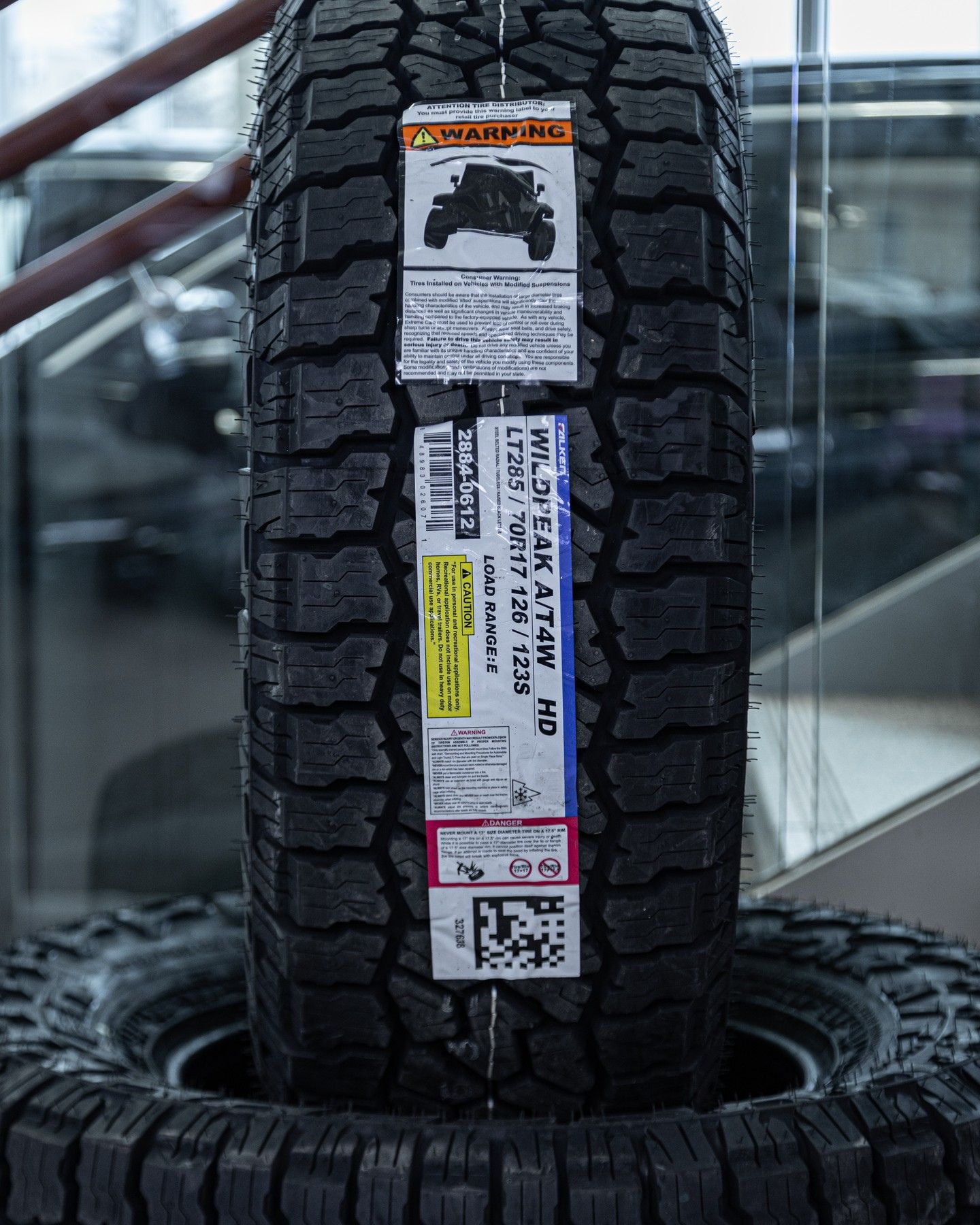

Data-driven technical analysis verified by a former Bridgestone test engineer, synthesized from thousands of online tests and user feedback.
The Falken Wildpeak AT4W and AT3W are premier Off-Road A/T tires for pickup trucks and SUVs, both with the 3PMSF rating.
The critical status is that the AT3W is officially discontinued with limited retail stock remaining.
The AT3W was popular for its comfort compromise; the AT4W is its tougher successor, engineered with a fundamentally stiffer casing to prioritize severe-duty durability. I use comprehensive data to analyze this critical shift in focus.
QUICK DECISION NOTE
If you’re short on time, don’t waste it guessing. Use my All-Terrain Tire Decision Tool for a tailored recommendation by SUV, CUV, or truck class
Quick Look
The Falken Wildpeak AT3W became the dry road athlete, boasting best-in-class dry stopping at 126.6 ft and superior cornering at 0.80 g. It was known for its comfort (8.2/10), backed by a consistent 55,000-mile warranty. The AT4W is the mandatory upgrade, delivering both superior longevity and severe-duty safety. The AT4W extends the warranty to 65,000 miles (P-Metric) and features a stiffer 3-ply casing for enhanced ruggedness. The data validates the upgrade: the AT4W takes Rank 1 in severe winter conditions with the shortest snow stopping distance at 69 ft and superior standing wet grip (0.58 traction), alongside an overwhelming 8.8 Off-Road Rock score. The AT4W sacrifices some dry agility, but provides a superior overall margin of safety, durability, and tread life.
Falken Wildpeak A/T4W

Raw Test Data
Tire Test Data
Pick categories to show metrics, then open ☰ to pick tires. Optional chart is hidden by default.
Dry Performance: The Trade-Off - Sharpness vs Durability
As a test engineer, I immediately look at the dry performance numbers, and they tell a fascinating story. The AT3W was, hands down, the superior road tire for pure dry agility. My analysis shows it securing Rank 1 with an astonishing 126.6 ft dry stopping distance and 0.80 g lateral grip. This superior contact patch stability is what gives the AT3W that razor-sharp, immediate on-center feel. The AT4W trades this snap for rigidity, stopping around 131.8 ft with 0.72 g grip. User feedback confirms the AT4W feels heavier, more planted, and steady under load, but noticeably less snappy.
The core technical trade-off is the story here, one of Compound flexibility versus Casing Integrity. The AT3W’s softer compound delivered that agile feel. The AT4W’s deliberate shift stiffer sidewalls and broader blocks sacrifices a few feet of braking performance to gain the immense payload composure and durability needed for constant towing and heavy-duty use on North American highways. This is not a flaw; it’s the cost of being truck-tough.
This critical engineering focus clarifies the segmentation of the Wildpeak line. If you are prioritizing the AT3W’s nimble dry feel, your spiritual successor is the Falken Wildpeak Rubitrek AT01, Falken’s new tire engineered specifically for that sharpness on lighter SUVs. The AT4W, however, remains the stronger, mandatory choice for half-ton trucks that tow regularly and for all heavy-duty applications, where casing rigidity is non-negotiable.
Wet Performance: The 5 ft Margin of Safety
When asphalt turns slick, the AT4W demonstrates a clear commitment to safety margins. My analysis shows the AT4W stopping in a critical 171 ft in wet braking (60–0 mph), establishing a decisive 5 ft advantage over the AT3W’s 176 ft. This margin is compounded by the AT4W’s Rank 1 standing wet traction coefficient of 0.58. Why this dominance? The engineering is focused on water evacuation. The AT4W utilizes deeper, wider circumferential grooves and improved tread block rigidity to more effectively displace water and reduce hydroplaning risk. The AT3W still maintains acceptable grip in light rain due to its flexible blocks and higher siping, but its stability is compromised when hard braking or heavy spray is required.
User feedback reinforces this safety difference: I see comments like, “AT4W feels safer in storms,” versus “AT3W is fine in drizzle but feels more hesitant when things get heavy.” The AT4W clearly inspires far more confidence under sudden braking in slick conditions.
In application, this margin is crucial. The AT4W is the safer choice for all regular wet commutes and is mandatory for towing or heavy-duty trucks where its improved water evacuation and stability make a significant difference under maximum load. The AT3W is acceptable in moderate wet, but demands earlier braking.
Note from the Expert: When it comes to rain, I always emphasize two things: compound grip and water evacuation. You can see the full details in my analysis, but if you take just one thing away, remember that an AT tire’s stiff nature makes achieving top-tier wet performance a constant battle. This is why the question, Are All-Terrain Tires Good in Rain?, requires a nuanced answer that balances tread design against rubber stiffness.
Snow Performance: Braking and Acceleration Dominance
In snowy conditions, the AT4W prioritizes critical stopping safety over the perceived agility of its predecessor. While the AT3W was often felt to be better for general snow-day driving and initial pull, the data confirms the AT4W’s technical dominance in pull as well. The AT4W’s snow acceleration time of 41.5 s (vs AT3W’s 43.5 s) is significantly faster, and it stopped in just 69 ft on packed snow (25–0 mph), requiring 3 ft less than the AT3W. The AT4W’s gain is in safety and efficiency in deeper or more variable snow.
The engineering confirms this focus. The AT4W’s construction features a stiffer casing that keeps blocks aligned under load, improved shoulder voids that actively boost snow evacuation, and an updated compound tuned to resist firming up in the cold. The AT3W, while still 3PMSF rated, tends to shine more in lighter snow or mixed winter use. Community feedback reflects this difference: drivers in heavier snow zones say AT4W “grabs sooner in drifted snow,” while AT3W is described as “good on plowed/snowy roads but less aggressive in fresh or deep snow.”
The AT4W is the safer choice for all vehicles operating in heavy snow zones, where safety braking is key and durability is tested. The AT3W is still excellent for lighter SUVs and crossovers used on moderate snow and regularly plowed winter roads.
Note from the Expert: Our discussions often boil down to the core tradeoff. On one hand, you must understand why all-terrain tires are truly effective in deep snow, but not on ice. On the other hand, you face the 3PMSF Paradox—the hidden cost of that badge. The short answer is: The 3PMSF badge certifies traction, but it costs you durability. Dive into our full analysis on the critical 3PMSF rating for severe winter and off-road service, and its hidden costs, before you risk your rig on the trail.
Ice Performance: Predictability and Pliability
Let’s talk about the scariest part of winter driving: black ice on a frozen highway overpass. On ice, the AT4W takes a small data lead that translates to a mandatory safety advantage on our roads. My analysis shows the AT4W stopping in approximately 45 ft versus the AT3W’s 47.5 ft. The AT4W’s true edge is not in brute stopping power, but in predictability during steering inputs.
Why the difference? It boils down to the compound’s updated cold-weather physics. The AT4W’s material remains pliable in colder temperatures, giving better support and a stable block shape—that’s what keeps your contact patch honest. The AT3W’s older design suffers from blocks that flex more, resulting in a feel that is softer and less precise and predictable. Forum users agree: the AT4W feels more composed in icy patches, reinforcing that the older AT3W response is now an unacceptable compromise for Canadian and northern US winters.
The AT4W gives far more peace of mind on icy commutes. It is the non-negotiable choice for safety where the discontinued AT3W is simply less reliable.
Durability Mandate: Sidewall Protection & Rock Score
Off-road, the AT4W is built to a modern standard of toughness, making it the definitive upgrade. The structural shift is immediately visible in the data: the AT4W jumped to an overwhelming 8.8 Off-Road Rock score versus the AT3W’s 7.4. This leap is driven by the 3-ply DURASPEC Sidewall construction, which is the foundation of the durability mandate in many sizes. It also features a revised shoulder lug geometry for better biting on rocks and gravel, and an updated compound designed to resist chips and cuts more effectively. The AT3W is still capable but explicitly prioritized winter grip and comfort over maximum durability.
Forum users consistently reinforce this difference in ruggedness. I see feedback like, “AT4W takes a beating and still tracks straight,” versus the AT3W’s “softer feel, more bounce.” In my trail time, the AT4W handled loose rock and gravel with less chunking, showing true resilience where the older tire prioritizes a better feel on snow-laden trails.
Application Summary: The AT4W is the superior, mandatory choice for rugged terrain, heavy towing, and any heavy-duty truck application where its beefed-up build supports heavier loads. The AT3W is only appropriate for mild trails and lighter rigs, as it traded toughness for better comfort.
Note from the Expert: Every successful day on the trail is about preparation and physics, because tire longevity is earned, not given. Before you even start, you must master the critical link between tire pressure and load range for every rig to maximize your contact patch. Once moving, remember your ultimate off-road armor is your sidewall protection against the inevitable pinch flat. And finally, your traction on the obstacle is dictated by choosing the right aggressive vs hybrid tread pattern for your terrain. Master those three steps, and your rig will be ready for anything.
Comfort & Noise — Polished Ride vs Rugged Character
In the subjective category of comfort and noise, the difference is noticeable but minimal, reflecting the deliberate stiffness of the AT4W. The AT3W tends to be quieter, especially in its initial miles, thanks to its softer compound and more flexible blocks. The AT4W’s deliberate increase in stiffness (compound and sidewall) trades a bit of that initial softness. I found the AT4W noticeable in ride firmness over rough pavement, yet it still achieves a high rating (8.3/10 vs AT3W’s 8.2/10), remaining more polished than genuinely rugged.
Drivers often confirm this trade-off: they say the AT3W is “milder on highway hum,” while the AT4W is described as “firmer but less mushy,” especially under heavy loads or bigger sizes. This change in character—trading a light, cushiony ride for rigidity—is the price of the AT4W’s durability mandate.
Application Summary: The AT3W remains the comfort leader for lighter SUVs and crossovers. However, the AT4W offers a good compromise for half-ton trucks, and for 3/4-ton and HD trucks, the difference in ride quality becomes less relevant under the vehicle’s sheer mass, making the AT4W’s added strength the clear priority.
Note from the Expert: For years, choosing all-terrain meant accepting noise—a true compromise for off-road grip. That’s why the question, Are All-Terrain Tires Louder than Highway Tires?, used to have a simple “yes” answer. Now, with the rise of on-road models, the core issue has shifted from noise to overall refinement. To fully understand which side of the comfort spectrum you’re buying into, you need to determine Are All-Terrain Tires Good for Daily Driving?—a question that depends entirely on the tire’s construction, not just the name.
Tread Life & Longevity: The 10,000-Mile Guarantee
This is where the durability mandate of the AT4W is most explicit. Falken backs the AT4W with up to a 65,000-mile warranty (in many sizes), a significant upgrade from the AT3W’s consistent 55,000-mile range. That 10,000 mile jump tells me the engineering team is highly confident in the AT4W’s resistance to damage and wear. Real-world reports confirm this confidence, suggesting the AT4W holds up better in gravel and rocky roads, while the AT3W shows earlier edge wear under aggressive use.
From an engineer’s view, the longer life is due to compounds that resist chip, thicker sidewalls, and more durable shoulder blocks, all features that actively slow wear. The AT3W sacrifices some of that durability for winter flex and grip, which makes its edges prone to wearing faster under abuse.
Application Summary: The AT4W offers a stronger, more reliable long haul for all vehicle classes and is mandatory for half-ton and HD trucks that face mixed terrain or constant towing. The AT3W has a proven life but offers less margin for error and requires frequent rotation to avoid earlier edge wear.
Tire Size Selection: The Basics You Can’t Skip
Even the best tread design can’t rescue a tire that’s built too weak. Back when I was testing tires at Bridgestone, I saw all-terrain models that should’ve performed but fell short — simply because the basics (size, load strength, and speed rating) weren’t matched to the vehicle.
P-Metric vs. LT (Light Truck) Tires
The first step is knowing whether you need LT or passenger tires. LT (Light Truck) tires are built with extra reinforcement and stiff sidewalls, designed for towing, hauling, or off-road use. Passenger (P-metric) tires are lighter, smoother, and tuned for daily comfort and fuel efficiency — but they’ll flex more under load.
Understanding Tire Load Range: XL vs. E-Load
Then comes the tire load index and load range — essentially your tire’s strength rating. Here’s where things split between passenger XL and LT E:
XL (Extra Load) is a passenger tire with reinforced sidewalls. It can handle a bit more pressure (~41 PSI) than a standard SL tire and is perfect for SUVs, crossovers, or light trucks that carry extra gear, passengers, or small trailers. XL tires ride softer and quieter than LT options, making them ideal for daily use.
E Load Range is an LT tire class built with a much thicker casing. E-rated tires can handle far more pressure (up to ~80 PSI) and heavier loads, which makes them essential for ¾-ton and 1-ton trucks towing trailers or hauling close to max capacity. The trade-off is weight, stiffer ride, more road noise, and a small drop in fuel efficiency.
Put simply: XL is for “extra luggage and family,” while E is for “truck bed full of bricks or a car trailer.”
Why the Tire Speed Rating Matters for Safety
Finally, don’t overlook the tire speed rating. It’s not just about top speed — it measures how well a tire handles heat and stress at highway pace. Lower ratings (like S) tend to ride softer and last longer, while higher ratings (H, T) feel more stable and responsive under sharp maneuvers. Heat build-up is the silent killer of tires, and speed rating is your safeguard.
Bottom line: Match your tire’s construction (LT vs P-metric), load range (XL vs E), and speed rating to your vehicle’s demands. Get those right, and everything else — off-road grip, winter traction, comfort — will finally perform the way it was designed to.
Conclusion
The comprehensive data analysis confirms that the upgrade to the Wildpeak AT4W represents a major strategic shift for Falken. The company intentionally traded the AT3W’s famous comfort compromise for the singular focus of rugged durability and maximized severe weather safety.
The AT4W’s dominant 69 ft snow stopping distance, combined with its 3-ply durability mandate, immediately positions it as the premium, heavy-duty option. This repositioning signifies a major change in the Wildpeak line-up, making the AT4W a fundamentally more rugged tire than its predecessor and leaving the comfort-focused role to the Falken Wildpeak Rubitrek AT01.
The bottom line is simple: The AT3W is an obsolete compromise. If you need the durability and superior severe-duty safety, the AT4W is the only answer.
Justifiable Scenarios for Buying Leftover AT3W Stock:
✅ Immediate Replacement: You need a single tire to match a damaged tire in an existing AT3W set.
✅ Ultimate Comfort Priority: You prioritize the AT3W’s quieter ride and softer, more compliant feel over the AT4W’s stiffness, durability, and safety gains.
Note: If you’re still weighing your options, our full Falken Wildpeak Buyer’s Guide walks through the AT Trail, AT3W, and AT4W in detail, helping you match the right tire to your vehicle, size, and driving style.
Falken Wildpeak AT4W Related Articles
Frequently Asked Questions: Falken AT3W vs AT4W
Which tire is better on dry roads?
The AT3W holds the dry speed advantage (126.6 ft stop, 0.80 g grip) versus AT4W’s 131.8 ft (0.72 g). However, the AT4W's stiffer casing makes it mandatory for heavy loads, providing steadier composure.Which tire is safer in rain?
The AT4W is the mandatory safety upgrade. It stops shorter (171 ft) compared to the AT3W’s 176 ft, thanks to its Rank 1 standing wet traction and improved water evacuation.How do they perform in snow?
The AT4W is technically superior in all metrics. It stops shorter (69 ft) and accelerates faster (41.5 s) than the AT3W (72 ft stop, 43.5 s accel), making it the definitive choice for heavy snow zones.Which grips better on ice?
The AT4W is the non-negotiable choice. It stops shorter (45 ft vs AT3W's 47.5 ft) and its updated compound provides greater predictability on black ice where the AT3W is less reliable.Which tire is tougher off-road?
The AT4W. It is built with 3-ply DURASPEC Sidewalls and a chip-resistant compound, securing a superior 8.8 Rock Score. The AT3W is structurally outdated for serious abuse.Which is quieter and more comfortable?
The AT3W has the softer, more compliant feel (comfort 8.2/10). However, the current comfort successor is the Falken Wildpeak Rubitrek AT01. The AT4W is firmer but offers the necessary durability.Which lasts longer?
The AT4W. Falken backs it with a 65k warranty, a 10,000-mile gain over the AT3W's 55k warranty. The AT4W's build resists wear and damage far better.Which vehicles suit each tire?
The AT3W is now suited only for historical replacement on lighter SUVs. AT4W is mandatory for all ½-ton, ¾-ton, and HD trucks needing towing stability, maximum durability, and superior safety margins.
Leave a Reply