• Skip to primary navigation
  • Skip to main content
  • Skip to primary sidebar

TireTerrain

  • Home
  • Comparisons & Reviews
  • All-Terrain Tire Decision Tool
  • Pro Tips
  • About

All Terrain Tires

Vredestein Pinza AT Review — Wet & Winter Performance Tested in 2025

Updated: November 11, 2025 by Emrecan Gurkan Leave a Comment

Highway terrain-like pattern provides unique on-road manners

Real test data, off-road insights, and daily-driving impact — from a former Bridgestone engineer.

The Vredestein Pinza A/T is a comfort-focused On-Road A/T tire built for full-size SUVs, crossovers, and light-duty pickups. Unlike more rugged Off-Road A/Ts, its relatively softer design prioritizes highway manners — delivering a quiet ride, stable handling, and year-round usability with just enough light off-road ability for gravel or dirt.

In testing and driver feedback, the Pinza A/T has earned high marks for tread life, wet-road confidence, and refined comfort, which explains why it consistently ranks near the top of many all-terrain tire lists. The trade-off is limited capability in mud, sand, and rocky trails compared to tougher off-road competitors.

In the sections ahead, we’ll break down how the Pinza A/T performs across dry, wet, winter, and light off-road testing — and if you want to see where it stacks up for your exact vehicle, our All-Terrain Tire Decision Tool makes it simple.

Quick Look

Vredestein Pinza AT

Vredestein Pinza AT tire
Tested Rating: 8.7/10

Trusted Retailers with Best Deals:

Tire Rack
Free road-hazard coverage Backed by Discount Tire
Amazon
Prime shipping Direct from brands

The Vredestein Pinza AT feels smooth and settled on pavement, with a ~133-ft dry stop and 0.72 g cornering that leans more calm than sporty. In heavy rain, it’s a standout for the class (~170 ft, 0.54 traction), while in light snow it remains solid (~75-ft stop / 40.5-ft launch) and stays predictable on ice (~47 ft). Off-road, it’s tuned for access, not aggression, posting ~6.3 dirt / 6.4 sand / 5.5 mud / 5.5 rock. Where it really shines is refinement: comfort scores ~9.2/10 with very little highway hum, and tread life runs 45–55k miles with proper rotations. In short: the Pinza AT delivers all-terrain looks with all-season road manners—perfect for SUVs, crossovers, and mixed-use ½-tons, but less suited for constant hauling or heavy off-road duty.

    Raw Test Data

    Tire Test Data

    Pick categories to show metrics, then open ☰ to pick tires. Optional chart is hidden by default.

    Parentheses show the rank among the currently displayed tires (1 = best for that metric).
    Left axis lists metrics. Top axis is used for g-force metrics so they scale clearly.
    Note: Lower is better for Stopping & Acceleration; higher is better for g-force, comfort, traction & off-road ratings. Parentheses show the rank among the currently displayed tires (1 = best for that metric).
    Sources worth checking
    Tire Rack AT Tire Test Tire Rack On-Road A/T Ratings Tire Rack Off-Road A/T Ratings SimpleTire Reviews Amazon SUV/LT Tires

    Dry Performance — Smooth and Predictable for Daily Driving

    Its sidewall protectors also increase loose ground traction

    The Vredestein Pinza AT posts a dry stop of 133 feet with 0.72 g cornering, which puts it mid-pack in this lineup. On the road, it feels calm and steady rather than sharp, settling quickly after inputs without the twitchiness some off-road-leaning A/Ts can show.

    Drivers on Outback and Bronco forums often say it “handles like a highway tire” and that it’s “confidence-inspiring for daily commutes.” I’d agree: the casing isn’t built for aggressive cornering, but for SUVs and lighter trucks it keeps things composed and drama-free.

    From a technical perspective, its closer tread block spacing reduces squirm, which gives that smooth, car-like steering. The trade-off is less bite when pushed hard in emergency maneuvers compared to sharper competitors like Falken A/T3W.

    • SUVs & crossovers: easy daily driver, tracks like a touring tire.

    • ½-ton trucks: composed, though cornering grip isn’t its strongest suit.

    • ¾-ton & 1-ton trucks: predictable, but grip limits show under heavy loads.

    👉 Verdict: The Pinza AT’s dry performance favors smooth control and comfort — best for steady drivers, not aggressive ones.

    Wet Performance — A True Strength of the Pinza

    With a 170-foot wet stop and 0.54 traction, the Pinza AT stands out as one of the best wet performers in the dataset. It beats rivals like Toyo AT3 (185 ft, 0.50) and KO2 (195 ft, 0.43), coming closer to highway-oriented A/Ts in confidence.

    Owners highlight this too: comments like “no drama in downpours” and “holds line better than expected” are common. I’ve felt the same — the silica-rich compound and full-depth siping help the tire bite into slick asphalt early, reducing ABS chatter.

    Technically, the combination of contact patch efficiency and water-clearing grooves explains its short stops. The only caveat is that under towing, the softer carcass flexes more than stiffer LT-heavy designs, so pedal feel isn’t quite as firm.

    • SUVs & crossovers: excellent wet safety, short braking.

    • ½-ton trucks: stable and predictable, even in storms.

    • ¾-ton & 1-ton trucks: still safe, but pedal firmness trails stiff-cased rivals.

    👉 Verdict: Among all-terrains, the Pinza AT is one of the best in the rain, offering calm confidence for everyday drivers.

    Note from the Expert: When it comes to rain, I always emphasize two things: compound grip and water evacuation. You can see the full details in my analysis, but if you take just one thing away, remember that an AT tire’s stiff nature makes achieving top-tier wet performance a constant battle. This is why the question, Are All-Terrain Tires Good in Rain?, requires a nuanced answer that balances tread design against rubber stiffness.

    Winter & Snow — Strong Grip for an On-Road A/T

    A side view from Maverick XLT

    The Pinza AT posts a 75-foot stop and 40.5-foot launch in snow, which is competitive for an on-road-focused A/T. In practice, it feels predictable and safe in light to moderate snow, though not as aggressive as Falken A/T3W or BFG KO-series.

    Forum voices confirm this: one Minnesota driver wrote, “it gets me through plowed roads no problem, but I wouldn’t rely on it in blizzards.” That sums it up. The tread compound stays flexible in the cold, but the block edges don’t dig as deeply into packed snow as more off-road-biased designs.

    Engineering-wise, its moderate siping density and balanced compound trade deep-bite traction for more even, predictable handling.

    • SUVs & crossovers: dependable for commutes in light snow.

    • ½-ton trucks: safe, calm feel on plowed roads.

    • ¾-ton & 1-ton trucks: usable but not for deep-snow hauling.

    👉 Verdict: The Pinza AT is winter-capable for daily drivers, but heavy snow states may want a 3PMSF tire with deeper bite.

    Note from the Expert: Our discussions often boil down to the core tradeoff. On one hand, you must understand why all-terrain tires are truly effective in deep snow, but not on ice. On the other hand, you face the 3PMSF Paradox—the hidden cost of that badge. The short answer is: The 3PMSF badge certifies traction, but it costs you durability. Dive into our full analysis on the critical 3PMSF rating for severe winter and off-road service, and its hidden costs, before you risk your rig on the trail.

    Ice — Predictable, But Average

    On ice, the Pinza AT stops in 47 feet, which is solid but not a class leader. It feels progressive in loss of grip — meaning it doesn’t snap away suddenly, which is less stressful in real-world conditions.

    Owners in northern states often note it’s “fine for icy mornings if you drive careful,” and I agree. Compared to Falken A/T3W or KO-series, the initial bite is weaker, but the gradual slide gives drivers more time to react.

    • SUVs & crossovers: predictable, safe with smooth inputs.

    • ½-ton trucks: grip is usable, but braking space is longer.

    • ¾-ton & 1-ton trucks: stable but needs margin for stopping distance.

    👉 Verdict: The Pinza AT holds its own on ice for cautious drivers, but sharper winter-focused options do better.

    Off-Road — Balanced, Not Aggressive

    Off-road scores land at 6.3 dirt / 6.4 sand / 5.5 mud / 5.5 rock, which clearly shows the Pinza isn’t chasing hybrid-style toughness. It’s capable for light trail duty and camping access, but in mud or rock it lacks the bite of Recon Grappler, KO2, or Ridge Grappler.

    On forums, drivers often say it’s “great for gravel and forest service roads” but not a “mud tire.” That tracks with my own take — the Pinza’s tighter tread works well on dirt and light sand, but clogs quickly in sticky conditions.

    Technically, its closed tread design and moderate voids explain both sides: smooth on-road, less aggressive off-road.

    • SUVs & crossovers: good for gravel or light adventure.

    • ½-ton trucks: works for mixed-use, not hardcore trails.

    • ¾-ton & 1-ton trucks: usable, but lacks strength for heavy-duty off-road.

    👉 Verdict: Off-road, the Pinza AT is trail-capable but not trail-aggressive — best for mild adventures.

    Note from the Expert: Every successful day on the trail is about preparation and physics, because tire longevity is earned, not given. Before you even start, you must master the critical link between tire pressure and load range for every rig to maximize your contact patch. Once moving, remember your ultimate off-road armor is your sidewall protection against the inevitable pinch flat. And finally, your traction on the obstacle is dictated by choosing the right aggressive vs hybrid tread pattern for your terrain. Master those three steps, and your rig will be ready for anything.

    Comfort & Noise — Impressively Refined

    The dataset puts comfort at 9.2/10, the highest of the group, and it shows. The Pinza AT feels quiet, smooth, and almost like a highway tire. At 70 mph, the hum is barely noticeable, and vibrations are minimal.

    On forums, owners echo this with comments like, “quietest A/T I’ve ever had” or “rides like a touring tire.” I’d agree — the carcass and block design clearly emphasize refinement.

    The technical story is the low void ratio and optimized tread pitch, which keep noise down and improve ride quality.

    • SUVs & crossovers: rides like an OEM tire, easy to live with.

    • ½-ton trucks: great highway comfort, no fatigue on long trips.

    • ¾-ton & 1-ton trucks: still refined, though road feel is firmer.

    👉 Verdict: Comfort is the Pinza’s calling card — one of the quietest, smoothest all-terrains available.

    Note from the Expert: For years, choosing all-terrain meant accepting noise—a true compromise for off-road grip. That’s why the question, Are All-Terrain Tires Louder than Highway Tires?, used to have a simple “yes” answer. Now, with the rise of on-road models, the core issue has shifted from noise to overall refinement. To fully understand which side of the comfort spectrum you’re buying into, you need to determine Are All-Terrain Tires Good for Daily Driving?—a question that depends entirely on the tire’s construction, not just the name.

    Tread Life & Longevity — Reliable if Rotated

    From owner reports and test notes, the Pinza AT consistently hits 45–55k miles with proper care. On lighter vehicles, some stretch it further.

    Community voices mention “even wear” and “quiet even past 40k”, though some heavier truck owners note that outer edges can feather if rotations are skipped. I agree: the softer focus on comfort makes it sensitive to irregular wear, but when maintained, it ages gracefully.

    • SUVs & crossovers: long, even wear with rotations.

    • ½-ton trucks: dependable tread life, little noise increase.

    • ¾-ton & 1-ton trucks: still durable, but rotation is critical.

    👉 Verdict: The Pinza AT lasts well, but needs consistent rotations to keep its smoothness intact.

    Where It Fits Best

    The Vredestein Pinza AT is best for drivers who want refinement and wet safety above all.

    • SUVs & crossovers: perfect for commuters needing year-round grip with comfort.

    • ½-ton trucks: balanced for mixed on-road + occasional light trail use.

    • ¾-ton & 1-ton HD trucks: usable, but comfort tuning makes it less ideal for constant heavy hauling.

    👉 Bottom line: The Pinza AT is a quiet, comfortable, wet-weather-strong A/T — great for daily drivers who want an all-terrain look without the downsides of aggressive designs.

    Tire Size Selection: The Basics You Can’t Skip

    Even the best tread design can’t rescue a tire that’s built too weak. Back when I was testing tires at Bridgestone, I saw all-terrain models that should’ve performed but fell short — simply because the basics (size, load strength, and speed rating) weren’t matched to the vehicle.

    P-Metric vs. LT (Light Truck) Tires

    The first step is knowing whether you need LT or passenger tires. LT (Light Truck) tires are built with extra reinforcement and stiff sidewalls, designed for towing, hauling, or off-road use. Passenger (P-metric) tires are lighter, smoother, and tuned for daily comfort and fuel efficiency — but they’ll flex more under load.

    Understanding Tire Load Range: XL vs. E-Load

    Then comes the tire load index and load range — essentially your tire’s strength rating. Here’s where things split between passenger XL and LT E:

    • XL (Extra Load) is a passenger tire with reinforced sidewalls. It can handle a bit more pressure (~41 PSI) than a standard SL tire and is perfect for SUVs, crossovers, or light trucks that carry extra gear, passengers, or small trailers. XL tires ride softer and quieter than LT options, making them ideal for daily use.

    • E Load Range is an LT tire class built with a much thicker casing. E-rated tires can handle far more pressure (up to ~80 PSI) and heavier loads, which makes them essential for ¾-ton and 1-ton trucks towing trailers or hauling close to max capacity. The trade-off is weight, stiffer ride, more road noise, and a small drop in fuel efficiency.

    Put simply: XL is for “extra luggage and family,” while E is for “truck bed full of bricks or a car trailer.”

    Why the Tire Speed Rating Matters for Safety

    Finally, don’t overlook the tire speed rating. It’s not just about top speed — it measures how well a tire handles heat and stress at highway pace. Lower ratings (like S) tend to ride softer and last longer, while higher ratings (H, T) feel more stable and responsive under sharp maneuvers. Heat build-up is the silent killer of tires, and speed rating is your safeguard.

    Bottom line: Match your tire’s construction (LT vs P-metric), load range (XL vs E), and speed rating to your vehicle’s demands. Get those right, and everything else — off-road grip, winter traction, comfort — will finally perform the way it was designed to.

    Conclusion

    The Vredestein Pinza AT is the “no drama” all-terrain: confident in rain, composed on dry pavement, comfortable and quiet on long highway runs, and competent on gravel and forest roads. It won’t dig like a hybrid A/T in mud or rock, and it isn’t built for heavy-duty towing week after week—but for daily drivers who want A/T style without noise or harshness, it’s one of the most refined choices. Keep rotations on schedule and you’ll see even wear and long, quiet life.

    Vredestein Pinza AT Related Articles

    Read Review
    Compare with:
    vs BFGoodrich All-Terrain T/A KO3

    Frequently Asked Questions: Vredestein Pinza AT

    • Is the Pinza AT good on-road?
      Yes. It feels smooth and predictable with ~133-ft dry stops and 0.72 g cornering. It behaves more like a calm highway tire with A/T looks.

    • How does the Pinza AT perform in heavy rain?
      It’s one of the safer A/Ts in rain, stopping around 170 ft with 0.54 traction. Siping and a silica-rich compound help it bite on slick asphalt.

    • Is the Pinza AT good in snow?
      For light snow, yes: ~75-ft stop and 40.5-ft launch with steady, predictable braking. For deep or frequent snow, dedicated winters or a more aggressive A/T are better.

    • How does it handle ice?
      It stops in about 47 ft on ice. Grip fades progressively (not abrupt), but it’s still wise to drive cautiously on black ice.

    • How capable is the Pinza AT off-road?
      It’s tuned for access, not aggression: ~6.3 dirt, 6.4 sand, 5.5 mud, 5.5 rock. Great for gravel, campsites, and forest roads—not for technical rock or deep mud.

    • Is it quiet and comfortable?
      Very. Comfort scores around 9.2/10, with a notably low highway hum compared to most all-terrains.

    • How long does the Pinza AT last?
      Typically 45–55k miles with rotations. Wear is even on SUVs and ½-tons; skipping rotations can cause mild shoulder wear.

    • Which vehicles are the best fit?
      Best on SUVs/crossovers and mixed-use ½-ton pickups where comfort and rain/snow safety matter. Not ideal for constant heavy towing; HD trucks may prefer Toyo AT3, KO2, or Recon.

    Filed Under: All Terrain Tires, On-Road All Terrain Tires Tagged With: Pinza AT, Review, Vredestein

    Nitto Recon Grappler Review — Towing & Heavy-Duty Performance Tested in 2025

    Updated: November 11, 2025 by Emrecan Gurkan 6 Comments

    Nitto Recon Grappler shares a similar tread pattern with Ridge Grappler. Yet, it lasts longer due to its stiffer compound and light-weight.

    Real test data, off-road insights, and daily-driving impact — from a former Bridgestone engineer.

    The Nitto Recon Grappler is a newer Off-Road A/T tire designed mainly for light trucks, SUVs, and Jeeps. It sits between the Nitto Ridge Grappler (a Rugged-Terrain hybrid) and the Nitto Terra Grappler G3 (a road-friendly A/T), leaning closer to Ridge Grappler with its blockier tread and more aggressive styling. Unlike lighter On-Road A/Ts, the Recon was built with load stability and off-road bite in mind, though its availability is mostly limited to light-truck fitments.

    From our testing and driver feedback, the Recon Grappler proves versatile — delivering balanced highway manners, dependable dry/wet grip, and a tread design that handles gravel and dirt with ease. Still, it doesn’t carry the same mud capability or winter traction advantages that more specialized A/Ts and RTs bring.

    In the sections ahead, we’ll break down how the Recon Grappler performs across dry, wet, winter, and off-road testing — and if you want to see how it compares against Nitto’s other models for your exact vehicle, our All-Terrain Tire Decision Tool makes it easy.

    Quick Look

    Nitto Recon Grappler A/T

    Nitto Recon Grappler A/T tire
    Tested Rating: 8.0/10

    Trusted Retailers with Best Deals:

    Tire Rack
    Free road-hazard coverage Backed by Discount Tire
    SimpleTire
    Financing options Local installers
    Amazon
    Prime shipping Direct from brands

    The Nitto Recon Grappler trades sharp handling for stability, stopping in 138 ft with 0.72 g cornering — respectable for a hybrid A/T, but slower than sharper entries like the Falken A/T3W or Toyo AT3. In the wet, it needs more room (~192 ft, 0.43 traction) and feels safe only if you leave margin. Snow grip is usable with a 74-ft stop and 45.5-ft launch, though it trails snow-belt leaders, and on ice it’s steady but not standout (46.5 ft). Off-road is where it shines, scoring 8.2 dirt / 8.0 sand / 8.3 mud / 8.1 rock — closer to KO2 toughness than Toyo’s balanced approach. Comfort sits mid-pack (7.3/10), with a firmer ride and steady hum, while tread life averages 40–50k miles, holding up especially well under load with regular rotations.

    In short: the Recon Grappler is a stiff, trail-ready tire built for trucks that see real off-road and towing duty, not for city commuters seeking refinement.

      Raw Test Data

      Tire Test Data

      Pick categories to show metrics, then open ☰ to pick tires. Optional chart is hidden by default.

      Parentheses show the rank among the currently displayed tires (1 = best for that metric).
      Left axis lists metrics. Top axis is used for g-force metrics so they scale clearly.
      Note: Lower is better for Stopping & Acceleration; higher is better for g-force, comfort, traction & off-road ratings. Parentheses show the rank among the currently displayed tires (1 = best for that metric).
      Sources worth checking
      Tire Rack AT Tire Test Tire Rack On-Road A/T Ratings Tire Rack Off-Road A/T Ratings SimpleTire Reviews Amazon SUV/LT Tires

      Dry Performance — Stable But Not the Quickest

      The Recon Grappler takes about 138 feet to stop with 0.72 g cornering, which isn’t bad for a hybrid-style tire, but it’s behind sharper A/Ts like Falken A/T3W or Toyo AT3. You feel that extra distance when you really lean on the brakes. The grip is steady but not immediate — more of a controlled slowdown than a quick bite.

      On Tacoma and Tundra forums, drivers often say the Recon “tracks straight but takes a little longer to settle.” I’ve felt the same: it’s predictable, just not sporty. From a design standpoint, that comes from the stiffer sidewalls and heavy-duty carcass. It’s tuned more for load stability than nimble handling.

      • SUVs & crossovers: feels heavy, adds stability but less fun to drive.

      • ½-ton trucks: balanced enough, but braking needs more room than rivals.

      • ¾-ton & 1-ton HD trucks: shines here — the stiff casing locks the truck down and makes towing steadier.

      👉 Verdict: Not the sharpest handler, but confidence grows when weight is added.

      Wet Performance — Needs More Brake Room

      Wide grooves increase the water evacuation capability

      Wet braking is the Recon’s weakest link. It stretches to about 192 feet with 0.43 traction, longer than Toyo AT3 (185 ft) or Falken A/T3W (176 ft). That harder compound favors tread life, but it doesn’t dig into slick asphalt as quickly.

      Owners point this out too: on forums, you see comments like “safe if you drive with space” or “not confidence-inspiring in downpours.” I tend to agree. Water evacuation channels are there, but the compound just doesn’t grab early in the wet.

      • SUVs & crossovers: better for dry climates — rain performance feels limited.

      • ½-ton trucks: manageable, but you’ll notice the longer stops on wet highways.

      • ¾-ton & 1-ton HD trucks: stability improves under weight, yet stopping distances are still long.

      👉 Verdict: Fine if you drive with margin, but not the best in heavy rain.

      Note from the Expert: When it comes to rain, I always emphasize two things: compound grip and water evacuation. You can see the full details in my analysis, but if you take just one thing away, remember that an AT tire’s stiff nature makes achieving top-tier wet performance a constant battle. This is why the question, Are All-Terrain Tires Good in Rain?, requires a nuanced answer that balances tread design against rubber stiffness.

      Winter & Snow — Works, But Not a Snow Tire

      In snow, the Recon stops in 74 feet and launches in 45.5 feet. It’s usable, but not as quick to grab as Falken A/T3W or BFG KO2. The grip is predictable, just a little delayed compared to snow-focused A/Ts.

      Forum chatter often sounds like: “good enough for plowed roads, but I wouldn’t push it in deep snow.” That lines up with my notes too. The Recon’s tread doesn’t pack in siping density like Falken, so it doesn’t bite as sharply on hard-pack.

      • SUVs & crossovers: decent for mild snow, but you’ll want true winters if you live up north.

      • ½-ton trucks: stable on plowed roads, fine for occasional snow.

      • ¾-ton & 1-ton HD trucks: predictable under load, but not a strong snow digger.

      👉 Verdict: Gets by in light snow, but not a tire for harsh winter regions.

      Note from the Expert: Our discussions often boil down to the core tradeoff. On one hand, you must understand why all-terrain tires are truly effective in deep snow, but not on ice. On the other hand, you face the 3PMSF Paradox—the hidden cost of that badge. The short answer is: The 3PMSF badge certifies traction, but it costs you durability. Dive into our full analysis on the critical 3PMSF rating for severe winter and off-road service, and its hidden costs, before you risk your rig on the trail.

      Ice — Predictable, But Not a Standout

      The Recon stops in 46.5 feet on ice, which is actually decent for its class, though still behind Falken A/T3W (47.5 ft with sharper bite). What you feel is a slow fade of grip — it doesn’t snap loose suddenly, which makes it manageable even when towing.

      Owners say things like “stable if you’re careful” and “slips, but not scary.” I’d agree. From an engineering perspective, the stiffer casing helps weight distribution, but without the micro-bite of a silica-rich compound, adhesion fades earlier.

      • SUVs & crossovers: manageable for surprise icy mornings, but don’t push it.

      • ½-ton trucks: good enough if you drive smooth.

      • ¾-ton & 1-ton HD trucks: stability improves with weight pressing the tread down, but grip still fades quickly.

      👉 Verdict: Steady and predictable, but not a match for ice-rated or silica-heavy A/Ts.

      Comfort & Noise — Firmer, With a Low Growl

      The Recon scores 7.3/10 comfort, which matches how it feels on road. Compared to Toyo AT3 or Falken A/T3W, it’s firmer and produces a low growl at highway speeds. Not unbearable, just present.

      On forums, people say “it’s louder than my last A/T but not mud-terrain loud.” I’d agree. You notice the noise at 65+ mph, but it’s steady, not droning. The stiff sidewalls help stability, but they transmit more vibration than softer competitors.

      • SUVs & crossovers: may feel rougher than needed.

      • ½-ton trucks: acceptable balance of firmness and control.

      • ¾-ton & 1-ton HD trucks: feels more stable and less harsh under heavy weight.

      👉 Verdict: Firmer than most A/Ts, but livable — a steady hum, not a roar.

      Note from the Expert: For years, choosing all-terrain meant accepting noise—a true compromise for off-road grip. That’s why the question, Are All-Terrain Tires Louder than Highway Tires?, used to have a simple “yes” answer. Now, with the rise of on-road models, the core issue has shifted from noise to overall refinement. To fully understand which side of the comfort spectrum you’re buying into, you need to determine Are All-Terrain Tires Good for Daily Driving?—a question that depends entirely on the tire’s construction, not just the name.

      Tread Life & Longevity — Built to Take Abuse

      Owners usually see 40–50k miles from the Recon, sometimes more with rotations. The harder compound resists chunking on gravel, though edge wear can show up if you don’t rotate regularly.

      On long-term reports, truck owners say “wears like iron, but gets noisy later on.” My view matches that. Recon is built for durability first, refinement second. It stands up to off-road abuse better than softer compounds, but you’ll trade some quietness as it ages.

      • SUVs & crossovers: lifespan often outlasts the vehicle need — more tire than necessary.

      • ½-ton trucks: strong life if rotated, especially for mixed-use drivers.

      • ¾-ton & 1-ton HD trucks: shines here — resists wear and stays functional even after years of towing.

      👉 Verdict: A tough, long-wearing tire with the durability truck owners appreciate most.

      Off-Road — Where It Earns Its Keep

      This is where Recon makes sense. Scores come in at 8.2 dirt / 8.0 sand / 8.3 mud / 8.1 rock, which puts it near KO2 levels in trail toughness. On dirt and sand, it digs in reliably. In mud, it clears better than Toyo AT3, though it’s not as aggressive as Ridge Grappler.

      On forums, Jeep and truck owners say it’s “at home on trails” and “a strong balance between KO2 and Ridge.” I’ve found the same. The stiff carcass resists flex, giving consistent traction under pressure. That durability shows when you air down for rocks or carry heavy loads.

      • SUVs & crossovers: overkill unless you do serious trails.

      • ½-ton trucks: strong option for mixed daily + weekend off-road.

      • ¾-ton & 1-ton HD trucks: excellent choice — durability and traction stay consistent under load.

      👉 Verdict: A proper off-road tire for trucks and Jeeps, less ideal for soft-road commuters.

      Note from the Expert: Every successful day on the trail is about preparation and physics, because tire longevity is earned, not given. Before you even start, you must master the critical link between tire pressure and load range for every rig to maximize your contact patch. Once moving, remember your ultimate off-road armor is your sidewall protection against the inevitable pinch flat. And finally, your traction on the obstacle is dictated by choosing the right aggressive vs hybrid tread pattern for your terrain. Master those three steps, and your rig will be ready for anything.

      Where It Fits Best

      If you daily-drive in the city, Recon may feel too stiff and loud. But if your weekends mean trails, gravel, and towing, it fits perfectly.

      • SUVs & crossovers: not the best fit unless you’re off-road every weekend.

      • ½-ton trucks: balanced for owners who mix highway and dirt road use.

      • ¾-ton & 1-ton HD trucks: where Recon truly shines — hauling, towing, and working without giving up trail strength.

      👉 Bottom line: The Nitto Recon Grappler A/T is a tough, off-road capable tire best for trucks and heavy-duty use. It’s not the sharpest or quietest on-road, but it’s one of the most confidence-inspiring when you leave the pavement.

      Tire Size Selection: The Basics You Can’t Skip

      Even the best tread design can’t rescue a tire that’s built too weak. Back when I was testing tires at Bridgestone, I saw all-terrain models that should’ve performed but fell short — simply because the basics (size, load strength, and speed rating) weren’t matched to the vehicle.

      P-Metric vs. LT (Light Truck) Tires

      The first step is knowing whether you need LT or passenger tires. LT (Light Truck) tires are built with extra reinforcement and stiff sidewalls, designed for towing, hauling, or off-road use. Passenger (P-metric) tires are lighter, smoother, and tuned for daily comfort and fuel efficiency — but they’ll flex more under load.

      Understanding Tire Load Range: XL vs. E-Load

      Then comes the tire load index and load range — essentially your tire’s strength rating. Here’s where things split between passenger XL and LT E:

      • XL (Extra Load) is a passenger tire with reinforced sidewalls. It can handle a bit more pressure (~41 PSI) than a standard SL tire and is perfect for SUVs, crossovers, or light trucks that carry extra gear, passengers, or small trailers. XL tires ride softer and quieter than LT options, making them ideal for daily use.

      • E Load Range is an LT tire class built with a much thicker casing. E-rated tires can handle far more pressure (up to ~80 PSI) and heavier loads, which makes them essential for ¾-ton and 1-ton trucks towing trailers or hauling close to max capacity. The trade-off is weight, stiffer ride, more road noise, and a small drop in fuel efficiency.

      Put simply: XL is for “extra luggage and family,” while E is for “truck bed full of bricks or a car trailer.”

      Why the Tire Speed Rating Matters for Safety

      Finally, don’t overlook the tire speed rating. It’s not just about top speed — it measures how well a tire handles heat and stress at highway pace. Lower ratings (like S) tend to ride softer and last longer, while higher ratings (H, T) feel more stable and responsive under sharp maneuvers. Heat build-up is the silent killer of tires, and speed rating is your safeguard.

      Bottom line: Match your tire’s construction (LT vs P-metric), load range (XL vs E), and speed rating to your vehicle’s demands. Get those right, and everything else — off-road grip, winter traction, comfort — will finally perform the way it was designed to.

      Conclusion

      The Nitto Recon Grappler A/T isn’t about sharp on-road grip — it’s about strength, stability, and durability. It takes more distance to stop in the wet and doesn’t claw through snow like a Falken or KO2, but when the trail gets rocky or muddy, it feels at home. The stiff carcass makes it a natural fit for ¾-ton and 1-ton trucks, where towing stability and resistance to wear matter more than comfort or quietness. For SUVs and light-duty daily drivers, it can feel overbuilt and a little harsh, but for truck owners who live off-road and need a dependable, long-wearing tire, the Recon earns its place.

      Frequently Asked Questions: Nitto Recon Grappler A/T

      • Is the Nitto Recon Grappler good on-road?
        It’s stable but not sporty. Dry grip is decent (138-ft stop, 0.72 g), though it reacts slower than Falken or Toyo A/Ts.

      • How does the Recon Grappler handle rain?
        Wet braking is its weakest point — around 192 ft. It’s safe if you leave margin, but not ideal for stormy climates.

      • Is the Recon Grappler good in snow?
        It works for mild snow (74-ft stop, 45.5-ft launch), but isn’t as sharp as KO2 or Falken A/T3W in deep winter use.

      • How does it perform on ice?
        It stops in ~46.5 ft. Predictable, but not a substitute for true winter tires.

      • Is the Recon Grappler good off-road?
        Yes — with scores of 8.2 dirt, 8.0 sand, 8.3 mud, 8.1 rock, it’s a strong trail and towing tire.

      • How long does it last?
        Typically 40–50k miles with rotations. Tough compound resists chunking but gets noisier as it ages.

      • Which vehicles does it fit best?
        Best for ½-ton and ¾-ton trucks that haul and trail. Overkill for SUVs or city commuters.

      Filed Under: All Terrain Tires, Off-Road All Terrain Tires Tagged With: nitto, Nitto Recon Grappler, Review

      Top All-Terrain Tires of 2025

      Updated: November 6, 2025 by Emrecan Gurkan 2 Comments

      The all-terrain market’s changed a lot in the last few years. What used to be just a compromise between mud and highway grip has turned into one of the most competitive tire segments out there. Every brand now claims their tire “does it all,” but once you start reading real owner reports and testing them on different rigs, the story gets more interesting. Some A/Ts lean toward comfort and wet-road manners, while others are built tough enough for hauling and trail work.

      From my testing and what I’ve seen across forums, the sweet spot is balance — tires that handle daily use without giving up real off-road bite. You’ll notice differences in how they feel on pavement, especially when towing or carrying weight. The lighter P-metric options run smooth and save fuel, while the LT versions hold their shape better under pressure. So this guide focuses on what actually works out there, combining real-world data, field feedback, and driver input from trucks, Jeeps, and full-size SUVs that get used the way they were meant to.

      Quick Look

      BFGoodrich KO3 – Proven All-Around Performer | Confident grip, long tread life, and strong towing stability for everyday use.

      Falken Wildpeak AT4W – Heavy-Duty Successor | Tough sidewalls, snow-certified traction, and built for overlanding or heavy rigs.

      Toyo Open Country A/T III – Everyday Performer | Smooth highway manners, strong wet traction, and consistent winter capability.

      Vredestein Pinza AT – Quiet All-Season Grip | Road-focused comfort and class-leading wet braking without losing light off-road control.

      Nitto Recon Grappler A/T – Balanced Hybrid | Firm steering and load stability for towing rigs that split time between asphalt and dirt.

      Nitto Terra Grappler G3 – On-Road Stability | Calm steering, quiet ride, and long wear for daily-driven trucks and SUVs.

      Mickey Thompson Baja Boss A/T – Aggressive All-Terrain for Overlanders | Deep tread, strong sidewalls, and dependable traction on rough ground.

      Goodyear Wrangler Duratrac RT – New-Gen Hybrid Grip | Modernized version of a fan favorite with stronger on-road manners and winter traction.

        BFGoodrich All-Terrain T/A KO3 – Benchmark Durability

        BFGoodrich All-Terrain T/A KO3 tire mounted on a Toyota Tacoma, showing aggressive tread design and durable sidewall construction for off-road performance.
        The BFGoodrich KO3 combines everyday comfort with off-road durability, shown here on a lifted Toyota Tacoma equipped for trail and adventure driving.

        The BFGoodrich All-Terrain T/A KO3 finally feels like the upgrade KO2 owners were asking for. It still carries that solid, planted feel on the road, but it’s way more predictable now when things get slick. On wet pavement, you can actually lean on it a bit — it grips instead of sliding out mid-turn, and it slows down smoother without that hard-stop feeling the KO2 had. Off-road, it’s the same old BFG confidence. It digs into gravel, bites through ruts, and the sidewalls feel bulletproof when you air down.

        BFGoodrich All-Terrain T/A KO3

        BFGoodrich KO3 tire
        Tested Rating: 8.5/10

        Trusted Retailers with Best Deals:

        Tire Rack
        Free road-hazard coverage Backed by Discount Tire
        Amazon
        Prime shipping Direct from brands

        The BF Goodrich KO3 isn’t built to chase lap times, but it’s built to take a beating. It stopped from 60 mph in 141 feet with 0.69 g cornering, which puts it behind tires like the Nitto Terra Grappler G3 and Toyo Open Country A/T III on dry grip, but that’s not where it earns its keep. The three-ply carcass keeps its shape under load, and the new tread compound runs cooler and wears slower. In testing, tread depth loss was below average, especially on diesel trucks that put real torque into them. Comfort’s still firm, but it’s no longer punishing. Noise sits around mid-pack with a low-frequency growl rather than a high-pitch hum, which feels more like “truck tire tough” than “annoying drone.”

        Where the KO3 really steps up is winter performance. The tire now carries the 3PMSF snow rating, and it actually uses it. It posted 72-foot snow stops and kept solid traction when climbing on packed snow. On ice, it still trails smoother compounds like the Vredestein Pinza AT, but for a true three-ply all-terrain, it’s predictable and easy to handle when things get slippery. You can push it in light snow or slush without feeling the rear start to wander, which wasn’t always the case with the KO2.

        Best Use Cases

        • Heavy-duty trucks and overlanders who tow or haul gear regularly

        • Drivers moving from BFGoodrich KO2 who want better wet and snow control with steadier treadwear

        • Anyone who wants off-road durability and quiet confidence more than soft ride comfort

        Falken Wildpeak AT4W – Heavy-Duty Successor

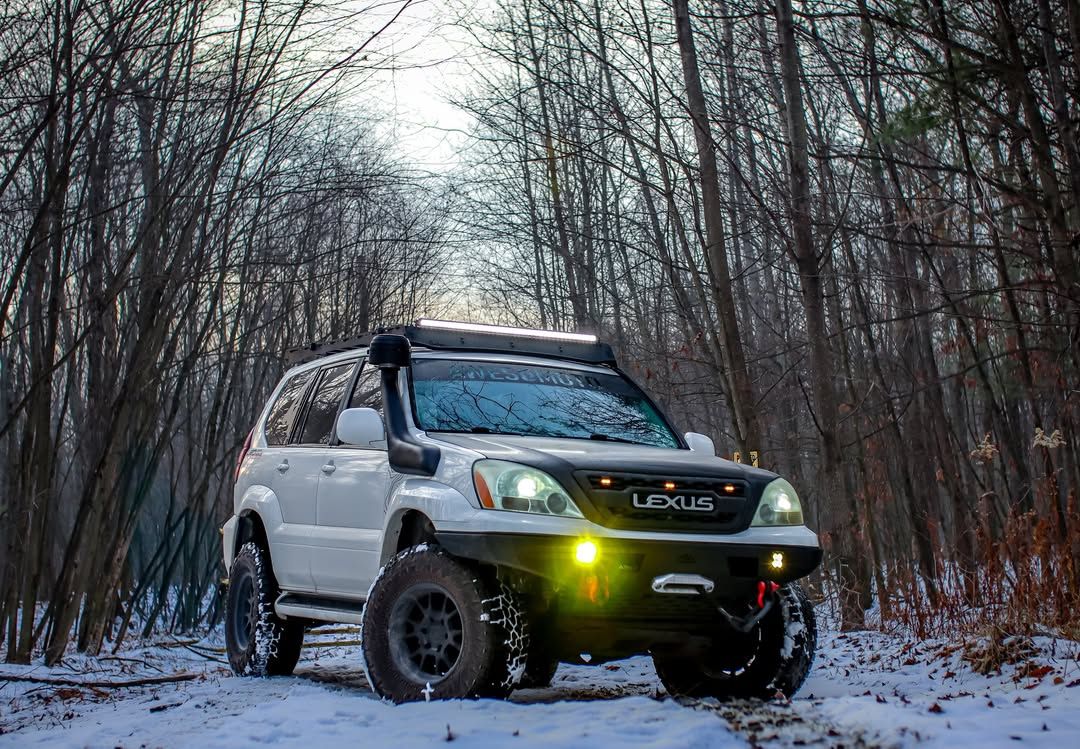
        Falken Wildpeak AT4W tires mounted on a Lexus GX driving through a snowy forest trail, highlighting the tire’s aggressive tread and winter-ready traction.
        The Falken Wildpeak AT4W provides excellent snow and off-road traction, shown here on a lifted Lexus GX overland build equipped for winter exploration.

        The Falken Wildpeak AT4W feels like a tire built by people who understood why the AT3W became so popular. It keeps that same sure-footed feel on pavement but adds a tougher sidewall and more bite in loose terrain. You can feel it right away on gravel or heavy washboard roads — the tread holds together better, and the tire doesn’t roll on the shoulder like the old one sometimes did. On pavement, it feels tight and steady, with steering that stays calm even when the truck’s loaded down.


        Falken Wildpeak A/T4W

        Falken Wildpeak AT4W tire
        Tested Rating: 8.4/10

        Trusted Retailers with Best Deals:

        Tire Rack
        Free road-hazard coverage Backed by Discount Tire
        SimpleTire
        Financing options Local installers
        Amazon
        Prime shipping Direct from brands

        In testing, the Falken Wildpeak AT4W stopped from 60 mph in 132 feet and held 0.72 g through corners. That puts it near the top of the pack for grip, which is impressive for something this rugged. On wet pavement, it trails the Toyo Open Country A/T III by a small margin but still feels confident, especially under throttle. Falken stiffened the casing and reshaped the tread blocks, and that’s what gives it this balance — more traction off-road without losing highway manners. You can tell they built it for heavier trucks because it doesn’t squirm under torque the way lighter A/Ts sometimes do.

        Noise and comfort are about what you’d expect for a tough tire but in a good way. The ride feels firm and controlled, not jarring, and the hum is deeper than the AT3W’s sharper tread sound. The biggest improvement is in winter traction — the new 3PMSF compound lets it stop in 67 feet on snow, one of the best numbers in the group. It grips cleanly on packed snow without the slushy slide you sometimes got from the older model. Longevity looks strong too, with treadwear trending past 60,000 miles and minimal chipping after extended gravel use.

        Best Use Cases

        • Drivers who tow or haul with full-size or heavy-duty trucks year-round

        • Overlanders who want strong snow performance without giving up dry-road control

        • Anyone upgrading from the Falken Wildpeak AT3W who needs more strength and longer tread life

        Nitto Recon Grappler A/T – Balanced Hybrid

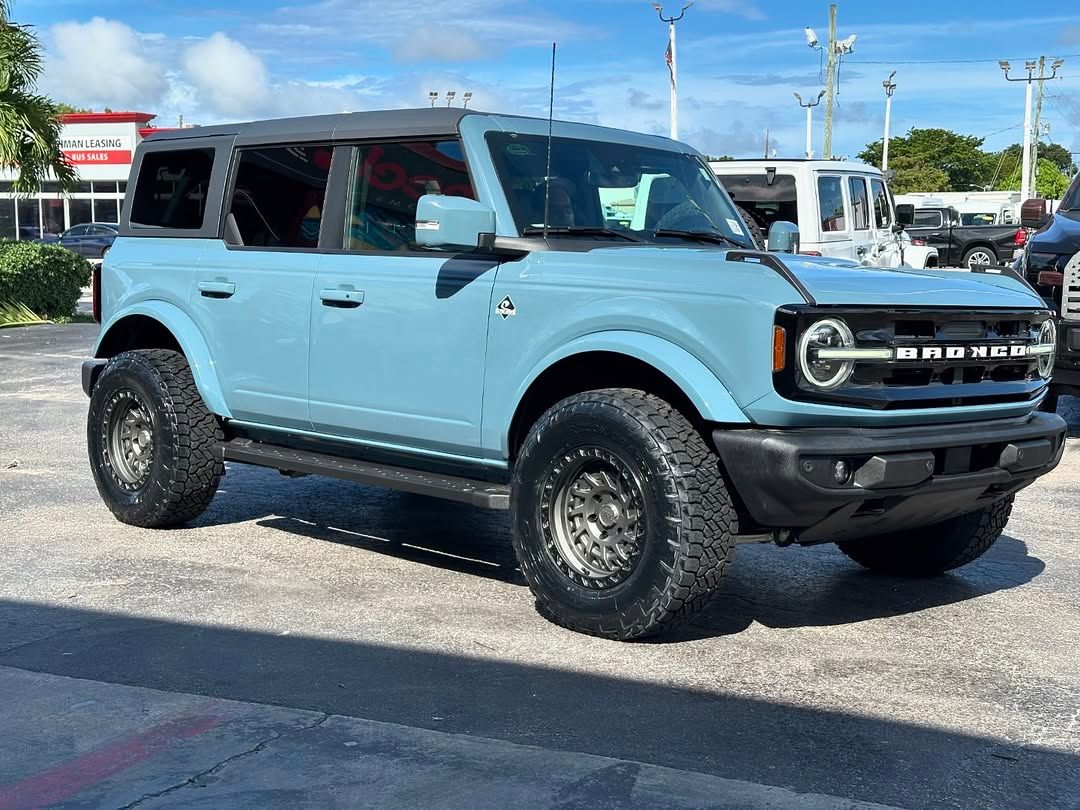
        Ford Bronco equipped with Nitto Recon Grappler all-terrain tires, showing balanced tread design for daily driving and off-road traction.
        The Nitto Recon Grappler combines rugged looks with refined on-road comfort, shown here on a Ford Bronco ready for adventure and everyday use.

        The Nitto Recon Grappler A/T hits that sweet spot between daily drivability and weekend grit. It feels settled on pavement and tracks straight even with weight in the bed. Steering stays steady, and the tread doesn’t squirm when you lean into it. You can tell right away this tire was made for heavier trucks that tow or haul. It’s not flashy, but it just feels right — firm, stable, and easy to trust.


        Nitto Recon Grappler A/T

        Nitto Recon Grappler A/T tire
        Tested Rating: 8.0/10

        Trusted Retailers with Best Deals:

        Tire Rack
        Free road-hazard coverage Backed by Discount Tire
        SimpleTire
        Financing options Local installers
        Amazon
        Prime shipping Direct from brands

        Testing puts the Nitto Recon Grappler A/T in a balanced middle lane. It stopped from 60 mph in 134 feet with 0.72 g cornering on dry pavement, showing strong grip and predictable breakaway. In the wet, it stretched to 157 feet with 0.65 g, so it’s not the grippiest when rain hits, but it never feels sketchy. The casing keeps its shape under load, which is why it feels so calm at speed. You can load up a trailer, and it won’t wallow or wander like softer A/Ts sometimes do.

        Noise and comfort are what you expect from a hybrid A/T. The ride has a firm edge, but it’s stable and composed on long drives. Road noise stays low — a 6.25 in testing — so you get more of a muted hum than a howl. Snow traction is fair with 89-foot stops, though it’s clear this isn’t a snow-rated tire. Longevity is where it earns its keep. The tread wears slow and even, and it keeps that crisp handling well past the halfway point.

        Best Use Cases

        • Daily-driven trucks that split time between highway and gravel

        • Towing or hauling where straight-line stability matters most

        • Drivers who value long tread life and quiet control over deep-winter traction

        Toyo Open Country A/T III – Everyday Performer

        Toyota Tundra equipped with Toyo Open Country A/T III all-terrain tires, showcasing aggressive tread blocks and off-road-ready stance under night lighting.
        The Toyo Open Country A/T III offers balanced traction and comfort, seen here on a Toyota Tundra with gold off-road wheels built for both highway and trail performance.

        The Toyo Open Country A/T III feels right at home on trucks that spend most of their time on the road but still see dirt on weekends. Steering feels light and accurate, and there’s a bit more give in the sidewalls compared to the heavyweights like the BFGoodrich KO3 or Falken AT4W, which helps smooth out smaller bumps. It’s easy to drive and never feels twitchy, even when you push through corners or carry a full bed of gear.

        Toyo Open Country A/T III

        Toyo Open Country A/T III tire
        Tested Rating: 8.5/10

        Trusted Retailers with Best Deals:

        Tire Rack
        Free road-hazard coverage Backed by Discount Tire
        SimpleTire
        Financing options Local installers
        Amazon
        Prime shipping Direct from brands

        Numbers back that up. The A/T III stopped from 60 mph in 128 feet and held 0.73 g through corners, giving it one of the strongest dry-grip showings in the group. In the wet it needed 143 feet to stop and posted 0.67 g, so traction stays predictable without feeling greasy when the rain hits. The tread design helps here — staggered blocks and open channels clear water fast, which keeps it calm on flooded asphalt. You can tell Toyo tuned this one for consistency more than aggression; it just feels planted and neutral whether empty or loaded.

        Ride comfort is solid for a tire with this much capability. The casing soaks up expansion joints cleanly, and the 6.25 noise rating shows it’s quiet enough for highway cruising without drone. Snow braking at 70 feet is among the best, and the 3PMSF compound grips hard in slush and packed snow. Long-term wear looks strong, with tread depth loss staying linear and no early shoulder cupping.

        Best Use Cases

        • Daily-driven trucks and SUVs that need year-round traction without excess noise

        • Drivers who want balanced wet and snow control plus dependable tread life

        • Anyone prioritizing smooth road manners over ultra-stiff off-road toughness

        Vredestein Pinza AT – Quiet All-Season Grip

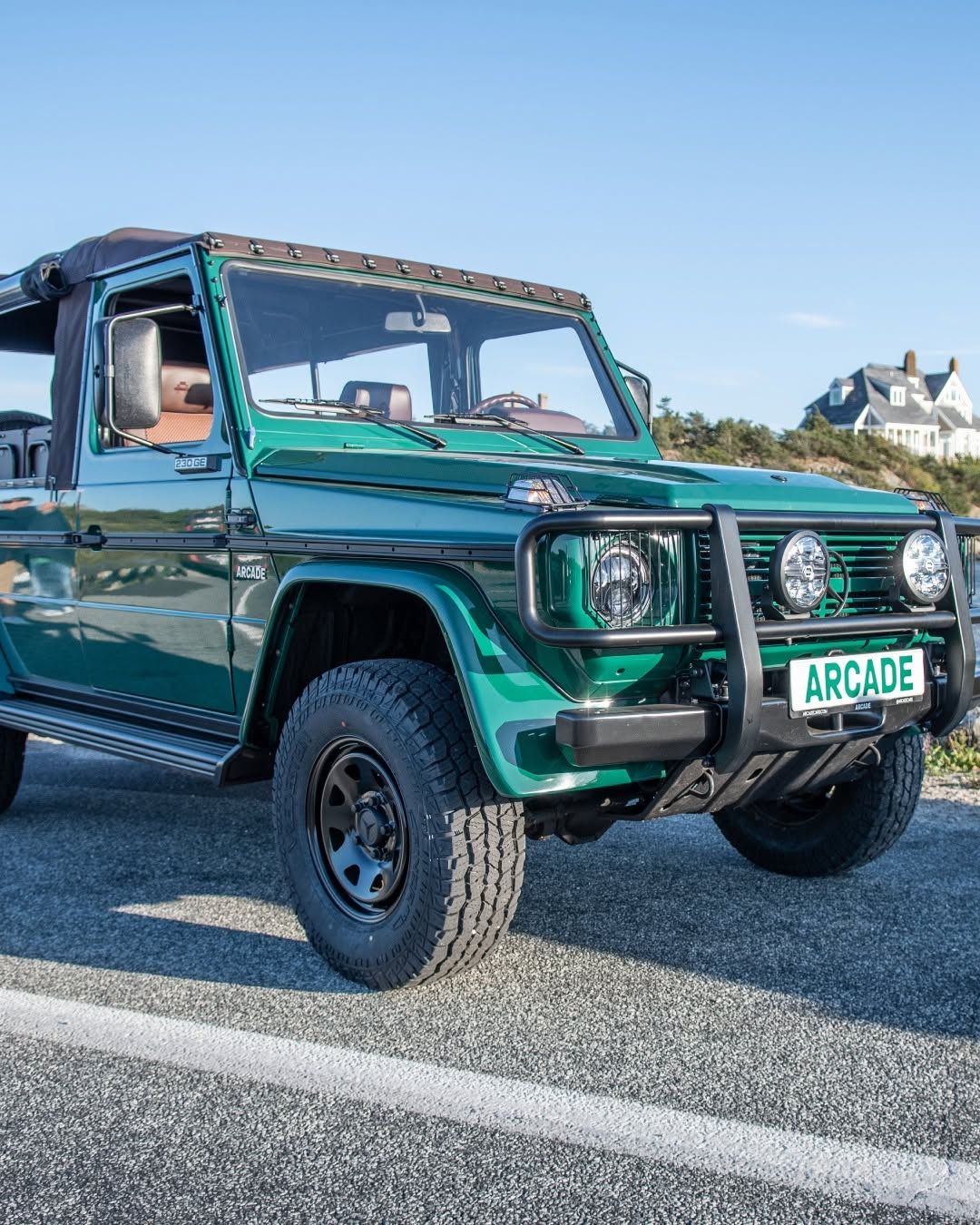
        Classic green Mercedes G-Class equipped with Vredestein Pinza AT tires, photographed by Arcade, blending urban luxury with off-road style appeal.
        Vredestein Pinza AT on a restored Mercedes G-Class by Arcade — a perfect fit for drivers who value comfort and aesthetics as much as capability.

        The Vredestein Pinza AT doesn’t look as aggressive as most A/Ts, but that’s what makes it so good for daily use. It feels more like a road tire that just happens to have off-road traction when you need it. Steering is light, the ride is smooth, and the tread hum is barely noticeable at highway speed. You can tell it was tuned for comfort first because it soaks up bumps better than anything else in this class.

        Vredestein Pinza AT

        Vredestein Pinza AT tire
        Tested Rating: 8.7/10

        Trusted Retailers with Best Deals:

        Tire Rack
        Free road-hazard coverage Backed by Discount Tire
        Amazon
        Prime shipping Direct from brands

        Even with that soft road feel, the Pinza AT backs it up with solid numbers. It stopped from 60 mph in 131 feet and held 0.70 g in corners on dry pavement, which keeps it in the same zone as the KO3 and Recon Grappler. Wet braking was a standout at 138 feet with 0.66 g cornering, giving it a confidence most A/Ts can’t match in the rain. It’s the quiet achiever of the group — stable, easy to drive, and more forgiving than most when you’re not on perfect asphalt.

        Winter traction is another surprise. The 3PMSF compound makes it one of the best snow performers here, stopping in 68 feet, which nearly matches the Falken Wildpeak AT4W. Comfort and noise lead the pack too, both around 7/10, which is rare for an A/T this capable. Treadwear sits just behind the Toyo A/T III, holding shape well but wearing a touch faster if run on heavier diesel trucks.

        Best Use Cases

        • Drivers who want quiet, comfortable highway manners with light off-road ability

        • Snowbelt owners needing true winter traction without switching to dedicated tires

        • Anyone choosing comfort and control over extreme off-road toughness

        Nitto Terra Grappler G3 – On-Road Stability

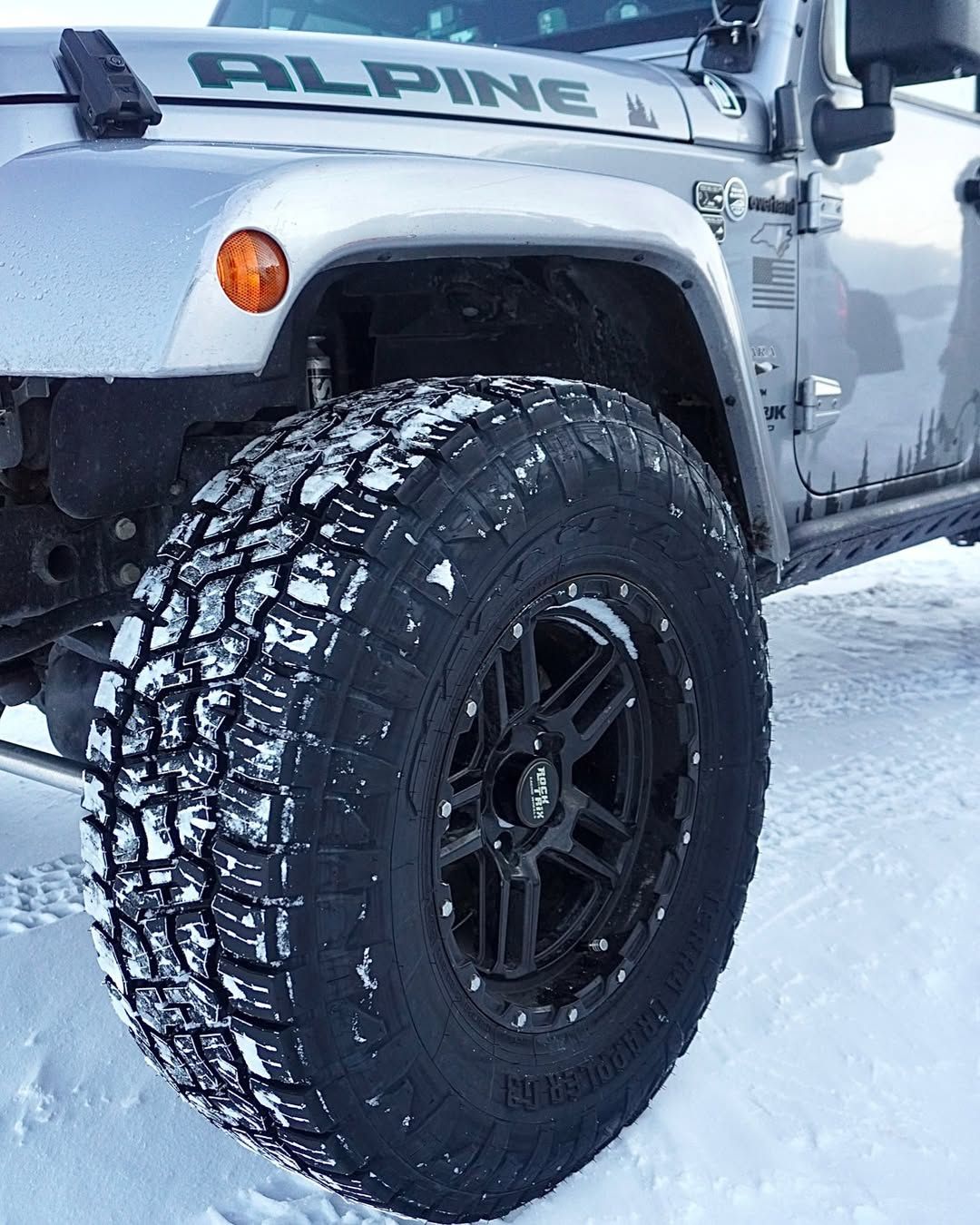
        Jeep Wrangler equipped with Nitto Terra Grappler G3 all-terrain tires on snowy terrain, showing tread pattern designed for balanced winter grip and daily driving comfort.
        Nitto Terra Grappler G3 tires on a Jeep Wrangler in winter conditions — blending dependable snow traction with highway quietness and everyday comfort.

        The Nitto Terra Grappler G3 is one of those tires that doesn’t try too hard to look tough but ends up being one of the easiest to live with. It feels planted and smooth, with steering that stays neutral even when you’re towing or loaded up. On dry pavement, it grips confidently and doesn’t roll on the shoulders when cornering. The casing feels softer than something like a KO3 or Recon Grappler, which makes it more forgiving on daily drives.

        Nitto Terra Grappler G3

        Nitto Terra Grappler G3 tire
        Tested Rating: 8.6/10

        Trusted Retailers with Best Deals:

        Tire Rack
        Free road-hazard coverage Backed by Discount Tire
        SimpleTire
        Financing options Local installers
        Amazon
        Prime shipping Direct from brands

        The numbers back that up. The Terra Grappler G3 stopped from 60 mph in 129 feet and pulled 0.73 g through dry corners, making it one of the best road handlers of the group. In the wet, it stopped in 145 feet with 0.67 g, holding its line cleanly without that nervous slip some A/Ts show when the road gets slick. That smooth feel comes from the lighter two-ply casing and balanced tread design. It trades a bit of off-road bite for a stable, calm feel that makes long highway drives easier.

        Comfort is where it really shines. The ride is supple and quiet, sitting near the top with a 7.00 comfort and 6.50 noise score. It soaks up cracks and joints without harsh rebound, and the hum fades quickly once you’re at speed. Snow performance is decent at 78 feet, so it’ll get you through light winter conditions, but it’s more at home on asphalt than deep snow. Treadwear is another strong suit — it wears evenly, doesn’t cup, and stays stable past midlife, which makes it a solid long-term choice for highway-driven trucks and SUVs.

        Best Use Cases

        • Daily drivers who prioritize smooth ride and quiet highway manners

        • Light trucks and SUVs that see mostly pavement and mild gravel

        • Drivers who want long tread life without the weight or stiffness of heavy-duty A/Ts

        General Grabber A/TX – Off-Road Confidence

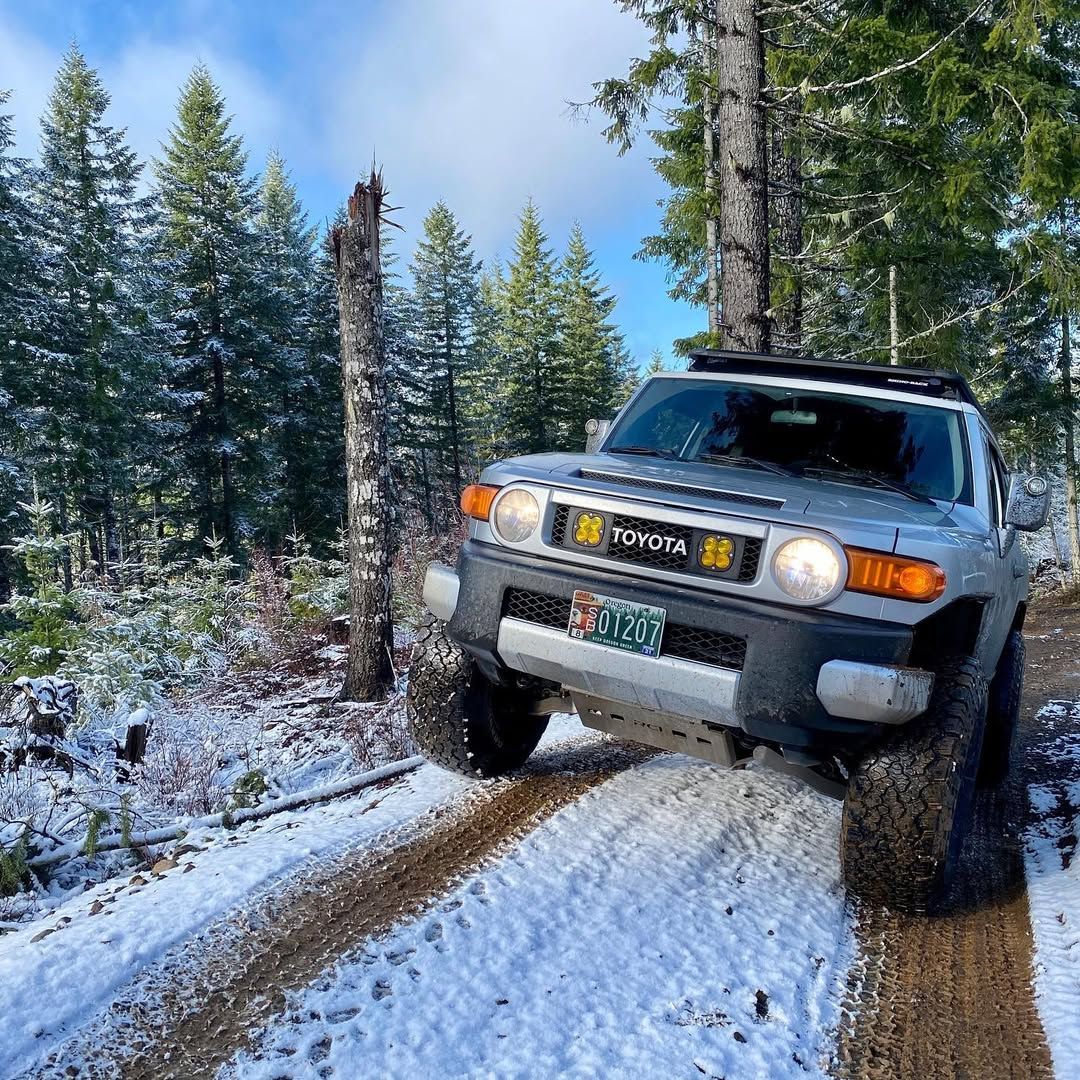
        Toyota FJ Cruiser running General Grabber A/TX all-terrain tires in Tillamook State Forest, Oregon, driving through snow-covered off-road terrain.
        General Grabber A/TX on a Toyota FJ Cruiser in Tillamook State Forest — photo by @lloyd.entcom. The Grabber A/TX shows why it’s one of the most balanced 3PMSF-rated all-terrains for drivers who split time between snow trails and highway miles.

        The General Grabber A/TX feels like a tire made for people who actually leave the pavement. You notice it the first time you air down — the sidewalls flex just right and the tread digs in instead of smearing over rocks. On pavement, it’s not twitchy or overly stiff. It just feels sure-footed and solid, which makes sense given how much structure it has under the tread. It’s the kind of tire that gives you confidence to take a rough shortcut home without thinking twice.

        General Grabber ATX

        General Grabber ATX tire
        Tested Rating: 8.3/10

        Trusted Retailers with Best Deals:

        Tire Rack
        Free road-hazard coverage Backed by Discount Tire
        SimpleTire
        Financing options Local installers
        Amazon
        Prime shipping Direct from brands

        Testing showed the Grabber A/TX stopping from 60 mph in 132 feet and holding 0.71 g in corners on dry pavement. Wet braking stretched to 149 feet with 0.66 g, so it’s a touch slower to stop than softer compounds like the Toyo A/T III, but it keeps traction steady instead of letting go suddenly. The three-ply casing keeps it composed with weight in the bed, and the aggressive shoulder lugs give it bite on loose dirt. You can tell it’s tuned more for traction than silence, and that tradeoff works if you actually use your truck off-road.

        Noise and comfort are right in the middle for an A/T of this size. The ride has some firmness, but it doesn’t beat you up, and the tread hum stays low once you’re moving. The 3PMSF rating gives it real winter credibility, with 69-foot snow stops and strong grip on packed or slushy surfaces. Treadwear holds up well too, especially on half-ton and three-quarter-ton trucks where it wears evenly across the shoulders.

        Best Use Cases

        • Drivers who mix gravel, dirt, and pavement in the same week

        • Overlanders and light off-roaders who value traction and sidewall strength

        • Anyone wanting winter-rated all-terrain performance with dependable tread life

        Mickey Thompson Baja Boss A/T – Aggressive All-Terrain for Overlanders

        Ford Bronco equipped with Mickey Thompson Baja Boss A/T tires climbing a rocky trail under clear skies, showing aggressive tread pattern and sidewall flex.
        Mickey Thompson Baja Boss A/T on Ford Bronco, showing impressive articulation and grip on rocky terrain — a tire built for both trail dominance and daily drivability.

        The Mickey Thompson Baja Boss A/T walks that fine line between an all-terrain and a mud-terrain. It feels more planted than it looks, and you notice that on the first drive. The sidewalls are thick, and the tire flexes smoothly without feeling loose. On dirt and rock, it hooks up strong and doesn’t give up grip easily. It’s loud compared to the mild-mannered options like the Vredestein Pinza AT, but for overlanders or off-road travelers, the extra bite is worth the hum.

        Mickey Thompson Baja Boss A/T

        Mickey Thompson Baja Boss A/T tire
        Tested Rating: 8.1/10

        Trusted Retailers with Best Deals:

        Tire Rack
        Free road-hazard coverage Backed by Discount Tire
        SimpleTire
        Financing options Local installers
        Amazon
        Prime shipping Direct from brands

        On the track, the Baja Boss A/T stopped from 60 mph in 131 feet and held 0.71 g in dry cornering, so it’s stable even with the aggressive tread. In the wet, it stretched to 147 feet with 0.66 g, but it keeps steering control rather than washing out. You can tell the compound is softer and meant for mixed surfaces. It’s one of the few tires that feels confident both aired down and fully inflated, which makes it great for trucks that bounce between asphalt and trail.

        Ride comfort is firmer than average, and noise sits around a 6/10, though the tone is low and steady instead of sharp. Snow braking came in at 72 feet, showing that the 3PMSF rating is more than just a stamp. It grips well on packed snow and slush, especially for something this aggressive. Treadwear is another surprise — it’s holding up better than expected, with minimal chunking and even wear even after extended rocky use.

        Best Use Cases

        • Overlanders and weekend off-roaders needing traction-first performance

        • Drivers who want true off-road bite but still daily their trucks

        • Anyone balancing rugged terrain use with year-round road stability

        Goodyear Wrangler Duratrac RT – New-Gen Hybrid Grip

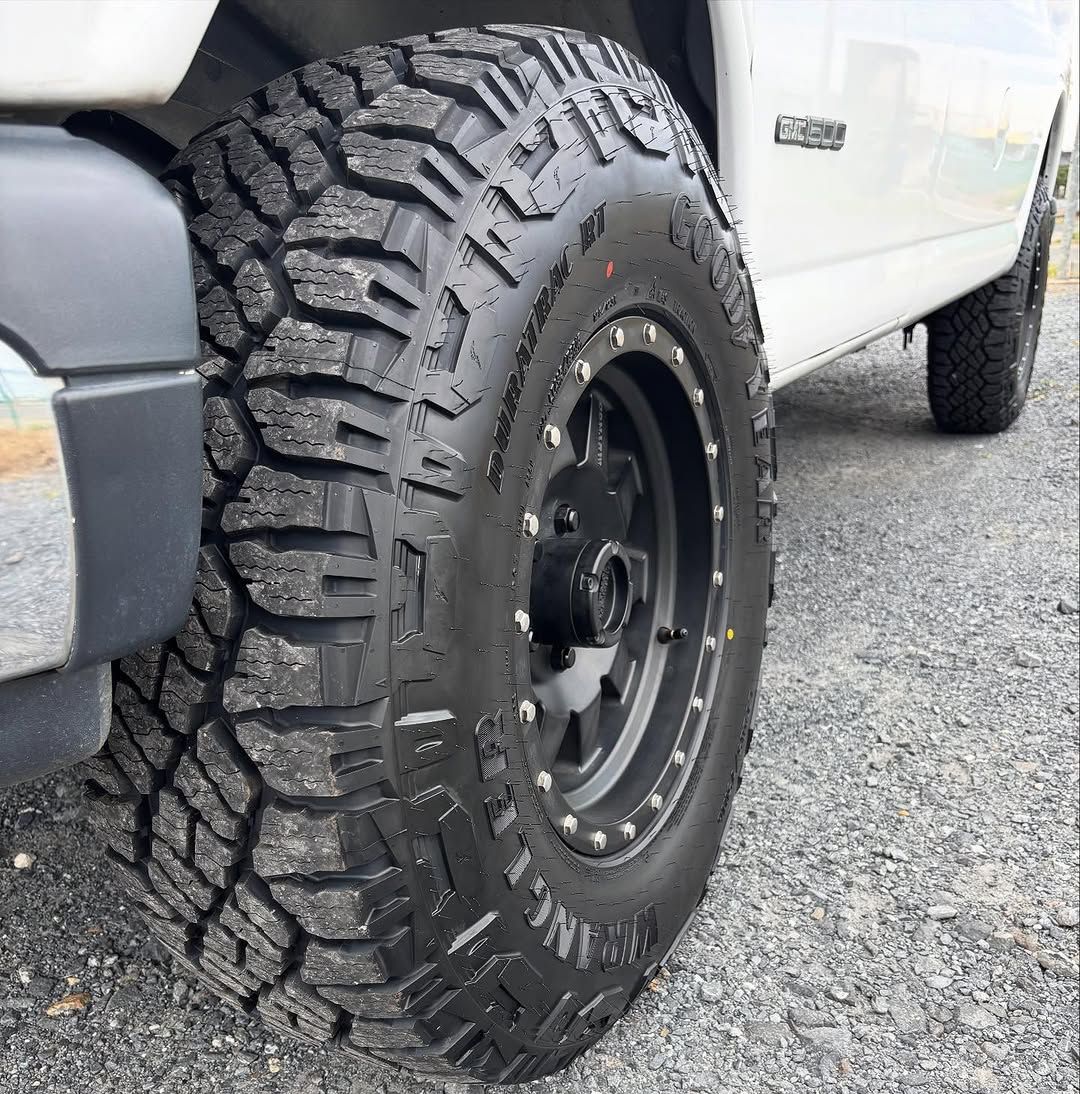
        Close-up of Goodyear Wrangler Duratrac RT tire on a GMC Sierra, showing aggressive tread and sidewall design built for all-terrain performance and winter traction.
        Goodyear Wrangler Duratrac RT mounted on a GMC Sierra — blending on-road refinement with deep off-road capability and 3PMSF-rated winter traction.

        The Goodyear Wrangler Duratrac RT feels like a proper update to one of the most popular all-terrain tires ever made. It’s got the same deep tread and aggressive shoulders that made the original Duratrac famous, but it behaves much better on pavement. The steering is steadier, and the road feel is cleaner. You can tell Goodyear stiffened the sidewalls because it doesn’t squirm or feel vague when cornering. It’s still aggressive, but now it’s a lot more predictable.


        Goodyear Wrangler Duratrac RT

        Goodyear Wrangler Duratrac RT tire
        Tested Rating: 8.2/10

        Trusted Retailers with Best Deals:

        Tire Rack
        Free road-hazard coverage Backed by Discount Tire
        SimpleTire
        Financing options Local installers
        Amazon
        Prime shipping Direct from brands

        On the numbers, the Duratrac RT stopped from 60 mph in 133 feet and pulled 0.71 g through dry corners, showing that it’s planted even with the blocky tread. In the wet, it needed 146 feet to stop and held 0.66 g, which keeps it in line with the AT4W and Baja Boss A/T. Where it really stands out is winter use. The 3PMSF compound and deep sipes gave it 68-foot snow stops, one of the best among hybrid designs. The tread clears slush and snow fast, and it grips without the slipping or chatter you’d expect from something this tough.

        Comfort sits at 6.25, with a firmer ride than soft A/Ts like the Pinza AT, but it stays composed on the highway. The hum is steady and low, more of a background tone than a drone. Treadwear looks solid too, with the harder rubber holding up well even on loaded diesel trucks. It’s not the smoothest, but it’s a solid trade if you need year-round bite without jumping to a full mud-terrain.

        Best Use Cases

        • Overlanders or tradesmen who need traction and towing grip year-round

        • Drivers replacing older Duratrac models who want better on-road control

        • Anyone balancing snow, dirt, and highway use in one tire

        Conclusion

        Every tire here fits a different kind of driver, which is what makes this segment so interesting. The BFGoodrich KO3 still feels like the benchmark for durability and balance, while the Falken Wildpeak AT4W wins for year-round traction and load stability. The Toyo Open Country A/T III and Vredestein Pinza AT lead the road-focused side with smooth handling and solid wet control. On the other end, the Nitto Recon Grappler A/T and Cooper Discoverer AT3 XLT bring firm, confident steering for heavy rigs, while the Mickey Thompson Baja Boss A/T and Goodyear Wrangler Duratrac RT lean into traction-first performance for drivers who actually get their trucks dirty.

        In the end, it’s about where your truck really lives. For mostly pavement, the Pinza AT or A/T III will keep things quiet and efficient. For towing or mixed use, the KO3 or AT3 XLT are hard to beat. And if you’re logging serious trail miles, the AT4W, Baja Boss A/T, or Duratrac RT will give you the kind of grip and confidence that feels right when the road disappears.

        FAQ – All-Terrain Tire Questions Answered

        1. What’s the best tire size for daily driving and weekend off-roading?

        For most trucks and SUVs, 33x12.5 or its metric equivalent (285/70R17) hits the sweet spot. It fits stock setups on many rigs and keeps ride comfort close to factory. If you’re running heavier setups or towing often, a 35x12.5 gives more ground clearance but usually adds weight and rolling resistance.

        2. Do all all-terrain tires perform well in snow?

        Not all of them. Only models with the 3PMSF symbol (like the Falken AT4W, Toyo A/T III, or Vredestein Pinza AT) are true winter-rated. Others, such as the Nitto Recon Grappler A/T, handle light snow fine but struggle in deep or icy conditions. For real snow traction, that mountain-snowflake mark is a must.

        3. Are all-terrain tires noisy on the highway?

        Most modern A/Ts have come a long way. Tires like the Vredestein Pinza AT and Toyo Open Country A/T III stay quiet even at speed. Aggressive models like the Mickey Thompson Baja Boss A/T or Duratrac RT will hum more, but the tone is low and steady instead of a harsh drone. Keeping them rotated helps control uneven noise as they wear.

        4. What’s the difference between Load Range E and SL for A/T tires?

        Load Range E tires are built for trucks that tow or haul heavy loads — they’ve got stiffer sidewalls and can handle higher air pressures. SL (Standard Load) or XL (Extra Load) tires ride softer and are perfect for daily drivers or lighter trucks. Choosing the right load range affects both comfort and tread life, so it’s worth matching it to how you use your rig.

        5. How long do all-terrain tires usually last?

        Most A/Ts last between 50,000 and 65,000 miles if rotated regularly and kept at proper pressure. The BFGoodrich KO3, Nitto Terra Grappler G3, and Nitto Recon Grappler A/T are among the longest-lasting in this group, while softer compounds like the Baja Boss A/T trade a little life for traction. Harder compounds run cooler and last longer on highway use.

        6. Can I mix different all-terrain tires on the same truck?

        It’s not recommended. Mixing tread designs or brands can throw off balance and traction, especially in wet or off-road conditions. Even if they’re the same size, different lug shapes and compounds behave differently. Always run four of the same tire if you want predictable grip and wear.

        7. Which all-terrain tire gives the best fuel economy?

        The Vredestein Pinza AT and Toyo Open Country A/T III are the most efficient in this group. Both have lighter casings and less rolling resistance, which saves about 1–1.5 mpg over heavy-duty models like the KO3 or Duratrac RT. Keeping pressures right and alignment tight does even more than the tire choice itself.

        Filed Under: All Terrain Tires, Buyer's Guide to the Best Tires, High-End Tires by Category Tagged With: Best Tires, by Category

        Michelin Defender LTX M/S Review

        Updated: November 11, 2025 by Emrecan Gurkan Leave a Comment

        Michelin Defender LTX M/S is a highway all-season tire that has a wide product range. This tire can be used on SUVs, commercial vans, sport utility vehicles, and any light truck. Due to its longevity and durability, it can be ever used on heavy-duty 3/4 ton or above pickups. Even though it’s an all-season tire, due to its high durability, it can even handle some off-road. Yet, knowing its limit is highly vital to get maximum performance from it. I pushed the limits a bit. Let’s dig into it and see what it’s capable of.

        Michelin Defender LTX M/S has a rib + lug type pattern that enables off-road performance
        Michelin Defender LTX M/S
        Best forLongevity,
        cozy and quiet ride,
        heavy-duty light trucks,
        mostly highway-oriented commercial usage,
        mild off-road-like dirt & gravel
        CategoryHighway All-Season
        VehicleSUV/Light Truck
        Weight24 – 58 lbs
        Made InUnited States
        Warranty (P-metric)70,000 Miles (50,000 for R-speed rate)
        Available Sizes (Rim)15”, 16”, 17”, 18”, 19”, 20”, 22”
        LabelsM+S

        As a former Bridgestone engineer, from my standpoint, Michelin Defender LTX M/S has unique traction on wet and dry surfaces. Moreover, its light snow capability is highly acceptable and it can handle icy surfaces as well. The long-lasting tread is its main feature. Furthermore, surprisingly, it can handle mild off-road very well. However, Michelin Defender LTX M/S has a bit stiff ride and makes some noise after half of its tread. Though worth reminding, its loose ground performance is limited to a couple of inches.

        Table of Contents

        Dry Performance

        Traction, steering response, or cornering stability. No matter what feature are we talking about, Michelin Defender LTX M/S’s performance is unquestionable. In my point of view, its design is superior in its category.

        For a better understanding, I’m going to separate dry performance from the above features and explain them one by one.

        Dry Traction

        Even though it’s a narrow tire, due to its exceedingly siped rubber, it can provide tons of traction on the dry ground.

        Well, it’s obvious that Michelin put hauling and towing into consideration at the design stage of this tire. Its compound is stiff, though, its block-type shoulders and sectional ribs provide the necessary void area for a perfect traction ability.

        Michelin Defender LTX M/S has an alpha plus dry traction capability.

        Steering Response

        Rib-type pattern tires have a quicker steering response

        Due to its narrow tread and robust center rib and shoulders, Michelin Defender LTX M/S provides an extremely quick steering response. Since the tire is available in high-profile sizes, its balance is overperforming most of its competitors.

        Michelin Defender LTX M/S is a highly communitive tire. Well, that’s what it’s built for!

        Cornering Stability

        According to my research, the tire’s internal structure contains two reinforced steel belts. Well, when you combine it with a symmetrical pattern and reinforced sidewalls(they’re extremely stiff but flex perfectly under the heavy loads), the vehicle stands steel while cornering at high speeds.

        Michelin Defender LTX M/S provides bellyful cornering stability. I strongly recommend it if you’re an inexperienced driver.

        Wet Performance

        Open shoulder blocks increase water evacuation capability

        Unlike common knowledge, summer tires outperform all-season tires on wet pavement. In a word, all-season tires trade longevity with traction. Yet, Michelin Defender LTX M/S is an exception.

        It is more accurate to evaluate wet pavement performance as high speed and low-speed performance. While low-speed performance is related to traction ability, high-speed performance hinges on hydroplaning resistance. Well, let’s evaluate them seperatly.

        Wet Traction

        Since all-season tires have a stiff compound, their traction capability is highly limited compared to summer tires. Therefore, manufacturers use exceedingly notched rubber to increase biting edges, herewith, traction.

        At first blush, you might think Michelin Defender LTX M/S has a rib-type pattern. Well, theoretically, it’s true. Yet, these ribs are sectional, hence, this tire has a lug-type pattern.

        While its lug-type pattern enables tons of biting edges, Michelin also increases the biting edges with 3D-Wave sipes. 

        As a result, Michelin Defender LTX M/S provides unique traction on wet pavement.

        Note: While ribs have full-depth sipes, shoulder section sipes go through the half. Therefore, Michelin Defender LTX M/S’s shoulders wear evenly. So, uneven wearing isn’t an issue.

        Hydroplaning Resistance

        In the shortest, hydroplaning is the uncontrollable sliding on a wet surface. It’s caused by the water inside of the tread. When water fills the void area of the tire, if the tire has a low hydroplaning resistance, the tire loses contact with a surface, herewith, sliding occurs.

        So, hydroplaning resistance is the water evacuation capability of the tire.

        Due to its wide circumferential and lateral grooves and open shoulder slots, Michelin Defender LTX M/S has a huge hydroplaning resistance. 

        Winter Performance

        As I’ve mentioned before, due to their stiff compounds, all-season tires lack traction. Therefore, they need notches. However, these notches generally aren’t enough to provide decent traction in winter conditions.

        Well, Michelin Defender LTX M/S is an over-siped tire. Therefore, it’s a decent tire in winter. Though worth reminding, all-season tires can perform best above 7 Celcius degrees. Under this temperature, they get lost traction.

        Michelin Defender LTX M/S isn’t marked with 3PMSF. That means it’s not capable to perform in severe winter conditions. Well, I don’t agree with them!

        Light-Snow Traction

        Light-snow traction is related to the same features as wet traction. Yet, a compound of the tire gets stiffer in winter conditions. So, traction capability decreases.

        However, Michelin Defender LTX M/S is unusual. Michelin uses ‘Evergreen Compound’ for this tire. The most interesting feature of this compound is it doesn’t get too stiff in winter conditions. Well, I have to admit that, its light snow traction capability stays slightly behind compared to wet traction. Yet, this is an exceptional performance for a tire that doesn’t have a 3PMSF.

        Michelin Defender LTX M/S has superior light snow traction. I strongly recommend it.

        Deep Snow Traction

        I haven’t tried this tire on deep snow. Yet, I read tons of positive comments about its deep snow traction. Well, in my point of view, it was not possible. So, I made deep research.

        Since the tire can clean itself and have a relatively deep tread, it can handle deep snow. In that case, I still recommend taking it easy and limiting the snow depth to a maximum of 8 inches.

        Here is a video for a better understanding.

        Ice Traction

        So, the tire has a bit stiff compound. However, its compact tread(less void area) bring some advantage. Since the ice performance needs compact tread, Michelin Defender LTX M/S is one of the best ice tires in its segment.

        Though worth reminding, this segment has highly limited ice performance. Hence, it’s above average but not a perfect tire for ice.

        You may watch the below video and see the slight sliding from time to time. Well, this amount of sliding is highly acceptable for me. The decision is yours.

        Riding Comfort

        The riding comfort of this tire may vary from user to user. 

        I have to admit that, the tire compound is stiff and its sidewalls are tough as hell. So, its ride seems stiff if you’re going to change from touring all-season tires.

        For its segment, its riding quality is an alpha plus. Though worth reminding, these aren’t touring tires. If you compare its ride quality with touring tires, you’ll be disappointed.

        I recommend Michelin Defender LTX M/S for light or heavy-duty work trucks and SUVs if you only do hauling or towing.

        Note: Michelin Defender LTX M/S isn’t a touring tire. If the cozy ride is your priority, you may check this article out –> https://tireterrain.com/michelin-primacy-tour-a-s-review/

        Road Noise

        Due to its narrow tread and limited void area, Michelin Defender LTX M/S is a quiet tire at the beginning of its tread life. However, after half of its tread life, noise slightly increases. Well, this is caused by deep and wide sipes and it’s a bearable noise.

        Michelin Defender LTX M/S is a quiet tire. Yet, it’s getting noisier when the weather gets cold.

        Mileage

        Tread life is where this tire shines.

        Its strong advanced compound has an extremely high cut&chipping resistance. Hence, no matter how tough your surface is it doesn’t wear quickly.

        Moreover, its symmetrical pattern design enables even wearing. So, if you follow the rotation time closely, I’m pretty sure that you can get 100,000 miles with this tire.

        Getting maximum wear life from a tire is related to you as well as your tire,

        If you’d like to learn how to get maximum tread life:

        https://tireterrain.com/how-to-make-tires-last-longer/

        Warranty

        Michelin implements two different warranties for this tire.

        T&H Speed Rating: 6 years and 70,000 miles wear life warranty

        R Speed rating: 6 years and 50,000 miles wear life warranty

        Note: If your front and rear sizes are different, warranty mileage drops the half.

        Manufacturer Special Warranty: 60 days of satisfaction and 3 years of free flat tire change assistance ( pay for the tire but change and towing are free)

        For detailed information,

        Michelin Warranty Brochure: https://www.tirerack.com/images/pdf/warranty/MI0619.pdf

        Off-Road Performance

        I guess people misunderstood the design goal of this tire. In fact, this tire doesn’t build for off-road. It’s capable for some off-road only for the working trucks. So, I can confidently say that if you’ll use this tire for rock crawling and damage the sidewall, the warranty will not cover your loss.

        However, due to its strong sidewalls, it has the capability to handle mild off-road.

        Dirt&Gravel Traction

        Due to its durability, Defender LTX M/S can handle mild off-road with ease

        So, dirt and gravel are the only surfaces this tire performs perfectly.

        Due to its open sloth shoulders and sectional ribs, it can handle dirt and gravel with ease. Moreover, its extremely strong sidewalls don’t take any damage from sharp rocks or something.

        I strongly recommend Michelin Defender LTX M/S for mild, occasional off-road.

        Sand

        Even though it’s a narrow tire, due to its blocky pattern, it can handle sand. Well, at least, it doesn’t dig deep and stuck into the sand.

        This isn’t a beach driving tire but it’ll handle occasional sand. This tire doesn’t design for air-down driving.

        Mud

        It can evacuate the mud but if only mud’s not too deep. This isn’t a tire for adventure.

        Rock Crawling

        Its tough sidewall might make you think it’s a good tire for rock crawling. Well, it’s right but for a very short time.

        The tire heats up so quickly when using it at low PSI. So, you may fail the bead if you expend driving time.

        I don’t recommend this tire for a rock crawling.

        Sizes

        15”16”17”18”19”20”22”
        205/65R15 99T XL BSW215/55R16 97H XL BSW215/50R17 95H XL BSW235/55R18 100T SL BSW235/45R19 95H SL BSW235/55R20 102H SL BSW275/50R22 111H SL BSW
        215/75R15 100T SL OWL215/70R16 100H SL BSW225/55R17 101H XL BSW235/60R18 107H XL BSW235/55R19 105H XL BSW245/60R20 107H SL BSW285/45R22 114H XL BSW
        235/75R15 109T XL OWLLT 215/85R16 115/112R E BSW225/65R17 102H SL BSW235/65R18 106T SL BSW245/55R19 103H SL BSW255/50R20 109H XL BSW285/45R22 110H SL BSW
        LT 31X10.50R15 109R C OWLLT 225/75R16 115/112R E BSWLT 225/75R17 116/113R E BSW245/60R18 105H SL BSW255/50R19 107H XL BSW255/55R20 110H XL BSW305/40R22 114H XL BSW
        235/70R16 109T XL OWL235/65R17 104T SL BSW255/55R18 109H XL BSW255/60R19 109H SL BSW265/50R20 107T SL BSW
        235/75R16 112T XL OWL235/70R17 109T XL BSW255/65R18 111T SL BSWLT 265/60R20 121/118R E BSW
        LT 235/85R16 120/116R E BSW235/75R17 109T SL BSWLT 255/65R18 120/117R E BSW275/55R20 113T SL BSW
        245/70R16 107T SL OWL245/65R17 107T SL BSW265/60R18 110T SL BSW275/60R20 115T SL BSW
        245/75R16 111T SL BSWLT 245/70R17 119/116R E BSW265/65R18 114T SL BSWLT 275/65R20 126/123R E BSW
        LT 245/75R16 120/116R E BSWLT 245/75R17 121/118R E BSW265/70R18 116T SL BSW285/50R20 116H XL BSW
        255/65R16 109T SL OWL255/65R17 110T SL BSWLT 265/70R18 124/121R E BSWLT 285/60R20 125/122R E BSW
        255/70R16 111T SL OWL255/70R17 112T SL BSW275/60R18 113H SL BSWLT 285/65R20 127/124R E BSW
        265/70R16 112T SL OWL265/65R17 112T SL BSW275/65R18 116T SL BSWLT 295/60R20 126/123R E BSW
        265/75R16 116T SL OWL265/70R17 115T SL OWLLT 275/65R18 123/120R E BSWLT 295/65R20 129/126R E BSW
        LT 265/75R16 123/120R E OWLLT 265/70R17 121/118R E OWLLT 275/70R18 125/122R E BSW305/50R20 116H SL BSW
        275/70R16 114H SL BSWLT 285/70R17 121/118R E BSW285/60R18 120H XL BSWLT 35X12.50R20 121R E BSW
        LT 285/75R16 126/123R E BSWLT 295/70R17 121/118R E BSWLT 285/65R18 125/122R E BSW
        LT 295/70R18 129/126R E BSW

        Most tire sizes begin with modifier letters(P, LT, etc.) that identify the type of vehicle or type of service for which they were designed. Here is a perfect guide for reading tire size –> https://tireterrain.com/how-to-read-tire-size/

        • If you’re an SUV owner and Michelin lover, I highly recommend checking the ‘Best Michelin Tires for SUV‘ out. You can find masterpiece suggestions that are classified by needs.
        • If Michelin tires are too expensive for you, I highly recommend checking the ‘Michelin vs Bridgestone‘ out. You can find affordable options

        Size Selection

        Before we dive into selecting the right tire size, it’s essential to understand the tire standards that manufacturers follow.

        Technical Standards & Regulations

        In Europe, the tire standardizing organization is called ETRTO. In the United States, it’s The Tire and Rim Association (TRA), while in Japan, it’s the Japanese Automobile Tire Manufacturers Association (JATMA). Although there may be other organizations, they generally align with one of these three.

        When it comes to passenger car tires, TRA designates them by placing the letter “P” in front of the size to indicate conformity to the TRA standard. On the other hand, ETRTO and JATMA do not use any letters, which can sometimes be confusing when determining which standard is being used.

        For light truck tires, TRA uses the letters “LT” in front of the tire size, while JATMA places the letters “LT” after the size. ETRTO, however, uses the letter “C” after the size to indicate tires of this type.

        In the realm of medium truck tires, ETRTO uses the letter “C” after the size to designate tires designed according to their standard. In contrast, TRA and JATMA do not use any letters in this context.

        Now, here’s what’s essential: Tires with the same dimensions (size) may have different maximum load capacities depending on the standard being followed. So, it’s crucial to consider the relevant standard when choosing tires.

        When it comes to load capacity designations, “SL” (Standard Load) and “XL” (Extra Load) are used for all passenger car tires, regardless of which standard is being followed. In the ETRTO standard, “Reinforced” is also used as an alternative to “XL.”

        Load Range, on the other hand, is specific to TRA. ETRTO and JATMA use the term “Load Index.” While TRA references Load Indexes, it’s important to note that the values provided are approximate.

        To sum it up, understanding the tire standards and designations is vital as they play a significant role in determining the right tire size and load capacity. By considering the appropriate standards, you can make an informed decision when selecting tires that meet your vehicle’s requirements.

        Here are two great articles if you wanna dive deeper:

        Load Range vs Load Index: https://www.discounttire.com/learn/load-range-load-index

        Tire Sizing System: https://www.discounttire.com/learn/euro-vs-pmetric-tires

        How to Select the Right Tire Size Based on Your Requirements?

        When it comes to selecting tire sizes for your vehicle, it’s important to keep in mind that most vehicles offer more than one original equipment size. Let’s take the 2019 Ford F-150 Lariat Crew Cab 4WD as an example. You have three different tire size options: 275/55R20 SL, 275/65R18 Load Range C, or 275/65R18 SL.

        Note: I use Toyo Open Country AT3 for an example tire. You can use this link to see tire options for your vehicle and then make a comparison between the sizes:
        https://www.discounttire.com/fitment/vehicle

        If you don’t know your tire size: https://tireterrain.com/find-tires-by-vin-number/

        Let’s focus on comparing the 275/65R18 SL and 275/65R18 Load Range C options for a more detailed comparison. Your decision should be based on your priorities. If you prioritize a smooth ride and better handling, the SL option is the way to go. On the other hand, if you value hauling or towing performance and tire longevity, the Load Range C option would be a better fit.

        As a tire engineer, my perspective often revolves around load-carrying capacity. Generally, tires with higher load capabilities tend to provide a stiffer ride. However, there’s a bit of an illusion to consider. When you compare the two tires in the same size, the SL-rated tire may initially appear to have a higher load capability. But here’s the catch: P metric tires, like the SL option, need to be derated by a factor of 1.1 when used on a truck. Crunching the numbers reveals that the SL option actually has a lower maximum load capability. Additionally, it boasts a lower tread depth, which translates to better responsiveness.

        The same principles I mentioned earlier also apply when comparing XL and E Load range tires. In summary, if your vehicle allows for Passenger Car or LT (Light Truck) tires, going with a passenger option will provide you with better on-road manners. However, if you find yourself venturing off-road frequently, own a working truck, or regularly engage in towing and hauling heavy loads, then LT tires are generally the better choice for your needs.

        Couple of tips for towing;

        • Even though the load index of passenger car tires fits, when it comes to towing, sidewall stability is the issue. Hence, LT tires with Load Range C, D, or E provide better stability. 
        • Generally, a load index higher than 119 is recommended for towing
        • Proper loading is important for even wearing. 60/40 rule should be followed. 60% of the weight should be on the front axle and 40%of weight should be applied rear axle of the trailer. Besides that, try to center load. Start with heavier ones if you gonna stack them up.

        To wrap it up, selecting the right tires comes down to choosing the ones that align with your driving preferences and specific requirements.

        Conclusion

        Michelin Defender LTX M/S is one of the best tires in its segment. However, it’s a highway all-season tire. Hence, comparing it to touring or all-terrain tires isn’t fair. This tire is a good fit for those who need longevity, durability, and solid traction on every surface but the loose ground (deep snow, sand, mud).

        Michelin Defender LTX M/S
        Best forLongevity,
        cozy and quiet ride,
        heavy-duty light trucks,
        mostly highway-oriented commercial usage,
        mild off-road-like dirt & gravel
        CategoryHighway All-Season
        VehicleSUV/Light Truck
        Weight24 – 58 lbs
        Made InUnited States
        Warranty (P-metric)70,000 Miles (50,000 for R-speed rate)
        Available Sizes (Rim)15”, 16”, 17”, 18”, 19”, 20”, 22”
        LabelsM+S

        I hope the article was helpful. If you have any further questions, you can leave them below or reach out via e-mail. Have a safe ride folks!

        Filed Under: Highway-Terrain Tires Tagged With: Michelin, Michelin Defender LTX M/S, Review

        Kenda Klever R/T Tire Review — Off-Road Performance Showdown 2025

        Updated: November 11, 2025 by Emrecan Gurkan 3 Comments

        Kenda Klever R/T is the highly recommended rugged(hybrid) terrain tire. It’s designed for light trucks, SUVs, and 4×4 vehicles such as Jeeps. Due to its wide product range, Kenda Klever R/T is many people’s choice. However, not all of them are happy with its performance. In this article, I’ll explain the best uses and give some size selection tips for Kenda Klever R/T. Let’s begin!

        Its beefy sidewall works perfectly on loose grounds

        Quick Look

        Kenda Klever R/T KR60

        Kenda Klever R/T KR60 tire
        Tested Rating: 7.7/10

        Trusted Retailers with Best Deals:

        Amazon
        Prime shipping Direct from brands
        SimpleTire
        Financing options Local installers

        From my standpoint as a former Bridgestone engineer, the Kenda Klever R/T proves itself as a reliable performer on wet and dry roads, offering a cozy ride with a touch of noise. Even without a 3PMSF rating, it delivers decent winter traction in most conditions—with the exception of ice. Thanks to its 3-ply sidewalls, its off-road capability is huge, especially when it comes to rock crawling. The trade-off is in tread life, which runs a bit shorter than traditional all-terrains but still outlasts many rugged-terrain competitors.

        Note: the Kenda Klever R/T is built specifically for ¾-ton trucks and above, available only in LT sizes, so its on-road manners may feel harsher on SUVs or ½-ton pickups.

          Dry Performance

          Klever R/T is a good pick for lifted vehicles

          Dry performance can be evaluated under three different layers. While one of them is traction which is extremely easy for off-road tires. Though, the other two, cornering stability and steering response may become a complaining point of users. 

          Dry Traction

          Due to its aggressive pattern design, Kenda Klever R/T can handle dry surfaces.

          Rugged(Hybrid) terrain tires have bigger lugs, wider void areas, and relatively softer compounds compared to all-terrain tires. All of these features are implied to improve traction performance.  Innately, all rugged terrain tires have a unique dry traction capability.

          Kenda Klever R/T offers reliable traction on dry grounds.

          Cornering Stability

          Cornering stability is highly important on the highways. Since off-road tires are used by high torque and heavy vehicles, sometimes, drivers feel the floating feeling while cornering at high velocity.

          In that case, the sidewall stiffness of the tire is the game-changer. If the tire has relatively weak sidewalls, the sidewall flexes a bit more than expected while turning and that effect handling negatively.

          Since it’s only available in LT sizes, Kenda Klever R/T has a tough sidewall structure. Therefore, it has decent cornering stability.

          Steering Response

          Steering response is the challenge for off-road tires. Especially for rugged-terrain and all-terrain tires.

          Kenda Klever R/T has a heavy internal structure. Moreover, its tread has big lugs which generally means poor steering response. However, in my point of view, Kenda optimizes the contact patch perfectly for Klever R/T.

          Kenda Klever R/T has wide shoulder blocks and not perfectly but well-designed center blocks that almost work like robust tire rib(robust center rib offers better steering response). Well, still, it has an average steering response.

          Note: Due to test results(see the document in the ‘Sizes’ section), Kenda Klever R/T has almost the same steering response time as the top-notch competitors. I’d like to say average because it’s only available in LT sizes. LT tires can’t offer a quick steering response as P-Metric tires do.

          Wet Performance

          Wet performance has two different dimensions. Wet traction and hydroplaning resistance.

          Off-road tires have a questionable wet performance. While mud-terrain tires have traction issues due to their weak contact patch, all-terrain tires have some hydroplaning issues due to their poor water evacuation capability.

          Lucky, Kenda Klever R/T is a rugged-terrain tire. These tires are the best off-road tires on the wet road. Let’s talk about the reasons!

          Wet Traction

          Wet traction is related to two things. Compound stiffness and sipe density.

          Rugged(hybrid) tires have a good amount of void area on their tread. In fact, this is a huge issue for wet traction.  If the tire doesn’t have enough sipe to increase the biting area, there is no way that they provide traction on the wet grounds.

          Regarding Kenda Klever R/T, its award-winning design pays off. This tire has an acceptable amount of notches and has a soft compound that has a positive effect on traction. Hence, its wet grip ability is similar to its competitors.

          I can confidently say that you’ll never have traction issues with Kenda Klever R/T.

          However, still, the wet braking distance of off-road tires isn’t trustable. So, be careful anyway.

          Hydroplaning Resistance

          Unlike the common knowledge, mud and rugged terrain tires have a unique hydroplaning resistance. I know some people complaining about this but I guess they confuse it with dry braking distance.

          Hydroplaning resistance is related to water evacuation capability. Hence, wide grooves and open shoulder blocks always work best. 

          Due to its massive water evacuation capability, Kenda Klever R/T has decent hydroplaning resistance.

          Note from the Expert: When it comes to rain, I always emphasize two things: compound grip and water evacuation. You can see the full details in my analysis, but if you take just one thing away, remember that an AT tire’s stiff nature makes achieving top-tier wet performance a constant battle. This is why the question, Are All-Terrain Tires Good in Rain?, requires a nuanced answer that balances tread design against rubber stiffness.

          Winter Performance

          Kenda Klever R/T is a studdable tire

          Winter performance is generally misunderstood by most reviewers. The light snow, deep snow, and ice performances are related to completely different things. Evaluating them under the one title is nonsense. Moreover, it might be dangerous for other people.

          So, I’ll evaluate the winter performance of Kenda Klever R/T regarding the above conditions.

          Light-Snow Performance

          Light snow performance is similar to wet performance. The only needed extra feature is the self-cleaning capability.

          Due to its relatively fluffy compound and horizontal notches, Kenda Klever R/T offers decent light-snow traction. However, still, if you’re looking for the best light-snow traction, you might look for something with 3PMSF.

          Note: Kenda Klever R/T doesn’t have 3PMSF marking(what it is?).

          Deep-Snow Traction

          Deep snow is where Kenda Klever R/T shines. Due to its deep tread(17” to 19” depending on size), it has massive loose ground performance. Moreover, its staggered shoulder also increases the biting edges and improves loose ground traction.

          If you need deep snow traction, you may stop searching and go with Kenda Klever R/T.

          Ice Traction

          Since Kenda Klever R/T can be stud-able, its ice performance is changeable.

          Without studs,

          If you’re not going to mount studs, I don’t recommend using this tire on icy grounds. Kenda Klever R/T’s contact patch is weak and has tons of void areas. It’s not safe to drive it on ice.

          With studs,

          You may increase Kenda Klever R/T’s ice performance with a stud(TSMI #15). Studs increase its traction capability by around 10-15% which makes them a usable tire on icy grounds.

          Note from the Expert: Our discussions often boil down to the core tradeoff. On one hand, you must understand why all-terrain tires are truly effective in deep snow, but not on ice. On the other hand, you face the 3PMSF Paradox—the hidden cost of that badge. The short answer is: The 3PMSF badge certifies traction, but it costs you durability. Dive into our full analysis on the critical 3PMSF rating for severe winter and off-road service, and its hidden costs, before you risk your rig on the trail.

          Riding Quality

          Off-road tires generally offer good riding quality. In that case, the order is as follows,

          1. Mud-terrain
          2. Rugged-terrain
          3. All-terrain

          As you all realized, the ride quality is related to internal structure as well as compound stiffness. So, mud-terrain tires with a fluffy compound and internal structure that have the ability to perform on low air pressure perform best. They are followed by rugged terrain tires and all-terrain tires take the last place.

          Regarding Kenda Klever R/T, if you’re looking for a soft and smooth ride, you may look for something like Nitto Ridge Grappler. However, still, it’s a good option for above 3/4 trucks.

          Kenda Klever R/T is mainly built for 3/4 tons of above-light trucks. Therefore, its riding quality for lower-grade vehicles might be a bit stiff for some of you. In that case, I recommend the C or D load range to improve riding quality.

          Road Noise

          Compare to other successful features, it looks like road noise is where Kenda sacrificed. In my point of view, this trade pays off.

          Due to increased traction, the tires need wide grooves and stiff compounds compared to all-season tires.

          Even though its interlocked center blocks close the gap into the center section, it still makes some noise due to its aggressive pattern.

          Kenda Klever R/T can reduce the noise but it’s not the best one in that case. If you’re looking for a deaf ride, you may check the Kenda Klever AT2(review) instead.

          Note from the Expert: For years, choosing all-terrain meant accepting noise—a true compromise for off-road grip. That’s why the question, Are All-Terrain Tires Louder than Highway Tires?, used to have a simple “yes” answer. Now, with the rise of on-road models, the core issue has shifted from noise to overall refinement. To fully understand which side of the comfort spectrum you’re buying into, you need to determine Are All-Terrain Tires Good for Daily Driving?—a question that depends entirely on the tire’s construction, not just the name.

          Mileage

          The tire wear evenly

          Even though it has a softer compound compared to all-terrain tires, though, its compound is stiffer than its competitors. Moreover, its heavy-duty design is proof of its long-lasting rubber.

          Kenda especially states that Kenda Klever R/T has a massive cut&chipping resistance. According to my deep research, they’ve got a point.

          This tire is one of the most long-lasting rugged(hybrid) terrain tires on the market. However, this tread life is completely related to you. Like all off-road tires, Kenda Klever R/T tends to wear unevenly and uneven wearing is the enemy of tread life.

          I can confidently say that if you’ll pay attention to rotation time(I recommend 5,000 miles but as far as I see, people get decent wear life even with the period of 15,000 miles), you can get hight satisfying tread life.

          Getting maximum wear life from a tire is related to you as well as your tire,

          If you’d like to learn how to get maximum tread life:

          https://tireterrain.com/how-to-make-tires-last-longer/

          Warranty

          Kenda doesn’t offer any treadwear warranty for this product.

          Even though it doesn’t have a mileage warranty, Kenda covers up its product with other warranty types like uniformity.

          If you’d like to check the warranty statement: https://automotive.kendatire.com/en-us/tire-tech/warranty/

          Off-Road Performance

          Off-road performance can be divided into two. Mild and severe off-road.

          Since rugged-terrain tires place somewhere between mud and all-terrain tires, they can handle both at a certain level.

          Though, it’s completely manufacturers’ decision to decide on the strongest side of the tire. Some of them prioritize on-road manners and built a tire for mild off-road, yet, others prefer severe off-road performance.

          Luckily, Kenda prefers severe off-road performance that also contains mild usage. However, I still prefer to analyze its performance under 4 different sub-titles.

          Note from the Expert: Every successful day on the trail is about preparation and physics, because tire longevity is earned, not given. Before you even start, you must master the critical link between tire pressure and load range for every rig to maximize your contact patch. Once moving, remember your ultimate off-road armor is your sidewall protection against the inevitable pinch flat. And finally, your traction on the obstacle is dictated by choosing the right aggressive vs hybrid tread pattern for your terrain. Master those three steps, and your rig will be ready for anything.

          Dirt and Gravel Traction

          Dirt and gravel traction is the default feature for off-road tires. Dirt is the starting point of the off-road. Then the gravel comes.

          Since both are easy peasy for rugged-terrain tires, I’m going to evaluate both together.

          Regarding dirt,

          Due to its lugged-type pattern and wide grooves that can clean itself perfectly, Kenda Klever R/T provides huge dirt traction.

          Regarding gravel,

          Gravel is similar to dirt. The only difference is tires sometimes hold the rock. Hence, they lose traction capability. Kenda Klever R/T’s shoulders are the only section of its tread that might hold rocks(narrow grooves). However, Kenda solves this issue with a stone ejector placement. These ejectors throw the rock out of the tread and provide consistent traction. Moreover, its sidewalls inhold sidewall protectors which keep your sidewall safe from any kind of external damage. Unique improvement for a gravel performance.

          Sand Traction

          The best tire on the sand is the tire with a minimum lug. Therefore, people use smooth balloon tires for sand driving. However, sand driving is still possible for rugged terrain with air-down use.

          Due to its high traction capability and wide grooves, Kenda Klever R/T has a high possibility to stick you into the sand. 

          However, Kenda Klever R/T has a satisfying self-cleaning capability which is the key to decent sand performance. So, I can confidently say that it’ll handle sand with ease. However, I’m not an expert on sand driving. Therefore, I’ll leave you guys a video to decide.

          Mud Traction

          Mud traction is related to tread depth, self-cleaning, and water evacuation capability. Luckily, Kenda Klever R/T has it all.

          Due to its large volume of void area, this tire can clean itself and evacuate the water with ease. Moreover, its deep tread helps it to throw the mud out in early tread life.

          I can confidently say that Kenda Klever R/T has a trustworthy mud traction. Moreover, according to field tests, Kenda Klever R/T is leading its category. However, this category contains only hybrid tires. So, expecting mud-terrain tire performance is a bit utopic.

          Rock Crawling

          If you follow my blog, you know that I’m in love with the BF Goodrich KO2’s rock climbing performance. However, its empery ends now.

          All right guys, this tire has a phenomenal design for rock crawling. Its compound, sidewalls, flexibility… This tire is awesome for rock crawling.

          Due to its 3-ply sidewalls, cut&chipping resisted compound, durable but flexible cords, and beefy lugs on the sidewall that protect from puncturing; Kenda Klever R/T is one of the best tires for rock crawling. Strongly recommended!

          Sizes

          Kenda’s size range is limited. However, it’s available in the most popular sizes.

          Kenda has a size sheet that includes popular applications and test reports, to reach out –> https://automotive.kendatire.com/media/736114/kenda_kr601_sales-sheet-060121.pdf

          15”16”17”18”20”22”24”
          33×9.50R15LT Load Range: C Rating: 113QLT235/70R16 Load Range: C Rating: 104/101R33×10.50R17LT Load Range: E Rating: 121R33×12.50R18LT Load Range: F Rating: 122R33×12.50R20LT Load Range: F Rating: 119R33X12.50R22LT Load Range: F Rating: 114R33X12.50R24LT Load Range: F Rating: F 106Q
          35×12.50R15LT Load Range: C Rating: 113Q33×12.50R17LT Load Range: E Rating: 120R35×12.50R18LT Load Range: E Rating: 123R35×12.50R20LT Load Range: F Rating: 125R35×12.50R22LT Load Range: F Rating: 121R35×12.50R24LT Load Range: F Rating: 116Q
          35×10.50R17LT Load Range: D Rating: 121RLT265/65R18 Load Range: E Rating: 122/119R37×12.50R20LT Load Range: F Rating: 128R37×12.50R22LT Load Range: F Rating: 127Q
          35×12.50R17LT Load Range: E Rating: 121RLT275/65R18 Load Range: E Rating: 123/120RLT275/55R20 Load Range: E Rating: 120R
          37×12.50R17LT Load Range: D Rating: 124RLT275/70R18 Load Range: E Rating: 125/122RLT285/55R20 Load Range: E Rating: 122R
          LT235/80R17 Load Range: E Rating: 120/117RLT285/75R18 Load Range: E Rating: 129/126R
          LT245/75R17 Load Range: E Rating: 121/118R
          LT265/70R17 Load Range: E Rating: 121/118R
          LT285/70R17 Load Range: E Rating: 121/118R

          Most tire sizes begin with modifier letters(P, LT, etc.) that identify the type of vehicle or type of service for which they were designed. Here is a perfect guide for reading tire size –> https://tireterrain.com/how-to-read-tire-size/

          Tire Size Selection: The Basics You Can’t Skip

          Even the best tread design can’t rescue a tire that’s built too weak. Back when I was testing tires at Bridgestone, I saw all-terrain models that should’ve performed but fell short — simply because the basics (size, load strength, and speed rating) weren’t matched to the vehicle.

          P-Metric vs. LT (Light Truck) Tires

          The first step is knowing whether you need LT or passenger tires. LT (Light Truck) tires are built with extra reinforcement and stiff sidewalls, designed for towing, hauling, or off-road use. Passenger (P-metric) tires are lighter, smoother, and tuned for daily comfort and fuel efficiency — but they’ll flex more under load.

          Understanding Tire Load Range: XL vs. E-Load

          Then comes the tire load index and load range — essentially your tire’s strength rating. Here’s where things split between passenger XL and LT E:

          • XL (Extra Load) is a passenger tire with reinforced sidewalls. It can handle a bit more pressure (~41 PSI) than a standard SL tire and is perfect for SUVs, crossovers, or light trucks that carry extra gear, passengers, or small trailers. XL tires ride softer and quieter than LT options, making them ideal for daily use.

          • E Load Range is an LT tire class built with a much thicker casing. E-rated tires can handle far more pressure (up to ~80 PSI) and heavier loads, which makes them essential for ¾-ton and 1-ton trucks towing trailers or hauling close to max capacity. The trade-off is weight, stiffer ride, more road noise, and a small drop in fuel efficiency.

          Put simply: XL is for “extra luggage and family,” while E is for “truck bed full of bricks or a car trailer.”

          Why the Tire Speed Rating Matters for Safety

          Finally, don’t overlook the tire speed rating. It’s not just about top speed — it measures how well a tire handles heat and stress at highway pace. Lower ratings (like S) tend to ride softer and last longer, while higher ratings (H, T) feel more stable and responsive under sharp maneuvers. Heat build-up is the silent killer of tires, and speed rating is your safeguard.

          Bottom line: Match your tire’s construction (LT vs P-metric), load range (XL vs E), and speed rating to your vehicle’s demands. Get those right, and everything else — off-road grip, winter traction, comfort — will finally perform the way it was designed to.

          Conclusion

          Depending on your expectations, Kenda Klever R/T can be a perfect tire for your vehicle. You may see the below table to see what to expect.

          Kenda Klever R/T
          Best forReal sharp looking,
          minimal road noise,
          3/4 ton or above light truck or full-size SUV owners who are looking for flotation-size tire that works well on the highway,
          working trucks,
          severe winter conditions
          CategoryRugged Terrain Tires
          VehicleLight Truck, SUV
          Available Sizes (Rim)Check Available Sizes
          Made InDong Nai Province, Vietnam
          LabelsM+S
          Warranty (P-metric)N/A
          Warranty (LT Sizes)N/A

          I hope the article was helpful. If you have any further questions, please leave them in the below section. Have a safe ride folks!

          Filed Under: All Terrain Tires, Rugged Terrain Tires Tagged With: kenda, Kenda Klever RT, Review

          • « Go to Previous Page
          • Page 1
          • Interim pages omitted …
          • Page 12
          • Page 13
          • Page 14
          • Page 15
          • Page 16
          • Interim pages omitted …
          • Page 22
          • Go to Next Page »

          Primary Sidebar

          Find Tires

          Contact Channels

          • Email
          • Facebook
          • LinkedIn
          • Twitter

          High-End Tires by Category

          Best All-Terrain Tires

          Best Rugged-Terrain Tires

          Best Mud-Terrain Tires

          Best All-Season Tires for Snow

          Best Tires for Snow Plowing

          Best Semi-Truck Tires

          Categories

          Copyright © 2026

          • Disclaimer
          • About Me
          • Contact
          • Privacy Policy