• Skip to primary navigation
  • Skip to main content
  • Skip to primary sidebar

TireTerrain

  • Home
  • Comparisons & Reviews
  • All-Terrain Tire Decision Tool
  • Pro Tips
  • About

All Terrain Tires

Continental TerrainContact H/T Review: Still the Benchmark for Highway Comfort and Wet Grip

Updated: November 11, 2025 by Emrecan Gurkan 7 Comments

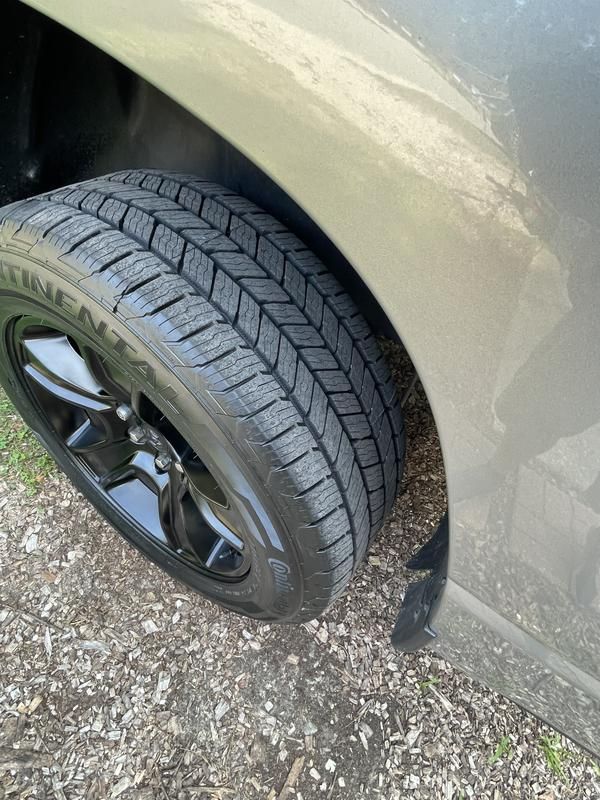
Close-up of Continental TerrainContact H/T tire on SUV, showing detailed tread design with stable center ribs for a smooth and quiet ride.
Continental TerrainContact H/T — premium highway all-season tire that balances comfort, wet grip, and long tread life for daily-driven trucks and SUVs.

The Continental TerrainContact H/T is one of my favorite highway tires since 2019. Well, at the beginning, I felt like it was a bit too squishy for me. It was perfect in rain and snow, no doubt, but when it came to loaded applications — I wasn’t sure. However, years passed, and iteration paid off. Instead of releasing a new model, Continental kept refining the same tire and made it great for almost any use. I love that approach.

Now, it’s easily one of the best in its class, and honestly, there’s not much real competition. Even the new Michelin Defender LTX M/S2 probably needs a couple of rounds of refinement to catch it. In this article, I’ll evaluate, in my point of view, the real legend — Continental TerrainContact H/T — using test data and real customer reviews to get straight to the point. Let’s begin.

Quick Look

Continental TerrainContact A/T

Continental TerrainContact A/T tread design
Tested Rating: 8.8/10

Trusted Retailers with Best Deals:

Tire Rack
Free road-hazard coverage Authorized dealer
SimpleTire
Local installers Financing options
Amazon
Prime shipping Multiple sellers

The Continental TerrainContact H/T is still the benchmark in its class. In testing, it stopped about 3% shorter on dry pavement and nearly 5% shorter in wet braking than the Michelin Defender LTX M/S2, while also holding the highest lateral grip at 0.76 g. It is one of those highway tires that feels both planted and smooth, with tight steering, steady feedback, and almost no noise even at highway speeds.

What is more impressive is it manages that performance without giving up comfort. It scored roughly 3% higher in ride quality and ran about 5% quieter than most premium options. Add in proven long-term durability, and it is easy to see why this tire still leads the segment after years on the market. The TerrainContact H/T does everything right and keeps doing it longer.

Best Use Cases

  • Trucks and SUVs mostly driven on pavement

  • Drivers who value wet braking and all-weather stability

  • Middle to mild towing conditions with stable ride under load

  • Long highway runs or mixed daily driving

    Dry Grip & Stability — Feels Firm, Confident, and Predictable

    On dry pavement, the Continental TerrainContact H/T sets the standard for how a highway tire should feel. It recorded 0.76 g in average cornering and stopped from 60 mph in 130 feet, leading the group in both stability and braking confidence. You can feel that grip through the steering; it holds a line without that soft delay you get from comfort-biased compounds.

    Compared to the Michelin Defender LTX M/S2, which stopped in 140 feet and delivered 0.75 g, the Continental feels a bit firmer and more responsive in quick maneuvers. Well, the good news is, it even has a smoother ride than the Michelin, which makes that result even more impressive. You get both precision and comfort, something most highway tires struggle to balance.

    A guy on Reddit said, “These tires make my F-150 feel like it’s on rails. No squirm, no drama, just solid grip.” Another review on Tire Rack summed it up perfectly: “Dry traction is unbelievable for a highway tire — it corners like something sportier.”

    From my point of view, this is where Continental nailed it. The TerrainContact H/T feels engineered for drivers who like a steady, locked-in steering feel. It’s firm, predictable, and stays composed no matter how much weight you’ve got in the back.

    Wet Traction & Braking — Still the Benchmark
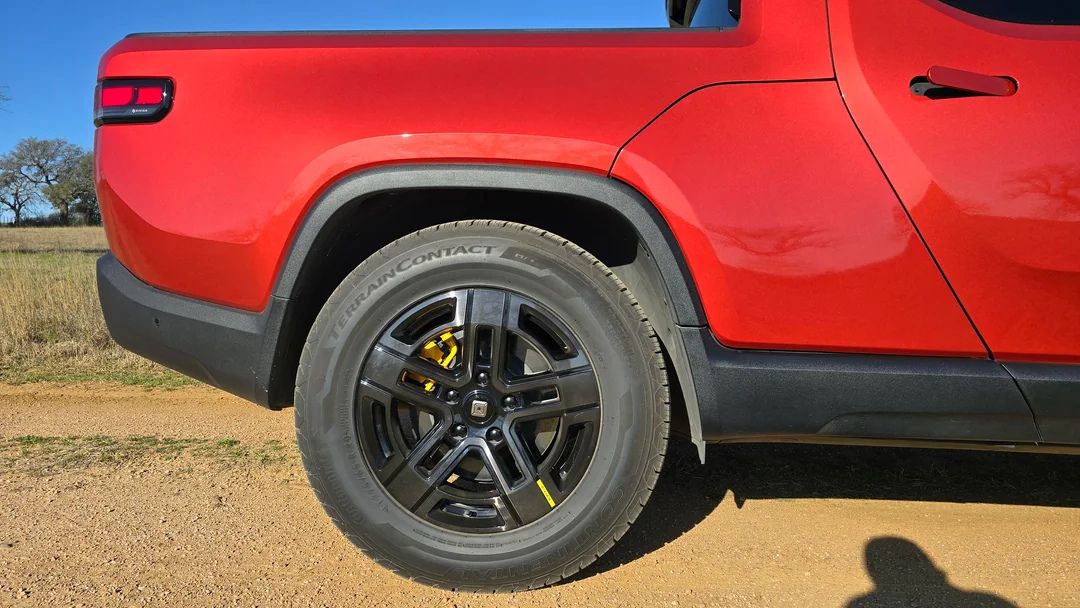
    Close-up of Continental TerrainContact H/T tire on a Rivian R1T electric pickup truck, highlighting tread design and sidewall branding.
    Continental TerrainContact H/T mounted on Rivian R1T — built for drivers who value quiet comfort, stability, and long-lasting performance on highways.

    The Continental TerrainContact H/T is one of those tires that makes driving in heavy rain feel easy. In testing, it stopped from 50 mph in 97 feet, ran a 36.02-second wet lap, and held 0.74 g of cornering grip, which is the best result in its class. That number tells a lot. The tire doesn’t just clear water — it holds traction through the turn instead of sliding out mid-corner. It’s that combination of grip and control that makes it stand out.

    Compared to the Michelin Defender LTX M/S2, which stopped in 100 feet and held 0.73 g, the Continental still has the upper hand. It feels tighter on turn-in and more composed when braking hard in standing water. The steering feedback stays linear, and it never feels floaty or nervous. Michelin is solid, but the TerrainContact H/T just gives more confidence when things get slick.

    One owner on F-150Forum said, “I’ve hit standing water at 70 and didn’t even flinch — these things just cut through.” Another on Reddit wrote, “Best wet grip I’ve ever had on a truck tire. I don’t even think about slowing down when it rains.” Those comments match the test data perfectly — calm, predictable handling and class-leading grip even when the road is covered in water.

    From my point of view, this is the tire that defines wet performance for the category. It grips, it stops, and it does it all quietly. If you want the safest, most confidence-inspiring drive in the rain, this is the one I’d pick.

    Winter & Light Snow Performance — Strong for Its Class

    For an all-season tire that doesn’t carry the 3PMSF badge, the Continental TerrainContact H/T does an impressive job in cold conditions. In testing, it needed 77 feet to stop on packed snow and about 95 feet on ice — both among the best in its class. Snow lap times and acceleration results put it comfortably ahead of most highway all-seasons, which shows that Continental’s compound doesn’t stiffen up as quickly when temperatures drop.

    Compared to the Michelin Defender LTX M/S2, which stopped at 82 feet on snow and 105 feet on ice, the Continental is clearly stronger in both braking and control. The tire feels more connected to the surface, especially in those in-between conditions — slush, frozen rain, or slightly packed snow. You can feel it bite and pull instead of spinning uselessly. Michelin is still the more comfortable one when things get bumpy, but in real traction, Continental wins it clean.

    A few user reviews line up exactly with that. A driver on Reddit said, “Didn’t expect much in snow, but these things dig in better than most all-seasons I’ve tried.” On BobIsTheOilGuy, another mentioned, “No drama on icy driveways. Grips like it has claws.” For a non-3PMSF tire, that’s high praise — and it’s consistent across multiple forums.

    From my experience, this is about as good as it gets for a standard all-season. The TerrainContact H/T gives you usable winter traction without sacrificing dry comfort or treadwear. For anyone driving in light to moderate snow regions, it’s the most capable tire you can run year-round without switching sets.

    Noise & Comfort — The Smoothest in the Segment

    If I had to pick one thing that defines the Continental TerrainContact H/T, it’s how refined it feels on the road. In testing, it scored 8.75 for ride comfort and 8.50 for noise, both best-in-class results. You can tell right away how much time Continental spent tuning this tire for daily driving. It’s quiet on fresh asphalt, stays calm on concrete, and absorbs rough surfaces without turning harsh.

    Compared to the Michelin Defender LTX M/S2, which scored 8.50 for ride and 8.25 for noise, the Continental actually feels smoother and a little more composed over patchy roads. The steering stays centered, and the suspension doesn’t have to work as hard to keep the ride balanced. It’s that fine-tuned feel you only get from a tire that’s been tested, refined, and retuned instead of being replaced every few years.

    Owners say the same thing. One driver on Tire Rack wrote, “It’s so quiet I can finally hear the wind noise over my tires — that’s new.” Another on F-150Forum said, “These feel like a luxury tire. I run them on my work truck, but they ride better than the stock ones on my SUV.” That kind of feedback shows how well this tire balances comfort without going soft.

    From an engineering standpoint, this tire nails the sweet spot. The tread blocks are tightly spaced and make small, frequent contact with the road, which breaks up air pulses that usually cause tire hum. The compound itself feels pliable but not mushy, giving the ride a cushioned feel without losing feedback.

    If you drive a truck or SUV mostly on pavement and want something that just disappears under you, this is the tire. It’s as smooth as highway tires get, and for long drives, it’s easily one of the most comfortable sets you can buy.

    Treadwear & Durability — Proven Over Time
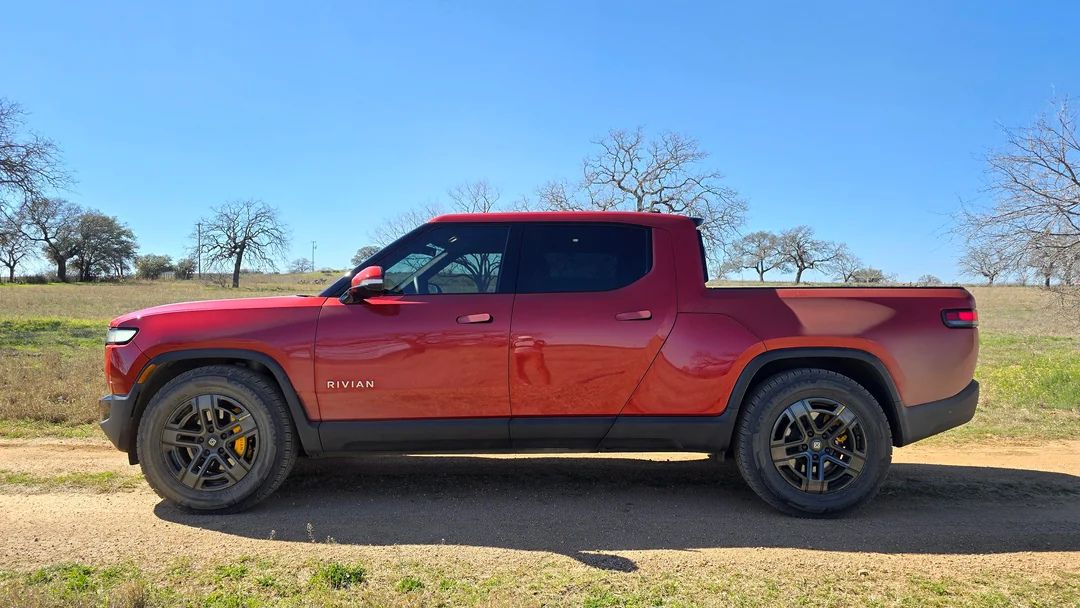
    Side profile of a red Rivian R1T electric truck equipped with Continental TerrainContact H/T tires, parked on a dirt road under clear blue skies.
    Continental TerrainContact H/T on Rivian R1T — engineered for electric pickups needing confident highway handling, quiet comfort, and long tread life.

    This is where the Continental TerrainContact H/T really proves why it’s been trusted since 2019. It comes with a 70,000-mile warranty for Euro-metric sizes and 60,000 miles for LT sizes, which already puts it among the best in the highway tire category. But what makes it special is how consistently it wears — not just how long it lasts.

    Owners who’ve run them for 30–40k miles often say the same thing: “They still look new.” On Tire Rack, several reviews mention perfectly even wear patterns with minimal rotation effort. A user on F-150Forum wrote, “I’ve got 40k on mine, and I’ll easily see 70k. No cupping, no noise increase.” That kind of feedback tells me the carcass construction and tread stiffness are dialed in.

    Compared to the Michelin Defender LTX M/S2, Continental doesn’t promise more mileage on paper, but it often holds its feel longer. Michelin tends to harden a bit as it ages, while Continental stays flexible and consistent. That said, Michelin’s stiffer sidewall can be slightly better for heavy-duty towing, where extra rigidity helps keep the rear end more stable under max load. But for everyday mixed driving, Continental’s balance between stiffness and comfort feels more natural.

    From my point of view, the TerrainContact H/T isn’t just long-lasting; it’s stable over time. The compound wears slowly and evenly, and the casing resists deformation under load. That’s the difference between a tire that just survives 70k miles and one that actually performs the same way from day one to the end of its life.

    If you’re the type who keeps a truck for the long haul and wants to forget about tire issues, this one won’t disappoint. It’s built to last and stay consistent — and that’s what separates good tires from great ones.

    Final Verdict — Still the Highway Tire to Beat

    The Continental TerrainContact H/T has been around for a while, but honestly, it doesn’t need replacing. Continental kept refining it instead of rushing a new version, and it shows. The tire feels planted, confident, and consistent across every surface — dry, wet, or light snow. It’s quiet, smooth, and wears evenly, which is exactly what most truck and SUV owners want from a daily tire.

    Even against newer models like the Michelin Defender LTX M/S2, it still leads in wet braking and stability while matching or beating it in ride comfort. Michelin’s slightly stiffer build gives it a small edge for heavy towing, but for everything else, the Continental just feels more balanced. It’s one of those tires that makes your truck drive better without you realizing why — and that’s what good engineering does.

    Best Use Cases

    • Trucks and SUVs used mostly on highways and paved roads

    • Daily drivers looking for the smoothest and quietest ride in the category

    • Light towing and work trucks that still need stability under load

    • Drivers in mild-winter climates who want reliable rain and snow performance without switching tires

    FAQ – Continental TerrainContact H/T

    Is the Continental TerrainContact H/T better than the Michelin Defender LTX M/S2?

    In most cases, yes. The TerrainContact H/T stops about 5% shorter in the wet and feels tighter in corners with 0.76 g of lateral grip. The Michelin still rides a little softer, but Continental combines that stability with smoother comfort overall.

    How does the TerrainContact H/T perform in rain?

    It leads the category in wet traction. The tire stays stable in deep water, keeps strong braking performance, and provides confident steering even in heavy rain. Many drivers describe it as “planted” and “unbothered” in wet conditions.

    Can the TerrainContact H/T handle snow?

    Yes, for light to moderate snow. It stops around 77 feet on snow and 95 feet on ice, which makes it one of the best non-3PMSF highway tires in winter traction. For deep snow or icy regions, a dedicated winter tire is still better.

    How is the ride comfort and noise level?

    It is one of the quietest highway tires you can buy. In testing, it scored 8.75 for ride comfort and 8.50 for noise. Most drivers say it feels calm on rough pavement and almost silent on the highway.

    Is it good for towing?

    Yes, for middle to mild towing conditions. It keeps its shape under load and stays stable without adding harshness. If you tow heavy or frequently, the Michelin’s stiffer sidewall might give a small edge in rear stability.

    How long does the TerrainContact H/T last?

    It comes with a 70,000-mile warranty for Euro-metric and 60,000 miles for LT sizes. Most owners report even wear and quiet performance past 40k miles, with many expecting to reach full warranty life easily.

    Who should buy the TerrainContact H/T?

    It is perfect for drivers who spend most of their time on pavement and want premium stability, comfort, and wet traction without the premium price. Great for daily trucks, family SUVs, and long-distance commuters.

    Filed Under: Highway-Terrain Tires Tagged With: continental, Continental Terraincontact H/T, Review

    Patriot R/T Tires Review — Off-Road Performance Showdown 2025

    Updated: November 11, 2025 by Emrecan Gurkan 2 Comments

    Patriot Tires is also known as Renegade tires. Well, the company has two different rugged-terrain tires(best ones), Patriot RT and Patriot RT Plus. These two fellows have almost the same appearance. Yet, they are slightly different regarding sizes, and labels. Let’s see which one is better for your application!

    Patriot RT with a stiffer compound offer better tread life than RT+

    Quick Look

    Patriot R/T+

    Patriot R/T+ tire
    Tested Rating: 7.4/10

    Trusted Retailers with Best Deals:

    SimpleTire
    Financing options Local installers
    Amazon
    Prime shipping Direct from brands

    From my standpoint as a former Bridgestone engineer, the Patriot RT delivers impressive traction on loose ground, backed by decent handling and wet grip that make it more versatile than many rugged-terrain options. For a tire in this category, it rides surprisingly smooth and quiet, and with its 3PMSF rating, it proves to be a solid choice for winter conditions. The trade-off is in tread life, which runs shorter and closer to a mud-terrain tire, but its budget-friendly price more than compensates for that drawback.

    Note: Patriot RT and RT+ are merged into one product, sold simply as Patriot RT, and all versions come labeled with the 3PMSF symbol.

      Tread Appearances

      I have to admit that I’m pretty impressed by these tire designs. I’m not only talking about super-aggressive sidewall design. They also have a very functional contact patch. Though worth reminding, they have exactly the same contact patch.

      Let’s start with the center section.

      They have wide, solid, and inter-locked center sections. The wide center section provides even wear distribution. For this reason, these tires tend to wear evenly. Furthermore, solid and inter-locked lugs act like a huge rib and increase tire’s stability, so, handling.

      That center section is connected to inner shoulder lugs. Staggered and angled shoulder lugs provide better traction on loose grounds. Therefore, they promise better off-road performances. 

      Regarding shoulders, Patriot also uses a staggered shoulder design on both of them. Moreover, the open shoulder design ensures that the tire doesn’t have any issue with self-cleaning ability. Hence, they can provide consistent traction on off-road adventures. Fellows, they’re trying to make an off-road beast!

      Lastly, sidewall design. These tires have a dual sidewall design. While one side has a flaming demon design for moe aggressive appearances, the other sides have a big dual dagger that provides a better grip on mud and deep snow.

      Dry Performance

      Patriot R/T is a decent tire for a 3/4 ton or above trucks

      The dry performance consists of 3-different dimensions. Dry traction, steering response, and cornering stability.

      Regarding dry traction, this tire is a beast. As we’re all expected from rugged-terrain tires, they have a huge grip ability. Due to their relatively soft compound and disunited but solid lugs, they perform perfectly on dry grounds.

      Let’s continue with the steering response. This section is generally an issue for big tires. Due to their heavy constructions and big gaps between the lugs, their contact patch is hard to optimize. Well, Patriot solves this problem with a wide and solid center section. I think they would work better with connected lugs but even this design is enough to provide a quick steering response.

      Cornering stability is easy for this kind of tires. 3-ply and thick sidewalls restrict over-flexibility and promote stability while cornering.

      Patriot RT and Patriot RT plus have trustworthy dry performance. You can confidently go with both of them.

      Comfort and Road Noise

      Due to their lugged but narrow gap center section, these tires are almost quite as legendary as Nitto Ridge Grappler. Well, I might remind you that these are rugged-terrain tires with a very aggressive pattern. Expecting a noiseless drive is a kinda dreaminess.

      In comfort cases, you should decide between LT and regular sizes. If you need better durability, you should go with LT sizes and sacrifice a bit of comfort. Otherwise, Patriot RT with a soft compound provides a smooth ride. Yet, it’s slightly bumpy compared to the premium brand tires.

      Fuel Efficiency

      As you can see these tires aren’t intensely notched. As a result, they have low rolling resistance. I’m pretty sure that they won’t hurt your mpg.

      Wet Performance

      Wet performance is what I was questioning about this tire. Well, it surprised me.

      Due to its open shoulders and wide grooves, it can evacuate the water easily and prevent hydroplaning resistance.

      Regarding wet grip, I thought that it has a lack of siping. Yet, its well-optimized compound provides a very well grip on wet surfaces. 

      It’s a trustworthy tire regarding wet performance. Yet, you might face spinning if you rough up to the gas pedal while starting.

      Winter Performance

      Winter performance is where Patriot RT and Patriot RT Plus are separating.

      Patriot RT Plus with a 3PMSF is a reliable pick for severe winter conditions. Yet, worth reminding, both are beasts on deep snow due to their deep tread grooves. Patriot RT Plus is slightly better due to its superior grip ability on icy grounds.

      If you wanna stay on the safe side go with Patriot RT Plus. However, Patriot RT will provide everything you need except ice performance.

      You can also check the best tires for severe winter conditions right here!

      Off-Road Peformance

      Off-road performance is where these two are shining. They’ve been released as a rugged-terrain tires. Yet, their primary intention is off-road. Let’s evaluate them by surfaces.

      Rock and Gravel

      Due to their stone ejectors, they can throw the stones out easily and provide consistent traction on gravel. Moreover, their staggered shoulder and inner shoulder design enhance their traction ability significantly.

      Due to their 3-ply sidewalls and sidewall protector, they prevent sidewall impacts with ease. However, these tires have a relatively fluffy compounds. So, you might get flat tire while rock crawling.

      I recommend this tire for gravel driving. Yet, I don’t think that they’re suitable for rock crawling.

      Mud

      Mud driving is where these two are shown up. Due to their self-cleaning and water evacuation capabilities, they can perform almost as well as mud-terrain tires. Moreover, their aggressive sidewall biters help them to grip loose and deep mud. Thus, they provide consistent traction even under the toughest muddy grounds.

      Sand

      Their tread pattern is way much aggressive for sand driving. You might get digged and stuck on soft sand. Yet, on 4wd, sidewall biters can save you from trouble.

      Tread Life and Durabilty

      The tires that labelled with 3PMSF generally have 15% less tread life than regular ones

      This section is the answer to the ‘Why they are so cheap?’ question. Even though they’re rugged-terrain tires, they still have mud-terrain tire tread life. Due to increasing grip ability, Patriot uses a fluffy cap compound. Well, tread life decreases.

      If you can agree with a mud-terrain tread life, they’re a perfect choice.

      Getting maximum wear life from a tire is related to you as well as your tire,

      If you’d like to learn how to get maximum tread life:

      https://tireterrain.com/how-to-make-tires-last-longer/

      Warranty

      Patriot doesn’t offer any tread life warranty for these products.

      Sizes

      You can find the available sizes in the below tables.

      Most tire sizes begin with modifier letters(P, LT, etc.) that identify the type of vehicle or type of service for which they were designed. Here is a perfect guide for reading tire size –> https://tireterrain.com/how-to-read-tire-size/

      17”18”20”22”24”
      LT285/70R17LT275/65R18275/55R20 – XL285/45R22 – XL33×12.50R24LT
      LT295/70R17LT275/70R18285/50R20 – XLLT285/50R2235×12.50R24LT
      33×12.50R17LT – E LoadLT285/65R18LT265/50R20LT285/55R2235×13.50R24LT
      33×12.50R17LT – F Load33×12.50R18LT – E LoadLT265/60R2033×12.50R22LT E&F Load37×13.50R24LT
      35×12.50R17LT – E Load33×12.50R18LT – F LoadLT275/55R2035×12.50R22LT E&F Load
      35×12.50R17LT – F Load35×12.50R18LT – E LoadLT275/60R2035×13.50R22LT E&F Load
      35×12.50R18LT – F LoadLT275/65R2037×13.50R22LT E&F Load
      37×13.50R18LTLT285/50R20
      LT285/55R20
      LT285/60R20
      LT295/55R20
      LT295/65R20
      LT305/55R20
      LT325/60R20
      33×11.50R20LT
      33×12.50R20LT E&F Load
      35×11.50R20LT
      35×12.50R20LT
      35×12.50R20LT
      35×13.50R20LT E&F Load
      37×12.50R20LT E&F Load
      37×13.50R20LT E&F Load

      Price

      The tire market has a dynamic price policy. Hence, in my point of view, sharing tire price is pointless.

      Though, I’ve analyzed the top 10 brands of most popular tire brands.

      Here are the dealers with a reasonable price range,

      SimpleTire

      • Free shipping
      • Delivered in 2 days
      • Verified shops near you(for mount and balance)
      • Mobile installation option
      • 7 million customers since 2021
      • 4.7/5 points on Google rate
      • Top-notch customer service, you may even request a price match

      Patriot R/T: https://simpletire.com/brands/patriot-tires/r-t

      PriorityTire

      • Local installer and mobile installer options
      • Huge product range(you may find any tire you want)
      • 4.8 overall satisfaction rate
      • Always have a good deal to find
      • 90 days money-back guarantee
      • Free FedEx shipping

      Patriot R/T: https://www.prioritytire.com/by-brand/patriot/r-t-tires/

      Amazon

      • Fast and free shipping (mostly in a day)
      • Get your tires shipped to a selected service center or get them installed at home or work (how does it work?)
      • Installation on Mavis Discount Tire (15$ per tire) 
      • Installing new stem valves supplied by pro
      • Balancing your tires
      • Road/safety test
      • Since Amazon provides wholesale and affordable prices, they don’t offer a road hazard warranty

      Patriot R/T: https://www.amazon.com/s?k=patriot+rt&ref=nb_sb_noss

      While choosing dealers, I especially pay attention to reliability. All of the dealers on this list have 15-20 years of experience in the online tire business. Therefore, I can guarantee a smooth and fast tire buying process.

      Conclusion

      Patriot RT and RT Plus are decent rugged-terrain tires. Their only weak point is tread life. Well, they perform like mud-terrain tires and have a similar tread life to mud-terrain tires.

      I recommend Patriot RT for above 3/4 pickups and loaded applications(best ones) due to its high load range options. On the other hand, Patriot RT Plus (discontinued) was a good choice if you’re living in severe winter conditions. It can handle hauling and towing. The good news, both tires are combined on New Patriot RT. Now you can get winter traction and durability at the same time.

      If you have any further questions, please leave them below. Have a safe ride folks!

      Filed Under: Rugged Terrain Tires Tagged With: patriot, Patriot RT, Review

      Yokohama YK-HTX vs Michelin Defender LTX M/S

      Updated: November 11, 2025 by Emrecan Gurkan 1 Comment

      Yokohama YK-HTX and Michelin Defender LTX M/S are highway all-season tires. Due to their use range, they are separated. While Defender LTX can be used on vans, pickups, SUVs, and as well as commercial intended vehicles with light-truck sizes; Yokohama YK-HTX covers the same range but commercial intend. Let’s dig into them and see what are the pros and cons!

      Defender LTX's open shoulder blocks increase its hydroplaning resistance

      As a former Bridgestone engineer, from my standpoint, Michelin Defender LTX M/S is a better tire for wet and snowy surfaces. It has a broader application range that covers heavy-duty applications, commercial usage, and, above 3/4 ton pickups. Furthermore, it can handle mild off-road very well. It’s also a less vocal and more fuel-efficient tire. However, Yokohama YK-HTX offers a slightly smoother ride. Its low price makes it a decent pick.

      Table of Contents

      Tread Appearances

      If you know how to read a tread, it can give you a clue about your tire performance with high accuracy. Well, I will start this comparison with the pattern comparison.

      Let’s start with the width. Yokohama YK-HTX is a slightly broader tire. If the difference was a bit higher, it might affect my traction comparisons. Yet, this minor gap can’t make a big impact.

      Regarding height, Michelin Defender LTX M/S is a bit higher tire. That info might be precious for those who like to drive tuned and lifted vehicles.

      Our last technical information is tread depth. Michelin Defender LTX M/S has a deeper tread that has a positive effect on loose ground traction.

      Now, it’s time to talk about rubber. These tires have a very similar tread design. 4 circumferential grooves and flat shoulders are part of both designs. In that case, sipe placement and lug/rib type pattern design will be a game-changer.

      Regarding the center section, both tires have a very promising design. This part is crucial because it’s highly related to noise reduction and steering response. A solid center rib guarantees a quick steering response for both of them. However, they are separated due to outer center ribs. While Michelin prefers full-depth notched and one-piece lugs, Yokohama decides on half-depth sipes and sectional lugs. Therefore, Yokohama’s traction consistency is limited. Moreover, this type of design mostly causes vocal rides.

      Dry Performance

      I will evaluate dry performance under the three different dimensions. Dry traction, steering response, and cornering stability.

      Dry traction isn’t an issue for tires that have an off-road capability. In that case, both tires pass the test. They are both have reliable dry traction.

      Regarding steering response, I’ve talked about it in the tread appearance section. Both tires have a solid center rib that works like a mast and accelerate response time. Both are trustworthy.

      Cornering stability is where these two are separated. In fact, both are confidential options. Yet, due to stronger sidewalls, Michelin Defender LTX M/S steps ahead and gets the lead.

      Michelin Defender LTX M/S and Yokohama YK-HTX have equally great dry performance. However, Michelin Defender LTX is slightly better tire, due to better cornering stability.

      Wet Performance

      Wet performance can be evaluated under two different dimensions. Wet grip and hydroplaning resistance.

      Compound stiffness and sipe intensity are the most important elements of wet grip. Well, in that case, both tire has a soft compound that improves their wet grip. However, Michelin Defender LTX M/S is a better tire due to its well-placed and full-depth sipes. Yokohama YK-HTX has a decent wet grip. Yet, I don’t think that its grip level will be consistent.

      Hydroplaning resistance is directly related to water evacuation capability. In that case, circumferential grooves and open shoulders work best. Regarding circumferential grooves, they are equal. However, Michelin Defender LTX MS gets the lead with an open shoulder design.

      Comfort and Road Noise

      Yokohama YK-HTX's sectional ribis decrease its riding quality

      Due to their fluffy compounds, both tires have a smooth ride. So, they offer a smooth ride. However, Michelin Defender LTX has stiffer and stronger sidewalls. Well, its sidewall flexibility is limited compared to Yokohama YK-HTX.

      Regarding road noise, Michelin Defender LTX is my favorite. I’m sure that Yokohama YK-HTX isn’t a vocal tire. However, its outer center rib lugs are sectional. That means they will make a noise unless they hit to ground in perfect order.

      Michelin Defender LTX is a significantly less vocal tire. However, Yokohama YK-HTX is slightly smoother while driving through the bumps. Yet, Michelin Defender LTX won’t let you down regarding comfort.

      Tread Life

      Michelin Defender LTX is a suitable tire for an heavy-duty usage

      Tread life depends on your vehicle and driving style. In that case, I will consider that you’re using them on the right vehicle with a standard(Neither aggressive nor soft) style.

      Even wearing ability is a key to longer tread life. In that case, Michelin Defender LTX’s pattern promises more. Its connected and close lugs can work together and offers even wearing. However, Yokohama YK-HTX has a well-optimized contact patch. It has decent tread life.

      Michelin Defender LTX M/S offers better tread life than Yokohama YK-HTX. Moreover, it can be used on heavier vehicles. Its compound is more stiff and durable.

      Getting maximum wear life from a tire is related to you as well as your tire,

      If you’d like to learn how to get maximum tread life:

      https://tireterrain.com/how-to-make-tires-last-longer/

      Warranty

      Michelin Defender LTX M/S and Yokohama YK-HTX have 70,000 miles tread life warranty. Even so, worth reminding, Michelin Defender LTX’s warranty decrease to 60,000 miles if you’re using a tire with an S speed rating.

      Fuel-Efficiency

      This section is where Yokohama YK-HTX is totally failed. Its soft rubber and sectional lugs increase its rolling resistance significantly. Well, Yokohama tries to optimize it with orange oil technology. Yet, it isn’t good enough to beat Michelin Defender LTX due to higher weight.

      Defender LTX is significantly better tire regarding fuel-efficiency. I can confidently say that it offers 1-2 mpg better fuel-milegage.

      Winter Performance

      Winter performance is hard to reach for all-season tires. Due to achieving 3PMSF, they have to sacrifice from tread life. Well, manufacturers don’t take this trade.

      Let’s start with light snow. Light snow is similar to wet. Therefore, all-season tires can handle it with ease. Due to their well-siped and perfectly optimized rubbers, Defender LTX and Yokohama YK-HTX are decent tires on light snow. Yet, open shoulders get into the game again and push Michelin Defender LTX one step ahead.

      Regarding deep snow, there is no competition. Yokohama YK-HTX even doesn’t have M+S marking. That’s a huge negativeness. Michelin Defender LTX is a significantly better tire for thick snow.

      Lastly, ice traction, even though I don’t recommend these tires for icy conditions; if you have to pick one, I recommend you to go with Michelin Defender LTX again.

      Michelin Defender LTX is a significantly better winter tire.

      Note: Michelin Defender LTX and Yokohama YK-HTX don’t have 3PMSF. Worth reminding, they aren’t severe winter rated.

      If you need a superior winter tire, I recommend you to check this article out!

      Off-Road Performance

      Defender LTX's 'M+S' marking stand for a mud and snow performance

      I generally divide this part into 3 sections(Gravel and rock, mud, sand). Since Yokohama YK-HTX doesn’t have M+S, I will keep it short and evaluate them under this title.

      Gravel, sand, and mud are loose grounds. Herewith, they are directly related to M+S marking. Michelin Defender LTX M/S is a significantly better tire on sand, mud, and gravel.

      You can also check this article out to see the best mud-terrain tires!

      Regarding dirt, both are trustworthy options. Due to their high sipe intensity, they can handle dirt with ease.

      Lastly, rock. I don’t recommend using these tires for rock crawling. Their sidewalls aren’t good enough to resist sharp rock corners.

      If you need a better off-road tire with decent on-road manners, I recommend you to check this article out!

      Specs

      Yokohama YK-HTXMichelin Defender LTX M/S
      CategoryHighway All-SeasonHighway All-Season
      VehicleSUV/Light TruckSUV/Light Truck
      Available Sizes (Rim)15”, 16”, 17”, 18”, 19”, 20”15”, 16”, 17”, 18”, 19”, 20”, 22”
      Weight27 – 46 lbs24 – 58 lbs
      Made InUnited StatesUnited States
      Severe Snow Rated (3PMSF)NoNo
      Warranty (P-metric)70,000 Miles70,000 Miles (50,000 for R-speed rate)
      PricesCheck price section to see best possible pricesCheck price section to see best possible prices

      Price

      The tire market has a dynamic price policy. Hence, in my point of view, sharing tire price is pointless.

      Though, I’ve analyzed the top 10 brands of most popular tire brands.

      Here are the dealers with a reasonable price range,

      TireRack

      • Fast and Free shipping
      • Usually delivered in 1 day
      • Joint venture with DiscountTire(their installers and dealers are on your service)
      • Tons of installer options, they also help you to choose the best one
      • Mobile installers in many areas, your tires will be replaced while you’re working in the office
      • Tire test results and comparisons can be found on the most product page
      • 4.6/5 points on Google rate

      Yokohama YK-HTX: Discontiniued

      Michelin Defender LTX M/S: https://www.tirerack.com/tires/michelin-defender-ltx-m-s

      DiscountTire

      • Biggest dealer in the US. Founded in 1960
      • 1000 stores in 35 states. You most probably find one on your parallel street
      • Free rotation and balancing
      • 5% off for DiscountTire cardholders on online purchase
      • Highest rated online tire dealer in Consumer Affairs
      • Almost all brands are available
      • Delivery takes 2-4 days (30% shorter average waiting time when you book online)
      • Frequent discounts and promotions

      Yokohama YK-HTX: Discontiniued

      Michelin Defender LTX M/S: https://www.discounttire.com/buy-tires/michelin-defender-ltx-m-s

      SimpleTire

      • Free shipping
      • Delivered in 2 days
      • Verified shops near you(for mount and balance)
      • Mobile installation option
      • 7 million customers since 2021
      • 4.7/5 points on Google rate
      • Top-notch customer service, you may even request a price match

      Yokohama YK-HTX: Discontinued

      Michelin Defender LTX M/S: https://simpletire.com/brands/michelin-tires/defender-ltx-m-s

      While choosing dealers, I especially pay attention to reliability. All of the dealers on this list have 15-20 years of experience in the online tire business. Therefore, I can guarantee a smooth and fast tire buying process.

      Conclusion

      Yokohama YK-HTX and Michelin Defender LTX are solid tires if you’re using them in the right operation. The below table will help you to decide easily.

      Yokohama YK-HTXMichelin Defender LTX M/S
      Mild applicationsEven for a heavy-duty applications
      Only for below 1/2 ton and below pickups and SUVsIt can be used in every application. It’s durable enough to handle above 3/4 ton trucks.
      Only for highway usageIf you’re looking for a deaf tire
      Not commercial intendIf you care about your MPG
      If you don’t wanna break your budgetIf you need a decent wet and light-snow traction
      If you face off-road regularly

      If you have any further questions, please leave them below. I will answer ASAP. Have a safe ride!

      Filed Under: All Terrain Tires Tagged With: Comparisons, Michelin, Michelin Defender LTX M/S, yokohama, Yokohama YK-HTX

      Firestone Destination AT2 Review — Expert All-Terrain Tire for SUV & Truck Drivers in 2025

      Updated: November 11, 2025 by Emrecan Gurkan

      The relatively slim sidewall protectors of Firestone Destination AT2 is a kinda sign of limited off-road capability

      Real test data, off-road insights, and daily-driving impact — from a former Bridgestone engineer.

      The Firestone Destination A/T2, released in late 2019, is a road-friendly On-Road A/T tire built for full-size SUVs, crossovers, and Jeeps. Unlike heavy-duty Off-Road A/Ts, it’s tuned more for pavement comfort, light off-road use, and all-season drivability — making it a poor match for trucks above the ¾-ton class (see our best heavy-duty tire picks).

      In testing and driver feedback, the Destination A/T2 earns points for its quiet ride, wet traction, and year-round versatility. The trade-offs show in harsher terrain — it lacks the same bite and load stability you’d expect from more rugged options.

      In the sections ahead, we’ll break down how it performs across dry, wet, winter, and light off-road use — and if you want a fast comparison for your exact vehicle, our All-Terrain Tire Decision Tool shows how it stacks up against other A/T options.

      Quick Look

      Firestone Destination AT2

      Firestone Destination AT2 tire
      Tested Rating: 8.7/10

      Trusted Retailers with Best Deals:

      Tire Rack
      Free road-hazard coverage Backed by Discount Tire
      SimpleTire
      Financing options Local installers
      Amazon
      Prime shipping Direct from brands

      From my standpoint as a former Bridgestone engineer, the Firestone Destination AT2 stands out as a long-lasting and fuel-efficient tire that delivers extremely satisfying on-road manners thanks to its well-optimized tread pattern. It offers a quiet, smooth ride and shows unique consistency on both wet and dry pavement, making it a strong everyday performer. With its 3PMSF rating, it’s also a reliable pick for mild winter conditions, though it falls short when the road disappears — it simply isn’t designed for adventure or severe off-road use.

        Tread Appearances

        Red- Lug Type Shoulders, Green – Rib Type Center

        Firestone Destination AT2 has a bit different pattern design than regular all-terrain tires. Most all-terrains have only a lug-type tread pattern that increases their loose ground traction significantly. In return, they sacrifice from the comfort and sometimes steering response.

        Due to avert these negativities, Firestone use a hybrid type design. Destination AT2 has a rib-type center section and lug-type shoulder sections. The rib-type center section decreases the void area in the center section and reduces the road noises. Furthermore, it works like a mast and helps you to steer more responsively.

        On the other hand, lug-type shoulders maintain the loose ground traction and help it to evacuate water more quickly.

        Lastly, shoulder bites. While shoulder bites improve Destination AT2’s traction, they also provide a bare-knuckle looking. Though worth reminding, its biters don’t go through the sidewall. So, you can’t use it on an adventure like BF Goodrich KO2.

        Fuel Efficiency

        Due to its perfectly optimized void area and notches, this tire has very satisfying rolling resistance compared to its competitors. Moreover, it’s light as a feather. I can confidently say this is an eco-friendly tire. Your fuel mileage will be rump up unless you don’t replace it with an all-season tire.

        Comfort and Road Noise

        Firestone Destination AT2 is a tire that focus on satisfying on-road manners

        Hybrid-type pattern offers a more smooth ride than lug-type patterns. Well-aligned center lugs hit the ground in order and absorb the bumpy feeling significantly. Moreover, its gradual rubber is stiff outside and getting softer through the carcass. This feature increases its flexibility and absorbs the reaction force that reflects from the road.

        Regarding road noise, this tire is deaf. Road noise is mostly related to the void area ratio of the center section. Rib-type and inter-locked center sections increase their contact pitch and provide a quiet ride.

        This tire has unique road noise and comfort. I can confidently say that it’s more on-road tires than an off-road tire. I strongly recommend it for highway usage.

        Note from the Expert: For years, choosing all-terrain meant accepting noise—a true compromise for off-road grip. That’s why the question, Are All-Terrain Tires Louder than Highway Tires?, used to have a simple “yes” answer. Now, with the rise of on-road models, the core issue has shifted from noise to overall refinement. To fully understand which side of the comfort spectrum you’re buying into, you need to determine Are All-Terrain Tires Good for Daily Driving?—a question that depends entirely on the tire’s construction, not just the name.

        Dry Performance

        Dry performance can be evaluated under 3 different dimensions. Dry traction, steering response, and cornering stability. Let’s start with the first dimension.

        Dry traction is easy to reach for an all-terrain tire. Due to its lug-type tread pattern, its grip ability is higher than all-season tires. Regarding Destination AT2, as I mentioned above, it has a hybrid type tread pattern. Due to its lug-type shoulders and inner shoulder section, it has phenomenal dry traction. Moreover, well-siped rubber increases its grip ability and provides consistent grip.

        Steering response is where it steps ahead. Its rib-type center behaves like a support bar and helps it to turn both ways easily. It has a unique steering ability. This feature increases its highway capability in a positive way.

        Lastly, cornering stability. In that case, it’s not the best but average. Due to its fluffy sidewalls, it flexes a bit more than regular all-terrain tires at high speed. No worries, it’s not vital. I’ve stated it cause you might not like that floating feeling.

        Firestone Destination AT2 is a beast regarding dry performance. It has unique traction and steering response. Yet, you might feel slightly floaty while cornering.

        Go for ItStay Away
        Satisfying on-road mannersIf you need a tire for adventure
        For a smooth and quiet rideIf you have 3/4 ton or above light truck(Ram 250, F250, F350 etc.)
        Long lasting rubber
        Mild snow conditions

        Wet Performance

        Wet performance is muddy for all-terrain tires. While they need a stiff compound for durability, however, they also need a fluffy compound for better grip. Though, an optimized tread pattern saves lives again.

        Due to its 3D full-depth sipes, Firestone Destination AT2 provides consistent wet grip over time. Moreover, its full-depth and perfectly sized grooves improve its water evacuation ability with the help of open shoulders. That feature prevents hydroplaning.

        Note from the Expert: When it comes to rain, I always emphasize two things: compound grip and water evacuation. You can see the full details in my analysis, but if you take just one thing away, remember that an AT tire’s stiff nature makes achieving top-tier wet performance a constant battle. This is why the question, Are All-Terrain Tires Good in Rain?, requires a nuanced answer that balances tread design against rubber stiffness.

        Tread Life and Durability

        Tread life is the most powerfull side of Destination AT2

        Tread life is where Firestone tires step ahead. Due to their special compound selection, they generally last longer than their competitors.

        The above info is also valid for Firestone Destination AT2. While optimized rubber offers better wearing, solid center rib, and increased surface help it to wear evenly and offer massive tread life.

        Regarding sidewall durability, I can’t say the same thing that I’ve said for tread life. This tire is built for better on-road manners. Hence, it needs more flexible and softer sidewalls. Its sidewalls can resist puncture. Yet, tough sidewall impacts like that you face while rock crawling will hurt it very badly.

        Firestone Destination AT2 lasts longer and offers huge durability for mild operations.

        Getting maximum wear life from a tire is related to you as well as your tire,

        If you’d like to learn how to get maximum tread life:

        https://tireterrain.com/how-to-make-tires-last-longer/

        Winter Performance

        Winter is where Firestone Destination AT2 is shining. It’s labeled with 3PMFS. That means you can use it even in the hardest winter conditions.

        Regarding light snow, it works almost the same as wet ground. Perfect grip and perfect evacuation for melted snow. Moreover, its narrower grooves(for an all-terrain) can clean itself perfectly and offers consistent traction.

        Due to its lower tread depth, its deep snow traction is very limited. Serrated shoulder biters help it a bit but I don’t recommend it for deep snow usage.

        About ice, due to its less void area, it’s better than most all-terrain tires. Yet, don’t forget, these are not winter tires. Your driving skills are a game-changer in that case.

        Note from the Expert: Our discussions often boil down to the core tradeoff. On one hand, you must understand why all-terrain tires are truly effective in deep snow, but not on ice. On the other hand, you face the 3PMSF Paradox—the hidden cost of that badge. The short answer is: The 3PMSF badge certifies traction, but it costs you durability. Dive into our full analysis on the critical 3PMSF rating for severe winter and off-road service, and its hidden costs, before you risk your rig on the trail.

        Off-Road Performance

        It's off-road performance is limited to mild off-road

        Off-road performance can be considered under 4 different dimensions. Let’s start with the first one.

        Dirt and Gravel

        Since this tire is built for mild off-road applications, I’ve decided to put these two together for better understanding.

        Dirt performance isn’t an issue for all-terrain tires. Regarding their grip ability, they can easily handle dirty surfaces. In that case, the crucial part is compact dirt. Well, Firestone Destination AT2 also performs very well on compact dirt. Due to its self-cleaning ability, it throws the compact dirt out with ease. Herewith, it offers consistent traction even on wet grass.

        Regarding gravel performance, it’s also very efficient. Due to its serrated shoulders and stone ejectors, while it bites the loose ground, it also holds the stones out of grooves and helps to increase durability.

        Firestone Destination AT2 is a solid pick for gravel and dirt. I strongly recommend it.

        Sand

        All-terrain tires fail on the sand due to their high traction ability. They tend to dig the sand and that increases the stacking possibility.

        Due to its narrowed void area, Firestone Destination AT2 has better performance than common all-terrain tires. I can’t say it’s unique. Yet, it has superior performance.

        Mud

        In that case, Firestone Destination AT2 has one strength and one weakness.

        Due to its narrow void area and low tread depth, it has limited mud traction. Yet, its self-cleaning ability and evacuation capability enhance its wet performance.

        Let’s say it has average mud performance. Yet, I don’t recommend it for adventures.

        Check this article out if you need a straight mud-terrain tire!

        Rock

        Firestone Destination AT2 is a p-metric tire. Therefore, it has relatively weak sidewalls.

        I don’t recommend it for rock crawling.

        Note from the Expert: Every successful day on the trail is about preparation and physics, because tire longevity is earned, not given. Before you even start, you must master the critical link between tire pressure and load range for every rig to maximize your contact patch. Once moving, remember your ultimate off-road armor is your sidewall protection against the inevitable pinch flat. And finally, your traction on the obstacle is dictated by choosing the right aggressive vs hybrid tread pattern for your terrain. Master those three steps, and your rig will be ready for anything.

        Sizes

        Bad news, it’s only available for p-metric sizes. In my point of view, it also shows the application range of this tire. It isn’t built with commercial intent.

        Most tire sizes begin with modifier letters(P, LT, etc.) that identify the type of vehicle or type of service for which they were designed. Here is a perfect guide for reading tire size –> https://tireterrain.com/how-to-read-tire-size/

        Firestone Destination AT2 Sizes for 15'' And 16'' Rim

        Tread DepthLoad RangeSpeed RatingWeight
        P235/75R1512/32”SLS29 lbs
        P225/75R1612/32”SLS34 lbs
        P235/70R1612/32”SLS29 lbs
        P235/75R1612/32”SLS31 lbs
        P245/70R1612/32”SLS32 lbs
        P245/75R1612/32”SLS34 lbs
        P255/70R1612/32”SLS35 lbs
        P265/75R1612/32”SLT37 lbs
        Tread DepthLoad RangeSpeed RatingWeight
        P235/65R1712/32”SLS28 lbs
        P235/70R1712/32”XLS32 lbs
        P235/75R1712/32”SLS33 lbs
        P245/65R1712/32”SLT33 lbs
        P245/70R1712/32”SLS32 lbs
        P255/65R1712/32”SLS35 lbs
        P255/70R1712/32”SLS36 lbs
        P255/75R1712/32”SLS37 lbs
        P265/65R1712/32”SLS36 lbs
        P265/70R1712/32”SLS38 lbs
        P285/70R1712/32”SLT38 lbs
        Tread DepthLoad RangeSpeed RatingWeight
        P245/60R1812/32”SLT32 lbs
        P255/70R1812/32”XLS38 lbs
        P265/60R1812/32”SLT38 lbs
        P265/65R1812/32”SLT39 lbs
        P265/70R1812/32”SLS40 lbs
        P275/65R1812/32”SLT40 lbs
        P275/55R2012/32”SLS38 lbs
        P275/60R2012/32”SLS43 lbs
        285/54R2212/32”XLH40 lbs

        Warranty

        Tread Life Warranty: 5 Years / 55,000 Miles. Half mileage if the rear is a different size than the front.

        Uniformity Warranty: First 2/32″ of wear.

        Manufacturer Warranty: 90 Day Buy & Try Guarantee. Return option for the first 90 days.

        Tire Size Selection: The Basics You Can’t Skip

        Even the best tread design can’t rescue a tire that’s built too weak. Back when I was testing tires at Bridgestone, I saw all-terrain models that should’ve performed but fell short — simply because the basics (size, load strength, and speed rating) weren’t matched to the vehicle.

        P-Metric vs. LT (Light Truck) Tires

        The first step is knowing whether you need LT or passenger tires. LT (Light Truck) tires are built with extra reinforcement and stiff sidewalls, designed for towing, hauling, or off-road use. Passenger (P-metric) tires are lighter, smoother, and tuned for daily comfort and fuel efficiency — but they’ll flex more under load.

        Understanding Tire Load Range: XL vs. E-Load

        Then comes the tire load index and load range — essentially your tire’s strength rating. Here’s where things split between passenger XL and LT E:

        • XL (Extra Load) is a passenger tire with reinforced sidewalls. It can handle a bit more pressure (~41 PSI) than a standard SL tire and is perfect for SUVs, crossovers, or light trucks that carry extra gear, passengers, or small trailers. XL tires ride softer and quieter than LT options, making them ideal for daily use.

        • E Load Range is an LT tire class built with a much thicker casing. E-rated tires can handle far more pressure (up to ~80 PSI) and heavier loads, which makes them essential for ¾-ton and 1-ton trucks towing trailers or hauling close to max capacity. The trade-off is weight, stiffer ride, more road noise, and a small drop in fuel efficiency.

        Put simply: XL is for “extra luggage and family,” while E is for “truck bed full of bricks or a car trailer.”

        Why the Tire Speed Rating Matters for Safety

        Finally, don’t overlook the tire speed rating. It’s not just about top speed — it measures how well a tire handles heat and stress at highway pace. Lower ratings (like S) tend to ride softer and last longer, while higher ratings (H, T) feel more stable and responsive under sharp maneuvers. Heat build-up is the silent killer of tires, and speed rating is your safeguard.

        Bottom line: Match your tire’s construction (LT vs P-metric), load range (XL vs E), and speed rating to your vehicle’s demands. Get those right, and everything else — off-road grip, winter traction, comfort — will finally perform the way it was designed to.

        Conclusion

        Firestone Destination AT2 is an exceptional all-terrain tire. All you need to know is if its built intention matches your needs or not. The below table will help you to decide.

        Firestone Destination AT2
        Best forMostly highway driving,
        SUV and CUVs,
        light-truck owners who are focused on road manners,
        mild off-road traction
        Test Reportvs TerrainContact AT & Pinza AT
        (July 7, 2022)
        CategoryAll-Terrain Tire
        VehicleLight Truck, SUV
        Weight29 – 43 lbs
        Made InUSA
        Warranty (P-metric)55,000 Miles
        Warranty (LT Sizes)55,000 Miles
        Available Sizes (Rim)15”, 16”, 17”, 18”, 20”, 22”
        Labels3PMSF

        If you have any further questions, please leave them below. Have a safe ride folks!

        Filed Under: All Terrain Tires, On-Road All Terrain Tires Tagged With: firestone, Firestone Destination AT2, Review

        Firestone Destination X/T Review — Towing & Heavy-Duty Performance for 2025

        Updated: November 11, 2025 by Emrecan Gurkan 2 Comments

        Due to its relatively compact pattern, it offers safe ride while towing or hauling

        Real test data, off-road insights, and daily-driving impact — from a former Bridgestone engineer.

        The Firestone Destination X/T is a work-focused Off-Road A/T tire built with heavier trucks in mind. Unlike lighter-duty On-Road A/Ts, it’s designed for ¾-ton and 1-ton pickups and body-on-frame SUVs like the GMC Yukon XL, Cadillac Escalade, and Jeep Wrangler Unlimited. Its strengths are clear: hauling stability, towing confidence, and a sturdy LT construction that keeps it planted under load.

        From our testing and driver feedback, the Destination X/T also runs quieter than some heavy-duty competitors, but its trade-offs show in ultimate off-road bite and winter grip compared to the top-tier options.

        In the sections ahead, we’ll break down how it performs across dry, wet, winter, and off-road testing — and if you want to see how it stacks up against other heavy-duty A/Ts for your exact vehicle, our All-Terrain Tire Decision Tool makes it easy to compare results by SUV, CUV, or truck class.

        Quick Look

        Firestone Destination XT

        Firestone Destination XT tire
        Tested Rating: 8.2/10

        Trusted Retailers with Best Deals:

        Tire Rack
        Free road-hazard coverage Backed by Discount Tire
        SimpleTire
        Financing options Local installers
        Amazon
        Prime shipping Direct from brands

        From my standpoint as a former Bridgestone engineer, the Firestone Destination XT is the lightest tire in its segment, which gives it an edge in responsiveness and makes it more durable for extended air-down use. Its wet and dry traction is highly praiseworthy, and thanks to a compact tread and stiff compound, it’s an excellent choice for hauling and towing, delivering an extremely satisfying wear life. Being severe-winter rated, it performs exceptionally well in light and deep snow, though its harder compound limits grip on ice. It’s also worth noting that the tire can produce a slight hum, and its stiffer ride may feel firm to drivers not accustomed to all-terrain tires.

          Tread Appearances

          Firestone Destination XT Pattern(colors are dedicated on Dry Performance section)

          Heavy-duty tires generally don’t look aggressive. Manufacturers focus on performance instead of good-looking. So, they sacrifice from aggressive looking. Well, Firestone Destination XT is an exception in that case. While maintaining its performance, it also looks as tough as a rugged-terrain tire. 

          Use ItDon’t Use It
          Heavy-duty applicationsIcy conditions
          Above 3/4-ton pickupsDaily driving(It’s LT tire. Though it has a hars ride)
          Large(body on frame) SUVs, JeepsCrossovers, Unibody SUVs(if it’s not too heavy)
          Mild winter conditions

          Firestone Destination XT doesn’t have a rib/lug hybrid type pattern design like its rival Cooper Discoverer AT3 LTX or Michelin Defender LTX. It has lug type design with wide shoulders. As a result, it keeps its traction ability on loose surfaces. Moreover, its wide shoulder increases its comfort on highways.

          Dry Performance

          Dry traction isn’t an issue for all-terrain tires due to their aggressively designed rubber. Well, Destination XT provides huge traction on dry surfaces.

          About handling, well-optimized pattern getting into the game. A wide shoulder combined with the interlock center section increases its contact patch and offers decent handling.

          Lastly, steering. Steering is an enemy for lug-type tread patterns. In that case, the center section must be work like a circumferential rib and preserve stability. Well, I think Destination XT’s engineers made it very well. The middle center block supports each side with larger side blocks. Therefore, it works like a rib during the wheeling.

          Comfort and Road Noise

          Due to its wide shoulder design, well-balanced compound, and solid internal structure(2 steel belts support by a 2-ply polyester cord),  you don’t feel bumpy like driving a mud-terrain tire. That’s a huge plus.

          On the other hand, it performs even better regarding noise cancellation. Due to its interlocked center section( explained in the tread appearance section), this tire is deaf for a heavy-duty tire. Moreover, its void area is narrower than most of its competitors. This feature also brings an advantage to noise cancellation.

          Destination XT is quiet and offers a smooth ride. You can confidently go with it if these are your priorities. Yet, Firestone Destination AT2(review) could be a better selection if you wanna extend your riding conditions.

          Note from the Expert: For years, choosing all-terrain meant accepting noise—a true compromise for off-road grip. That’s why the question, Are All-Terrain Tires Louder than Highway Tires?, used to have a simple “yes” answer. Now, with the rise of on-road models, the core issue has shifted from noise to overall refinement. To fully understand which side of the comfort spectrum you’re buying into, you need to determine Are All-Terrain Tires Good for Daily Driving?—a question that depends entirely on the tire’s construction, not just the name.

          Fuel Efficiency

          Due to its low rolling resistance and lightweight, Destination XT is one of the most fuel-efficient tires in its class. For comparison, it’s at least 1mpg better than BFG KO2 for every available size.

          Wet Performance

          While I’ve been researching this tire for my comparison articles, I was pretty impressed by its wet performance.

          Its full-depth 3D sipes increase its biting edge density. This feature increases its biting capability on wet grounds and improves wet traction. However, this’s a heavy-duty tire. Therefore, its compound is relatively stiffer than regular all-terrain tires. That feature decreases its wet traction a bit. Yet, its wet traction is decent. Let’s say 8.5 out of 10.

          The keynote speech is hydroplaning resistance. Its open shoulder blocks improve water evacuation and restrain hydroplaning resistance.  Due to its tread design(2 circumferential grooves), this tire doesn’t keep water inside of the tread. So,  you can confidently drive this tire at high speeds in the pouring rain.

          Destination XT is a beast on wet surfaces. I strongly recommend it.

          Note from the Expert: When it comes to rain, I always emphasize two things: compound grip and water evacuation. You can see the full details in my analysis, but if you take just one thing away, remember that an AT tire’s stiff nature makes achieving top-tier wet performance a constant battle. This is why the question, Are All-Terrain Tires Good in Rain?, requires a nuanced answer that balances tread design against rubber stiffness.

          Winter Performance

          It can chew the snow. This is an huge advantage for reliable deep snow performance

          Winter is where Destination XT shines. Due to its specific rubber, it heats up quickly and maintains its gripping ability in cold winter conditions.

          Destination XT is a severe snow-rated tire(3PMFS). Yet, it isn’t the perfect pick for all winter conditions.

          Due to its full-depth sipes, it’s a monster on light snow. It can evacuate melted snow very well and avert hydroplaning.

          Due to its staggered shoulder lugs, it has massive traction ability on deep snow. Moreover, its divided center lugs(3 pieces with 2 full-depth sipes) can work separately and increase its self-cleaning ability.

          Ice is where it fails. Due to its low rolling resistance, its braking distance on ice is average. I don’t recommend it for ice usage.

          Destination XT is a safe pick for light and thick snow. However, ice isn’t its expertise.

          Note from the Expert: Our discussions often boil down to the core tradeoff. On one hand, you must understand why all-terrain tires are truly effective in deep snow, but not on ice. On the other hand, you face the 3PMSF Paradox—the hidden cost of that badge. The short answer is: The 3PMSF badge certifies traction, but it costs you durability. Dive into our full analysis on the critical 3PMSF rating for severe winter and off-road service, and its hidden costs, before you risk your rig on the trail.

          Off-Road Performance

          It can handle mild and severe off-road very well

          Even though most heavy-duty tires can perfrom only in mild off-road applications, Destination XT makes a difference and can perfrom on most severe off-road conditions very well. Let’s dig into it!

          Dirt and Gravel Performance

          Dirt and gravel performance are what heavy-duty vehicles need most. Well, Firestone didn’t miss that point.

          Due to its well-placed sipes, it has enough biting edges to provide a decent grip on dirt. However, this tire’s dirt performance is remarkable because of its ‘u’ shaped lugs. This design allows the lugs to move independently. As a result, increases self-cleaning capability significantly. So, its grip ability on dirt is a phenomenon.

          Due to strategically placed stone ejectors, Destination XT doesn’t hold small stones on the shoulders and center section. Hence, it can maintain its traction on the gravel.

          Destination XT can handle dirt and gravel with ease. You can confidently use it on these surfaces.

          Sand

          Here is the deal, all all-terrain tires tend to dig into the soft sand. Yet, Firestone Destination XT’s wide shoulders help it to float on sand and maintain its traction capability. Moreover, the tire is naturally wide. Therefore, it can stay on the sand more easily than most of the tires on the market.

          Firestone Destination X/T is the master of all-terrain tires on sand driving. I strongly recommend it.

          Mud

          Due to its big side biters, it can grip compact mud very well. Moreover, its evacuation ability steps in again and helps it to move on muddy days. In this case, its deep and voided tread is the biggest assistant. Especially for the flotation sizes (these sizes specifically have 17/32” tread depth).

          Firestone Destination X/T is an assertive candidate for best mud terrain tires. I can confidently say that it’s the best for 3/4 ton work trucks.

          Yet, if you need a tire for adventure, you might want to check this article out.

          Rock

          Firestone Destination X/T is specially built for 3/4 ton or above trucks. Well, it should have strong sidewalls and it does. In my point of view, what makes this tire special is its lightweight even for these extremely strong sidewalls.

          So, this lightweight is kinda proof of its alpha-plus air-down performance. It doesn’t get heated due to its thin but durable material. As a result, you can use this tire for an ages on air-down and doesn’t hurt the tire bead.

          I’ve already talked about its traction and grip capability. Well, when you combine it with heat resistance, you can get one of the best rock-crawling tires.

          Note from the Expert: Every successful day on the trail is about preparation and physics, because tire longevity is earned, not given. Before you even start, you must master the critical link between tire pressure and load range for every rig to maximize your contact patch. Once moving, remember your ultimate off-road armor is your sidewall protection against the inevitable pinch flat. And finally, your traction on the obstacle is dictated by choosing the right aggressive vs hybrid tread pattern for your terrain. Master those three steps, and your rig will be ready for anything.

          Sizes

          Most tire sizes begin with modifier letters(P, LT, etc.) that identify the type of vehicle or type of service for which they were designed. Here is a perfect guide for reading tire size –> https://tireterrain.com/how-to-read-tire-size/

          Firestone Destination XT Sizes for 15'' Rim

          Tread DepthLoad RangeSpeed RatingWeight
          LT30.5X9.5R1514/32”CR35 lbs
          LT31X10.5R1515/32”CR40 lbs
          LT33X12.5R1517/32”CR50 lbs

          Firestone Destination XT Sizes for 16'' Rim

          Tread DepthLoad RangeSpeed RatingWeight
          LT215/85R1614/32”ES36 lbs
          LT225/75R1614/32”ES35 lbs
          LT235/85R1614/32”ES39 lbs
          LT245/75R1614/32”ES39 lbs
          LT265/75R1615/32”ES44 lbs
          LT285/75R1616/32”ER51 lbs

          Firestone Destination XT Sizes for 17'' Rim

          Tread DepthLoad RangeSpeed RatingWeight
          LT235/80R1714/32”ES40 lbs
          LT245/70R1714/32”ES41 lbs
          LT245/75R1714/32”ES42 lbs
          LT255/75R1715/32”CT40 lbs
          LT265/70R1715/32”ES45 lbs
          LT275/70R1716/32”ER48 lbs
          LT285/70R1716/32”ES50 lbs
          LT315/70R1717/32”ER61 lbs

          Firestone Destination XT Sizes for 18'' Rim

          Tread DepthLoad RangeSpeed RatingWeight
          LT265/70R1815/32”ES47 lbs
          LT275/65R1816/32”ES49 lbs
          LT275/70R1816/32”ES50 lbs
          LT285/65R1815/32”ER51 lbs
          LT35X12.5R1817/32”ER60 lbs

          Firestone Destination XT Sizes for 20'' Rim

          Tread DepthLoad RangeSpeed RatingWeight
          LT265/60R2015/32”ES48 lbs
          LT275/55R2016/32”ES48 lbs
          LT275/60R2016/32”ER52 lbs
          LT275/65R2016/32”ES52 lbs
          LT285/55R2016/32”ER51 lbs
          LT285/60R2016/32”ES52 lbs
          LT285/65R2016/32”ES53 lbs
          LT295/60R2016/32”ES56 lbs
          LT305/55R2016/32”ER56 lbs
          LT35X12.5R2017/32”ER60 lbs

          Warranty

          Firestone offers 50,000 miles treadwear warranty for all Destination XT products.

          Getting maximum wear life from a tire is related to you as well as your tire,

          If you’d like to learn how to get maximum tread life:

          https://tireterrain.com/how-to-make-tires-last-longer/

          Spec

          Firestone Destination XT
          CategoryAll-Terrain Tire
          VehicleLight Truck, SUV
          Available Sizes (Rim)15”, 16”, 17”, 18”, 20”
          Weight35- 61 lbs
          Made InCanada
          Snow RatedYes
          Warranty (P-metric)50,000 Miles
          Warranty (LT Sizes)50,000 Miles
          PricesContinue below to see best possible prices

          Tire Size Selection: The Basics You Can’t Skip

          Even the best tread design can’t rescue a tire that’s built too weak. Back when I was testing tires at Bridgestone, I saw all-terrain models that should’ve performed but fell short — simply because the basics (size, load strength, and speed rating) weren’t matched to the vehicle.

          P-Metric vs. LT (Light Truck) Tires

          The first step is knowing whether you need LT or passenger tires. LT (Light Truck) tires are built with extra reinforcement and stiff sidewalls, designed for towing, hauling, or off-road use. Passenger (P-metric) tires are lighter, smoother, and tuned for daily comfort and fuel efficiency — but they’ll flex more under load.

          Understanding Tire Load Range: XL vs. E-Load

          Then comes the tire load index and load range — essentially your tire’s strength rating. Here’s where things split between passenger XL and LT E:

          • XL (Extra Load) is a passenger tire with reinforced sidewalls. It can handle a bit more pressure (~41 PSI) than a standard SL tire and is perfect for SUVs, crossovers, or light trucks that carry extra gear, passengers, or small trailers. XL tires ride softer and quieter than LT options, making them ideal for daily use.

          • E Load Range is an LT tire class built with a much thicker casing. E-rated tires can handle far more pressure (up to ~80 PSI) and heavier loads, which makes them essential for ¾-ton and 1-ton trucks towing trailers or hauling close to max capacity. The trade-off is weight, stiffer ride, more road noise, and a small drop in fuel efficiency.

          Put simply: XL is for “extra luggage and family,” while E is for “truck bed full of bricks or a car trailer.”

          Why the Tire Speed Rating Matters for Safety

          Finally, don’t overlook the tire speed rating. It’s not just about top speed — it measures how well a tire handles heat and stress at highway pace. Lower ratings (like S) tend to ride softer and last longer, while higher ratings (H, T) feel more stable and responsive under sharp maneuvers. Heat build-up is the silent killer of tires, and speed rating is your safeguard.

          Bottom line: Match your tire’s construction (LT vs P-metric), load range (XL vs E), and speed rating to your vehicle’s demands. Get those right, and everything else — off-road grip, winter traction, comfort — will finally perform the way it was designed to.

          Conclusion

          Firestone Destination XT is a golden opportunity if you use it on the right vehicle and right operation. Moreover, it has an affordable price for this level of performance. You can check the below table to see if it fits your operation.

          Firestone Destination XT
          Best forFuel efficiency for 3/4 ton or above light truck,
          smooth ride,
          light snow traction
          Test Reportvs Open Country AT3 & Grabber ATX & Discoverer AT3 LT
          (August 4, 2021)
          CategoryAll-Terrain Tire
          VehicleLight Truck, SUV
          Available Sizes (Rim)15”, 16”, 17”, 18”, 20”
          (Ensure these tires fit your vehicle)
          Weight35- 61 lbs
          Made InCanada
          Labels3PMSF
          Warranty (P-metric)50,000 Miles
          Warranty (LT Sizes)50,000 Miles

          If you have any further questions, please leave them below. I’ll be glad to help. Have a safe ride folks!

          Firestone Destination XT Related Articles

          Read Review
          Compare with:
          vs BFGoodrich All-Terrain T/A KO2 vs Falken Wildpeak A/T3W

          Filed Under: All Terrain Tires, Off-Road All Terrain Tires Tagged With: firestone, firestone destination xt, Review

          • « Go to Previous Page
          • Page 1
          • Interim pages omitted …
          • Page 14
          • Page 15
          • Page 16
          • Page 17
          • Page 18
          • Interim pages omitted …
          • Page 22
          • Go to Next Page »

          Primary Sidebar

          Find Tires

          Contact Channels

          • Email
          • Facebook
          • LinkedIn
          • Twitter

          High-End Tires by Category

          Best All-Terrain Tires

          Best Rugged-Terrain Tires

          Best Mud-Terrain Tires

          Best All-Season Tires for Snow

          Best Tires for Snow Plowing

          Best Semi-Truck Tires

          Categories

          Copyright © 2026

          • Disclaimer
          • About Me
          • Contact
          • Privacy Policy