I’ve always seen the Sumitomo Encounter AT as one of the better on-road all-terrain tires out there. It had the kind of stability, wet grip, and steering feel that made it perfect for towing or everyday work trucks that spend most of their life on pavement. It wasn’t flashy, but it got the job done quietly and lasted long enough to earn a loyal following among drivers who wanted something dependable without paying a premium.
Now, with the Encounter AT2, I feel like Sumitomo is trying to tighten its grip on that same audience. The goal seems clear: dominate the on-road all-terrain market with a bargain price, a long treadwear warranty, and small design tweaks that make it more refined where it counts.
At first glance, the tread looks like a typical 4-rib layout, but if you take a closer look, you can see a 6-rib structure hiding in there — something you almost never see on off-road-focused A/T tires. That’s usually a design you’d find on a more highway-oriented model, which tells me Sumitomo is chasing better stability and smoother road manners this time around.
Since there’s no official test data yet, I’ll approach this from an engineering perspective and walk through what you can expect from the new model based on its tread pattern, construction, and compound design.
Quick Look
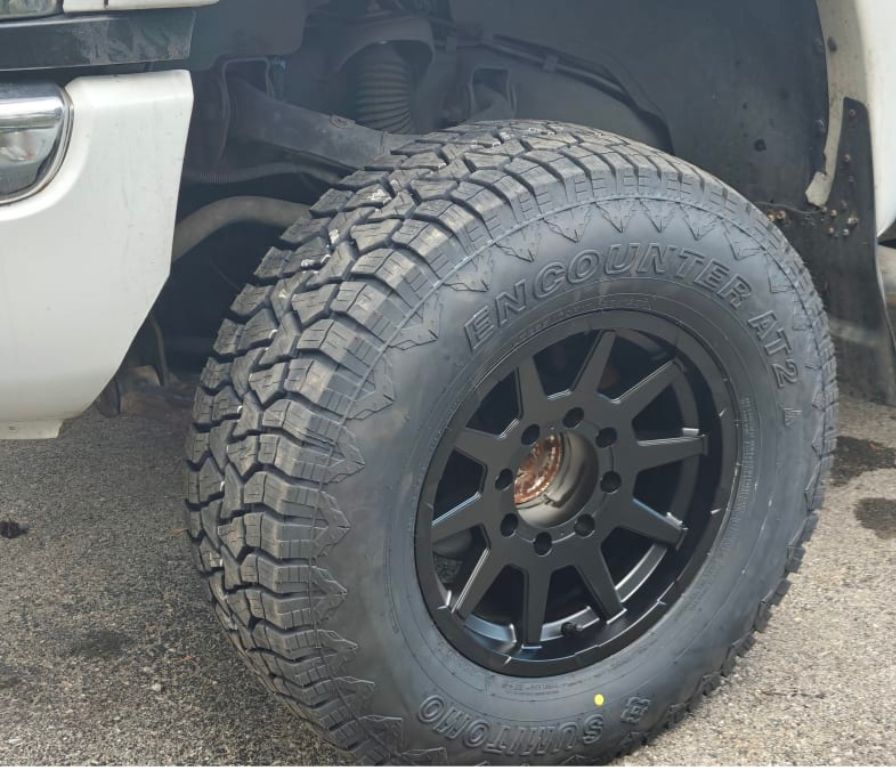
The Sumitomo Encounter AT2 looks like a smarter version of the old one. It’s lighter, sharper on steering, and definitely built more for everyday trucks and SUVs than deep off-road rigs. The six-rib tread should make it more stable on pavement, and those wider shoulder slots will help it move water better. It also seems to clean itself easier in snow and light mud, which is a nice step up from the previous design. The smaller shoulder blocks tell me Sumitomo really wanted this tire to stay quiet and smooth on the highway, and from the pattern alone, I think they nailed it. I’m still a bit unsure about long-term wear, but with how balanced the structure looks, I’d say just keep up with rotations and you’ll be fine. Overall, it feels like the kind of tire that just works — clean design, no drama, comfortable, and practical for daily use.
Shop Smart: Compare Deals
Limited Time Offers – Updated Weekly
Steering, Stability, and Dry Grip
On dry pavement, I can already tell the AT2 should feel more precise than the old Encounter AT. The previous version used stepped center blocks and open shoulders that worked well for stability, but there was still a bit of tread movement when cornering or towing heavy loads. That’s why, even though it scored well in tests, some drivers described it as a little heavy on steering.
This new version is around 4–5 lbs lighter depending on size, which is a significant change for an all-terrain tire. Despite the weight drop, the contact patch and section width are slightly wider, which usually means quicker steering response and more feedback through the wheel, especially during cornering or low-speed maneuvers with a trailer attached.
The UTQG rating and tread depth remain almost identical, so there’s probably no major compound change, and honestly, that’s a smart decision. The compound from the previous model already worked well — it gripped predictably, stayed consistent in heat, and wore evenly. When something performs that reliably, there’s no need to fix it.
It feels like Sumitomo focused its updates on pattern geometry and casing stiffness rather than the rubber mix, and that’s exactly what gives the AT2 a more balanced, controlled feel on dry roads. For towing, highway driving, or long commutes, this tire should feel lighter on its feet and more stable under load while keeping the easy, predictable steering that made the first version so popular.
Wet Traction and Braking
All right, we all know Sumitomo does a great job with compounds. That’s always been one of their strongest areas. However, wet performance isn’t just about the compound — it’s also about how well the tread can move water out from under the tire.
In this case, the new AT2 design uses wider shoulder slots, and that’s the key improvement here. Those channels help evacuate water faster, which is critical for keeping traction in heavy rain. With a tread pattern this tight and symmetrical, they almost had to make that adjustment. Without those wider shoulders, a design like this would hydroplane easily, especially at highway speeds.
What’s interesting is that the AT2 seems to put a little less rubber on the road compared to the older Encounter AT. That’s likely intentional. By spreading out the tread into what looks like a six-rib layout, Sumitomo can create more biting edges and extra notches across the tread blocks. This helps shorten wet braking distances and keeps the tire predictable when the surface is slick.
That said, there’s always a trade-off. I expect the AT2 to offer better hydroplaning resistance overall, but maybe a slightly longer braking distance on damp pavement compared to the original. This trade-off will actually work in your favor if you’re running loaded applications or towing, since the wider voids will keep the tread from glazing over under weight and will help maintain grip stability in standing water. It’s a smart design move — prioritizing control and stability when things get messy, which is exactly where most A/T drivers need it.
Snow and Winter Traction
When it comes to winter grip, both versions of this tire look good on paper, but the AT2’s approach is clearly more refined. The first Encounter AT already carried the 3PMSF severe snow rating, and it honestly performed better than most people expected for a value all-terrain. The new model builds on that by using a tread design that seems to clean itself better, especially in deep snow. The wider shoulder slots and slightly more open voids help push snow and slush out faster, which usually means stronger traction in heavier conditions and less chance of the tread packing up.
Another key change is the switch to 3D Wave Sipes, replacing the older zigzag pattern. These interlocking sipes stay open just enough to bite into snow and slush while keeping the blocks stable on dry pavement. That gives the tire a more predictable feel in light to moderate snow, with better braking stability and fewer of those sudden grip losses that older A/T patterns sometimes have.
When it comes to ice, things might play out a little differently. I expect it to feel more predictable overall, but probably with slightly longer stopping distances than the previous version. The tread seems tuned for stability rather than extreme softness, so it’ll likely track straighter on frozen roads but take a little longer to come to a full stop.
For most drivers who deal with occasional winter weather—slush, packed snow, or short freeze periods—this design hits a very good balance. It’s the kind of tire you can run year-round without feeling like you’re giving up control in cold conditions. But if you drive on glare ice or constant deep freeze, a proper winter tire is still the smarter call.
Noise and Comfort
One thing that always stood out with the old Encounter AT was how quiet it was for an all-terrain tire. It had that steady hum on the highway, but it was never harsh or annoying. With the AT2, I think Sumitomo tried to take that same character and smooth it out even more. The tread looks tighter and more symmetrical, and when you combine that with the new jointless polyamide reinforcement, it should ride softer without losing control.
I haven’t driven it yet, but looking at the pattern and construction, I’d expect less vibration through the cabin and a bit more cushioning on broken pavement. The six-rib layout plays a big role here. Because the tread blocks are smaller and more evenly spaced, they should make contact with the road in shorter, more frequent pulses. That’s what gives a tire that refined, steady highway feel instead of the thumping rhythm you get from wide-void off-road designs.
The shoulder blocks are noticeably less aggressive than the ones on the previous AT, and that’s an interesting design decision. Sumitomo seems to have moved most of the biting edges toward the center section, which makes sense if they’re targeting drivers who use higher air pressures or spend more time towing and commuting. For this type of tire, most of the road noise usually comes from the shoulder area, so keeping those blocks smaller and more uniform is a win. In this case, it feels like Sumitomo hit the jackpot — less shoulder void means less resonance and cleaner airflow, which should translate into a quieter ride without killing its light off-road grip.
Overall, the Encounter AT2 looks built to stay quiet and composed on the highway. It’s not the kind of tire that’ll make your truck sound aggressive when you pull into a parking lot, and that’s the whole point. If you value long-distance comfort and subtle road manners more than a rugged look, this design direction is going to suit you well.
Off-Road and Dirt Performance
The first thing that caught my eye is the higher void area compared to the old Encounter AT. That change alone should help the AT2 clean itself better on muddy or wet dirt, especially when the tread starts packing up. More void means more space for mud and stones to escape, and that usually translates to better traction when the surface gets sloppy. It’s a subtle tweak but an important one for drivers who find themselves on job sites or unpaved trails after a storm.
That said, the shoulder blocks aren’t as aggressive as before. Sumitomo clearly moved the grip focus toward the center ribs, which makes sense if this tire is meant for higher-pressure, on-road-heavy setups. Those narrower shoulders help keep the road noise low, but they’re not designed for deep ruts or rocky crawling. So while the AT2 will dig better in mud and soft soil, it’s still not a tire you’d air down and take through brutal terrain.
Overall, I expect a small but noticeable improvement in off-road traction, especially on loose gravel, clay, and shallow mud. It’ll probably hook up faster when you roll into soft ground and clean itself more easily once it spins. Honestly, I think I love this tread design. It feels like Sumitomo finally found the right balance between practical off-road traction and clean highway behavior — and for most daily drivers, that’s exactly what you want.
Treadwear and Durability
To be honest, this is the only part where I still have questions. The design looks great, but I’m not entirely sure how evenly it’s going to wear. Sumitomo is a Japanese company, and if there’s one thing I know from my time around engineers there, it’s that they don’t release anything before it’s fully tested. (Hello to my colleagues from Bridgestone — you made those testing phases feel like forever.) So I’m sure this tire has gone through the right internal validation. Still, from an outside perspective, I’ll wait to see how it performs in the field.
Because of the higher traction capability and slightly more complex tread structure, I’d keep a close eye on rotation timing with this one. The wear pattern might need a bit more attention than usual, especially during the first 10,000 miles. If you’re good about rotations and alignments, it should reward you with long life. If you’re not, you might see uneven wear a little faster than with the older Encounter AT.
Sumitomo extended the warranty to 65,000 miles, which suggests they actually expect better treadwear performance despite keeping the same tread depth. That’s an optimistic sign. The only thing I can’t predict yet is how the new tread geometry and added traction edges will behave long-term. Sometimes more grip means quicker wear if the compound isn’t perfectly balanced.
So for now, I’ll say this: it looks promising, but let’s hold judgment until more real-world mileage data comes in. This feels like a special tire, not a rehash of the old one — but that also means it’s worth watching how it ages.
Conclusion
After looking through the details, I think the Sumitomo Encounter AT2 is exactly what it looks like — a smarter, cleaner, and more balanced version of the original. It doesn’t try to be a full-on off-road tire, and it doesn’t need to. Sumitomo clearly focused on improving what already worked: on-road comfort, steering precision, and wet confidence.
The tread design is one of the best I’ve seen from Sumitomo in this category. It’s lighter, more stable, and better suited for trucks that spend most of their life on pavement but still need to handle dirt or mild trails without drama. The higher voids give it better self-cleaning in soft terrain, while the compact shoulder setup keeps it quiet and smooth on the highway.
If I had to pick one word for this tire, it would be refined. It’s built for people who want all-terrain traction without the bulk or noise that usually comes with it. I still have a few questions about long-term treadwear, but that’s not something I can call until we see more real-world data. What’s clear is that Sumitomo didn’t cut corners here. The design feels intentional, the construction looks strong, and the balance between comfort and grip is spot on.
If you’re someone who drives mostly on-road, tows occasionally, and doesn’t want to sacrifice ride quality for off-road looks, the Encounter AT2 fits that profile perfectly. It feels like a tire designed by engineers who actually drive trucks — and for me, that’s a very good sign.
FAQ – Sumitomo Encounter AT2
What makes the Sumitomo Encounter AT2 different from the previous Encounter AT?
The Encounter AT2 refines the original AT by improving handling precision and wet-road confidence. It uses a lighter, 4-rib high-void pattern and stiffer belt package for smoother highway manners and better steering response. While the older Encounter AT relied on stepped center blocks, the AT2’s optimized tread geometry reduces noise and improves wear balance.
Is the Encounter AT2 suitable for heavy towing or hauling?
Yes. LT-rated versions feature reinforced polyester plies, dual steel belts, and a jointless polyamide cap that enhances stability under load. The E-load models can support up to 3,750 lbs at 80 psi, making them ideal for light-truck owners who tow frequently.
How does it perform on wet and snowy roads?
Independent evaluations show strong wet braking and hydroplaning resistance, thanks to its deeper circumferential grooves and variable-width shoulders. The 3D wave sipes and aggressive biting edges help it earn the Three-Peak Mountain Snowflake (3PMSF) certification, giving it reliable light-snow capability—though it’s not a replacement for a true winter tire.
Is the AT2 a quiet all-terrain tire?
Yes. The tread pattern is tuned to limit harmonic noise that typically comes from large voids. Many drivers describe it as “quiet on pavement”, even in LT constructions, making it a solid fit for daily-driven trucks and SUVs.
What about treadwear and longevity?
Sumitomo backs the AT2 with a 65,000-mile limited warranty across both passenger and LT versions. Early reports indicate stable wear and even tread contact, although long-term field data is still limited. The uniform warranty coverage shows Sumitomo’s confidence in its new compound and casing balance.
Leave a Reply