• Skip to primary navigation
  • Skip to main content
  • Skip to primary sidebar

TireTerrain

  • Home
  • Comparisons & Reviews
  • All-Terrain Tire Decision Tool
  • Pro Tips
  • About

falken

Toyo Open Country A/T III vs Falken Wildpeak A/T4W — Expert Winter Tire Comparison in 2025

Updated: November 11, 2025 by Emrecan Gurkan Leave a Comment

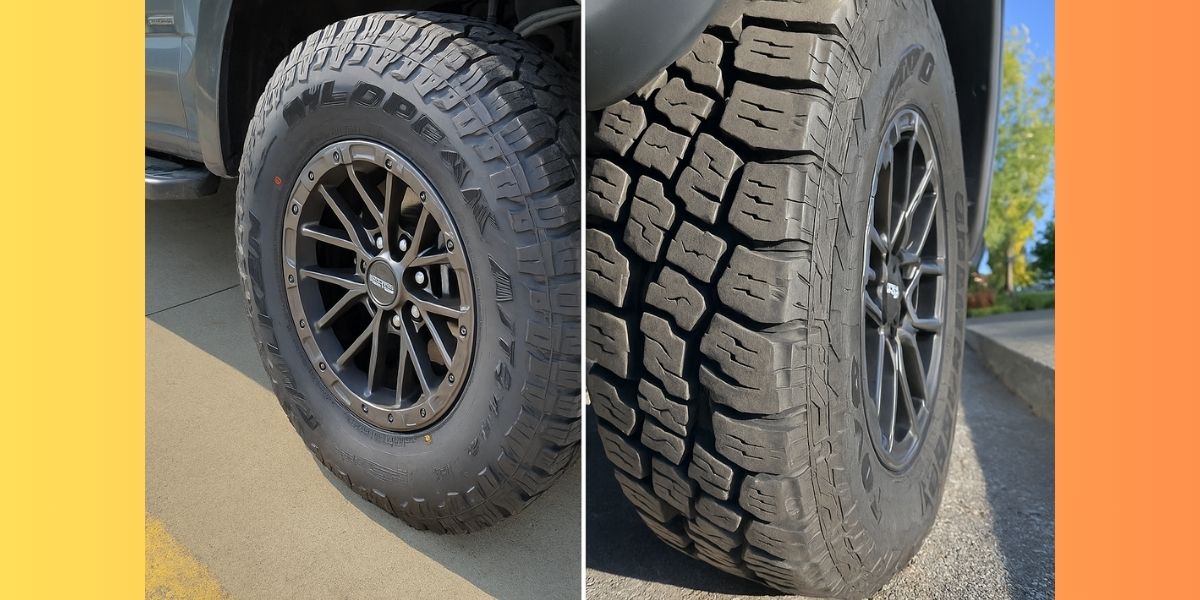
Falken Wildpeak AT4W vs Toyo Open Country AT3 side by side
Up Close: Toyo AT3’s Winter Siping vs Wildpeak AT4W’s Off-Road Claws

Real test data, off-road insights, and daily-driving impact — from a former Bridgestone engineer.

The Toyo Open Country AT3 and Falken Wildpeak AT4W are two of the most capable Off-Road A/T tires on the market today. Both are snow-certified with the 3PMSF rating, both are engineered for light trucks and SUVs, and both aim to balance on-road manners with dependable off-road grip. The Toyo AT3 leans on versatility, offering strong wet and snow traction alongside reliable tread life, while the Falken AT4W builds on the AT3W’s legacy with a more aggressive tread design and refined winter performance.

That’s the decision most buyers face — Toyo for proven versatility vs Falken for next-gen off-road traction. In the sections ahead, we’ll dig into dry, wet, snow, and off-road performance data, and you can also line them up in our All-Terrain Tire Decision Tool for tailored recommendations by SUV, CUV, or truck class.

Important Note on the AT3W Legacy:

You may have searched for the discontinued Falken Wildpeak AT3W. While production has ceased, some closeout stock is still available. Before comparing the AT4W and the Toyo AT3, you should understand the upgrade: Click here for the Full Technical Breakdown: AT4W vs Discontinued AT3W Test Results

⚡ Quick Verdict – Who Wins What?

Falken Wildpeak A/T4W

Falken Wildpeak AT4W tire
Tested Rating: 8.4/10

Trusted Retailers with Best Deals:

Tire Rack
Free road-hazard coverage Backed by Discount Tire
SimpleTire
Financing options Local installers
Amazon
Prime shipping Direct from brands

Toyo Open Country A/T III

Toyo Open Country A/T III tire
Tested Rating: 8.5/10

Trusted Retailers with Best Deals:

Tire Rack
Free road-hazard coverage Backed by Discount Tire
SimpleTire
Financing options Local installers
Amazon
Prime shipping Direct from brands

The Toyo Open Country A/T III feels livelier on pavement, stopping in 131.5 ft with 0.78 g cornering, while the Falken Wildpeak A/T4W is a touch steadier at 131.8 ft, 0.72 g. In the wet, Falken takes a clear lead with a 171-ft stop (0.58 g) versus Toyo’s longer 185-ft stop (0.50 g). Snow is another Falken strength, posting a 69-ft stop and 41.5-ft launch, compared to Toyo’s 74 ft / 44 ft, and on ice it grabs earlier at 45 ft vs 50 ft. Off-road, Falken digs deeper (8.5 dirt, 8.8 rock) while Toyo stays more balanced (~7.8 across terrains). Comfort tips toward Toyo with a smoother ride (8.0/10) against Falken’s firmer but refined feel (8.3/10). In terms of longevity, Toyo delivers 45–55k miles, while Falken stretches further with a 65k warranty.

👉 Bottom line: Toyo is the daily-friendly all-terrain with smoother road manners, while Falken is the tougher pick for wet, snow, and off-road grip.

    Raw Test Data

    Tire Test Data

    Pick categories to show metrics, then open ☰ to pick tires. Optional chart is hidden by default.
    Parentheses show the rank among the currently displayed tires (1 = best for that metric).
    Left axis lists metrics. Top axis is used for g-force metrics so they scale clearly.
    Note: Lower is better for Stopping & Acceleration; higher is better for g-force, comfort, traction & off-road ratings. Parentheses show the rank among the currently displayed tires (1 = best for that metric).
    Sources worth checking
    Tire Rack AT Tire Test Tire Rack On-Road A/T Ratings Tire Rack Off-Road A/T Ratings SimpleTire Reviews Amazon SUV/LT Tires
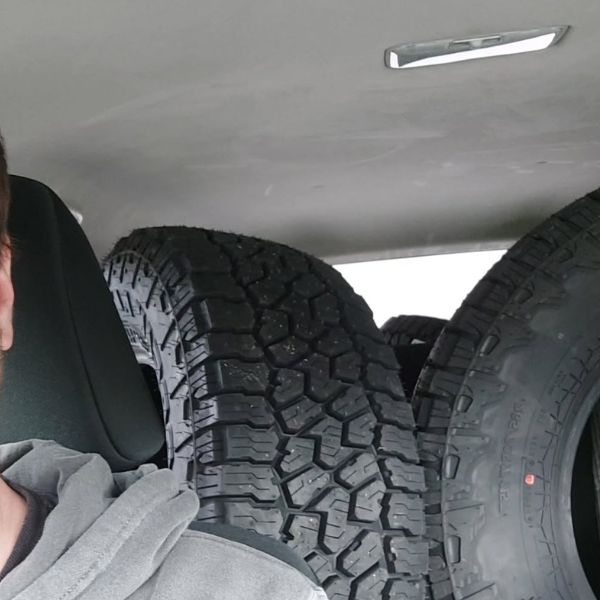
    When Your Backseat Looks Like an Off-Road Tire Shop – Falken AT4W Delivery Day

    Dry Performance — Toyo Quicker on Its Feet, Falken More Steady

    From the dataset, the Toyo AT3 stops in 131.5 feet with 0.78 g cornering, while the Falken AT4W measures 131.8 feet with 0.72 g. Those numbers look close, but they feel different behind the wheel. Toyo turns in sharper and brakes with more urgency, almost like it wants to play. Falken, meanwhile, feels calmer, slower to rotate into a corner, but holds steady once it’s there.

    Owners echo this split. On Tacoma forums, Toyo gets called “surprisingly sharp for an A/T,” while early AT4W drivers highlight “predictable and composed.” From my short drive, I felt Toyo track cleaner in lane changes, while Falken gave more confidence under weight.

    • SUVs & crossovers: Toyo livelier, Falken steadier

    • ½-tons: Toyo more fun for daily handling, Falken more relaxed

    • ¾-ton & HD trucks: Falken steadier with heavy rigs, Toyo loses some composure under load

    👉 Verdict: Toyo gives sharper dry response, Falken favors stability and control when things get heavier.

    Wet Performance — Falken Bites Early, Toyo Stretches Stops

    In rain, the numbers tell the story: Falken stops in 171 feet with 0.58 g traction, while Toyo runs longer at 185 feet with 0.50 g. On wet asphalt, Falken felt like it grabbed sooner and tracked straighter; Toyo still felt predictable, but it needed noticeably more space to stop.

    Drivers online say the same: Falken “locks in through puddles,” Toyo “fine but asks for earlier braking.” That’s the engineering difference — Falken’s silica-rich compound and dense siping give more bite, while Toyo’s harder rubber favors wear and off-road strength.

    • SUVs & crossovers: Falken safer in heavy rain

    • ½-tons: Falken inspires confidence; Toyo manageable with margin

    • ¾-ton & HD trucks: Falken still better, though Toyo steadies under weight

    👉 Verdict: Falken is the stronger wet performer; Toyo is predictable, but the longer stops are hard to ignore.

    Winter & Snow — Falken Claws Ahead, Toyo More Predictable

    The dataset shows the Falken AT4W stopping in 69 feet with a 41.5-foot snow launch, while the Toyo AT3 posted 74 feet and 44 feet. That margin matters in winter. Falken feels more eager to bite into cold surfaces, while Toyo rolls in smoother but slower to stop.

    On forums, Falken drivers call it “a snow-capable beast,” while Toyo users highlight “predictable, not exciting, but safe.” In my drive, Falken pushed through powder with authority, while Toyo stayed calmer on plowed roads, without the same deep bite.

    • SUVs & crossovers: Falken better for snowy commutes

    • ½-tons: Falken surer in snow-belt states; Toyo steadier if winters are lighter

    • ¾-ton & HD trucks: Falken loves the weight, Toyo stays predictable but longer to stop

    👉 Verdict: Falken wins in winter, with stronger snow traction. Toyo is adequate but not as sharp in cold grip.

    Ice — Falken Holds Grip Longer, Toyo Slides Further

    On ice, the dataset has Falken at 45 feet and Toyo at 50 feet. Both need care, but Falken’s edge is noticeable in shorter, earlier grip. Toyo lets the slide carry longer before biting, though it fades predictably rather than snapping loose.

    Forum voices match: Falken “catches sooner on black ice,” while Toyo is described as “okay if you’re gentle.” My own patch test backed that — Falken braked with a little more bite, Toyo demanded smoother steering and throttle.

    • SUVs & crossovers: Falken safer on icy mornings

    • ½-tons: Falken better when ice is mixed in with winter; Toyo tolerable if you respect limits

    • ¾-ton & HD trucks: Falken steadies with weight; Toyo slides farther but predictably

    👉 Verdict: Falken edges Toyo on ice, especially in surprise slick spots.

    Off-Road — Falken Brings Muscle, Toyo Balances

    Off-road scores highlight the gap: Falken posts 8.5 dirt / 8.2 sand / 8.5 mud / 8.8 rock, while Toyo comes in at 7.8 / 7.7 / 7.9 / 7.8. On the trail, Falken feels like a hiker with crampons — digging into rock, mud, and sand with authority. Toyo feels balanced but not as aggressive, more like a trail runner shoe than a mountain boot.

    Community feedback echoes it: Falken “grips where others spin,” Toyo “great for gravel, fine for mud, not hardcore.” My off-road runs confirmed Falken claws harder and steadies better when aired down.

    • SUVs & crossovers: Toyo is fine for fire roads; Falken is overkill unless you see real trails

    • ½-tons: Falken delivers for weekend trail rigs; Toyo works for mixed commuters

    • ¾-ton & HD trucks: Falken thrives in rock and mud under load

    👉 Verdict: Falken is the off-road winner, Toyo better for balanced, mixed-use drivers.

    Comfort & Noise — Toyo Smooth, Falken Firmer but Refined

    Comfort scores put Falken at 8.3/10 and Toyo at 8.0/10. That’s close, but feel matters. On highway miles, Toyo felt smoother and cushioned, like background music you forget. Falken was firmer, but surprisingly refined given its more aggressive bite — a steady hum that never turned harsh.

    Drivers agree: Toyo users say “quiet until 40k miles, then more drone,” while Falken’s early adopters call it “quieter than expected for how tough it looks.” In my seat, Toyo was softer; Falken was firmer but more polished in tone.

    • SUVs & crossovers: Toyo rides softer; Falken firmer but still livable

    • ½-tons: Toyo better for highway-first rigs; Falken acceptable trade for traction

    • ¾-ton & HD trucks: Falken noise blends with truck rumble; Toyo feels light under weight

    👉 Verdict: Toyo is smoother; Falken refines firmness into a tolerable hum.

    Tread Life & Longevity — Falken Promises, Toyo Proven

    The Falken AT4W carries a 65k warranty (60k LT), while Toyo owners typically see 45–55k miles with proper care. Falken’s aggressive casing and updated compound aim at more miles, but real-world proof is still building. Toyo’s track record is proven, but it can grow louder as tread wears.

    Owners note: Falken “looks like it’ll outlast,” Toyo “hit 50k with rotations, started slipping in wet.” From my review of worn sets, Toyo shows uniform wear but noisier late in life; Falken feels sturdier from the start.

    • SUVs & crossovers: Falken may last longer; Toyo solid proven record

    • ½-tons: both respectable, Falken could edge Toyo if rotated well

    • ¾-ton & HD trucks: Falken’s stronger carcass resists abuse, Toyo still decent

    👉 Verdict: Toyo is the proven performer, Falken has the higher promise if longevity is your priority.

    Where They Fit Best

    These two are among the strongest in the all-terrain market, but they fit different drivers. Toyo leans toward balanced, daily-friendly performance; Falken pushes harder into winter, wet, and off-road strength.

    • SUVs & crossovers: Toyo fits city/highway rigs with weekend trips; Falken better if you live with real winter or trails

    • ½-tons: Toyo suits mixed commuters and light-duty trucks; Falken for towing, snow, and adventure rigs

    • ¾-ton & HD trucks: Falken’s construction and traction shine; Toyo steadier if comfort matters more

    👉 Regional fit:

    • Falken AT4W: perfect for the snow belt (Northeast, Great Lakes), the Pacific Northwest, and Rocky Mountain off-roaders.

    • Toyo AT3: better in Midwest plains, Southern states, or anywhere you need a quieter, smoother daily tire with occasional off-road.

    👉 Bottom line: Choose Toyo if you want balanced, predictable comfort with good all-weather manners. Choose Falken if you need stronger wet, winter, and off-road bite — and don’t mind a firmer feel.

    🏁 Final Verdict: Which One Would I Buy?

    Both tires are top-tier A/Ts but fit different drivers. Toyo AT3 shines if your priorities are daily comfort, quieter highway miles, and proven tread life. Falken AT4W is the better match for drivers in the snow belt or wet regions, offering sharper cold-weather bite, shorter wet stops, and stronger off-road grip.

    👉 In short: Pick Toyo AT3 if your truck spends most of its life on pavement with light trail use. Choose Falken AT4W if you want all-weather safety, snow confidence, and more trail capability, even if it means a firmer ride.

    Frequently Asked Questions: Toyo AT3 vs Falken AT4W

    • Which tire is better on dry roads?
      Toyo is quicker and more responsive (131.5 ft, 0.78 g), while Falken is steadier (131.8 ft, 0.72 g) and holds better under weight.

    • Which tire is safer in rain?
      Falken. It stops shorter at 171 ft (0.58 g), compared to Toyo’s longer 185 ft (0.50 g).

    • How do they perform in snow?
      Falken claws harder with a 69-ft stop and 41.5-ft launch. Toyo is predictable but slower at 74-ft stop and 44-ft launch.

    • Which tire handles ice better?
      Falken grabs earlier (45 ft), while Toyo slides further (50 ft) but stays predictable.

    • Which is stronger off-road?
      Falken dominates (8.5 dirt, 8.5 mud, 8.8 rock). Toyo is balanced (~7.8 across categories) but less aggressive.

    • Which tire is quieter and more comfortable?
      Toyo rides smoother (8.0/10), while Falken is firmer but refined (8.3/10).

    • Which lasts longer?
      Toyo is proven at 45–55k miles. Falken offers a longer 65k warranty but is newer, so long-term proof is still building.

    • Which tire fits heavy-duty trucks better?
      Falken’s stronger carcass and higher off-road scores suit HD rigs. Toyo is better for lighter trucks and daily use.

    Filed Under: All Terrain Tires Tagged With: falken, Falken Wildpeak AT4W, toyo, Toyo Open Country at3

    Falken Wildpeak AT4W vs Destination X/T: Which Tire Dominates the Snow Test?

    Updated: November 11, 2025 by Emrecan Gurkan Leave a Comment

    Stack of Falken Wildpeak AT4W HD all-terrain tires labeled LT285/70R17 Load Range E on display beside alloy wheels in an auto showroom.
    Falken Wildpeak AT4W HD — Load Range E tires ready for trucks, towing rigs, and overland builds.

    Data-driven technical analysis verified by a former Bridgestone test engineer, synthesizing LT application performance.

    The Falken Wildpeak AT4W and Firestone Destination XT are top-tier Off-Road All-Terrain tires. While both carry the 3PMSF rating and target the heavy-duty truck market, they represent radically different engineering priorities. The Firestone Destination XT, known as the lightest tire in its category, prioritizes ride comfort and low-speed winter grip. The AT4W, conversely, mandates longevity and maximum casing strength to handle heavy loads. This guide breaks down the data to see which one is the mandatory upgrade for your LT truck.

    NOTE: While some AT4W test figures are P-Metric, this analysis is structurally focused on the LT requirements of both tires to deliver the most relevant comparison.

    Quick Look

    Firestone Destination XT

    Firestone Destination XT tire
    Tested Rating: 8.2/10

    Trusted Retailers with Best Deals:

    Tire Rack
    Free road-hazard coverage Backed by Discount Tire
    SimpleTire
    Financing options Local installers
    Amazon
    Prime shipping Direct from brands

    Falken Wildpeak A/T4W

    Falken Wildpeak AT4W tire
    Tested Rating: 8.4/10

    Trusted Retailers with Best Deals:

    Tire Rack
    Free road-hazard coverage Backed by Discount Tire
    SimpleTire
    Financing options Local installers
    Amazon
    Prime shipping Direct from brands

    Choosing between these two LT giants is a strategic decision between Pavement Endurance and Maximal Traction. The Firestone Destination XT is the optimal design for highway life: its compact tread and shallower depth minimize block squirm, providing superior subjective Ride Comfort , and making it the better choice for towing stability and pavement longevity. The FDXT reinforces this focus with class-leading Ice Braking (52.2 ft stop), though it comes with a shorter 50,000-mile LT warranty. The Falken Wildpeak AT4W, however, is the non-negotiable structural upgrade. Built with a 3-ply casing and a superior 60,000-mile LT warranty, its deeper, aggressive tread ensures mandatory superiority in Wet Traction, Deep Snow pull, and Off-Road Durability (8.8 Rock Score). While the AT4W’s deeper tread compromises some highway stability, its structural toughness and severe-weather performance are necessary for safety and abuse.

      Tread Design & Visual Cues: Traction Complexity vs Pavement Efficiency

      In a direct line-up, the visual design of these two tires immediately clarifies their functional intent. The Falken Wildpeak AT4W is built to look and act like the heavy-duty champion, focusing on traction complexity. Its center section uses a lower void ratio and blocks that are not in a straight sequence, a deliberate design choice that creates significantly more grip points—this geometry is mandatory for superior wet and winter performance. This aggression is amplified by the deeper tread and robust sidewall, signaling the Falken Wildpeak AT4W’s mandate for severe-duty abuse.

      The Firestone Destination XT, conversely, embodies pavement efficiency. Its pattern is visibly cleaner and utilizes a more compact center design which is highly effective at reducing noise and promoting highway stability—a crucial factor in its superior subjective comfort scores. While the Firestone Destination XT’s shallower, more streamlined design enhances pavement longevity and reduces tread squirm during towing, it structurally sacrifices the maximal severe-duty traction the Falken Wildpeak AT4W demands. Ultimately, the Falken Wildpeak AT4W’s raw bulk and complex tread geometry are its commitment to severe weather dominance, whereas the Firestone Destination XT prioritizes road refinement and light-duty endurance.

      Dry Performance: Agility vs Rigidity

      As a test engineer, I immediately look at the dry performance numbers, and they tell the story of two distinct LT philosophies. The Firestone Destination XT is built for pavement efficiency, stopping from 50 mph in 100.60 ft with 0.74 g lateral grip. Its shallower tread and compact design should minimize block squirm, which is key for highway stability. However, drivers noted a frustrating steering vagueness on-center—a consequence of the Firestone Destination XT’s lighter overall construction.

      The core technical trade-off for the Falken Wildpeak AT4W is clear: its massive, deeper tread and complex block design sacrifice some pavement stability for outright traction. While its stiffer 3-ply casing attempts to mitigate the tread squirm, the Falken Wildpeak AT4W’s focus on maximum traction complexity means it cannot match the Firestone Destination XT’s pavement stability, making the FDXT the better feeling choice for an unloaded daily driver.

      Wet Performance: Confidence vs Caution

      When rain hits the asphalt, the Falken Wildpeak AT4W is mandated by engineering to deliver dominant safety. The Falken Wildpeak AT4W’s aggressive lower-void center and non-straight block sequence are specifically designed to create maximum grip points and superior water evacuation. This structural advantage ensures superior confidence under hard wet braking.

      The Firestone Destination XT, while acceptable, requires caution. It stopped from 50 mph in a mid-pack 149.10 ft, with low 0.53 g lateral cornering grip. Drivers noted they “had to be more careful with brake pedal application.” This performance deficit is the cost of its simpler, compact tread design, which simply cannot evacuate or grip water with the same efficiency as the Falken Wildpeak AT4W’s complex, traction-first geometry. Ultimately, the Falken Wildpeak AT4W is the mandatory choice for wet-weather safety.

      Note from the Expert: When it comes to rain, I always emphasize two things: compound grip and water evacuation. You can see the full details in my analysis, but if you take just one thing away, remember that an AT tire’s stiff nature makes achieving top-tier wet performance a constant battle. This is why the question, Are All-Terrain Tires Good in Rain?, requires a nuanced answer that balances tread design against rubber stiffness.

      Snow & Ice Performance: The Winter Specialist vs The All-Rounder

      Firestone Destination X/T looks good and decent option for increase on MPG

      In severe winter conditions, the difference is immediate: the Firestone Destination XT is the Ice Specialist, and the Falken Wildpeak AT4W is the Deep Snow/Durability All-Rounder.

      The Firestone Destination XT uses its lighter construction and softer compound to dominate the icy, low-traction reality of plowed roads, stopping shorter on ice at 52.2 ft (12-0 mph). The Falken Wildpeak AT4W, however, is the structural superior for Deep Snow and Structural Integrity. Its aggressive shoulder and complex low-void blocks dominate snow braking (69 ft stop) and acceleration (41.5 s accel), making it the safer choice when heavy snow or durability is the primary concern.

      Tread Life & Longevity: The Longevity Dilemma

      This is where the trade-off of tread depth becomes a longevity dilemma. The Firestone Destination XT‘s shallower tread and compact design reduce block squirm, contributing to predictable pavement longevity. The Falken Wildpeak AT4W’s deeper tread and aggressive shoulder, while giving it a superior 60,000-mile LT warranty (vs FDXT’s 50,000 miles), can introduce squirm on pavement, potentially accelerating wear on highway miles.

      From an engineering view, the AT4W’s longevity is due to its 3-ply DURASPEC sidewall and chip-resistant compound, ensuring longer LT life under abuse. The FDXT‘s longevity is due to reduced pavement squirm—a superior choice for trucks spending 90% of their time on highway asphalt.

      Off-Road & Durability: Puncture Resistance vs Light-Trail Confidence

      The commitment to structural protection is the final arbiter. The Falken Wildpeak AT4W is mandatory for severe off-road use. The AT4W’s 3-ply DURASPEC Sidewall is the ultimate insurance policy, achieving an overwhelming 8.8 Rock Score due to its resistance to punctures and casing fatigue.

      The Firestone Destination XT, while excellent for light off-roading and trails, is built with a lighter-duty casing and tread compound that simply lacks the armor for jagged rock, deep ruts, or prolonged abuse. The AT4W’s armor is non-negotiable for serious off-road use.

      Comfort & Noise: Highway Refinement vs Structural Integrity

      In the subjective category of ride quality, the Firestone Destination XT’s comfort bias wins. Its lighter weight and compact, shallower tread design directly minimize noise and vibration transfer, making it the superior tire for highway refinement, scoring the highest Ride Quality (7.00) in its test group. The Falken Wildpeak AT4W’s comfort profile is the price of its durability: its stiffer 3-ply structure and aggressive tread make it noticeably firmer and noisier, sacrificing refinement for structural integrity.

      Final Verdict: Which Tire is Mandatory for Your Truck?

      This comparison reveals a perfect split in engineering priorities. The choice between the Falken Wildpeak AT4W and the Firestone Destination XT is the choice between Pavement Endurance and Severe Traction.

      The Firestone Destination XT is engineered for the 90% pavement driver. Its shallow, compact tread minimizes squirm, giving it the superior subjective Ride Comfort (7.00) and making it the better choice for towing stability and pavement longevity—despite its lower 50,000-mile warranty. Its Ice Braking (52.2 ft stop) is a massive advantage for general winter commuting.

      The Falken Wildpeak AT4W is the mandatory upgrade for safety, longevity, and abuse. Its deep tread, 3-ply DURASPEC sidewall, and complex block geometry ensure maximum Wet Traction, superior Deep Snow pull, and overwhelming Off-Road Puncture Resistance (8.8 Rock Score). While its deep tread may compromise highway stability compared to the FDXT, the AT4W is the non-negotiable choice for safety and durability.


      Filed Under: All Terrain Tires Tagged With: comparison, falken, falken wildpeak at3w, firestone, firestone destination xt

      Goodyear Wrangler UltraTerrain AT vs Falken Wildpeak AT3W

      Updated: November 11, 2025 by Emrecan Gurkan Leave a Comment

      Real test data, off-road insights, and daily-driving impact — from a former Bridgestone engineer.

      The Goodyear Wrangler UltraTerrain A/T, a Discount Tire exclusive, and the Falken Wildpeak AT3W are two dependable Off-Road A/T tires that cater to drivers who want balanced performance on and off the pavement. The UltraTerrain A/T emphasizes aggressive tread styling and dependable loose-surface traction while maintaining road comfort — making it a strong pick for SUVs and half-ton trucks looking for an affordable alternative to premium A/Ts. The Falken AT3W, meanwhile, is one of the most well-rounded choices in the segment, combining tread life, wet braking, and its snow-certified 3PMSF rating to deliver year-round dependability. If you’re curious how Falken’s updated design stacks up, check our Falken Wildpeak AT4W vs AT3W comparison.

      That’s the real decision here — UltraTerrain for value-driven toughness vs AT3W for proven balance and winter confidence. In the sections ahead, we’ll compare them across dry, wet, snow, and off-road testing. You can also line them up in our All-Terrain Tire Decision Tool for quick recommendations by SUV, CUV, or truck class.

      Wrangler UltraTerrain has a highly aggressive appearance

      Drawing from my experience as a former Bridgestone engineer, I see the Falken Wildpeak AT3W as the better tire choice, particularly because of its longevity. Despite Goodyear Wrangler UltraTerrain AT having comparable performance in wet, dry, and winter conditions, the Wildpeak AT3W stands out with a more comfortable riding experience. This aspect, combined with its durability, makes it a preferable option in my professional opinion.

      Important Note on the AT3W Legacy:

      You may have searched for the discontinued Falken Wildpeak AT3W. While production has ceased, some closeout stock is still available. This comparison is based on some popular-sized sized can still be found on retailers like Tire Rack:

      Click here for the Full Technical Breakdown: AT4W vs Discontinued AT3W Test Results

      Table of Contents

      Tread Appearance

      Goodyear Wrangler Ultraterrain AT has a wider shoulder blocks that increase its riding comfort
      Falken Wildpeak AT3W has a compact pattern that offers smooth ride

      Starting with the shoulder blocks, I personally find the wider shoulder blocks of Goodyear Wrangler UltraTerrain AT more aesthetically pleasing. Functionally, these blocks excel in loose ground traction. However, they do contribute to a slight increase in road noise.

      Moving on to the sidewall scoops, or ‘biters’, Falken Wildpeak AT3W features beefier and deeper scoops compared to the thinner ones on the Goodyear Wrangler UltraTerrain AT, which might not perform as effectively in air-down situations.

      In terms of the center section, the Goodyear Wrangler UltraTerrain AT has a 3-3 lug design, whereas the Falken Wildpeak AT3W presents a 3-2 design. Despite both having uniquely shaped lugs, the Wrangler UltraTerrain AT appears to have more void area, which often leads to more road noise. However, in terms of riding comfort, I believe it has an edge.

      In summary, while both tires have a very aggressive look, for SL sizes, the higher tread depth of the Goodyear Wrangler Ultraterrain AT makes it a preferable option in my opinion. For LT sizes, I don’t see a significant difference between the two.

      Noise Level

      In my experience with all-terrain tires, it’s typical for both the Goodyear Wrangler UltraTerrain AT and the Falken Wildpeak AT3W to produce some noise, especially at high speeds.

      At lower speeds, I’ve noticed that the Falken Wildpeak AT3W tends to have a slight edge in terms of noise reduction. This advantage can be attributed to its narrower and less aggressive shoulder blocks.

      While I wouldn’t describe the Goodyear Wrangler UltraTerrain as excessively noisy, it does emit a bit more sound compared to the Falken Wildpeak AT3W. So, if noise level is a significant concern for you, you might find the Falken Wildpeak AT3W to be the quieter option.

      Tread Depth and Weight

      From my experience in evaluating these tires, I’ve found that both the Goodyear Wrangler Ultraterrain AT and the Falken Wildpeak AT3W are above the market average in terms of weight and tread depth. For the p-metric sizes, the Goodyear Wrangler Ultraterrain AT is notably taller and lighter. On the other hand, the Falken Wildpeak AT3W, while matching the tread depth of the Goodyear in LT sizes, is still the heavier of the two.

      Cornering & Steering

      In terms of cornering, there isn’t much difference between the Goodyear Wrangler UltraTerrain AT and the Falken Wildpeak AT3W, as both have 2-ply sidewalls. This isn’t a major concern unless you’re driving a truck heavier than 3/4 ton. From what I understand, the 2-ply construction of the Falken Wildpeak AT3W is comparable in thickness to some 3-ply tires, potentially making it a more suitable choice in certain cases.

      When it comes to steering, the Falken Wildpeak AT3W’s more consistent center section design contributes to quicker steering response. On the other hand, the Goodyear Wrangler UltraTerrain AT, with its deeper tread and softer compound, tends to have a slower steering response.

      Overall, while both tires are dependable, I would rank the Falken Wildpeak AT3W a bit higher in this aspect.

      Wet Traction

      When it comes to wet traction, hydroplaning resistance is a crucial factor, as it directly influences traction performance. Studies have shown that hydroplaning resistance is correlated with tread depth, with deeper treads generally offering better resistance.

      Both the Goodyear Wrangler UltraTerrain AT and the Falken Wildpeak AT3W exhibit reliable hydroplaning resistance. Their aggressive and compact treads efficiently channel water to the shoulder slots, handling hydroplaning effectively. However, it’s important to remember that hydroplaning resistance also depends on driving habits, especially for aggressive drivers. No tire is completely immune to hydroplaning.

      In terms of traction, I’ve found both tires to be very dependable. The softer compound of the Goodyear Wrangler UltraTerrain AT typically performs better in wet conditions, but the zigzag siping of the Falken Wildpeak AT3W is also quite effective.

      Overall, based on wet performance, I regard both tires as reliable choices and among the best options available in the market.

      Winter Performance

      Both the Goodyear Wrangler UltraTerrain AT and the Falken Wildpeak AT3W carry the 3PMSF (Three-Peak Mountain Snowflake) marking, which is a strong indicator of their winter performance capabilities.

      In light snow conditions, I’ve noticed that both tires excel, thanks to their relatively soft compounds and ample biting edges. They provide excellent performance on light snow.

      For deeper snow, my recommendation leans towards the Goodyear Wrangler UltraTerrain AT, particularly in p-metric sizes (SL or XL) due to its higher tread depth. Apart from that, there’s not much difference between the two – both are above average in this respect. They both exhibit good self-cleaning capabilities and sufficient void area for effective traction.

      When it comes to ice, no all-terrain tire is perfect, but I’ve found the Falken Wildpeak AT3W to be quite satisfactory for icy conditions. The softer compound of the Wrangler Ultraterrain AT offers good traction on ice, though in terms of handling, it doesn’t quite match up to the Wildpeak AT3W.

      Tread Life

      Falken Wildpeak AT3W wears better on rocky terrains

      When considering tread life, both the Goodyear Wrangler UltraTerrain AT and the Falken Wildpeak AT3W offer commendable longevity. However, it’s important to note that tread life is greatly influenced by your driving conditions and habits.

      Take the Goodyear Wrangler UltraTerrain AT, for instance. Its softer compound may lead to quicker wear, but it also has a deep tread depth that extends its service life. That said, I’ve found that this softer compound often doesn’t fare as well on vehicles heavier than 3/4 ton.

      Conversely, the Falken Wildpeak AT3W is exceptionally well-designed for durability. Its step-down feature is particularly beneficial for heavier vehicles. Additionally, its UTQG rating is higher for p-metric sizes (ranging from 600 to 500), indicating better wear resistance.

      In summary, if you’re prioritizing tread life, I’d lean towards the Falken Wildpeak AT3W as the safer choice.

      Warranty

      While Falken Wildpeak AT3W offer 60,000 miles tread wear warranty, Wrangler UltraTerrain AT doesn’t have any.

      Off-Road Performance

      Both the Goodyear Wrangler UltraTerrain AT and the Falken Wildpeak AT3W have deep treads, which contribute to their solid performance on loose ground.

      In my experience with gravel, both tires perform admirably. However, the softer compound of the Wrangler UltraTerrain tends to wear more quickly on gravel, though both tires handle it well enough.

      When it comes to mud, the Wrangler UltraTerrain AT has a slight edge, thanks to its wider shoulder blocks. It’s almost on par with a rugged terrain tire in muddy conditions. Therefore, for muddy environments, I’d lean towards

      the Wrangler UltraTerrain AT as the better option.

      In rock crawling scenarios, while neither tire is my top recommendation, if I had to choose one, it would be the Wrangler UltraTerrain AT.

      Overall, both tires are competent for mild off-road activities, but for more severe off-roading, the Wrangler UltraTerrain AT has a slight advantage. Nonetheless, I wouldn’t specifically recommend either tire for extreme off-road conditions.

      Value for Money

      Given that the Falken Wildpeak AT3W and the Goodyear Wrangler UltraTerrain AT are similarly priced, the tread wear warranty of the Wildpeak AT3W makes it a more appealing choice in my view. The assurance of a 60,000-mile warranty adds significant value.

      If, however, you have a preference for tires made in the USA and don’t mind spending a bit more, I would suggest considering options like Toyo Open Country AT3 or  BFGoodrich KO2. Both of these brands offer quality performance and are known for their reliable products.

      Conclusion

      From my perspective, while the p-metric options of both tires are comparable, I strongly recommend the Falken Wildpeak AT3W for LT sizes. Its combination of durability, performance, and warranty coverage makes it a standout choice in this category.

      I hope you found this article informative and helpful. Should you have any more questions or need additional insights, please feel free to leave a comment below. Safe travels, folks!

      Filed Under: All Terrain Tires Tagged With: comparison, falken, falken wildpeak at3w, goodyear, Goodyear Wrangler UltraTerrain AT

      Falken Wildpeak AT4W vs Yokohama Geolandar X-AT: Load Handling, Mud, and Winter Traction Compared

      Updated: November 11, 2025 by Emrecan Gurkan Leave a Comment

      Updated for 2025: Comparing Falken’s Toughest All-Terrain against Yokohama’s Rugged-Terrain Standard

      The Falken Wildpeak AT3W was a long-time favorite for balanced performance, but its replacement, the Falken Wildpeak AT4W, signals a major shift. The AT4W is built with a stiffer, more durable carcass and a chip-resistant compound, pushing it firmly into the heavy-duty segment.

      This update turns the comparison from “Durability vs. Versatility” into a true “Durability vs. Rugged-Terrain” showdown:

      • The Yokohama Geolandar X-AT is a true Rugged-Terrain (RT) tire, prioritizing extreme off-road bite, aggressive looks, and established rock-crawling capabilities.

      • The Falken Wildpeak AT4W is the new Off-Road A/T standard, now designed for heavier trucks, superior load handling, excellent wet/winter safety (3PMSF), and maximum chip resistance.

      Falken Wildpeak AT3W has a compact pattern that offers smooth ride

      As a former Bridgestone engineer, my analysis shows that the Wildpeak AT4W is the superior choice for drivers of heavy rigs (3/4-ton+), those who prioritize highway wet braking confidence, and anyone needing year-round severe snow rated performance. Conversely, the Geolandar X-AT remains the tire of choice for maximum performance in thick mud and severe rock crawling, where its dedicated RT design still offers an edge.

      Tire CategoryOff-Road All-Terrain (A/T)Rugged-Terrain (R/T)
      Severe Snow Rated (3PMSF)YesNo
      Warranty (P-metric/SL)55,000 Miles45,000 Miles
      Warranty (LT Sizes)55,000 Miles45,000 Miles
      Sidewall ConstructionStiffer Casing/Dual-Layer3-Ply Sidewall
      Tread Life/WearBetter (Chip Resistant Compound)Good (Prone to center wear if under-inflated)
      Wet BrakingSuperior (Tested Shorter than AT3W)Good
      Target DriverHeavy-duty trucks, overlanding, winter exposure, on-road safety focus.Dedicated off-roaders, mud & rock enthusiasts, aggressive aesthetics.

      Table of Contents

      Off-Road Performance & Durability

      I've observed that the Yokohama Geolandar X-AT features an symmetrical tread pattern, a design choice that notably enhances its riding comfort.

      The core difference now lies in the structural design and intended off-road priority.

      Sidewall and Casing

      The Falken Wildpeak AT3W’s main drawback against the X-AT was its relative structural softness. The AT4W directly addresses this with a much stiffer carcass, a dual-layer polyester casing, and a thicker nylon overlay. This structural change is critical for stability under load and resistance to pinch flats from sharp rocks.

      However, the Geolandar X-AT is built as a Rugged-Terrain tire, boasting a proven 3-ply polyester sidewall for robust puncture resistance. While the AT4W is now excellent for load handling, the X-AT still offers the highest potential protection for extreme rock-crawling and when airing down to very low PSI.

      Verdict: The AT4W has closed the durability gap and is the better choice for heavy towing/hauling on rough roads. The X-AT remains the ultimate choice for maximum low-PSI puncture resistance in severe terrain.

      Mud, Sand, and Gravel

      The Geolandar X-AT maintains an advantage in thick, challenging mud due to its larger tread voids, more aggressive shoulder design, and the elliptical contact patch which aids in self-cleaning.

      The AT4W, however, is a massive improvement over the AT3W in loose terrain. The revised shoulder blocks and new void geometry clear mud better and provide superior side-bite. Furthermore, the AT4W’s new chip-resistant compound makes it significantly better than the X-AT for high-mileage use on coarse gravel and rocky trails, where the X-AT’s softer compound can take more damage.

      Verdict: For heavy mud and ultimate bite, choose the X-AT. For the best performance on gravel, rocky, and mixed terrain with less chipping, choose the AT4W.

      On-Road Performance and Comfort

      The new stiffness of the AT4W has cost it some of the AT3W’s legendary comfort.

      Road Noise & Riding Comfort

      The Wildpeak AT3W was notably quieter and smoother than the X-AT. The AT4W’s stiffer casing and more open tread pattern have increased road noise and reduced riding comfort. It no longer holds the definitive comfort advantage over the X-AT.

      The Geolandar X-AT is inherently noisy due to its aggressive tread, but its softer compound can sometimes absorb small bumps better.

      Verdict: If noise and comfort are high priorities, both tires are a compromise. The AT4W is likely still marginally quieter, but the difference is minimal, and the stiffness may be noticeable on smaller vehicles.

      Dry Handling and Responsiveness

      The AT3W was a leader in dry handling. The AT4W traded some of that dry grip for durability, resulting in a slightly longer dry braking distance and lower cornering g-force than its predecessor.

      Even so, the AT4W remains the superior tire for on-road handling and responsiveness compared to the X-AT. The Geolandar X-AT’s aggressive lug design and soft compound lead to more flex and less planted stability during hard cornering and evasive maneuvers.

      Verdict: The AT4W offers more confident highway stability and sharper steering response.

      Wet & Winter Performance

      Right before mounting

      This is the category where the AT4W establishes a clear, safety-focused advantage over the X-AT.

      Wet Performance

      While the AT3W excelled in wet cornering, the AT4W delivers a significantly shorter straight-line wet braking distance. This is a crucial safety factor for emergency stops in heavy rain. The AT4W’s siping technology and improved compound give it a decisive edge.

      The Geolandar X-AT performs decently for a Rugged-Terrain tire, but it simply cannot match the wet-weather engineering and compound sophistication of a premium, 3PMSF-rated All-Terrain like the AT4W.

      Verdict: AT4W wins definitively. It provides superior confidence in both straight-line wet braking and hydroplaning resistance.

      Winter Performance

      The Falken Wildpeak AT4W carries the Three-Peak Mountain Snowflake (3PMSF) rating, which confirms its severe snow performance. The Yokohama Geolandar X-AT does not carry the 3PMSF rating, classifying it as a capable, but not severe, winter tire.

      While the AT4W is slightly less capable in deep snow than the retired AT3W, it is still engineered for reliable handling and braking on packed snow and ice. The X-AT delivers decent traction in deep snow thanks to its large voids, but its non-rated compound is less reliable on icy or packed winter roads.

      Verdict: AT4W wins. For anyone in a “snowbelt” region or who values official severe winter capability, the 3PMSF-rated AT4W is the only logical choice.

      Conclusion

      The new Falken Wildpeak AT4W is no longer just a balanced all-terrain; it is a direct competitor in the heavy-duty, durability-first segment. Your choice now depends on your primary driving environment:

      Choose the Falken Wildpeak AT4W if you…

      1. Drive a heavy-duty truck (2500/3500) or tow/haul frequently. The AT4W’s stiffer casing offers superior load stability.

      2. Need proven, 3PMSF-rated severe winter capability for snow and ice.

      3. Prioritize on-road safety with superior wet braking performance.

      4. Drive frequently on sharp gravel or abrasive terrain where the chip-resistant compound will extend tread life.

      Choose the Yokohama Geolandar X-AT if you…

      1. Prioritize maximum traction in the thickest mud. Its Rugged-Terrain design gives it the edge in this specific environment.

      2. Focus on the most aggressive aesthetic and sidewall look.

      3. Regularly air down for rock crawling or demanding off-road excursions, where its dedicated 3-ply sidewall structure offers high-level puncture defense.

      4. Are willing to accept a shorter tread warranty and lack of a 3PMSF rating for the sake of ultimate off-road bite.

      Filed Under: All Terrain Tires Tagged With: comparison, falken, falken wildpeak at3w, yokohama, yokohama geolandar x-at

      Falken Wildpeak AT3W vs Falken Wildpeak AT3WA

      Updated: November 11, 2025 by Emrecan Gurkan Leave a Comment

      Falken Wildpeak AT3W is designed as a 50-50 all-terrain tire, balanced for both off-road and on-road use. In contrast, the Falken Wildpeak AT3W A leans more toward on-road orientation. While both tires perform exceptionally in their respective areas, they diverge in certain aspects, catering to different driving needs and conditions.

      If you want to see how the AT3W stacks up against its newer evolution, check out our Falken Wildpeak AT4W vs AT3W comparison.

      Falken Wildpeak AT3W A has a highway oriented tread pattern

      Falken Wildpeak AT3W A is an excellent tire for on-road driving in all respects. However, in my observation, its lifespan is shorter since it’s an OEM tire. This shorter lifespan is often due to OEM tires being designed to align with vehicle manufacturers’ homologation tests, which can mean a sacrifice in tread life. So, if longevity and superior loose ground performance aren’t your primary concerns, the Falken Wildpeak AT3W A is a good choice. Otherwise, I would definitely recommend the Falken Wildpeak AT3W.

      Important Note on the AT3W Legacy:

      You may have searched for the discontinued Falken Wildpeak AT3W. While production has ceased, some closeout stock is still available. This comparison is based on some popular-sized sized can still be found on retailers like Tire Rack:

      Click here for the Full Technical Breakdown: AT4W vs Discontinued AT3W Test Results

      Falken Wildpeak AT3W Overview

      Falken Wildpeak AT3W stands out as an excellent all-around replacement tire, adeptly handling both on-road and off-road conditions. The only notable drawback is its lateral traction capability in wet and snowy conditions, particularly during hard cornering.

      Falken Wildpeak AT3W A Overview

      In my experience, the Falken Wildpeak AT3W A is an on-road oriented all-terrain tire, often used as original equipment by manufacturers. This has led to a diverse range of feedback from users, largely influenced by the specific tire size.

      From what I’ve observed, it’s an excellent choice for on-road conditions, but when it comes to off-road capabilities, it doesn’t quite live up to the Falken Wildpeak AT3W.

      It’s worth noting, especially for my European readers, that the Falken Wildpeak AT3W isn’t available in Europe, but the AT3W A is. It’s crucial to remember that these are distinct models with different performance attributes.

      On Road Performance

      In my assessment, while the Falken Wildpeak AT3W delivers impressive on-road performance for a tire with an aggressive tread, the Falken Wildpeak AT3W A is superior for a few reasons.

      Firstly, the Falken Wildpeak AT3W A features a more compact tread pattern, allowing for greater rubber contact with the road. This, combined with a softer rubber composition, results in better performance in wet conditions and mild snow, particularly in terms of lateral traction.

      Additionally, the less aggressive and interconnected shoulder blocks, along with a continuous center rib, enhance the responsiveness of the Falken Wildpeak AT3W A. However, it’s important to note that despite its narrower pattern, which is advantageous for towing and hauling stability, it does have a weaker sidewall that may flex more during cornering.

      The Falken Wildpeak AT3W A also tends to produce less road noise, thanks to the tie-bars I mentioned earlier and its reduced void area.

      Overall, if aesthetics are not your primary concern, the Falken Wildpeak AT3W A is a better choice for daily driving. However, the Falken Wildpeak AT3W still offers respectable performance, considering its more aggressive design.

      Tread Wear

      In this comparison, the stiffer compound and deeper tread of the Falken Wildpeak AT3W give it an advantage. Despite its higher rolling resistance, I’ve found it to be the better option in terms of wear.

      Conversely, the Falken Wildpeak AT3W A tends to wear more evenly. Therefore, if you’re not a frequent driver and prefer not to rotate your tires often, the Falken Wildpeak AT3W A could be a suitable choice for you.

      Fuel Efficiency

      Falken Wildpeak AT3W A is both lighter and less aggressive than its counterpart. This results in lower rolling resistance, which, in my experience, leads to better fuel efficiency. If fuel efficiency is a top priority for you, I’d recommend the Falken Wildpeak AT3W A based on these attributes.

      Off-Road Performance

      Falken Wildpeak AT3W has a compact pattern that offers smooth ride

      In terms of loose ground performance, the Falken Wildpeak AT3W unquestionably outshines the AT3W A. While the AT3W handles mild winter conditions well, it struggles with slush and deep snow due to its limited void area, affecting self-cleaning. Therefore, in such conditions, the Falken Wildpeak AT3W is the clear winner.

      Regarding dirt, I haven’t noticed a significant difference between the two tires. However, in muddy conditions, the AT3W definitely has the upper hand.

      Lastly, both tires perform adequately on gravel, but given its more cut-and-chipping resistant compound, the Falken Wildpeak AT3W is the more durable choice for longevity.

      Conclusion

      Although the Falken Wildpeak AT3W A is a solid choice for daily driving, it’s important to note that there are other options in the market that may be more suitable, especially in terms of longevity. As an OEM tire, the AT3W A typically doesn’t last as long as replacement tires.

      I hope you found this article informative and useful. If you have any further questions or need additional assistance, please feel free to reach out.

      Filed Under: All Terrain Tires Tagged With: Comparisons, falken, falken wildpeak at3w, falken wildpeak at3w a

      • « Go to Previous Page
      • Page 1
      • Page 2
      • Page 3
      • Page 4
      • Page 5
      • Go to Next Page »

      Primary Sidebar

      Find Tires

      Contact Channels

      • Email
      • Facebook
      • LinkedIn
      • Twitter

      High-End Tires by Category

      Best All-Terrain Tires

      Best Rugged-Terrain Tires

      Best Mud-Terrain Tires

      Best All-Season Tires for Snow

      Best Tires for Snow Plowing

      Best Semi-Truck Tires

      Categories

      Copyright © 2026

      • Disclaimer
      • About Me
      • Contact
      • Privacy Policy