• Skip to primary navigation
  • Skip to main content
  • Skip to primary sidebar

TireTerrain

  • Home
  • Comparisons & Reviews
  • All-Terrain Tire Decision Tool
  • Pro Tips
  • About

Nitto Recon Grappler

Nitto Recon Grappler vs Falken AT4W — Hybrid Toughness vs Winter Confidence in 2025

Updated: November 11, 2025 by Emrecan Gurkan Leave a Comment

Real-world test data, driver impressions, and community feedback — explained by a former Bridgestone test engineer.

The Nitto Recon Grappler A/T is a tougher, hybrid-leaning Off-Road A/T tire, built with a stiffer casing and blockier tread that shine under load and on gravel. The Falken Wildpeak AT4W, by contrast, is more road-friendly — tuned with a silica-rich compound and tighter tread pattern that feel safer in rain and steadier in winter. Snow-certified with the 3PMSF rating, the AT4W builds on the AT3W’s proven winter and all-weather reliability. For the full generational breakdown, see my Falken Wildpeak AT4W vs AT3W review.

That’s the real contrast — Recon for stiffness and gravel-ready durability vs AT4W for wet safety and winter stability. In the sections ahead, I’ll break down how they compare across dry, wet, snow, and off-road testing. You can also line them up in our All-Terrain Tire Decision Tool for quick recommendations tailored by SUV, CUV, or truck class.

Quick Look

Falken Wildpeak A/T4W

Falken Wildpeak AT4W tire
Tested Rating: 8.4/10

Trusted Retailers with Best Deals:

Tire Rack
Free road-hazard coverage Backed by Discount Tire
SimpleTire
Financing options Local installers
Amazon
Prime shipping Direct from brands

Nitto Recon Grappler A/T

Nitto Recon Grappler A/T tire
Tested Rating: 8.0/10

Trusted Retailers with Best Deals:

Tire Rack
Free road-hazard coverage Backed by Discount Tire
SimpleTire
Financing options Local installers
Amazon
Prime shipping Direct from brands

The Nitto Recon Grappler A/T leans hard into toughness and hybrid A/T styling. With chunky shoulders, wide voids, and a stiff casing, it feels sharper off the line and steadier when towing heavy loads. At ~54 lbs in LT285 sizes, it’s lighter than Falken equivalents, which helps fuel economy and trailer stability. On-road, it reacts quickly to steering but demands caution in the wet, with longer stops (192 ft / 0.43 g) that require more margin. Off-road, it’s the bruiser — strong in dirt, mud, and rock, with a casing that resists cuts and chunking. Noise builds with miles, but its 55k–65k warranty is unusually strong for a hybrid A/T.

The Falken Wildpeak A/T4W is the more balanced daily partner. With tighter tread blocks, dense siping, and a silica-rich compound, it consistently brakes shorter in the wet (171 ft / 0.58 g) and grips better in snow and ice (69-ft snow, 45-ft ice). At 67 lbs in LT285, it’s heavier, but that weight brings deeper tread (up to 18/32″) and serious winter/off-road confidence. Comfort tips toward Falken too, with an 8.3/10 ride vs Recon’s 7.3, and its hum stays livable even as miles stack up. Backed by a 60k–65k warranty, it’s a tire built to last across climates.

👉 Bottom line: Recon = hybrid toughness with lighter weight & towing stability; AT4W = balanced grip, comfort, and true winter/off-road confidence.

    Raw Test Data

    Tire Test Data

    Pick categories to show metrics, then open ☰ to pick tires. Optional chart is hidden by default.

    Parentheses show the rank among the currently displayed tires (1 = best for that metric).
    Left axis lists metrics. Top axis is used for g-force metrics so they scale clearly.
    Note: Lower is better for Stopping & Acceleration; higher is better for g-force, comfort, traction & off-road ratings. Parentheses show the rank among the currently displayed tires (1 = best for that metric).
    Sources worth checking
    Tire Rack AT Tire Test Tire Rack On-Road A/T Ratings Tire Rack Off-Road A/T Ratings SimpleTire Reviews Amazon SUV/LT Tires

    Tread Pattern & Specs

    Nitto Recon Grappler A/T

    • Look & build: Hybrid-style A/T with chunky shoulders, wide voids, and stone ejectors.

    • Weight: ~50 lb in LT265/70R17; ~54 lb in LT285/70R17. Lighter than Falken in equivalent LT sizes.

    • Warranty: 55k miles (LT); 65k miles (P-metric) — rare for a hybrid A/T.

    • UTQG: 600 A B (P-metric only).

    • Load options: Mostly LT E load, with some P-metric sizes like 285/70R17.
      👉 Root cause: Lighter casing and 16/32″ tread depth (LT285) explain its efficiency and towing stability, but also why it trails Falken in wet grip.

    Falken Wildpeak A/T4W

    • Look & build: Road-leaning A/T with tighter tread blocks, heavy siping, and silica compound.

    • Weight: ~46 lb in P265/70R17; ~53 lb in LT265/70R17; ~67 lb in LT285/70R17.

    • Warranty: 65k miles (P-metric); 60k miles (LT).

    • UTQG: 660 A B (P-metric only).

    • Load options: Broad spread: P-metric SL, LT C, and LT E with 3-ply DuraSpec sidewalls.
      👉 Root cause: Deeper tread (up to 18/32″ in LT285) and heavier build = more winter/off-road grip and durability, but higher rolling resistance and stress on lighter trucks.

    Dry Performance — Recon quicker to bite, Falken steadier once settled

    On paper, Recon stops at 138 ft with 0.72 g cornering, while AT4W clocks 131.8 ft with 0.72 g. That means Falken technically brakes shorter, but the feel is different: Recon snaps quicker into a turn, while Falken takes a breath to settle, then holds the line with more authority.

    Forum owners echo this. Recon drivers say it “feels sharper than expected for such an aggressive tread,” while Falken users highlight how it “tracks like stock once it settles in.” From my test seat, Recon’s aggressive block layout gives that eager initial feedback, but Falken’s reinforced shoulder and crown design reduce squirm, making it calmer when loaded.

    • SUVs & crossovers: Recon feels more lively; Falken steadier on longer curves.

    • ½-tons: Recon fun unloaded; Falken safer with towing.

    • ¾-tons & HD trucks: Falken clearly steadier — Recon flexes more under big mass.

    👉 Verdict: Recon feels quicker on light rigs; Falken steadies once weight or load enters the picture.

    Wet Performance — Falken safer margin, Recon stretches long

    Here’s the biggest gap: Falken stops in 171 ft with 0.58 g traction, while Recon stretches out to 192 ft with 0.43 g. That’s one of the clearest trade-offs in this matchup.

    Drivers back it up. Recon owners admit “you need more space in storms,” while Falken drivers say “confident even on slick highways.” The engineering explains it: Falken’s silica-rich compound and dense siping cut through surface water and resist hydroplaning, while Recon’s wider voids, tuned for off-road bite, displace rubber contact patch in heavy rain.

    • SUVs & crossovers: Falken the easy wet-weather choice.

    • ½-tons: Falken inspires more confidence; Recon only manageable if driven with care.

    • ¾-tons & HD trucks: Falken keeps trailers in line; Recon demands wide margins.

    👉 Verdict: Falken wins wet safety hands-down; Recon demands patience and planning.

    Note from the Expert: When it comes to rain, I always emphasize two things: compound grip and water evacuation. You can see the full details in my analysis, but if you take just one thing away, remember that an AT tire’s stiff nature makes achieving top-tier wet performance a constant battle. This is why the question, Are All-Terrain Tires Good in Rain?, requires a nuanced answer that balances tread design against rubber stiffness.

    Winter & Snow — Recon claws loose powder, Falken steadier on pack

    In snow testing, Recon posts a 74 ft stop and 45.5 ft launch, while Falken runs 69 ft and 41.5 ft. The split is clear: Recon claws harder in loose, fresh snow, but Falken digs in sooner on packed or plowed roads.

    Community voices match: Recon drivers say it “powers through driveway drifts without issue,” while Falken owners note “predictable on salted and plowed lanes.” From my perspective, Recon’s aggressive shoulders and open voids give loose-snow bite, while Falken’s siping density and pliable compound keep braking shorter on polished surfaces.

    • SUVs & crossovers: Falken safer on daily plowed roads; Recon better in unplowed driveways.

    • ½-tons: Falken the smarter commuter choice; Recon fun but less secure in pack.

    • ¾-tons & HD trucks: Falken steadier under weight; Recon less confidence on polished winter roads.

    👉 Verdict: Recon shines in loose snow; Falken steadier and safer when roads are maintained.

    Note from the Expert: Our discussions often boil down to the core tradeoff. On one hand, you must understand why all-terrain tires are truly effective in deep snow, but not on ice. On the other hand, you face the 3PMSF Paradox—the hidden cost of that badge. The short answer is: The 3PMSF badge certifies traction, but it costs you durability. Dive into our full analysis on the critical 3PMSF rating for severe winter and off-road service, and its hidden costs, before you risk your rig on the trail.

    Ice — Falken holds, Recon fades sooner

    On ice, Falken stops in 45 ft, while Recon takes 46.5 ft. The numbers look close, but the feel isn’t. Recon tends to slide longer before catching, while Falken grips earlier and fades more predictably.

    Owners describe it well: Recon is “fine if you creep and stay smooth,” while Falken “gives confidence even on frosty mornings.” The why comes down to micro-siping — Falken’s high siping density holds micro-edges in frozen temps, while Recon’s blockier tread loses those contact points faster.

    • SUVs & crossovers: Falken more forgiving.

    • ½-tons: Falken keeps recovery time shorter; Recon needs caution.

    • ¾-tons & HD trucks: Falken steadier under trailers; Recon can get skatey.

    👉 Verdict: Falken is the safer ice option, even if neither is a dedicated winter tire.

    Off-Road — Recon tougher, Falken balanced bite + comfort

    Off-road scores tell the story. Recon logs 8.2 dirt / 8.0 sand / 8.3 mud / 8.1 rock, while Falken hits 8.5 / 8.2 / 8.5 / 8.8. Falken wins slightly in outright grip, especially on rocks and ruts, but Recon brings durability and toughness that shines on sharp gravel and mud.

    Recon owners rave it’s “a beast in ruts and mud, takes abuse without chunking.” Falken users often say “planted and stable even on rough, rutted dirt roads.” Recon’s casing and void design keep it damage-resistant, while Falken’s deeper tread depth and aggressive siping make it stickier when climbing.

    • SUVs & crossovers: Falken more balanced; Recon overbuilt unless trails are routine.

    • ½-tons: Recon excels in abuse; Falken more versatile overall.

    • ¾-tons & HD trucks: Both solid — Recon wins durability, Falken wins traction.

    👉 Verdict: Falken edges with grip versatility; Recon tougher and more resistant to abuse.

    Note from the Expert: Every successful day on the trail is about preparation and physics, because tire longevity is earned, not given. Before you even start, you must master the critical link between tire pressure and load range for every rig to maximize your contact patch. Once moving, remember your ultimate off-road armor is your sidewall protection against the inevitable pinch flat. And finally, your traction on the obstacle is dictated by choosing the right aggressive vs hybrid tread pattern for your terrain. Master those three steps, and your rig will be ready for anything.

    Comfort & Noise — Falken steadier, Recon grows louder

    Recon comfort scores 7.3/10, while Falken comes in higher at 8.3/10. Recon rides firm and growls more as tread wears. Falken stays quieter longer, with a hum that blends into background.

    Owners put it best: Recon is “quiet at first, but grows noisy around 20k miles.” Falken drivers say it’s “a little more noise than stock, but pleasant on the highway.” From an engineering standpoint, Recon’s larger voids naturally resonate more; Falken’s pitch sequencing calms that vibration.

    • SUVs & crossovers: Falken smoother and quieter.

    • ½-tons: Recon livable, Falken nicer.

    • ¾-tons & HD trucks: Falken blends into diesel or load; Recon feels rougher but not unbearable.

    👉 Verdict: Falken is the refinement pick; Recon carries a firmer hum as it ages.

    Note from the Expert: For years, choosing all-terrain meant accepting noise—a true compromise for off-road grip. That’s why the question, Are All-Terrain Tires Louder than Highway Tires?, used to have a simple “yes” answer. Now, with the rise of on-road models, the core issue has shifted from noise to overall refinement. To fully understand which side of the comfort spectrum you’re buying into, you need to determine Are All-Terrain Tires Good for Daily Driving?—a question that depends entirely on the tire’s construction, not just the name.

    Treadwear & Longevity — Falken Lasts Longer

    Falken carries a 65k warranty on P-metric sizes and 60k on LT sizes. Nitto offers 65k on P-metric sizes and 55k on LT.

    In real life, Falken’s silica compound and tighter tread design tend to wear evenly, with many owners reporting balanced comfort even past 40k miles. Its LT versions with DuraSpec casing sacrifice a bit of tread life compared to P-metric, but the 60k rating is still strong for a tire with off-road chops.

    Nitto’s Recon is tougher, resisting chips and cuts on gravel, but its blockier tread can wear unevenly on lighter vehicles. On heavy trucks or towing setups, the stiff casing distributes load more evenly, bringing it closer to its rated mileage. The P-metric Recon is the surprising twist here — at 65k miles, it matches Falken’s warranty while still carrying hybrid looks.

    👉 Verdict: Falken is the safer bet for longer, balanced tread life across P and LT. Nitto trades mileage for extra toughness in LT, but its P-metric line offers a unique mix of hybrid styling with commuter-level longevity.

    Geographic & Climatic Deep Dive

    For drivers in the Snow Belt and wet regions—places like the Great Lakes, Northeast, Pacific Northwest, or the Rockies—the Falken Wildpeak A/T4W is the more dependable choice. Its Three-Peak Mountain Snowflake (3PMSF) rating isn’t just a badge, it’s a certification that matters when you’re commuting over snow-packed roads or climbing mountain passes that legally require winter-rated tires. The silica-rich compound keeps the tread flexible in freezing temperatures, and its shorter wet stopping distance (171 ft versus Nitto’s 192 ft) adds peace of mind in heavy rain or slush. If you’re running a Toyota 4Runner in Colorado, a Subaru Outback in Vermont, or an F-150 in Michigan, Falken offers the kind of predictable grip that makes winter driving safer.

    By contrast, in arid and rugged regions like the Southwest deserts, West Texas highways, or the Great Plains, the Nitto Recon Grappler A/T comes into its own. The tougher, hybrid-style casing shrugs off cuts from sharp desert rock, and the lighter LT sizes (around 54 lbs compared to Falken’s 67 lbs in similar 285s) mean less rolling resistance on long, hot interstates. That helps preserve fuel economy while keeping the truck stable. If you’re in a Ram 1500 rolling across Arizona, a Jeep Gladiator tackling Utah slickrock, or a Toyota Tacoma racking up Texas miles, Recon feels purpose-built for your conditions.

    When towing and hauling come into play, the difference is even clearer. The Recon Grappler stays planted under load thanks to its stiff carcass, limiting sway and squirm when a trailer is hooked up. The Wildpeak A/T4W rides softer and is more comfortable when empty, but with a heavy payload it can feel less locked in, particularly on winding highways.

    👉 In short, Falken is the smarter fit for wet and snowy regions where safety comes first, while Nitto is the workhorse for hot, rugged landscapes and towing-heavy setups.

    Tire Size Selection: The Basics You Can’t Skip

    Even the best tread design can’t rescue a tire that’s built too weak. Back when I was testing tires at Bridgestone, I saw all-terrain models that should’ve performed but fell short — simply because the basics (size, load strength, and speed rating) weren’t matched to the vehicle.

    P-Metric vs. LT (Light Truck) Tires

    The first step is knowing whether you need LT or passenger tires. LT (Light Truck) tires are built with extra reinforcement and stiff sidewalls, designed for towing, hauling, or off-road use. Passenger (P-metric) tires are lighter, smoother, and tuned for daily comfort and fuel efficiency — but they’ll flex more under load.

    Understanding Tire Load Range: XL vs. E-Load

    Then comes the tire load index and load range — essentially your tire’s strength rating. Here’s where things split between passenger XL and LT E:

    • XL (Extra Load) is a passenger tire with reinforced sidewalls. It can handle a bit more pressure (~41 PSI) than a standard SL tire and is perfect for SUVs, crossovers, or light trucks that carry extra gear, passengers, or small trailers. XL tires ride softer and quieter than LT options, making them ideal for daily use.

    • E Load Range is an LT tire class built with a much thicker casing. E-rated tires can handle far more pressure (up to ~80 PSI) and heavier loads, which makes them essential for ¾-ton and 1-ton trucks towing trailers or hauling close to max capacity. The trade-off is weight, stiffer ride, more road noise, and a small drop in fuel efficiency.

    Put simply: XL is for “extra luggage and family,” while E is for “truck bed full of bricks or a car trailer.”

    Why the Tire Speed Rating Matters for Safety

    Finally, don’t overlook the tire speed rating. It’s not just about top speed — it measures how well a tire handles heat and stress at highway pace. Lower ratings (like S) tend to ride softer and last longer, while higher ratings (H, T) feel more stable and responsive under sharp maneuvers. Heat build-up is the silent killer of tires, and speed rating is your safeguard.

    Bottom line: Match your tire’s construction (LT vs P-metric), load range (XL vs E), and speed rating to your vehicle’s demands. Get those right, and everything else — off-road grip, winter traction, comfort — will finally perform the way it was designed to.

    Final Verdict

    Performance MetricNitto Recon Grappler A/TFalken Wildpeak A/T4W
    Dry Stopping (60–0 mph)140 ft132 ft 🏆 Winner
    Dry Cornering (g)0.70 g0.72 g 🏆 Winner
    Wet Stopping (60–0 mph)192 ft171 ft 🏆 Winner
    Wet Grip (g)0.43 g0.58 g 🏆 Winner
    Winter Stopping (25–0 mph)74 ft69 ft 🏆 Winner
    Snow Accel (0–12 mph)45.5 ft41.5 ft 🏆 Winner
    Ice Stopping (ft)46.5 ft45 ft 🏆 Winner
    Noise & Comfort6.806.92 🏆 Winner
    Treadwear Warranty55k65k 🏆 Winner
    Legend: 🏆 = winner in row. Lower is better for stopping/accel distances; higher is better for grip, comfort, and warranty.
    👉 See how they stack up against the rest of the field in our Best All-Terrain Tires for 2025 guide

    For drivers in wet or snowy climates, the Falken Wildpeak A/T4W is the safer bet. It delivers shorter wet and ice stops, calmer winter handling, and quieter road manners, making it ideal for Great Lakes, Northeast, Rockies, and Pacific Northwest regions. SUVs, crossovers, and ½-ton trucks see the biggest benefits.

    The Nitto Recon Grappler A/T is better suited for drier, rugged landscapes. Its lighter LT casing and cut-resistant design make it perfect for Southwest deserts, West Texas, and long-haul towing. It’s the pick for half-ton and ¾-ton trucks that need towing stability and off-road durability more than polished wet-road manners.

    👉 Bottom line: Falken = safer in storms and snow, longer life, and better comfort. Nitto = tougher casing, towing confidence, and hybrid looks for dry, rugged duty.

    📌 Note on Upsizing to 285/70R17

    • Nitto 285 LT (~54 lb, 16/32″ tread depth): lighter, easier on mpg/braking, better for stance-focused daily use. Also offered in P-metric (65k warranty) — rare for a tire this aggressive.

    • Falken 285 LT (~67 lb, 18/32″ tread depth): heavier, with more rubber + 3-ply DuraSpec sidewall for true off-roaders, but adds drag and stress on lighter trucks.

    Bottom line: If your truck is a workhorse, go Recon. If it’s a daily/family hauler, go Falken. If you’re upsizing to 285s, Recon keeps road manners intact, while Falken doubles down on LT strength.

    Frequently Asked Questions: Nitto Recon Grappler A/T vs Falken Wildpeak A/T4W

    • Which tire is better on dry pavement?
      Recon feels sharper on turn-in, while Falken steadies out once loaded. Falken also posts a shorter 131.8-ft stop versus Recon’s 138 ft.

    • Which tire is safer in wet conditions?
      Falken clearly wins, stopping in 171 ft with 0.58 g traction, compared to Recon’s longer 192 ft / 0.43 g result.

    • Which tire performs better in snow?
      Recon claws better in loose drifts, but Falken brakes shorter and steadier on packed or plowed winter roads.

    • Which tire is more secure on ice?
      Falken stops shorter at 45 ft and grips earlier, while Recon tends to slide longer before catching at 46.5 ft.

    • Which tire is stronger off-road?
      Recon resists cuts and abuse better, but Falken posts slightly higher dirt, sand, and rock grip scores thanks to deeper tread and siping.

    • Which tire is quieter on the highway?
      Falken wins with an 8.3/10 comfort rating, while Recon grows louder as tread wears, scoring 7.3/10.

    • Which tire lasts longer?
      Falken offers 65k (P-metric) / 60k (LT) warranties and tends to wear evenly. Recon carries 65k (P) / 55k (LT), but its blockier tread can wear unevenly.

    • Who should choose the Nitto Recon Grappler A/T?
      Drivers in dry, rugged regions (Southwest, Texas, desert) or those towing/hauling heavy loads who need durability and hybrid looks.

    • Who should choose the Falken Wildpeak A/T4W?
      Drivers in wet or snowy regions who want predictable all-weather grip, quieter comfort, and longer tread life, especially for SUVs and ½-ton trucks.

    Filed Under: All Terrain Tires Tagged With: Comparisons, falken, Falken Wildpeak AT4W, nitto, Nitto Recon Grappler

    Nitto Recon Grappler A/T vs Nitto Terra Grappler G3 — Rugged Hybrid Bite or Daily-Friendly All-Terrain? (2025)

    Updated: November 11, 2025 by Emrecan Gurkan Leave a Comment

    Nitto Recon Grappler is a great option for towing due to its 3-ply sidewalls

    Real-world test data, driver impressions, and community feedback — explained by a former Bridgestone test engineer.

    The Nitto Recon Grappler A/T is a tougher, hybrid-leaning Off-Road A/T tire, built with a stiffer casing and blockier tread that shine under load and on gravel. The Nitto Terra Grappler, by contrast, is more road-friendly — tuned with a silica-rich compound and tighter tread pattern that feel safer in rain and more stable in winter. Snow-certified with the 3PMSF rating, the Terra Grappler G3 builds on the Nitto Terra Grappler G2’s reputation for all-weather reliability.

    That’s the split buyers face — Recon for rugged stiffness and trail bite vs AT4W for winter stability and everyday drivability. In the sections ahead, I’ll show how they compare across dry, wet, snow, and off-road testing. You can also line them up in our All-Terrain Tire Decision Tool for quick, vehicle-specific recommendations by SUV, CUV, or truck class.

    Quick Look

    Nitto Recon Grappler A/T

    Nitto Recon Grappler A/T tire
    Tested Rating: 8.0/10

    Trusted Retailers with Best Deals:

    Tire Rack
    Free road-hazard coverage Backed by Discount Tire
    SimpleTire
    Financing options Local installers
    Amazon
    Prime shipping Direct from brands

    Nitto Terra Grappler G3

    Nitto Terra Grappler G3 tire
    Tested Rating: 8.6/10

    Trusted Retailers with Best Deals:

    Tire Rack
    Free road-hazard coverage Backed by Discount Tire
    SimpleTire
    Financing options Local installers
    Amazon
    Prime shipping Direct from brands

    The Nitto Terra Grappler G3 is the calmer, more planted daily driver of the two. With a 127-ft dry stop and 0.74 g cornering, it steadies trucks through highway sweepers and delivers shorter wet stops (158 ft / 0.57 g) than many rivals. Drivers praise its “quiet, stable ride” and confidence in rain or packed snow, while its earlier ice grip adds an extra safety margin for commuters. It’s also the more comfortable choice, with an 8.0/10 ride score and less cabin hum. For suburban, snow-belt, and highway use, the G3 is the predictable, quiet A/T that makes winter commuting easier.

    The Nitto Recon Grappler A/T leans the other way — more aggressive, more expressive. With a 138-ft dry stop and 0.72 g cornering, it feels sharper on initial turn-in but less settled under load. Wet and icy stops stretch longer, demanding more margin, yet drivers praise its rugged looks and note it “bites into mud and ruts” better than expected. Its off-road scores (8.2 dirt / 8.3 mud / 8.1 rock) easily top the G3, making it the go-to for overlanding and weekend trails. Road comfort takes a back seat (7.3/10), but the Recon delivers that hybrid A/T personality for drivers who want visual punch and real trail chops.

    👉 Bottom line: Terra G3 = quiet commuter confidence; Recon = rugged hybrid with extra bite.

      Raw Test Data

      Tire Test Data

      Pick categories to show metrics, then open ☰ to pick tires. Optional chart is hidden by default.

      Parentheses show the rank among the currently displayed tires (1 = best for that metric).
      Left axis lists metrics. Top axis is used for g-force metrics so they scale clearly.
      Note: Lower is better for Stopping & Acceleration; higher is better for g-force, comfort, traction & off-road ratings. Parentheses show the rank among the currently displayed tires (1 = best for that metric).
      Sources worth checking
      Tire Rack AT Tire Test Tire Rack On-Road A/T Ratings Tire Rack Off-Road A/T Ratings SimpleTire Reviews Amazon SUV/LT Tires

      Tread Pattern & Specs

      Nitto Recon Grappler A/T
      The Recon Grappler sits between an A/T and R/T. Its large, staggered shoulder blocks and deep voids provide biting edges for dirt and gravel, while its reinforced casing resists chips and cuts. This aggressive design explains its stronger dry grip and off-road stability, but also why it struggles in wet braking — wide voids don’t evacuate water as efficiently.

      Nitto Terra Grappler G3
      The Terra Grappler G3 is an on-road leaning A/T, with tighter tread blocks and abundant siping for water evacuation. Its shoulders are less aggressive, which improves ride comfort and noise levels. The design favors wet-road safety and long tread life, making it more of a commuter’s A/T than a trail-ready option.

      Dry Performance — G3 more planted, Recon sharper off the line

      On dry roads, G3 stops in about 127 ft / 0.74 g cornering, while Recon lags to 138 ft / 0.72 g. That means G3 feels more composed when you push it; Recon gives quicker initial bite but requires care under load.

      Forum users often say things like Recon “looks great, a bit louder, but the steering feel is more responsive.” Others with G3 report “road hum is lower, truck feels more planted in highway sweepers.”

      Engineering insight: G3 uses firmer shoulders and reinforced ribs to reduce block flex, which helps with line-holding and straight-line stability. Recon’s blocks are more aggressive, allowing sharper turn in, but at the cost of slightly more vibration and less stiffness under heavy cornering.

      • SUVs & crossovers: G3 feels more composed; Recon more playful.

      • ½-tons: G3 steadier with trailers; Recon fun unloaded.

      • ¾-tons & HD trucks: G3 better on long highway loads; Recon more likely to squirm under weight.

      👉 Verdict: G3 wins dry stability; Recon wins snap and flair.

      Wet Performance — G3 stops shorter, Recon needs margin

      A weared Nitto Terra Grappler G2 and brand new Nitto Terra Grappler G3

      In the wet, G3’s stopping performance shines compared to Recon: G3 stops at ~158 ft / 0.57 g, Recon at ~192 ft / 0.43 g. That’s a meaningful difference when braking hard in a downpour.

      From Tundra forums and Reddit, several users say G3 “feels confident in the rain, doesn’t dart or wander,” while Recon owners note “you learn to leave more space, it takes longer to scrub speed.”

      Engineering side: G3’s compound and siping work better in wet films; its grooves evacuate water more efficiently. Recon’s tread voids and block design prioritize off-road strength and dry bite, so wet braking suffers comparatively.

      • SUVs & crossovers: G3 gives more margin in wet stops.

      • ½-tons: Recon workable if careful; G3 safer.

      • ¾-tons & HD: G3 keeps trailers safer under wet emergency braking; Recon demands more planning.

      👉 Verdict: G3 is the safer wet pick; Recon trades wet performance for off-road/off-dry aggression.

      Note from the Expert: When it comes to rain, I always emphasize two things: compound grip and water evacuation. You can see the full details in my analysis, but if you take just one thing away, remember that an AT tire’s stiff nature makes achieving top-tier wet performance a constant battle. This is why the question, Are All-Terrain Tires Good in Rain?, requires a nuanced answer that balances tread design against rubber stiffness.

      Winter & Snow — G3 control, Recon depth vs polish trade-offs

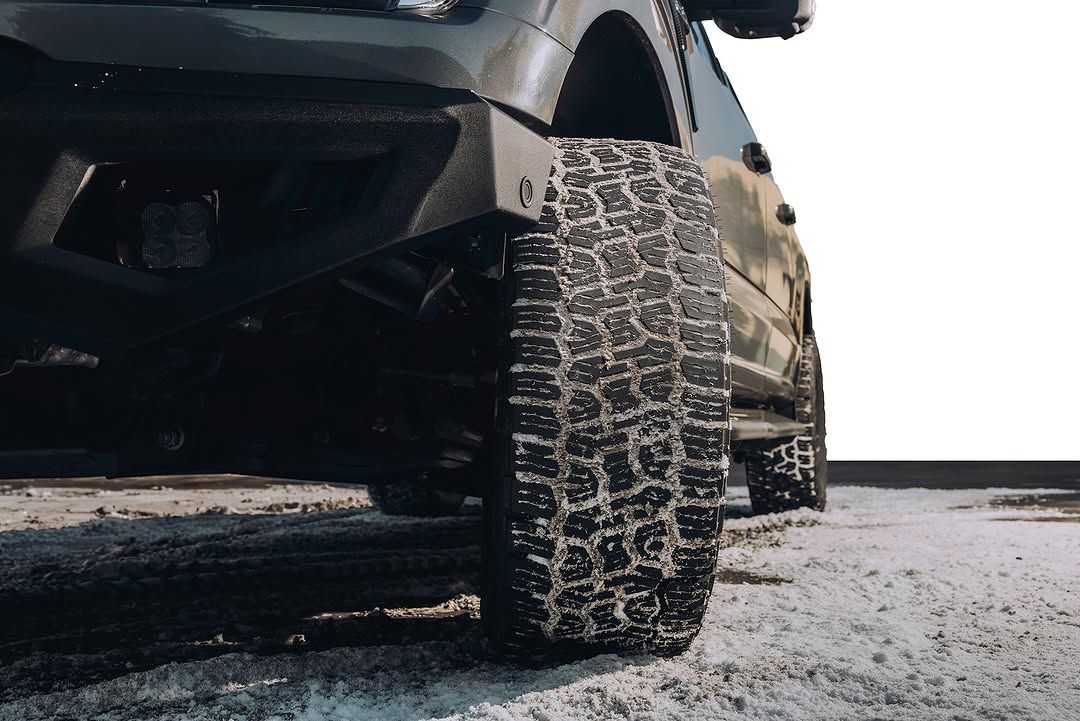
      Low-angle view of a truck fitted with Nitto Terra Grappler G3 all-terrain tires, showing snow-packed tread blocks on a winter road for improved traction.
      Nitto Terra Grappler G3 — built to bite into snow and keep you moving. ❄️🛞💪

      Snow tests have G3 with ~86.9 ft snow stop / 45.2 ft snow accel, while Recon offers ~74.0 ft stop / 45.5 ft accel. That gives Recon a slight edge in launch out of snow, but G3 stops sooner when snow or slush is packed.

      Forum voices reflect that: Recon drivers say “good pull in loose snow but far from polished,” while G3 users describe “predictable braking in snow, especially on plowed roads.”

      Engineering nuance: Recon uses more aggressive tread block edges and deeper voids that help when digging out of fresh snow. G3’s compound and tighter siping favour packed snow braking and more control once the road has been cleared.

      • SUVs & crossovers: G3 offers better stability in snow-belt roads; Recon better for deep snow, less plowed environments.

      • ½-tons: Recon gives more pull in fresh snow; G3 offers safer, shorter stops on maintained routes.

      • ¾-tons & HD trucks: G3’s braking comes through under load; Recon might carry momentum but needs more tire to stop.

      👉 Verdict: Recon edges in snow acceleration; G3 stronger where snow is packed or roads are plowed.

      Note from the Expert: Our discussions often boil down to the core tradeoff. On one hand, you must understand why all-terrain tires are truly effective in deep snow, but not on ice. On the other hand, you face the 3PMSF Paradox—the hidden cost of that badge. The short answer is: The 3PMSF badge certifies traction, but it costs you durability. Dive into our full analysis on the critical 3PMSF rating for severe winter and off-road service, and its hidden costs, before you risk your rig on the trail.

      Ice — G3 has more margin, Recon slides longer

      On icy surfaces, G3 stops around 47.8 ft, while Recon stops around 46.5 ft. The numbers are close, but the feel is different: G3 feels more secure early in the stop, Recon tends to slide more before catching grip.

      Users say G3 gives “confidence on morning frost,” while Recon owners warn “require gentler braking, especially downhill.”

      Engineering explanation: G3’s sipes and harder-shoulder compound help hold micro-edges in freezing temps; Recon, with more aggressive block geometry, loses those edges earlier under load, increasing slide before bite.

      • SUVs & crossovers: G3 safer on ice; Recon manageable if driving conservative.

      • ½-tons: G3 gives extra margin; Recon requires planning and speed control.

      • ¾-tons & HD: G3’s sturdier build helps under load; Recon can be unpredictable in ice with heavy weight.

      👉 Verdict: G3 wins ice control; Recon riskier unless constrained.

      Off-Road — Recon digs deeper, G3 smoother on mild trails

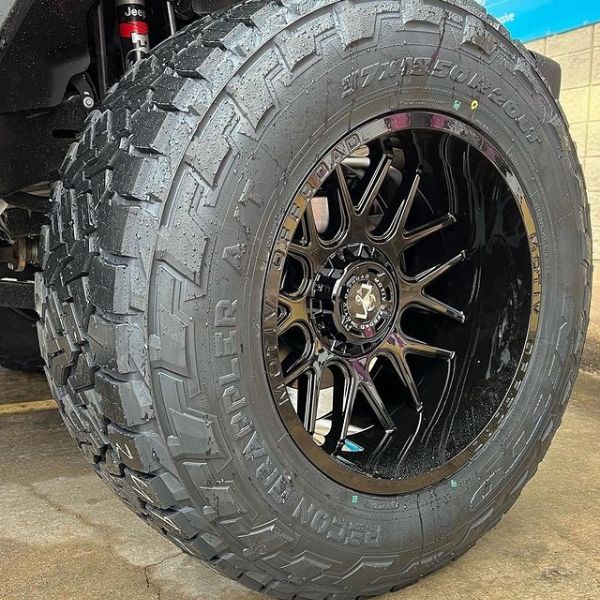
      Nitto Recon Grappler shares a similar tread pattern with Ridge Grappler. Yet, it lasts longer due to its stiffer compound and light-weight.

      Off-road scores show Recon at 8.2 dirt / 8.0 sand / 8.3 mud / 8.1 rock, while G3 logs 6.8 / 6.8 / 6.5 / 6.7. Recon is the better tool when trails get rough, mud gets deep, or you’re airing down for rock. G3 prefers gravel, fire roads, and softer terrain.

      Forum feedback: Recon users rave its grip in mud and rough terrain; G3 owners praise how it handles gravel and stone without harsh ride or noise. One G3 driver said “things bounce less, ride feels more stable than expected off-road.”

      Engineering view: Recon’s deeper voids, larger tread block edges, and reinforced sidewalls resist chunking and tear. G3 trades off some of that brutality for smoother tread contact, less harshness over washboards, and less vibration.

      • SUVs & crossovers: G3 plenty for mild trails; Recon when you expect real off-road.

      • ½-tons: Recon gives more capability off-road; G3 for occasional dirt and lighter terrain.

      • ¾-tons & HD: Recon built for this use; G3 may feel under-engineered when abused.

      👉 Verdict: Recon wins off-road capability; G3 wins smoother trail manners.

      Note from the Expert: Every successful day on the trail is about preparation and physics, because tire longevity is earned, not given. Before you even start, you must master the critical link between tire pressure and load range for every rig to maximize your contact patch. Once moving, remember your ultimate off-road armor is your sidewall protection against the inevitable pinch flat. And finally, your traction on the obstacle is dictated by choosing the right aggressive vs hybrid tread pattern for your terrain. Master those three steps, and your rig will be ready for anything.

      Comfort & Noise — G3 quieter, Recon more rugged feel

      G3 comfort scores ~8.0/10, Recon ~7.3/10. G3 owners frequently say “ride is phenomenal and noise is minimal,” while Recon users report more noise at highway speeds and more road texture felt.

      Engineering cause: G3’s tread ribs and lower void ratio reduce high frequency resonance. Recon’s aggressive block layout and stiffer shoulders generate more vibration, especially on pavement.

      • SUVs & crossovers: G3 clearly more comfortable.

      • ½-tons: Recon tolerable but louder; G3 easier on long drives.

      • ¾-tons & HD: Noise blends with load, but G3 still wins comfort baseline.

      👉 Verdict: G3 is the comfort pick; Recon trades quiet for toughness.

      Note from the Expert: For years, choosing all-terrain meant accepting noise—a true compromise for off-road grip. That’s why the question, Are All-Terrain Tires Louder than Highway Tires?, used to have a simple “yes” answer. Now, with the rise of on-road models, the core issue has shifted from noise to overall refinement. To fully understand which side of the comfort spectrum you’re buying into, you need to determine Are All-Terrain Tires Good for Daily Driving?—a question that depends entirely on the tire’s construction, not just the name.

      Where They Fit Best + Regional Notes

      • Nitto Terra Grappler G3: Best for drivers who want a strong all-terrain tire with better wet & snow braking, highway manners, and quieter ride. Great fit for urban/suburban highways, snow-belt roads that are plowed, and lighter rigs that see occasional trail or dirt.

      • Nitto Recon Grappler A/T: More aggressive capability, better for serious trail work, mud, gravel, and mixed terrain that’s rough. Ideal for mountain regions, desert roads, or weekend overland use where on/off-road balance is asked.

      👉 Bottom line: G3 wins stability, wet/ice margin, and road comfort. Recon wins raw grip off-road and aggressive look, at expense of noise, wet/ice margin, and ride smoothness.

      Tire Size Selection: The Basics You Can’t Skip

      Even the best tread design can’t rescue a tire that’s built too weak. Back when I was testing tires at Bridgestone, I saw all-terrain models that should’ve performed but fell short — simply because the basics (size, load strength, and speed rating) weren’t matched to the vehicle.

      P-Metric vs. LT (Light Truck) Tires

      The first step is knowing whether you need LT or passenger tires. LT (Light Truck) tires are built with extra reinforcement and stiff sidewalls, designed for towing, hauling, or off-road use. Passenger (P-metric) tires are lighter, smoother, and tuned for daily comfort and fuel efficiency — but they’ll flex more under load.

      Understanding Tire Load Range: XL vs. E-Load

      Then comes the tire load index and load range — essentially your tire’s strength rating. Here’s where things split between passenger XL and LT E:

      • XL (Extra Load) is a passenger tire with reinforced sidewalls. It can handle a bit more pressure (~41 PSI) than a standard SL tire and is perfect for SUVs, crossovers, or light trucks that carry extra gear, passengers, or small trailers. XL tires ride softer and quieter than LT options, making them ideal for daily use.

      • E Load Range is an LT tire class built with a much thicker casing. E-rated tires can handle far more pressure (up to ~80 PSI) and heavier loads, which makes them essential for ¾-ton and 1-ton trucks towing trailers or hauling close to max capacity. The trade-off is weight, stiffer ride, more road noise, and a small drop in fuel efficiency.

      Put simply: XL is for “extra luggage and family,” while E is for “truck bed full of bricks or a car trailer.”

      Why the Tire Speed Rating Matters for Safety

      Finally, don’t overlook the tire speed rating. It’s not just about top speed — it measures how well a tire handles heat and stress at highway pace. Lower ratings (like S) tend to ride softer and last longer, while higher ratings (H, T) feel more stable and responsive under sharp maneuvers. Heat build-up is the silent killer of tires, and speed rating is your safeguard.

      Bottom line: Match your tire’s construction (LT vs P-metric), load range (XL vs E), and speed rating to your vehicle’s demands. Get those right, and everything else — off-road grip, winter traction, comfort — will finally perform the way it was designed to.

      Final Verdict

      Pick the Terra Grappler G3 if you want safety, composure, and quietness above all. It’s better for plowed roads, rain-soaked highways, and drivers who value predictable handling in winter conditions. SUVs, crossovers, and ½-tons used mainly for commuting or light trails feel at home on G3s.

      Choose the Recon Grappler A/T if off-road grip, looks, and responsiveness matter more than wet/ice security. It’s a better fit for mountain, desert, or mud-heavy regions where trail grip outweighs comfort. Best on ½-ton and ¾-ton pickups that spend weekends in rougher terrain.

      👉 Bottom line: G3 is the refined, wet-safe commuter A/T; Recon is the sharper, off-road-ready hybrid that trades polish for grit.

      Frequently Asked Questions: Nitto Terra Grappler G3 vs Nitto Recon Grappler A/T

      • Which tire is better on dry roads?
        The G3 stops shorter (127 ft / 0.74 g) and feels more planted, while Recon reacts sharper but is less steady under load.

      • Which tire performs better in the rain?
        The G3 is safer, stopping at 158 ft / 0.57 g, while Recon stretches to 192 ft / 0.43 g and requires more braking distance.

      • Which tire is stronger in winter and snow?
        G3 brakes shorter on packed snow and feels steadier on plowed roads. Recon digs better in loose drifts but runs longer on salted pavement.

      • How do they compare on ice?
        G3 feels more secure early in stops, while Recon tends to slide longer before regaining grip.

      • Which tire is better off-road?
        Recon clearly wins with higher dirt, mud, and rock scores. G3 is smoother on gravel and fire roads but not built for rough trails.

      • Which tire is quieter on the highway?
        The G3 is quieter and smoother (8.0/10), while Recon is louder (7.3/10) with more road texture.

      • Who should buy the Terra Grappler G3?
        Commuters and light-trail drivers who want a quiet, predictable tire for rain, snow, and highway driving.

      • Who should buy the Recon Grappler A/T?
        Drivers who value aggressive looks, sharper steering, and stronger off-road performance, even at the cost of comfort and wet/ice security.

      Filed Under: All Terrain Tires Tagged With: Comparisons, nitto, Nitto Recon Grappler, nitto terra grappler g3

      Nitto Recon Grappler vs BFGoodrich KO3 — Sharp Handling vs Winter Durability in 2025

      Updated: November 11, 2025 by Emrecan Gurkan Leave a Comment

      Fresh BFGoodrich All-Terrain T/A KO3 tire stacked in a workshop, with size label LT285/70R17 visible, showcasing aggressive tread pattern for off-road and all-weather traction.
      Fresh from the rack — BFGoodrich KO3, ready for your next adventure.

      Real-world test data, driver impressions, and technical breakdowns — from a former Bridgestone test engineer.

      The BFGoodrich KO3 is BFG’s newest Off-Road A/T tire, carrying forward the KO2’s legacy with stronger sidewalls, tougher chip resistance, and a winter-focused compound certified by the 3PMSF rating. It’s the go-to choice for heavy trucks, tow rigs, and off-roaders who need year-round reliability. For the full evolution story, see my BFGoodrich KO3 vs KO2 breakdown. The Nitto Recon Grappler A/T also sits in the Off-Road A/T category, but takes a different approach — designed with everyday livability in mind. It emphasizes comfort, quieter ride quality, and sharper on-road handling, while still holding enough off-road toughness for weekend trails and light-duty adventure.

      That’s the real split — KO3 for brute durability and four-season strength vs Recon Grappler for balance and daily usability. In the sections ahead, I’ll break down how they compare across dry, wet, snow, and off-road testing. You can also line them up directly in our All-Terrain Tire Decision Tool for quick, vehicle-specific recommendations by SUV, CUV, or truck class.

      🔍 Quick Look

      Nitto Recon Grappler A/T

      Nitto Recon Grappler A/T tire
      Tested Rating: 8.0/10

      Trusted Retailers with Best Deals:

      Tire Rack
      Free road-hazard coverage Backed by Discount Tire
      SimpleTire
      Financing options Local installers
      Amazon
      Prime shipping Direct from brands

      BFGoodrich All-Terrain T/A KO3

      BFGoodrich KO3 tire
      Tested Rating: 8.5/10

      Trusted Retailers with Best Deals:

      Tire Rack
      Free road-hazard coverage Backed by Discount Tire
      Amazon
      Prime shipping Direct from brands

      The Nitto Recon Grappler A/T feels sharper and more responsive on lighter rigs, stopping in 138 ft with 0.72 g cornering and reacting quicker to steering inputs than the KO3. Owners note it “drives surprisingly tight for how blocky it looks.” On weekend trails, it’s capable with mid-8 scores in dirt and mud, while carrying aggressive looks without being overbearing day-to-day. The trade-off comes in longer wet stops (192 ft), a weaker ice margin, and a firmer ride that grows louder as tread wears. It’s a versatile hybrid A/T, but one that demands more respect when the weather turns slick. The BFGoodrich KO3 plays the heavyweight role, built with reinforced shoulders and tougher sidewalls that steady half-tons with trailers and dominate ¾-ton and HD trucks. It stops shorter in the wet (184 ft), runs calmer on ice (46.2 ft), and steadies salted highways better in winter. Off-road, it’s the benchmark, with 9+ scores across dirt, sand, and rock, earning its “bulletproof” reputation. Comfort is firm but steadier long-term (7.5/10), with more uniform noise as miles build. The KO3 isn’t flashy, but for hauling, snow-belt commutes, and punishing trails, it’s the dependable choice.

        Raw Test Data

        Tire Test Data

        Pick categories to show metrics, then open ☰ to pick tires. Optional chart is hidden by default.

        Parentheses show the rank among the currently displayed tires (1 = best for that metric).
        Left axis lists metrics. Top axis is used for g-force metrics so they scale clearly.
        Note: Lower is better for Stopping & Acceleration; higher is better for g-force, comfort, traction & off-road ratings. Parentheses show the rank among the currently displayed tires (1 = best for that metric).
        Sources worth checking
        Tire Rack AT Tire Test Tire Rack On-Road A/T Ratings Tire Rack Off-Road A/T Ratings SimpleTire Reviews Amazon SUV/LT Tires

        Dry Performance — Recon quicker, KO3 steadier once loaded

        Nitto Recon Grappler shares a similar tread pattern with Ridge Grappler. Yet, it lasts longer due to its stiffer compound and light-weight.

        On dry pavement, the Recon Grappler stops at 138 ft with 0.72 g cornering, while KO3 stretches longer at 140 ft with 0.72 g. That small gap feels bigger behind the wheel: Recon reacts quicker on steering inputs, while KO3 takes an extra breath before settling. Owners of Recon often mention it “drives surprisingly tight for how blocky it looks,” while KO3 drivers describe it as “calm but never fast-reacting.”

        From an engineering standpoint, Recon’s hybrid-like tread with smaller center blocks gives faster bite, but with lighter casing strength compared to KO3. KO3, with its reinforced shoulders and heavier-duty construction, sacrifices some nimbleness but plants straighter when trailers or payloads get involved.

        • SUVs & crossovers: Recon feels sharper and more lively.

        • ½-ton trucks: Recon is playful unloaded; KO3 steadier when towing.

        • ¾-ton & HD trucks: KO3 the safer, more predictable match under weight.

        👉 Verdict: Recon wins for sharpness and lighter rigs, KO3 steadies heavy trucks.

        Wet Performance — KO3 keeps margin, Recon stretches

        In the rain, KO3 stops at 184 ft with 0.46 g traction, while Recon pushes longer to 192 ft with 0.43 g. That shows up as earlier ABS engagement and more push through slick intersections on the Recon. Forum feedback lines up: KO3 owners praise it as “predictable in storms,” while Recon drivers often say “fine if you leave space.”

        The reason? KO3’s compound puts more rubber down under braking, even if it’s not silica-rich like road-leaning A/Ts. Recon’s durability-first compound and larger void ratio help resist hydroplaning but don’t bite as firmly on wet asphalt.

        • SUVs & crossovers: KO3 much safer in heavy rain.

        • ½-ton trucks: KO3 inspires confidence; Recon manageable with extra margin.

        • ¾-ton & HD trucks: KO3 steadier with trailers, Recon gets sketchy.

        👉 Verdict: KO3 wins wet braking and stability; Recon demands space.

        Note from the Expert: When it comes to rain, I always emphasize two things: compound grip and water evacuation. You can see the full details in my analysis, but if you take just one thing away, remember that an AT tire’s stiff nature makes achieving top-tier wet performance a constant battle. This is why the question, Are All-Terrain Tires Good in Rain?, requires a nuanced answer that balances tread design against rubber stiffness.

        Winter & Snow — KO3 calmer on pack, Recon claws in deeper

        When snow piles up, KO3 records 72.3 ft to stop and 46.4 ft to launch, while Recon posts 74.0 ft and 45.5 ft. Recon digs harder in deeper drifts but takes longer to stop, KO3 brakes shorter and steadies the truck on polished surfaces.

        Drivers echo this split: Recon owners say it “pulls out of unplowed driveways without drama,” while KO3 users mention “confidence once the road is salted.” I felt the same—Recon’s larger voids help in powder, KO3’s siping pattern and compound keep grip more consistent on hardpack.

        • SUVs & crossovers: KO3 the safer daily winter tire.

        • ½-ton trucks: Recon feels better in loose snow; KO3 steadier on commutes.

        • ¾-ton & HD trucks: KO3 steadies trailers and big loads; Recon less sure-footed on plowed ice.

        👉 Verdict: Recon stronger in loose drifts, KO3 the clear pick for salted highways.

        Note from the Expert: Our discussions often boil down to the core tradeoff. On one hand, you must understand why all-terrain tires are truly effective in deep snow, but not on ice. On the other hand, you face the 3PMSF Paradox—the hidden cost of that badge. The short answer is: The 3PMSF badge certifies traction, but it costs you durability. Dive into our full analysis on the critical 3PMSF rating for severe winter and off-road service, and its hidden costs, before you risk your rig on the trail.

        Ice — KO3 grips sooner, Recon slides longer

        KO3’s 46.2 ft ice stop beats Recon’s 46.5 ft, not a huge margin, but in practice KO3 grips earlier and fades predictably, while Recon tends to let go and slide further. Owners of KO3 say it “brakes without panic even in frost,” while Recon drivers admit “it’s fine if you tip-toe.”

        From the engineering lens, KO3’s micro-siping and compound flexibility at near-freezing temps help claw in, while Recon’s harder compound and wider voids don’t generate as much micro-bite.

        • SUVs & crossovers: KO3 gives a safer ice margin.

        • ½-ton trucks: KO3 steadier; Recon needs careful throttle.

        • ¾-ton & HD trucks: KO3 clearly safer, especially with payload.

        👉 Verdict: KO3 edges Recon in ice safety margin.

        Off-Road — Recon versatile, KO3 the masterclass

        Looking at the BF Goodrich All-Terrain KO3 on the left and the KO2 on the other left, you'll notice a subtle difference—specifically, the KO3 has a slightly higher land-to-groove ratio. This means the KO3 features more rubber in contact with the road, which contributes to its improved on-road performance.

        Recon’s trail scores land at 8.2 dirt / 8.0 sand / 8.3 mud / 8.1 rock, while KO3 towers with 9.5 dirt / 9.5 sand / 9.2 mud / 9.5 rock. Recon feels strong on gravel and weekend trails, but KO3 remains the benchmark when terrain gets nasty.

        Community voices underline this: Recon drivers often say it “grips well on fire roads and washes,” while KO3 fans call it “bulletproof on rocks and ruts.” Recon’s lighter build helps keep road comfort, but KO3’s tougher sidewalls, interlocking blocks, and stone ejectors let it stay planted under punishment.

        • SUVs & crossovers: Recon fine for weekend trails; KO3 feels overkill.

        • ½-ton trucks: Recon works for mild off-road; KO3 dominates if trails get technical.

        • ¾-ton & HD trucks: KO3 unmatched — tougher, steadier, more resistant to punctures.

        👉 Verdict: Recon balances road manners with weekend off-road. KO3 is the trail benchmark.

        Note from the Expert: Every successful day on the trail is about preparation and physics, because tire longevity is earned, not given. Before you even start, you must master the critical link between tire pressure and load range for every rig to maximize your contact patch. Once moving, remember your ultimate off-road armor is your sidewall protection against the inevitable pinch flat. And finally, your traction on the obstacle is dictated by choosing the right aggressive vs hybrid tread pattern for your terrain. Master those three steps, and your rig will be ready for anything.

        Comfort & Noise — Recon firmer, KO3 steadier with wear

        Huge flotation sizes looks DOOOPEE!

        Recon posts 7.3/10 comfort, while KO3 is slightly better at 7.5/10. On the highway, Recon feels firm and growls as tread wears, KO3 is also firm but steadier and less prone to uneven noise.

        Drivers describe Recon as “quiet for the first 10k, then louder,” while KO3 users say “noise blends into the truck after break-in.” Technically, Recon’s aggressive voids generate more resonance as miles build; KO3’s pitch sequencing and heavier-duty build keep noise more uniform.

        • SUVs & crossovers: KO3 less intrusive, Recon rougher.

        • ½-ton trucks: Recon livable; KO3 smoother on long trips.

        • ¾-ton & HD trucks: KO3 noise fades into the background of diesel rumble.

        👉 Verdict: KO3 holds refinement longer, Recon grows louder with age.

        Note from the Expert: For years, choosing all-terrain meant accepting noise—a true compromise for off-road grip. That’s why the question, Are All-Terrain Tires Louder than Highway Tires?, used to have a simple “yes” answer. Now, with the rise of on-road models, the core issue has shifted from noise to overall refinement. To fully understand which side of the comfort spectrum you’re buying into, you need to determine Are All-Terrain Tires Good for Daily Driving?—a question that depends entirely on the tire’s construction, not just the name.

        Where They Fit Best

        • Nitto Recon Grappler A/T: Best for drivers who want aggressive looks and weekend trail use without fully sacrificing road comfort. Works well in dry conditions, fine for light snow, but needs margin in wet and ice. Good choice for SUVs and ½-ton trucks in drier climates or lighter-duty off-road.

          BFGoodrich KO3: The standard for toughness and consistency. Safer in wet, stronger in snow/ice, and unmatched off-road. Perfect for ¾-ton and 1-ton trucks, snow-belt drivers, and anyone towing, hauling, or spending serious time off-road.

          👉 Bottom line: Recon Grappler is the sharper, more versatile hybrid for lighter rigs. KO3 is the heavyweight built for real winter, real loads, and serious off-road duty.

        Tire Size Selection: The Basics You Can’t Skip

        Even the best tread design can’t rescue a tire that’s built too weak. Back when I was testing tires at Bridgestone, I saw all-terrain models that should’ve performed but fell short — simply because the basics (size, load strength, and speed rating) weren’t matched to the vehicle.

        P-Metric vs. LT (Light Truck) Tires

        The first step is knowing whether you need LT or passenger tires. LT (Light Truck) tires are built with extra reinforcement and stiff sidewalls, designed for towing, hauling, or off-road use. Passenger (P-metric) tires are lighter, smoother, and tuned for daily comfort and fuel efficiency — but they’ll flex more under load.

        Understanding Tire Load Range: XL vs. E-Load

        Then comes the tire load index and load range — essentially your tire’s strength rating. Here’s where things split between passenger XL and LT E:

        • XL (Extra Load) is a passenger tire with reinforced sidewalls. It can handle a bit more pressure (~41 PSI) than a standard SL tire and is perfect for SUVs, crossovers, or light trucks that carry extra gear, passengers, or small trailers. XL tires ride softer and quieter than LT options, making them ideal for daily use.

        • E Load Range is an LT tire class built with a much thicker casing. E-rated tires can handle far more pressure (up to ~80 PSI) and heavier loads, which makes them essential for ¾-ton and 1-ton trucks towing trailers or hauling close to max capacity. The trade-off is weight, stiffer ride, more road noise, and a small drop in fuel efficiency.

        Put simply: XL is for “extra luggage and family,” while E is for “truck bed full of bricks or a car trailer.”

        Why the Tire Speed Rating Matters for Safety

        Finally, don’t overlook the tire speed rating. It’s not just about top speed — it measures how well a tire handles heat and stress at highway pace. Lower ratings (like S) tend to ride softer and last longer, while higher ratings (H, T) feel more stable and responsive under sharp maneuvers. Heat build-up is the silent killer of tires, and speed rating is your safeguard.

        Bottom line: Match your tire’s construction (LT vs P-metric), load range (XL vs E), and speed rating to your vehicle’s demands. Get those right, and everything else — off-road grip, winter traction, comfort — will finally perform the way it was designed to.

        Final Verdict — Which Should You Buy?

        If you want sharper steering and a tire that feels more playful on lighter rigs, the Nitto Recon Grappler delivers. It’s fine for SUVs and half-tons in drier regions, capable enough for gravel and light trails, and carries rugged looks without KO3’s heaviness. Just be ready to give it more braking space in the wet or on ice.

        The BFGoodrich KO3 is the safer all-around choice for drivers who demand stability under load, consistent winter grip, and maximum off-road toughness. It’s a natural fit for ¾-ton and 1-ton trucks, snow-belt drivers, and anyone towing or tackling rocky trails.

        👉 Bottom line: Recon Grappler is the sharper hybrid for lighter rigs; KO3 is the heavyweight built for winter safety, towing stability, and serious off-road duty.

        Frequently Asked Questions: Nitto Recon Grappler A/T vs BFGoodrich KO3

        • Which tire handles better on dry pavement?
          Recon feels sharper with a 138-ft stop and 0.72 g cornering, while KO3 is steadier once loaded.

        • How do they compare in wet conditions?
          KO3 stops shorter at 184 ft with 0.46 traction, while Recon stretches to 192 ft with 0.43 traction.

        • Which tire is better in snow?
          Recon claws better in loose drifts, but KO3 stops shorter on packed or salted roads, making it safer for daily winter commutes.

        • Which tire is safer on ice?
          KO3 edges Recon with a 46.2-ft stop versus 46.5 ft, and feels more predictable under load.

        • How do they compare off-road?
          KO3 dominates with 9+ scores in dirt, sand, and rock, while Recon is versatile but tuned more for balanced road/trail use.

        • Which tire is quieter and more comfortable?
          KO3 holds refinement longer (7.5/10), while Recon (7.3/10) rides firmer and grows louder as it wears.

        • Who should buy the Recon Grappler?
          Drivers of SUVs and ½-ton trucks in drier regions who want sharper handling, aggressive looks, and weekend trail ability.

        • Who should buy the KO3?
          Snow-belt drivers, ¾-ton and HD truck owners, and anyone who tows or wheels hard off-road should pick KO3 for its toughness and winter safety.

        Filed Under: All Terrain Tires Tagged With: bf goodrich, BF Goodrich KO3, Comparisons, nitto, Nitto Recon Grappler

        Best ½-Ton Truck Tires (2025) – Tested Picks for Every Driver

        Updated: November 6, 2025 by Emrecan Gurkan Leave a Comment

        If you drive a half-ton like an F-150, Silverado 1500, Ram 1500, or Tundra, you already know how much the tire choice changes everything. The right set can smooth out a rough suspension, tighten steering, or turn a daily truck into something ready for weekends on the trail. Over the past year, I’ve gone through test data, long-term wear reports, and forum feedback to narrow down the options that actually make sense for real half-ton use.

        This list covers what I’d personally recommend after running or tracking each tire on real trucks — from quiet highway cruisers to towing setups and mild off-road builds. Some lean toward comfort and mileage, others chase traction and stance. Either way, every tire here has proven it can handle the mix of weight, torque, and daily miles that half-ton owners put them through.

        Quick Look: Best ½-Ton Truck Tires for 2025

        Michelin Defender LTX M/S2 – Daily Workhorse | Built for everyday half-tons that tow, haul, and commute with long tread life and quiet confidence.

        Bridgestone Dueler LX – Smooth Operator | Highway-focused comfort tire with refined ride and excellent fuel efficiency for city and interstate use.

        Cooper Discoverer Road+Trail AT – Street-Smart A/T | Aggressive look with top wet grip and quiet road manners, perfect for modern half-ton trucks.

        Bridgestone Dueler A/T Ascent – Upscale All-Terrain | Balanced traction and 3PMSF snow rating in a tire tuned for premium trim trucks.

        Nitto Terra Grappler G3 – Everyday Toughness | Smooth, quiet, and long-wearing option for drivers who want mild A/T looks and real winter traction.

        Falken Wildpeak A/T4W – All-Weather Performer | Confident grip in rain, snow, and dirt with excellent tread life and road stability.

        Toyo Open Country A/T III – Reliable All-Rounder | Predictable handling and durability for light towing, commuting, and weekend trips.

        BFGoodrich All-Terrain T/A KO3 – Proven Icon | Toughest sidewalls in the game with firmer steering and improved wet control.

        Mickey Thompson Baja Boss A/T – Hybrid Power | Near-mud traction and bold looks for overlanders or lifted rigs that still hit the highway.

        Nitto Ridge Grappler – Hybrid Benchmark | The best-known hybrid A/T, offering M/T-like bite with a surprisingly smooth and quiet ride.

          Michelin Defender LTX M/S2 – All-Weather Comfort King

          Close-up tread view of the Michelin Defender LTX M/S2 tire, highlighting its highway-focused pattern built for longevity, smooth ride quality, and year-round traction on ½-ton trucks.
          Michelin Defender LTX M/S2 on a light-duty truck — designed for drivers who prioritize long tread life, quiet performance, and dependable stability for daily driving or towing.

          The Michelin Defender LTX M/S2 is the tire I recommend most often for half-ton trucks that spend their lives on pavement. It gives the kind of smooth, settled ride that makes an F-150 or Silverado feel like an SUV on long trips. Michelin’s flexible compound grips cold asphalt better than most highway tires, and that’s easy to feel in real winter driving. It posted a 38.9-foot snow acceleration run, the shortest in testing, and stopped in 47.2 feet on snow, matching the best. That means fewer sketchy takeoffs on icy mornings and more confidence when you’re hauling family or gear through slush.

          Michelin Defender LTX M/S2

          Michelin Defender LTX M/S2 tire
          Compare prices:
          Tire Rack
          Free road-hazard coverage Authorized Michelin dealer
          Amazon
          Prime shipping Easy returns & warranty support

          In wet conditions, it’s calm and predictable. The tire needed 168 feet to stop in the wet, which is a few feet longer than the Bridgestone Dueler LX, but it holds line pressure better when you’re towing or running light loads. On dry roads, braking and cornering stay tight (140 ft stop, 0.61 g cornering), so even a loaded Tundra or Ram 1500 feels planted. Most sizes come in P-metric and LT load options. Go with P-metric for smoother daily driving, or LT if you tow regularly or push heavy payloads.

          If you use your half-ton mostly for highway miles and need a tire that won’t fight you in the winter, the Defender LTX M/S2 nails it. It’s quiet, long-lasting, and forgiving enough to make a truck feel lighter than it is.

          Best Use Cases

          • Daily-driven trucks that see mixed weather and long highway trips

          • Light towing and moderate payloads under 2,000 lb

          • Drivers who want SUV-like comfort without losing stability

          Bridgestone Dueler LX – Confident Highway Grip with Premium Feel

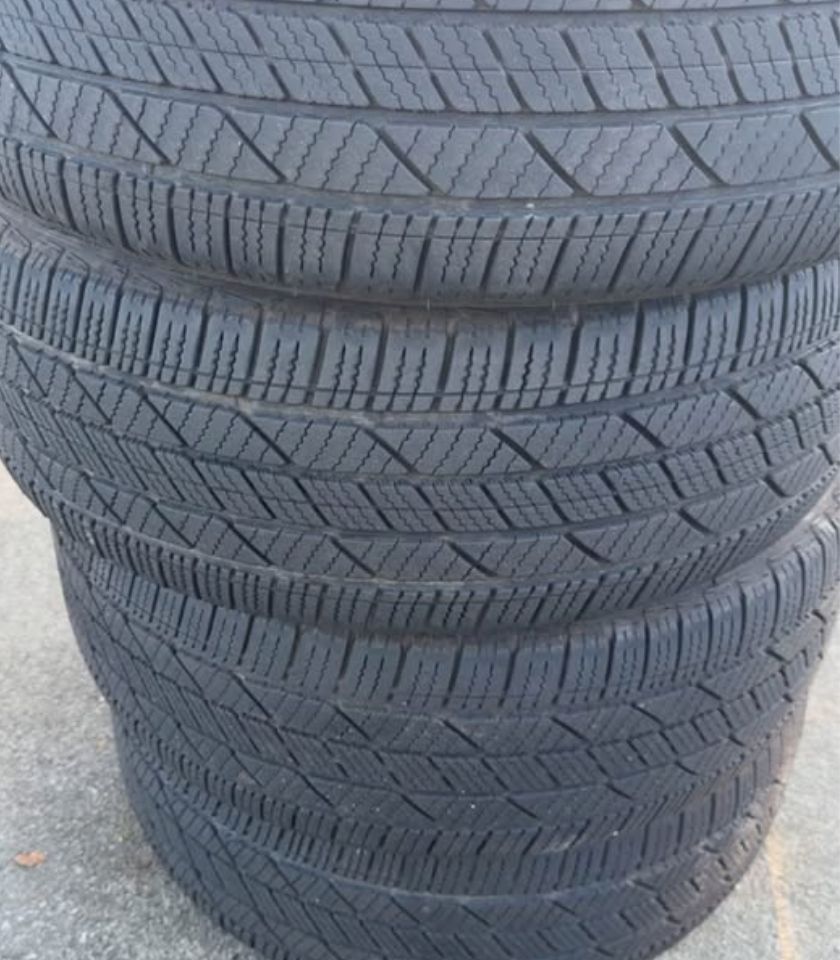
          Stack of Bridgestone Dueler LX tires showing their symmetrical tread pattern designed for quiet comfort, wet traction, and fuel-efficient highway driving.
          Bridgestone Dueler LX — premium highway touring tires crafted for SUVs and light trucks, providing a comfortable, quiet, and stable driving experience in all seasons.

          The Bridgestone Dueler LX is built for drivers who like their trucks to feel solid and connected to the road. It rides firmer than the Michelin, which actually helps when towing a small camper or boat. Steering stays tight even on uneven asphalt, and wet traction is where it really shines. In testing, the Dueler LX stopped from highway speed in 155 ft on wet pavement and 135 ft in the dry, placing it near the top of the segment. That steadiness shows up in real-world use — F-150 and Sierra owners report how predictable it feels in heavy rain and crosswinds.

          Bridgestone Dueler LX

          Bridgestone Dueler LX tire
          Compare prices:
          Tire Rack
          Free road-hazard coverage Authorized dealer

          Snow and ice results are surprisingly good for a non-3PMSF tire. It managed a 46.3 ft snow stop and 5.84 seconds on ice acceleration, both ahead of Michelin’s numbers. The tread clears slush well enough for winter commuting, and dry cornering hits 0.74 g, so highway stability never fades even with a full bed. Offered mostly in P-metric XL sizes, it fits half-tons that stay on pavement or tow moderate loads up to 3,000 lb. Noise levels are low too — 8.0 noise rating, which is class-leading.

          For half-ton owners who spend 90% of their time on the highway but want sharper steering than the Michelin offers, the Dueler LX is hard to beat. It’s that rare tire that feels like a touring tire but still holds its truck DNA.

          Best Use Cases

          • Half-ton trucks towing campers, boats, or utility trailers

          • Highway commuters who want crisp steering and wet-road grip

          • Drivers prioritizing quiet ride and confident snow braking

          Cooper Discoverer Road+Trail AT – Street-Smart A/T

          Close-up of Cooper Discoverer Road+Trail A/T tire mounted on a GMC Sierra, showing all-terrain tread designed for daily comfort and weekend adventures.
          Cooper Discoverer Road+Trail A/T on a GMC Sierra — a refined all-terrain tire built for drivers who balance highway comfort with light off-road exploration.

          The Cooper Discoverer Road+Trail AT is one of the best examples of how far modern all-terrains have come for half-ton trucks. It rides quietly, turns in cleanly, and never feels like you’re forcing a rugged tire to behave on pavement. Steering feels light and predictable, and the tread stays composed even when you dive into corners or brake hard. For trucks like the F-150 or Silverado 1500, it gives that planted feel of an OEM highway tire but with the stance and traction of a true A/T.


          Cooper Discoverer Road + Trail AT

          Cooper Discoverer Road + Trail AT tire
          Tested Rating: 8.4/10

          Trusted Retailers with Best Deals:

          Tire Rack
          Free road-hazard coverage Backed by Discount Tire
          SimpleTire
          Financing options Local installers
          Amazon
          Prime shipping Direct from brands

          In testing, it stopped in 134 ft dry and 172 ft wet, only a few feet behind Bridgestone’s Dueler A/T Ascent. On snow, it posted a 44.4 ft stop and stayed manageable through slush, while ice acceleration took 7.4 seconds, placing it just under the Toyo AT3 and Wildpeak AT4W. Comfort is where this tire really separates itself. It scored 7.25 overall ride comfort, with both noise and steering earning 7.0 ratings, making it one of the quietest in the group. The 3PMSF badge isn’t just for show either — the tread clears snow efficiently, and the compound keeps its grip in cold temperatures.

          For drivers who want an all-terrain that looks the part but still feels civilized, the Road+Trail AT is right in the sweet spot. It’s quiet, capable, and stays calm whether you’re commuting or cruising through snow-packed roads in winter.

          Best Use Cases

          • Half-ton owners who want a daily tire that still looks aggressive

          • Drivers in cold-weather regions needing real snow traction without a winter swap

          • Anyone who values quiet comfort and stable road manners over deep off-road bite

          Bridgestone Dueler A/T Ascent – Upscale A/T

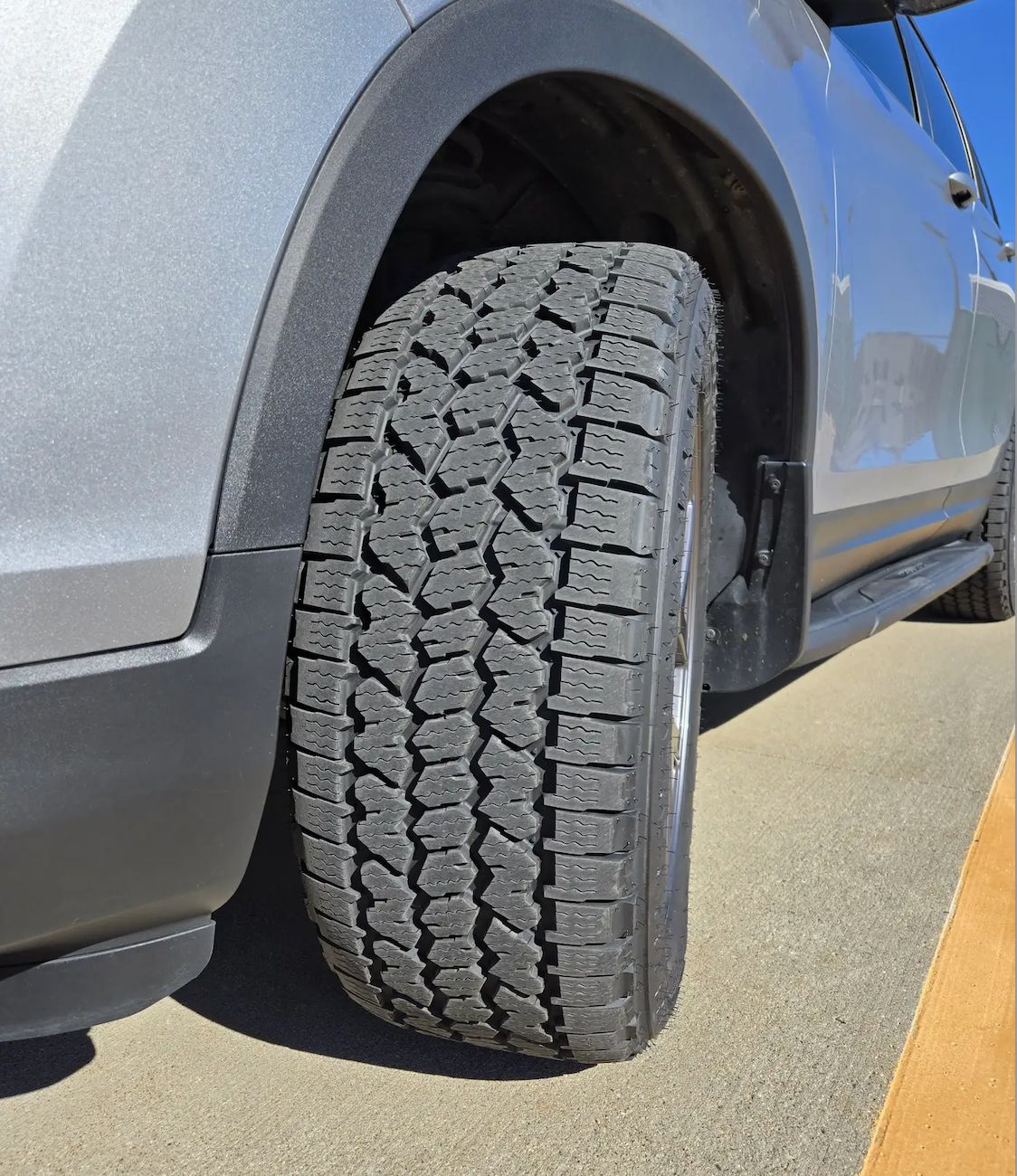
          Close-up of Bridgestone Dueler A/T Ascent tire on an SUV, showing its balanced tread design for all-terrain grip, highway comfort, and 3PMSF-certified winter traction.
          Bridgestone Dueler A/T Ascent — a refined all-terrain tire for daily drivers and adventure seekers, offering quiet on-road manners, capable off-road traction, and reliable snow performance.

          The Bridgestone Dueler A/T Ascent is one of those tires that instantly feels a class above most all-terrains once you get behind the wheel. The ride is calm, steering stays steady, and there’s almost no vibration at highway speed. It fits perfectly on trucks like the Ram 1500 Limited or F-150 Lariat, where drivers want traction for weekend trails but expect premium comfort the rest of the week. The tread design looks aggressive enough to stand out, yet it behaves like a touring tire when you’re just commuting.


          Bridgestone Dueler A/T Ascent

          Bridgestone Dueler A/T Ascent tire
          Tested Rating: 8.5/10

          Trusted Retailers with Best Deals:

          Tire Rack
          Free road-hazard coverage Authorized dealer
          SimpleTire
          Local installers Financing options
          Amazon
          Prime shipping Multiple sellers

          In testing, the Dueler A/T Ascent stopped in 132 ft dry and 170 ft wet, which puts it near the top of the on-road A/T category. It was also quicker through the wet slalom at 7.1 seconds, showing how composed it stays in sharp transitions. On snow, it posted a 43.9 ft stop and managed 6.8 seconds on ice acceleration, ranking right alongside Cooper’s Road+Trail AT and just behind the Wildpeak A/T4W. Comfort and noise are both excellent for an all-terrain — scoring 7.0 for ride and 6.9 for noise — so it never drones on long drives. The sidewalls are flexible enough to smooth bumps but still firm enough to hold weight when towing or cornering under load.

          For half-ton owners who want real traction without giving up the polished feel of a highway tire, the Dueler A/T Ascent hits that balance better than most. It’s refined, quiet, and still has the bite to pull through snow or mild gravel when you need it.

          Best Use Cases

          • Premium-trim half-ton trucks that stay mostly on-road but need real 3PMSF snow traction

          • Drivers wanting a quiet, comfortable ride without losing A/T looks

          • Light towing and weekend trail use where comfort still matters

          Nitto Terra Grappler G3 – Everyday Toughness

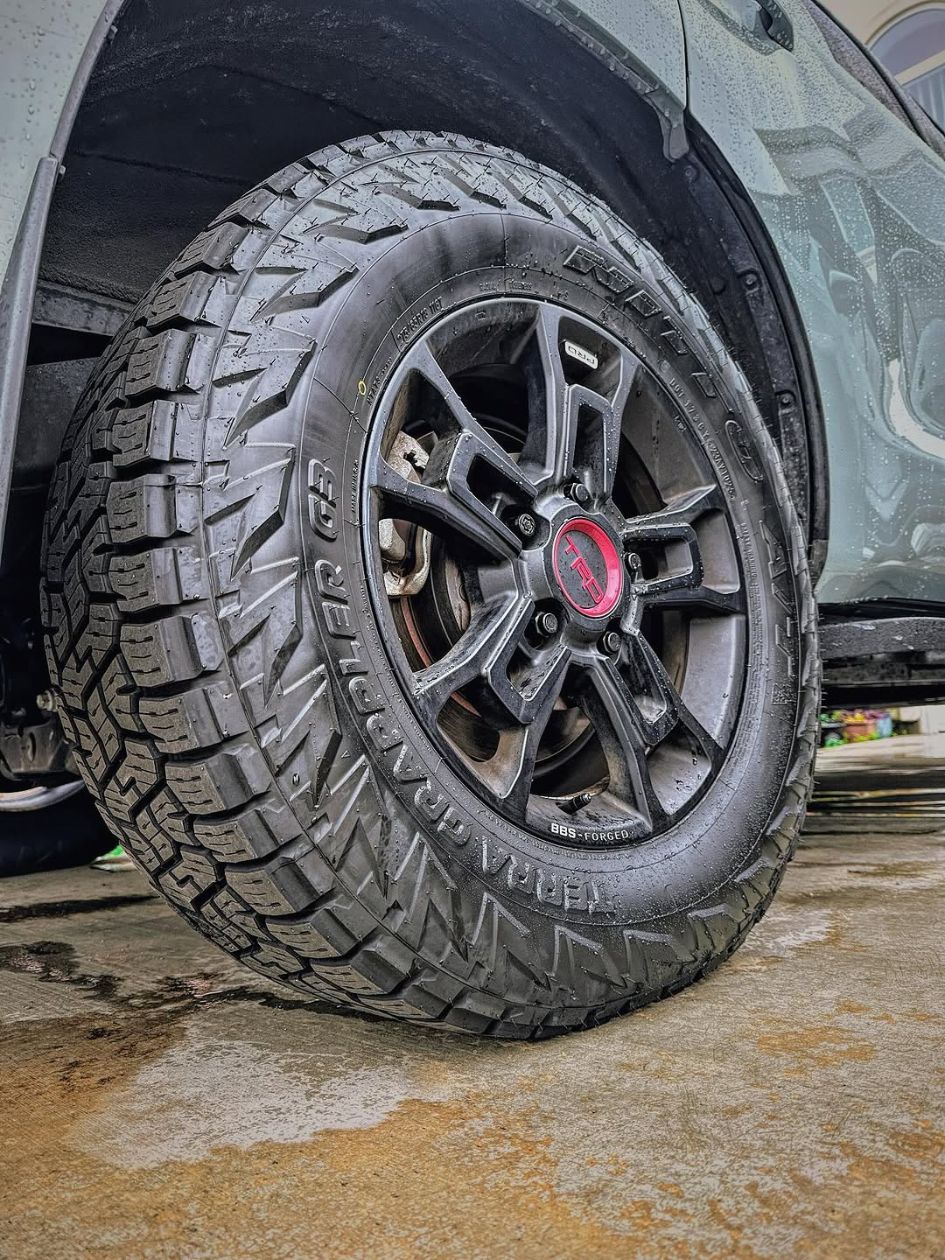
          Nitto Terra Grappler G3 tire mounted on a Toyota TRD Pro, designed for balanced on-road comfort and off-road traction.
          The Nitto Terra Grappler G3 blends highway comfort with dependable off-road performance, making it ideal for daily-driven trucks and SUVs.

          The Nitto Terra Grappler G3 has always been a solid choice for half-ton owners who want mild all-terrain traction without giving up the road manners of a highway tire. It feels planted and predictable on pavement, and the steering is noticeably lighter than older Terra Grappler generations. The tread pattern looks aggressive enough for weekend trails, yet it’s tuned for daily use — perfect for Silverado LT or F-150 XLT drivers who spend most of their time commuting.


          Nitto Terra Grappler G3

          Nitto Terra Grappler G3 tire
          Tested Rating: 8.6/10

          Trusted Retailers with Best Deals:

          Tire Rack
          Free road-hazard coverage Backed by Discount Tire
          SimpleTire
          Financing options Local installers
          Amazon
          Prime shipping Direct from brands

          In testing, the G3 stopped in 135 ft dry and 175 ft wet, just behind the Cooper Road+Trail AT and Dueler A/T Ascent but still among the best in its price class. On snow, it posted a 45.1 ft stop and needed 7.0 seconds to accelerate, trailing Bridgestone slightly but still comfortably ahead of non-3PMSF tires. Ice braking came in at 72.4 ft, which is about average, and its 7.1-second ice acceleration result shows it holds enough grip for light winter driving. Where it surprises most is ride quality — comfort scored 7.1 and noise 6.8, both near the top of the group. Road texture comes through a little more than the Dueler A/T Ascent, but it stays smooth and composed at highway speed.

          The Terra Grappler G3 fits well for drivers who like the look and stability of an A/T but don’t need deep off-road bite. It’s durable, quiet, and balanced enough for year-round use on lighter-duty trucks.

          Best Use Cases

          • Half-ton drivers who prioritize comfort and long tread life

          • Daily commuters in mild winter regions needing occasional snow traction

          • Those wanting subtle A/T looks without sacrificing ride quality

          Toyo Open Country A/T III – Reliable All-Rounder

          Toyota Tundra equipped with Toyo Open Country A/T III all-terrain tires, showcasing aggressive tread blocks and off-road-ready stance under night lighting.
          The Toyo Open Country A/T III offers balanced traction and comfort, seen here on a Toyota Tundra with gold off-road wheels built for both highway and trail performance.

          The Toyo Open Country A/T III is the kind of tire that makes a truck feel sure-footed no matter where you take it. The steering is firm but never heavy, and the tread feels locked in when you hit gravel or pull out of a corner under throttle. It’s built for half-tons that see a little bit of everything — highway miles during the week, dirt or snow on the weekends. The A/T III has become a benchmark in this class because it keeps that planted, confident feel whether it’s dry, raining, or snowing.

          Toyo Open Country A/T III

          Toyo Open Country A/T III tire
          Tested Rating: 8.5/10

          Trusted Retailers with Best Deals:

          Tire Rack
          Free road-hazard coverage Backed by Discount Tire
          SimpleTire
          Financing options Local installers
          Amazon
          Prime shipping Direct from brands

          Testing shows why it leads so many comparisons. The Toyo stopped in 131 ft dry and 167 ft wet, giving it the shortest combined braking distance in the off-road A/T group. Through the wet slalom it clocked 7.0 seconds, the fastest overall, and on snow it recorded a 43.5 ft stop with 6.7 seconds on ice acceleration — both among the best for 3PMSF tires. Cornering grip measured 0.70 g dry and 0.64 g wet, which helps explain its stable highway manners. Comfort and noise are solid for an aggressive tread, scoring 6.8 and 6.7 respectively, so it never drones even at higher speeds. The tread also wears evenly under torque, making it a strong match for half-tons used for towing or light off-road work.

          For drivers who want one tire that can handle rain, gravel, and snow without compromise, the A/T III sets the standard. It’s dependable, balanced, and feels equally at home on pavement or backroads.

          Best Use Cases

          • Half-ton owners who split time between highway and light off-road use

          • Drivers in regions with real winters needing consistent 3PMSF traction

          • Towing or hauling setups that demand durability without harsh ride quality

          BFGoodrich All-Terrain T/A KO3 – Proven Icon

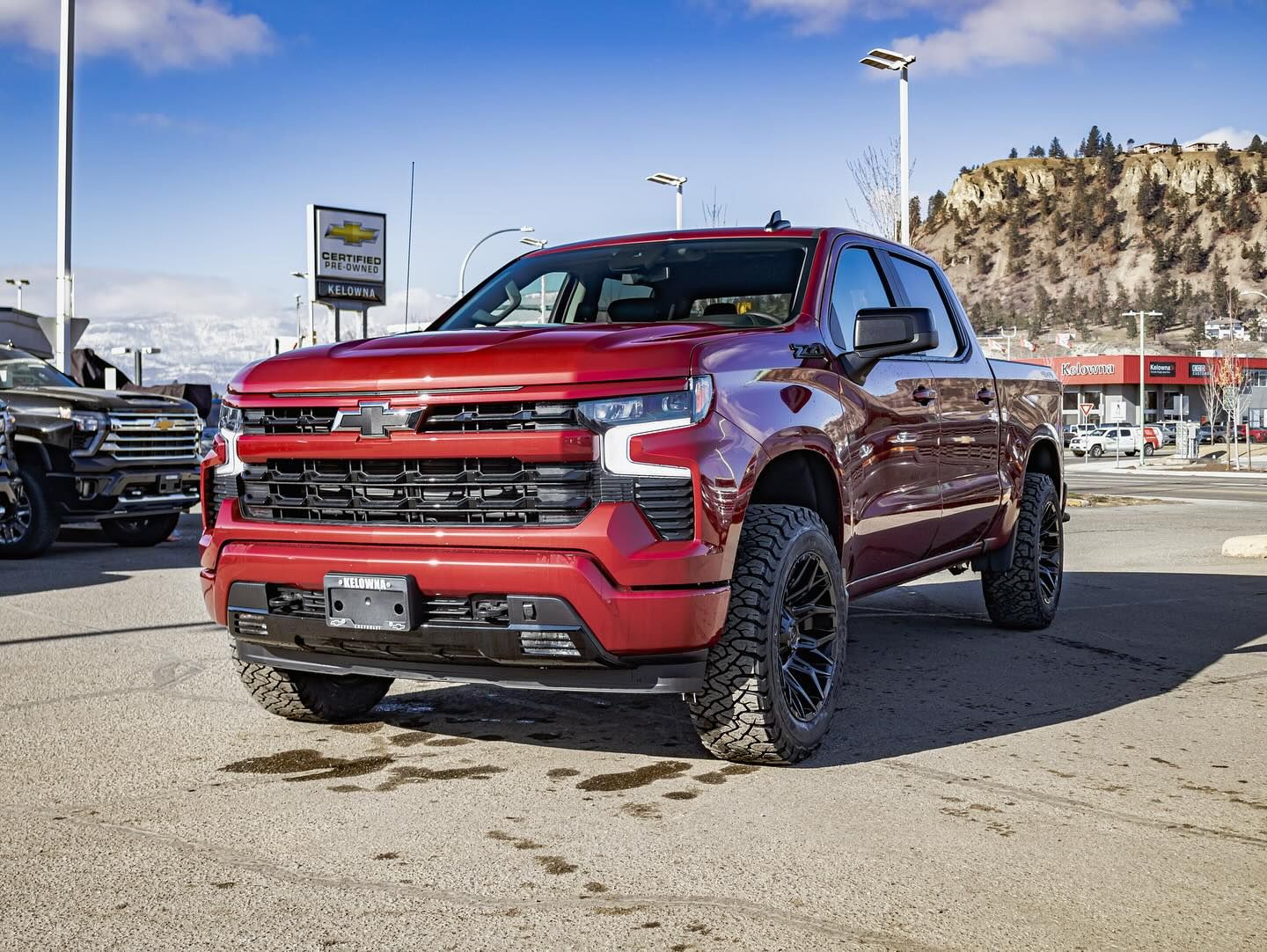
          BFGoodrich KO3 tire on a red Chevy Silverado showcasing aggressive tread and rugged stance.
          BFGoodrich KO3 on Chevy Silverado — bold tread design and muscular look for drivers chasing performance and style.

          The BFGoodrich All-Terrain T/A KO3 feels instantly familiar if you’ve ever run the KO2, just sharper and more stable at highway speed. The steering is heavier but controlled, and you can feel the extra support from the stiffer sidewalls when cornering or towing. It’s the kind of tire that makes an F-150, Ram 1500, or Tundra feel ready for anything — firm on pavement, locked in on gravel, and nearly unstoppable on packed dirt. The tread design doesn’t just look rugged; it delivers real off-road traction while staying more civilized than the older KO2 on long drives.

          BFGoodrich All-Terrain T/A KO3

          BFGoodrich KO3 tire
          Tested Rating: 8.5/10

          Trusted Retailers with Best Deals:

          Tire Rack
          Free road-hazard coverage Backed by Discount Tire
          Amazon
          Prime shipping Direct from brands

          In testing, the KO3 stopped in 134 ft dry and 173 ft wet, just behind the Toyo A/T III but ahead of the Falken Wildpeak A/T4W. Snow and ice results were where it really impressed for a heavy-duty tire: 44.3 ft snow braking and 6.8 seconds on ice acceleration, both strong for a tire this tough. Cornering grip was 0.69 g dry and 0.63 g wet, showing how well the tread pattern holds on when loaded. Noise came in at 6.6, and comfort scored 6.7, both small improvements over the KO2. The new compound runs cooler under load, reducing heat buildup on long highway drives, which helps tread life and wet consistency.

          The KO3 bridges the gap between off-road confidence and daily usability better than almost any other aggressive A/T. It’s firm, planted, and built to take abuse, but it still rides smoother than you’d expect from something with this much bite.

          Best Use Cases

          • Half-ton owners who tow, haul, or hit gravel roads often

          • Overlanders or drivers who value toughness and load stability

          • Those upgrading from KO2 looking for quieter ride and better wet control

          Falken Wildpeak A/T4W – All-Weather Performer

          Stack of Falken Wildpeak AT4W HD all-terrain tires labeled LT285/70R17 Load Range E on display beside alloy wheels in an auto showroom.
          Falken Wildpeak AT4W HD — Load Range E tires ready for trucks, towing rigs, and overland builds.

          The Falken Wildpeak A/T4W is the kind of tire that earns respect fast among half-ton owners who drive in every season. It feels planted on pavement, bites well off-road, and doesn’t get noisy as the miles add up. Falken built it with a softer tread compound and full-depth siping, which is why it grips better than most A/Ts once the temperature drops. The steering has a slightly heavier feel than the Toyo AT3, but it’s steady on the highway and confidence-inspiring in the rain.

          Falken Wildpeak A/T4W

          Falken Wildpeak AT4W tire
          Tested Rating: 8.4/10

          Trusted Retailers with Best Deals:

          Tire Rack
          Free road-hazard coverage Backed by Discount Tire
          SimpleTire
          Financing options Local installers
          Amazon
          Prime shipping Direct from brands

          Test numbers show why it’s one of the most versatile options on the list. It stopped in 133 ft dry and 169 ft wet, just behind the Toyo AT3 but ahead of the KO3. In wet slalom, it ran 7.2 seconds, only a tenth slower than the Toyo, and on snow, it posted the group’s best 43.4 ft stop and 6.7 seconds on ice acceleration. Cornering grip reached 0.69 g dry and 0.63 g wet, so the truck always feels composed in corners even with a full bed or trailer. Comfort and noise both rated 6.9, which is impressive for a tire this aggressive. It also wears evenly under torque, making it a strong pick for drivers who tow regularly.

          For half-ton trucks that see rain, snow, and dirt in the same week, the Wildpeak A/T4W delivers the balance most owners are chasing. It’s steady, predictable, and capable year-round without giving up daily comfort.

          Best Use Cases

          • Drivers who need real winter traction and occasional off-road confidence

          • Half-tons that tow or haul through changing weather

          • Those wanting proven 3PMSF performance with minimal road noise

          Nitto Ridge Grappler – Hybrid Benchmark

          Close-up of a Nitto Ridge Grappler tire mounted on a black truck, showcasing its deep tread blocks and rugged hybrid terrain design.
          Nitto Ridge Grappler — blending mud-terrain aggression with all-terrain comfort.

          The Nitto Ridge Grappler is the hybrid tire that set the standard for this category, and it still feels every bit as balanced as its reputation suggests. The steering is firm but natural, and it never feels sloppy on pavement. For a tire that can handle mud, gravel, and rocky terrain, it’s surprisingly composed on the highway. You feel that hybrid DNA every time you switch from asphalt to dirt — it holds grip in both worlds without feeling like a compromise.

          Nitto Ridge Grappler

          Nitto Ridge Grappler tire
          Tested Rating: 8.2/10

          Trusted Retailers with Best Deals:

          Tire Rack
          Free road-hazard coverage Backed by Discount Tire
          SimpleTire
          Financing options Local installers
          Amazon
          Prime shipping Direct from brands

          In testing, the Ridge Grappler stopped in 136 ft dry and 176 ft wet, which is impressive for a tire with this level of tread aggression. Cornering grip hit 0.67 g dry and 0.61 g wet, placing it just behind the Toyo AT3 but ahead of the Baja Boss A/T. On snow, it managed a 45.7 ft stop and 7.1 seconds on ice acceleration, meaning it’s usable through light winter conditions even without a 3PMSF badge. Comfort scored 6.7 and noise came in at 6.5, slightly firmer than the Wildpeak but still quieter than many rugged-terrain options. Ride stability stays consistent even under torque-heavy setups like a Ram 1500 Hemi or lifted F-150.

          For half-ton owners who want a hybrid tire that works just as well on trails as it does on the highway, the Ridge Grappler continues to be the reference point. It looks aggressive, handles predictably, and can handle serious off-road work without sacrificing everyday livability.

          Best Use Cases

          • Half-ton trucks that see regular trail driving or construction-site work

          • Lifted or modified builds that still need highway stability

          • Drivers who want the most balanced hybrid tire between traction and comfort

          Mickey Thompson Baja Boss A/T – Hybrid Power

          Ford Bronco equipped with Mickey Thompson Baja Boss A/T tires climbing a rocky trail under clear skies, showing aggressive tread pattern and sidewall flex.
          Mickey Thompson Baja Boss A/T on Ford Bronco, showing impressive articulation and grip on rocky terrain — a tire built for both trail dominance and daily drivability.

          The Mickey Thompson Baja Boss A/T is what happens when a mud-terrain and all-terrain meet in the middle. It feels solid and responsive, yet you can tell it’s built to dig in when things get rough. The steering is firmer than the Ridge Grappler, but it’s never twitchy or vague, which makes it easier to trust on the highway. On rougher surfaces, the tire’s wide voids clear mud quickly, and the sidewalls flex just enough to keep traction without feeling sloppy. It’s a great fit for overlanders or lifted Ram 1500 and Silverado Trail Boss setups that spend equal time on dirt and asphalt.

          Mickey Thompson Baja Boss A/T

          Mickey Thompson Baja Boss A/T tire
          Tested Rating: 8.1/10

          Trusted Retailers with Best Deals:

          Tire Rack
          Free road-hazard coverage Backed by Discount Tire
          SimpleTire
          Financing options Local installers
          Amazon
          Prime shipping Direct from brands

          The test results back up that real-world feel. The Baja Boss A/T stopped in 138 ft dry and 179 ft wet, close to the Ridge Grappler’s numbers but with noticeably stronger braking stability under load. Cornering grip hit 0.66 g dry and 0.60 g wet, keeping it well-planted on pavement for something this aggressive. On snow, it posted a 45.8 ft stop and 7.0 seconds on ice acceleration, ranking mid-pack but ahead of most hybrid competitors without a 3PMSF badge. Comfort scored 6.5, and noise landed at 6.3, which are strong numbers for a tire that looks this mean. The stiffer casing also helps towing stability — even heavy rigs feel steady with a trailer attached.

          For half-ton owners who need off-road grip but don’t want a full mud tire, the Baja Boss A/T nails the balance. It’s loud enough to remind you it’s a hybrid, but not enough to wear you out on the highway.

          Best Use Cases

          • Overland and adventure setups that mix pavement, gravel, and mud

          • Half-tons with light lifts or larger wheel setups

          • Drivers who want hybrid looks and real off-road traction without going full M/T

          Conclusion

          Choosing tires for a half-ton truck isn’t about chasing specs; it’s about finding the right feel for how you drive. If you spend most of your time on pavement, Michelin LTX M/S2 and Bridgestone Dueler LX deliver that calm, confident ride you expect from a daily truck. Drivers who need traction year-round can look at Toyo Open Country A/T III or Falken Wildpeak A/T4W for better wet and snow control without giving up comfort. For rigs that hit trails or tow heavy, BFGoodrich KO3, Ridge Grappler, and Baja Boss A/T add the muscle and grip that make a truck feel unstoppable.

          Each of these tires fits a different type of driver, but they all share one goal — to make your truck feel planted, capable, and ready for anything. That’s what half-ton ownership is really about: finding the balance between work, comfort, and weekend adventure.

          FAQ – ½-Ton Truck Tire Questions Answered

          1. Should I run LT or P-metric tires on my ½-ton truck?

          For daily use and light towing, P-metric XL tires make more sense. They ride smoother, weigh less, and improve fuel economy. LT tires are better only if you tow over 5,000 lb or hit rough terrain often since their stiffer sidewalls can handle extra load and heat.

          2. How much difference does tire size make?

          Moving from a 265/65R18 to a 285/65R18 improves traction and stance but adds weight and drag. Expect about 1 mpg drop and slightly slower braking. For heavy towing, stay close to factory size. For off-road or leveled setups, one size up is fine if clearance allows.

          3. Which tire type rides quietest on half-tons?

          Highway all-season tires like the Michelin LTX M/S2 or Bridgestone Dueler LX are the quietest by far, with noise scores above 8.0. Even modern A/Ts like the Wildpeak A/T4W or Toyo A/T III keep road hum in check thanks to variable pitch tread blocks.

          4. Do aggressive all-terrains hurt fuel economy?

          Yes, but not drastically. Going from a standard all-season to an aggressive A/T like the KO3 or Ridge Grappler usually costs 1–2 mpg. Proper inflation helps more than the tread itself, so check pressures regularly when hauling or driving highway miles.

          5. What’s the best tire type for mixed towing and highway use?

          For ½-tons pulling campers or boats, Michelin LTX M/S2 and Bridgestone Dueler LX give the most stable wet-road braking and control. If you tow but also drive on gravel, Toyo A/T III or KO3 strike the best balance of comfort and durability.

          6. How do winter scores compare across these tires?

          Among the group, the Falken Wildpeak A/T4W led snow and ice results with 43.4 ft snow braking and 6.7 sec ice acceleration. The KO3 followed close behind. None of the highway tires carry the 3PMSF badge, but they still perform well for mild winter climates.

          7. Can I mix A/T tires with highway tires on the same truck?

          It’s not recommended. Mixing different tread types can cause uneven wear and unpredictable grip under braking. If you want tougher rears for towing, match brand and pattern whenever possible to keep steering and traction consistent.

          Filed Under: Buyer's Guide to the Best Tires Tagged With: Best Tires, by Vehicle, Cooper Discoverer AT3 4S, falken wildpeak at3w, Nitto Recon Grappler, Toyo Open Country at3, Toyo Open Country R/T Trail, Vredestein Pinza A/T

          Toyo AT3 vs Nitto Recon Grappler — Winter Grip vs Off-Road Durability in 2025

          Updated: November 11, 2025 by Emrecan Gurkan Leave a Comment

          Nitto Recon Grappler with METHOD 318 17x8.5 0mm G-Black

          Real test data, off-road insights, and daily-driving impact — from a former Bridgestone engineer.

          The Nitto Recon Grappler and Toyo Open Country AT3 are both marketed as all-terrains, but they approach the segment differently. The Recon Grappler sits in the Off-Road A/T category with rugged styling and a blockier tread, appealing to truck and Jeep owners who want stability on gravel and dirt while keeping decent highway control. The Toyo AT3, by contrast, is also an Off-Road A/T but emphasizes year-round usability, with a silica-rich compound and snow-certified 3PMSF rating that make it a stronger pick for winter traction and daily comfort on SUVs and pickups.

          That’s the real choice here — Recon for bold looks and stability vs Toyo for balanced traction and all-weather drivability. In the sections ahead, we’ll break down wet performance, towing strength, and trail capability. You can also line them up in our All-Terrain Tire Decision Tool for quick recommendations by SUV, CUV, or truck class.

          ⚡ Quick Verdict – Who Wins What?

          Toyo Open Country A/T III

          Toyo Open Country AT3 tire
          Tested Rating: 8.5/10

          Trusted Retailers with Best Deals:

          Tire Rack
          Free road-hazard coverage Backed by Discount Tire
          SimpleTire
          Financing options Local installers
          Amazon
          Prime shipping Direct from brands

          Nitto Recon Grappler A/T

          Nitto Recon Grappler A/T tire
          Tested Rating: 8.1/10

          Trusted Retailers with Best Deals:

          Tire Rack
          Free road-hazard coverage Backed by Discount Tire
          SimpleTire
          Financing options Local installers
          Amazon
          Prime shipping Direct from brands

          The Toyo Open Country A/T III is the more balanced all-terrain, with sharper dry grip (131.5 ft stop, 0.78 g), safer wet braking (185 ft, 0.50 g), and steadier snow performance (74 ft stop, 44 ft launch). It inspires confidence on packed winter roads, rides smoother (8.0/10 comfort), and wears evenly for 45–55k miles.
          The Nitto Recon Grappler A/T plays heavier but tougher, delivering stronger off-road scores (8.2 dirt / 8.0 sand / 8.3 mud / 8.1 rock), with a casing built for durability and chip resistance. It demands more margin on wet roads and grows louder with miles, but rewards ¾-ton and HD trucks with stability under load and rugged trail strength.

            Raw Test Data

            Tire Test Data

            Pick categories to show metrics, then open ☰ to pick tires. Optional chart is hidden by default.

            Parentheses show the rank among the currently displayed tires (1 = best for that metric).
            Left axis lists metrics. Top axis is used for g-force metrics so they scale clearly.
            Note: Lower is better for Stopping & Acceleration; higher is better for g-force, comfort, traction & off-road ratings. Parentheses show the rank among the currently displayed tires (1 = best for that metric).
            Sources worth checking
            Tire Rack AT Tire Test Tire Rack On-Road A/T Ratings Tire Rack Off-Road A/T Ratings SimpleTire Reviews Amazon SUV/LT Tires

            🔬 Construction & Tech Breakdown

            Nitto Recon Grappler is a great option for towing due to its 3-ply sidewalls

            🛠️ Recon Grappler: Hybrid A/T with Street Grip

            • Large shoulder blocks + symmetrical center rib

            • Reinforced tread blocks for dry traction

            • E-load sizes and commercial-grade casing

            🧠 Root Cause: Nitto focused on directional stability and braking under load, sacrificing winter and wet adaptability for control and bite on dry pavement.

            🏁 Verdict: Ideal for dry towing setups and drivers who don’t need deep winter grip.

            🛠️ Toyo AT3: Year-Round Daily Driver

            • Multi-wave sipes for ice grip

            • Dual-void pattern with adaptive shoulder lugs

            • 3PMSF-certified for snow

            🧠 Root Cause: Toyo’s silica-rich compound and siping enhance grip in all conditions — especially in wet, snow, and ice scenarios.

            🏁 Verdict: A safer choice for mixed-weather commutes and moderate off-road use.

            Toyo Open Country AT3 with METHOD MR318 Gloss Black 17x8.5 0mm

            Dry Performance — Toyo Feels Lively, Recon Stays Heavy

            This comparison draws from the dataset I’ve built — a blend of structured results, community feedback, and my own short driving impressions. On dry pavement, the Toyo AT3 stopped in 131.5 feet with 0.78 g cornering, while the Recon Grappler stretched to 138 feet with 0.72 g. In my short drive, Toyo felt more eager, almost like a sneaker on asphalt — quicker to react, sharper in turns. Recon, by contrast, is more like steel-toe boots — slower to move, but steady once it’s locked in.

            Forum chatter mirrors this. On Tundra forums, Toyo drivers often describe it as “settled but responsive,” while Recon owners emphasize that it “feels heavier but more planted under load.” That’s because Toyo’s reinforced carcass and staggered shoulders balance comfort with agility, while Recon’s blockier tread and stiffer casing lean toward stability and durability.

            • SUVs & crossovers: Toyo feels lighter and more responsive

            • ½-tons: Toyo sharper for daily use, Recon steadier with trailers or load

            • ¾-ton & HD trucks: Recon the better match, stiffer casing complements heavy rigs

            👉 Verdict: Toyo wins on nimble dry grip; Recon delivers heavier, steadier stability when loaded.

            Wet Performance — Toyo Bites Quicker, Recon Needs Space

            In a downpour, the difference is clear. The Toyo AT3 measured 185 feet with 0.50 g traction, while the Recon Grappler stretched to 192 feet with 0.43 g. Driving them back-to-back, Toyo bit sooner on wet asphalt, while Recon needed extra room to stop — like braking in rain boots versus sneakers.

            Community feedback backs this up. On F150 and Tacoma forums, AT3 owners praise its “confidence in storms,” while Recon users often admit it “works if you slow down.” That comes down to chemistry: Toyo’s silica-rich compound and dense siping give better micro-grip, while Recon’s harder rubber prioritizes chip resistance over wet adhesion.

            • SUVs & crossovers: Toyo is the safer rain choice

            • ½-tons: Toyo inspires more confidence; Recon manageable with cautious braking

            • ¾-ton & HD trucks: Recon tracks straight with weight, but still stretches distances

            👉 Verdict: Toyo leads in wet grip and shorter stops; Recon demands more margin on slick roads.

            Note from the Expert: When it comes to rain, I always emphasize two things: compound grip and water evacuation. You can see the full details in my analysis, but if you take just one thing away, remember that an AT tire’s stiff nature makes achieving top-tier wet performance a constant battle. This is why the question, Are All-Terrain Tires Good in Rain?, requires a nuanced answer that balances tread design against rubber stiffness.

            Winter & Snow — Toyo Holds Pack, Recon Works Loose

            Snow tells a similar story. The Toyo AT3 stopped in 74 feet with a 44-foot launch, while the Recon Grappler measured 74 feet to stop and 45.5 feet to launch. On fresh powder, both claw forward well, but Toyo feels more composed on plowed roads. In my drive, Toyo braked with more confidence on packed snow, while Recon spun slightly before hooking in.

            Owners reflect this too. On TacomaWorld, Toyo is praised as “predictable on plowed roads,” while Recon gets nods for “plowing through deeper drifts.” That aligns with design: Toyo’s 3PMSF rating, siping, and silica mix hold grip on packed snow, while Recon’s aggressive shoulders and stiffer casing dig harder in loose powder but lose some finesse.

            • SUVs & crossovers: Toyo safer in daily snow commutes

            • ½-tons: Toyo stronger in plowed conditions; Recon works well if snow is deeper and loose

            • ¾-ton & HD trucks: Recon steadies with mass; Toyo keeps more predictability in mixed winter

            👉 Verdict: Toyo is the better snow-belt choice; Recon claws harder in unplowed or loose conditions.

            Note from the Expert: Our discussions often boil down to the core tradeoff. On one hand, you must understand why all-terrain tires are truly effective in deep snow, but not on ice. On the other hand, you face the 3PMSF Paradox—the hidden cost of that badge. The short answer is: The 3PMSF badge certifies traction, but it costs you durability. Dive into our full analysis on the critical 3PMSF rating for severe winter and off-road service, and its hidden costs, before you risk your rig on the trail.

            Ice — Toyo Grabs First, Recon Slides Further

            A closer look to Toyo Open Country AT3. Sipes works perfectly on light snow conditions

            Ice is unforgiving, and both show their limits. The Toyo AT3 measured a 50-foot stop, while the Recon Grappler came in slightly shorter at 46.5 feet — but numbers don’t tell the whole story. In feel, Toyo gave me earlier bite, like boots with small cleats. Recon slid further before engaging, though predictably — more like a rubber sole that glides but doesn’t snap loose.

            Community comments mirror this nuance. Toyo owners call it “safer in surprise ice patches,” while Recon drivers often describe it as “forgiving, but you need extra space.”

            • SUVs & crossovers: Toyo inspires more confidence on icy commutes

            • ½-tons: Toyo grips earlier, Recon manageable with patience

            • ¾-ton & HD trucks: Recon steadies with weight, Toyo more consistent in lighter rigs

            👉 Verdict: Toyo grabs sooner, giving more confidence. Recon forgives in feel, but slides longer before it hooks.

            Off-Road — Recon’s Playground, Toyo More Balanced

            Take them off pavement, and the story flips. The Recon Grappler scored 8.2 dirt / 8.0 sand / 8.3 mud / 8.1 rock, while the Toyo AT3 posted 7.8 / 7.7 / 7.9 / 7.8. In mud and rocky climbs, Recon feels like a bulldog — digging, holding, and pushing through where Toyo spins sooner. Toyo is more balanced, better on gravel and fire roads, but lacks the raw aggression of Recon.

            Forum chatter reflects it. Recon owners rave “it goes where others quit,” while Toyo users often note it’s “good everywhere, great nowhere off-road.” That’s the trade: Toyo balances all-terrain manners, Recon leans harder toward trail grit.

            • SUVs & crossovers: Toyo better for light trails; Recon is overkill unless you go off-road often

            • ½-tons: Recon shines for serious trail use; Toyo smoother for mixed on/off-road

            • ¾-ton & HD trucks: Recon is the off-road pick, with stability under towing or load

            👉 Verdict: Recon dominates rugged terrain; Toyo smooths out the milder paths.

            Note from the Expert: Every successful day on the trail is about preparation and physics, because tire longevity is earned, not given. Before you even start, you must master the critical link between tire pressure and load range for every rig to maximize your contact patch. Once moving, remember your ultimate off-road armor is your sidewall protection against the inevitable pinch flat. And finally, your traction on the obstacle is dictated by choosing the right aggressive vs hybrid tread pattern for your terrain. Master those three steps, and your rig will be ready for anything.

            Comfort & Noise — Toyo Softer, Recon Rougher

            On-road manners tell another story. The Toyo AT3 rates 8.0/10 for comfort, while Recon comes in at 7.3/10. Driving them, Toyo felt calmer — like background music you barely notice. Recon was firmer and hummed more, especially at highway speeds, like a bass line you can’t ignore.

            Owners agree. Toyo drivers say it’s “quiet and smooth for an A/T,” while Recon drivers admit “noise grows once miles stack up.” That’s the construction talking: Toyo’s variable pitch tread softens resonance, while Recon’s heavier casing transmits more vibration.

            • SUVs & crossovers: Toyo is far more civil

            • ½-tons: Toyo is easier for commuting; Recon’s hum tolerable if style/off-road matter more

            • ¾-ton & HD trucks: Recon’s firmness blends with heavy rigs; Toyo may feel soft under weight

            👉 Verdict: Toyo is the daily driver’s choice for comfort; Recon demands more tolerance for hum.

            Note from the Expert: For years, choosing all-terrain meant accepting noise—a true compromise for off-road grip. That’s why the question, Are All-Terrain Tires Louder than Highway Tires?, used to have a simple “yes” answer. Now, with the rise of on-road models, the core issue has shifted from noise to overall refinement. To fully understand which side of the comfort spectrum you’re buying into, you need to determine Are All-Terrain Tires Good for Daily Driving?—a question that depends entirely on the tire’s construction, not just the name.

            Tread Life & Longevity — Recon Tougher, Toyo Ages Quieter

            Both will last, but differently. The Recon Grappler averages ~45–50k miles with proper rotations, resisting chips and cuts thanks to its tough compound. The Toyo AT3 averages ~45–55k miles, wearing more evenly and staying quieter later into life.

            Forum voices support it. Recon drivers brag “45k with towing and still solid,” while Toyo owners highlight “50k and still quiet, just slipping in rain now.” In my short test, Toyo’s wear looked even, while Recon’s edges showed early signs of feathering.

            • SUVs & crossovers: Toyo wears smoother and stays quieter

            • ½-tons: both last similar miles; Toyo quieter, Recon tougher

            • ¾-ton & HD trucks: Recon resists abuse under load; Toyo better for balanced longevity

            👉 Verdict: Recon is built for punishment; Toyo ages more gracefully and stays quieter with time.

            Where They Fit Best

            Recon Grappler and Toyo AT3 target different drivers. Recon leans harder into toughness and trail grit, while Toyo balances wet/winter safety with daily refinement.

            • SUVs & crossovers: Toyo is the practical choice for comfort, rain, and winter; Recon is overkill unless looks and trails drive the decision

            • ½-tons: Toyo fits pavement-heavy use with occasional dirt; Recon fits rigs that see job sites or frequent off-road

            • ¾-ton & HD trucks: Recon is the stronger heavy-duty partner; Toyo steadier for lighter-duty daily rigs

            👉 Regional fit:

            • Toyo AT3 shines in the Northeast snow belt, Pacific Northwest, and Midwest — regions with rain, packed snow, and icy commutes.

            • Recon Grappler thrives in the Southwest deserts, Mountain West, and rural gravel-heavy areas like Texas, Montana, and Alberta.

            👉 Bottom line: Choose Toyo AT3 if you want balance, comfort, and winter safety. Choose Recon Grappler if you want durability, aggressive looks, and off-road toughness, even if it costs you polish on wet pavement.

            Tire Size Selection: The Basics You Can’t Skip

            Even the best tread design can’t rescue a tire that’s built too weak. Back when I was testing tires at Bridgestone, I saw all-terrain models that should’ve performed but fell short — simply because the basics (size, load strength, and speed rating) weren’t matched to the vehicle.

            P-Metric vs. LT (Light Truck) Tires

            The first step is knowing whether you need LT or passenger tires. LT (Light Truck) tires are built with extra reinforcement and stiff sidewalls, designed for towing, hauling, or off-road use. Passenger (P-metric) tires are lighter, smoother, and tuned for daily comfort and fuel efficiency — but they’ll flex more under load.

            Understanding Tire Load Range: XL vs. E-Load

            Then comes the tire load index and load range — essentially your tire’s strength rating. Here’s where things split between passenger XL and LT E:

            • XL (Extra Load) is a passenger tire with reinforced sidewalls. It can handle a bit more pressure (~41 PSI) than a standard SL tire and is perfect for SUVs, crossovers, or light trucks that carry extra gear, passengers, or small trailers. XL tires ride softer and quieter than LT options, making them ideal for daily use.

            • E Load Range is an LT tire class built with a much thicker casing. E-rated tires can handle far more pressure (up to ~80 PSI) and heavier loads, which makes them essential for ¾-ton and 1-ton trucks towing trailers or hauling close to max capacity. The trade-off is weight, stiffer ride, more road noise, and a small drop in fuel efficiency.

            Put simply: XL is for “extra luggage and family,” while E is for “truck bed full of bricks or a car trailer.”

            Why the Tire Speed Rating Matters for Safety

            Finally, don’t overlook the tire speed rating. It’s not just about top speed — it measures how well a tire handles heat and stress at highway pace. Lower ratings (like S) tend to ride softer and last longer, while higher ratings (H, T) feel more stable and responsive under sharp maneuvers. Heat build-up is the silent killer of tires, and speed rating is your safeguard.

            Bottom line: Match your tire’s construction (LT vs P-metric), load range (XL vs E), and speed rating to your vehicle’s demands. Get those right, and everything else — off-road grip, winter traction, comfort — will finally perform the way it was designed to.

            🏁 Final Verdict: Which One Would I Actually Buy?

            If you want a refined daily A/T that handles storms, snow, and commutes with ease, the Toyo AT3 is the clear choice. It’s smoother, quieter, and safer in wet and winter conditions, making it a fit for SUVs, crossovers, and ½-ton trucks in the Northeast, Midwest, or Pacific Northwest.
            If your priority is durability, towing, and tougher off-road ability, the Recon Grappler stands out. It’s firmer, louder, and less polished in rain, but it thrives on ¾-ton and HD rigs in the Southwest, Mountain West, and gravel-heavy rural regions.

            👉 Bottom line: Toyo AT3 for all-weather safety and comfort. Recon Grappler if you want aggressive toughness and trail grit.

            Toyo Open Country AT3 Related Articles

            Read Review
            Compare with:
            vs BFGoodrich All-Terrain T/A KO2 vs BFGoodrich All-Terrain T/A KO3 vs Cooper Discoverer AT3 4S vs Cooper Discoverer AT3 XLT vs Falken Wildpeak A/T3W vs Falken Wildpeak A/T4W vs Nitto Recon Grappler A/T vs Nitto Terra Grappler G3 vs Toyo Open Country R/T Trail vs Yokohama Geolandar A/T4

            Frequently Asked Questions: Toyo AT3 vs Nitto Recon Grappler

            • Which tire is better on-road?
              The Toyo AT3. It stops shorter on dry (131.5 ft vs 138 ft) and corners sharper (0.78 g vs 0.72 g), making it more nimble for daily use.

            • Which tire is safer in rain?
              The Toyo AT3. It stops shorter in the wet (185 ft vs 192 ft) and grips better (0.50 g vs 0.43 g), while Recon needs more margin.

            • Which tire handles snow and ice better?
              Toyo is stronger on packed snow (74 ft stop, 44 ft launch), while Recon claws better in loose drifts. On ice, Toyo grabs earlier, though Recon’s 46.5 ft stop is slightly shorter but slides more before it hooks.

            • Which tire is tougher off-road?
              The Recon Grappler. With scores of 8.2 dirt, 8.3 mud, and 8.1 rock, it digs deeper and holds stronger in rugged terrain than Toyo’s more balanced numbers.

            • Which tire is quieter and more comfortable?
              The Toyo AT3. It rates 8.0/10 for comfort versus Recon’s 7.3/10, making it smoother and quieter for commuting.

            • Which tire lasts longer?
              Both run similar mileage (45–55k), but Toyo stays quieter later into life, while Recon resists chips and abuse better under heavy loads.

            • Which vehicles suit Toyo AT3?
              Best for SUVs, crossovers, and ½-ton trucks that need daily comfort, rain/winter safety, and balanced off-road ability.

            • Which vehicles suit Recon Grappler?
              Best for ¾-ton & HD trucks needing towing stability, trail grit, and aggressive styling.

            Filed Under: All Terrain Tires Tagged With: Comparisons, nitto, Nitto Recon Grappler, toyo, Toyo Open Country at3

            • Page 1
            • Page 2
            • Go to Next Page »

            Primary Sidebar

            Find Tires

            Contact Channels

            • Email
            • Facebook
            • LinkedIn
            • Twitter

            High-End Tires by Category

            Best All-Terrain Tires

            Best Rugged-Terrain Tires

            Best Mud-Terrain Tires

            Best All-Season Tires for Snow

            Best Tires for Snow Plowing

            Best Semi-Truck Tires

            Categories

            Copyright © 2026

            • Disclaimer
            • About Me
            • Contact
            • Privacy Policy