
Real-world test data, driver impressions, and community feedback — explained by a former Bridgestone test engineer.
The Nitto Recon Grappler A/T is a tougher, hybrid-leaning Off-Road A/T tire, built with a stiffer casing and blockier tread that shine under load and on gravel. The Nitto Terra Grappler, by contrast, is more road-friendly — tuned with a silica-rich compound and tighter tread pattern that feel safer in rain and more stable in winter. Snow-certified with the 3PMSF rating, the Terra Grappler G3 builds on the Nitto Terra Grappler G2’s reputation for all-weather reliability.
That’s the split buyers face — Recon for rugged stiffness and trail bite vs AT4W for winter stability and everyday drivability. In the sections ahead, I’ll show how they compare across dry, wet, snow, and off-road testing. You can also line them up in our All-Terrain Tire Decision Tool for quick, vehicle-specific recommendations by SUV, CUV, or truck class.
Quick Look
Nitto Recon Grappler A/T

Nitto Terra Grappler G3

The Nitto Terra Grappler G3 is the calmer, more planted daily driver of the two. With a 127-ft dry stop and 0.74 g cornering, it steadies trucks through highway sweepers and delivers shorter wet stops (158 ft / 0.57 g) than many rivals. Drivers praise its “quiet, stable ride” and confidence in rain or packed snow, while its earlier ice grip adds an extra safety margin for commuters. It’s also the more comfortable choice, with an 8.0/10 ride score and less cabin hum. For suburban, snow-belt, and highway use, the G3 is the predictable, quiet A/T that makes winter commuting easier.
The Nitto Recon Grappler A/T leans the other way — more aggressive, more expressive. With a 138-ft dry stop and 0.72 g cornering, it feels sharper on initial turn-in but less settled under load. Wet and icy stops stretch longer, demanding more margin, yet drivers praise its rugged looks and note it “bites into mud and ruts” better than expected. Its off-road scores (8.2 dirt / 8.3 mud / 8.1 rock) easily top the G3, making it the go-to for overlanding and weekend trails. Road comfort takes a back seat (7.3/10), but the Recon delivers that hybrid A/T personality for drivers who want visual punch and real trail chops.
👉 Bottom line: Terra G3 = quiet commuter confidence; Recon = rugged hybrid with extra bite.
Raw Test Data
Tire Test Data
Pick categories to show metrics, then open ☰ to pick tires. Optional chart is hidden by default.
Tread Pattern & Specs
Nitto Recon Grappler A/T
The Recon Grappler sits between an A/T and R/T. Its large, staggered shoulder blocks and deep voids provide biting edges for dirt and gravel, while its reinforced casing resists chips and cuts. This aggressive design explains its stronger dry grip and off-road stability, but also why it struggles in wet braking — wide voids don’t evacuate water as efficiently.
Nitto Terra Grappler G3
The Terra Grappler G3 is an on-road leaning A/T, with tighter tread blocks and abundant siping for water evacuation. Its shoulders are less aggressive, which improves ride comfort and noise levels. The design favors wet-road safety and long tread life, making it more of a commuter’s A/T than a trail-ready option.
Dry Performance — G3 more planted, Recon sharper off the line
On dry roads, G3 stops in about 127 ft / 0.74 g cornering, while Recon lags to 138 ft / 0.72 g. That means G3 feels more composed when you push it; Recon gives quicker initial bite but requires care under load.
Forum users often say things like Recon “looks great, a bit louder, but the steering feel is more responsive.” Others with G3 report “road hum is lower, truck feels more planted in highway sweepers.”
Engineering insight: G3 uses firmer shoulders and reinforced ribs to reduce block flex, which helps with line-holding and straight-line stability. Recon’s blocks are more aggressive, allowing sharper turn in, but at the cost of slightly more vibration and less stiffness under heavy cornering.
SUVs & crossovers: G3 feels more composed; Recon more playful.
½-tons: G3 steadier with trailers; Recon fun unloaded.
¾-tons & HD trucks: G3 better on long highway loads; Recon more likely to squirm under weight.
👉 Verdict: G3 wins dry stability; Recon wins snap and flair.
Wet Performance — G3 stops shorter, Recon needs margin

In the wet, G3’s stopping performance shines compared to Recon: G3 stops at ~158 ft / 0.57 g, Recon at ~192 ft / 0.43 g. That’s a meaningful difference when braking hard in a downpour.
From Tundra forums and Reddit, several users say G3 “feels confident in the rain, doesn’t dart or wander,” while Recon owners note “you learn to leave more space, it takes longer to scrub speed.”
Engineering side: G3’s compound and siping work better in wet films; its grooves evacuate water more efficiently. Recon’s tread voids and block design prioritize off-road strength and dry bite, so wet braking suffers comparatively.
SUVs & crossovers: G3 gives more margin in wet stops.
½-tons: Recon workable if careful; G3 safer.
¾-tons & HD: G3 keeps trailers safer under wet emergency braking; Recon demands more planning.
👉 Verdict: G3 is the safer wet pick; Recon trades wet performance for off-road/off-dry aggression.
Note from the Expert: When it comes to rain, I always emphasize two things: compound grip and water evacuation. You can see the full details in my analysis, but if you take just one thing away, remember that an AT tire’s stiff nature makes achieving top-tier wet performance a constant battle. This is why the question, Are All-Terrain Tires Good in Rain?, requires a nuanced answer that balances tread design against rubber stiffness.
Winter & Snow — G3 control, Recon depth vs polish trade-offs
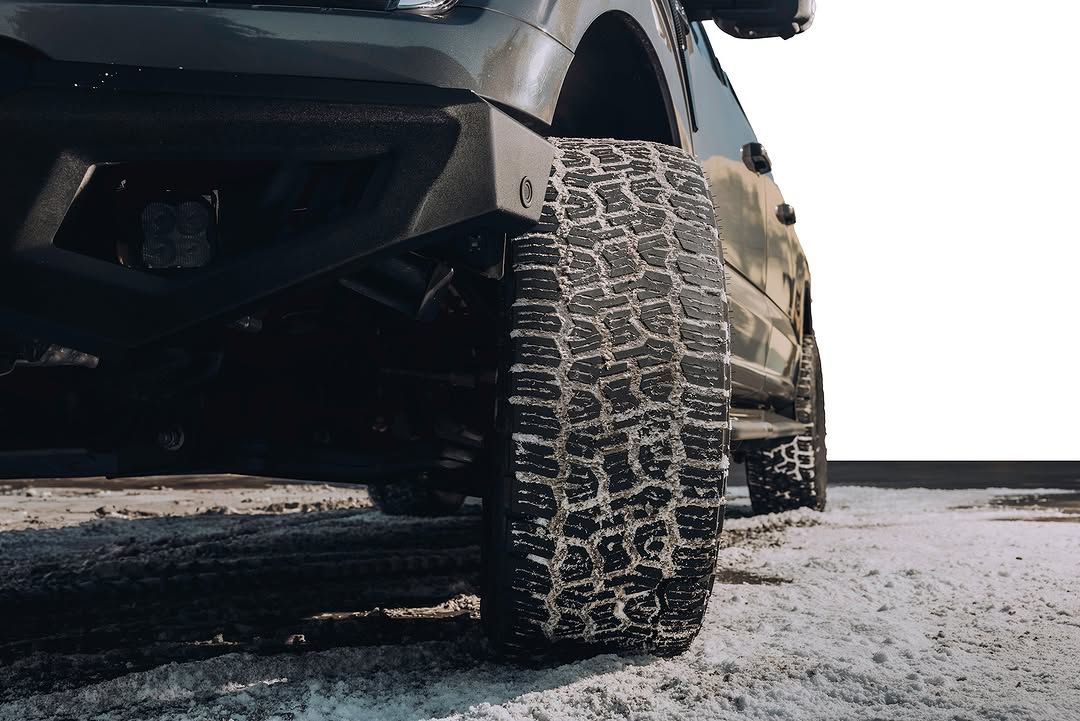
Snow tests have G3 with ~86.9 ft snow stop / 45.2 ft snow accel, while Recon offers ~74.0 ft stop / 45.5 ft accel. That gives Recon a slight edge in launch out of snow, but G3 stops sooner when snow or slush is packed.
Forum voices reflect that: Recon drivers say “good pull in loose snow but far from polished,” while G3 users describe “predictable braking in snow, especially on plowed roads.”
Engineering nuance: Recon uses more aggressive tread block edges and deeper voids that help when digging out of fresh snow. G3’s compound and tighter siping favour packed snow braking and more control once the road has been cleared.
SUVs & crossovers: G3 offers better stability in snow-belt roads; Recon better for deep snow, less plowed environments.
½-tons: Recon gives more pull in fresh snow; G3 offers safer, shorter stops on maintained routes.
¾-tons & HD trucks: G3’s braking comes through under load; Recon might carry momentum but needs more tire to stop.
👉 Verdict: Recon edges in snow acceleration; G3 stronger where snow is packed or roads are plowed.
Note from the Expert: Our discussions often boil down to the core tradeoff. On one hand, you must understand why all-terrain tires are truly effective in deep snow, but not on ice. On the other hand, you face the 3PMSF Paradox—the hidden cost of that badge. The short answer is: The 3PMSF badge certifies traction, but it costs you durability. Dive into our full analysis on the critical 3PMSF rating for severe winter and off-road service, and its hidden costs, before you risk your rig on the trail.
Ice — G3 has more margin, Recon slides longer
On icy surfaces, G3 stops around 47.8 ft, while Recon stops around 46.5 ft. The numbers are close, but the feel is different: G3 feels more secure early in the stop, Recon tends to slide more before catching grip.
Users say G3 gives “confidence on morning frost,” while Recon owners warn “require gentler braking, especially downhill.”
Engineering explanation: G3’s sipes and harder-shoulder compound help hold micro-edges in freezing temps; Recon, with more aggressive block geometry, loses those edges earlier under load, increasing slide before bite.
SUVs & crossovers: G3 safer on ice; Recon manageable if driving conservative.
½-tons: G3 gives extra margin; Recon requires planning and speed control.
¾-tons & HD: G3’s sturdier build helps under load; Recon can be unpredictable in ice with heavy weight.
👉 Verdict: G3 wins ice control; Recon riskier unless constrained.
Off-Road — Recon digs deeper, G3 smoother on mild trails
