• Skip to primary navigation
  • Skip to main content
  • Skip to primary sidebar

TireTerrain

  • Home
  • Comparisons & Reviews
  • All-Terrain Tire Decision Tool
  • Pro Tips
  • About

Review

Fullway HP108 Tires Review

Updated: July 29, 2025 by Emrecan Gurkan 6 Comments

Fullway HP108 is an dirt-cheap all-season tire that mainly focus on the performance. Due to its wide product range, his tire can be used on passenger cars, CUVs and SUVs. I have to admit that this tire has a charming look. However, buying a tire is similar to marry with someone. Good looking doesn’t mean anything on its own. It should be combined with inner beauty. In our case, inner beauty is the tires’ functionality. Let’s see how functional it is!

Asymmetrical pattern of Fullway HP108
Fullway HP108
Best forPerformance-oriented vehicle owners,
dry and squishy regions
CategoryAll-Season Tire
VehicleCars, trucks, SUVs and CUVs
Available Sizes (Rim)14”, 15”, 16”, 17”, 18”, 19”, 20”, 22”, 24”, 26”, 28”
Made InChina
LabelsM+S
Warranty (P-metric)N/A
Warranty (LT Sizes)N/A

As a former Bridgestone engineer, from my standpoint, Fullway HP108 has a decent dry and wet ground performance. Moreover, its hydroplaning capability is huge. Fullway Hp108 provides a quiet and smooth ride. However, its soft rubber doesn’t last too long but is around 40,000 miles. It’s also not usable in winter conditions. I strongly recommend this tire if you have a limited budget and want decent performance and appearance.

All-Season Tires Cheat Sheet

Finding the most suitable one for you among thousands of tires is very difficult.

My team & I have analyzed 100 different tires and generated this ‘Quick Answer Sheet‘ for those who don’t wanna spend too much time during tire selection.

Before we start, here are the incredibly helpful articles I highly recommend to take a look at;

  • How to keep tire noise down:
    https://www.tirerack.com/upgrade-garage/why-do-tire-tread-patterns-make-noise
  • Fuel-Efficiency:
    https://www.tirerack.com/landing/fuel_efficiency
  • Traction/Stability control for AWD/4WD (All-Season tires specific)
    https://www.tirerack.com/upgrade-garage/traction-stability-4ws-awd
Below the table, you can find my favorite tires that I have classified according to your needs.
All-Season Tires Cheat Sheet
NameBest forWorks Best onArticles3PMSFRoad NoiseMileageResponsivenessRiding ComfortWarrantyFuel EconomyWet PerformanceMild WinterSevere Winter

Michelin Crossclimate 2
( Check Price – Test Report )

Year Round Usage & Tread LifeSedans, coupes, crossovers, SUVs, minivansReviewYesDecentElegantElegantDecent60,000DecentElegantElegantDecent
Michelin Primacy Tour A/S
( Check Price – Test Report )
Everything but severe winter tractionSedans, coupes, crossovers, SUVsReviewNoElegantElegantElegantElegant45,000 – 55,000DecentElegantAverageFairy Well
Bridgestone WeatherPeak
( Check Price – Test Report )
Smooth & quiet 4 season drivingSedans, coupes, crossovers, SUVs, minivansReviewYesElegantDecentElegantElegant70,000ElegantDecentElegantAverage
Bridgestone DriveGuard Plus
( Check Price – Test Report )
Great all-round run-flat tireSUV, CUV, Sedans, CoupesReviewNoAverageExcellentExcellentExcellent65,000AverageExcellentDecentAverage
Vredestein Quatrac Pro
( Check Price – Test Report )
4-Season performance-driven ridingSedans, coupes, crossovers, SUVsReviewYesElegantDecentElegantElegant50,000DecentElegantElegantAverage
Vredestein HiTrac All-Season
( Check Price –Test Report )
Year round performance with great handlingSedans, coupes, crossovers, SUVsNoDecentDecentElegantDecent70,000DecentElegantDecentAverage
Pirelli P7 AS Plus 3
( Check Price – Test Report )
Great all-round performance + mild winterSedans, coupes, crossovers, SUVsReviewNoElegantElegantElegantElegant70,000ElegantDecentDecentAverage
Nokian WRG4
( Check Price )
Traction focused 4 season drivingSedans, coupes, crossovers, SUVs, minivansReviewYesDecentDecentDecentElegant65,000AverageElegantElegantDecent
Goodyear Assurance WeatherReady
( Check Price –Test Report )
Year-round traction + handlingSedans, coupes, crossovers, SUVs, minivans–YesAverageDecentElegantElegant60,000AverageElegantElegantAverage
Firestone WeatherGrip
( Check Price –Test Report )
Winter-focused 4 season drivingSedans, coupes, crossoversReviewYesAverageFairy WellAverageDecent65,00Fairy WellAverageElegantElegant
BF Goodrich Advantage Control
( Check Price –Test Report )
Quiet & smooth 3 season traction + light snowSedans, coupes, crossovers, SUVsReviewNoDecentDecentElegantDecent65,000 – 75,000ElegantDecentAveragePoor
Kumho Crugen HP71
( Check Price – Test Report )
Decent all-round performance + light snowCUV, SUVReviewNoAverageAverageDecentDecent65,000DecentDecentDecentFairy Well
Bridgestone Alenza AS Ultra
(Check Price – Test Report )
Long lasting performance for squishy regionsCrossovers, SUVs, light trucksReviewNoDecentDecentDecentDecent70,000DecentElegantDecentFairy Well
Uniroyal Tiger Paw Touring AS
(Check Price)
Affordable 3 season tractionSedans, coupes, crossovers, SUVsReviewNoAverageAverageDecentDecent70,000DecentAverageFairy WellPoor
Goodyear Assurance All-Season
( Check Price – Test Report )
Affordable all-round 3 season + light snow performanceSedans, minivansReviewNoDecentDecentDecentDecent65,000DecentDecentAverageFairy Well
Goodyear Assurance MaxLife
( Check Price – Test Report )
Longevitiy focused 3 season traction + light snowSedans, coupes, crossovers, minivansReviewNoDecentElegantElegantElegant85,000ElegantDecentAveragePoor
Bridgestone Turanza QuietTrack
( Check Price – Test Report )
Comfort-focused 3 season traction + light snowSedans, coupes, crossovers, minivansReviewNoElegantDecentElegantElegant80,000ElegantElegantDecentFairy Well
Goodyear Assurance ComfortDrive
(Check Price – Test Report )
Above average all-round performanceSedans, coupes, crossovers, SUVsReviewNoDecentElegantElegantElegant60,000AverageElegantDecentAverage
Michelin Defender T+H
(Check Price – Test Report )
Efficiency focused 3 season performanceSedans, coupes, crossoversvs Crossclimate 2NoDecentDecentDecentDecent80,000ElegantDecentFairy WellPoor
BF Goodrich Advantage T/A Sport
( Check Price – Test Report )
Long lasting 4 season performance + handlingSedans, coupes, crossovers–NoAverageDecentDecentDecent60,000 – 70,000AverageDecentDecentFairy Well
Continental TrueContact Tour
( Check Price – Test Report )
Smooth & long-lasting 3 season performance + light snowSedans, coupes, crossovers–NoDecentDecentDecentDecent70,000 – 80,000DecentElegantAverageFairy Well
Yokohama Avid Ascend LX
( Check Price – Test Report )
Long-lasting & responsive 4 season performanceSedans, coupes, crossovers, minivansNoDecentElegantElegantElegant85,000ElegantDecentDecentFairy Well
Laufenn S Fit AS
(Check Price)
Long-lasting sporty drivingSUV, CUV, Sedans, CoupesReviewNoDecentDecentExcellentDecent45,000DecentDecentAveragePoor

Depending on your needs, the below article might help;

  • https://tireterrain.com/best-all-weather-tires-for-snow/
  • https://tireterrain.com/bridgestone-vs-michelin/
  • https://tireterrain.com/best-michelin-tires-for-suv/

Table of Contents

Dry Performance

Dry performance can be evaluated under two different dimensions for performance tires. Handling and dry traction. Let’s evaluate them one by one.

Handling

Handling is the most important feature of the performance tire. These tires have a high-speed index and are generally used on high-velocity vehicles. However, Fullway HP108 can be used on different vehiclesç

Handling is mostly about the inner structure and treads pattern design. When I see its pattern for the first time, I was pretty sure that I should evaluate the handling under two different dimensions.

Steering Response,

Steering response shows how communitive your tire is. In this case, the tread pattern is the key. 

Due to its continuous center rib and wide shoulder blocks, Fullway HP108 provides a decent steering response. This kinda means that it’s a good fit for sedans and coupes. Moreover, its high load index sizes are suitable for vintage vehicle owners who want a fancy look.

Cornering Stability,

Cornering stability is the ability of tires to maintain their shape during high-speed turns. This metric is especially important for high-weight vehicles.

Cornering stability is the weak point of this tire. Well, this isn’t an extreme issue for sedans, coupes, or lightweight CUVs. Yet, I don’t recommend this tire for a large SUV.

Due to its thin and relatively thin sidewalls, Fullway HP108 has some stability issues on large vehicles. Though worth reminding, this issue occurs at high velocity. For this reason, if you’re not an aggressive driver, you can confidently mount these tires and have fun.

Dry Grip

Dry grip isn’t an issue for performance tires. Due to their soft compounds and asymmetrical tread design, they grip the dry surfaces with ease. However, sometimes, all-season performance tires fall short since they also need water evacuation capability.

Well, in my point of view, Fullway HP108 has a well-optimized contact pitch. To be fair, this is my favorite design on performance tires. It looks like Fullway preferred to notches outer ribs and shoulders instead of the center rib.

Since the tire has a fluffy compound, this design works very well on dry grounds. 

Fullway HP108 is a decent dry ground tire. I strongly recommend it if you have a limited budget.

Wet Performance

Low profile sizes looks pretty!

Wet performance is a must for all-season tires. However, it’s hard to reach for all-season tires. Due to their pattern design, they sometimes struggle to throw the water out. For this reason, you might face hydroplaning from time to time.

Well, Fullway HP108 is an all-season performance tire. Therefore, it mostly focuses on high-speed performance instead of low-speed traction.

For this reason, I’m going to evaluate the wet performance under two different layers. Wet traction and hydroplaning resistance.

Wet Grip

A wet grip is important for starting and stopping. In this case, the compound stiffness and siping density are the game-changers.

So, the most important metric is compound stiffness. In this case, Fullway HP108’s compound has a 380 UTQG rating. 700 is the maximum UTQG number for an average wet traction performance. The tires above this figure are too stiff for wet traction. Yet, the issue can be solved with a highly notched rubber.

In our case, the UTQG rating is exceedingly well for decent wet traction. However, the siping density is too low. For this reason, you may feel a minor delay or spinning before the tire is heated up.

Fullway HP108 has decent wet traction. However, it reaches its best after getting heated.

Hydroplaning Resistance

Hydroplaning resistance is the water evacuation capability of the tire. This feature is highly vital for high-speed wet performance. If the tire keeps the water inside of the tread, it loses contact with the ground, and aquaplaning occurs.

Due to its three large and one small circumferential grooves, it can evacuate the water with ease. That’s the key to solid hydroplaning resistance. Moreover, the tire has half ‘U’grooves that are going through the open shoulder blocks. These grooves throw the water out perfectly at high speeds.

Fullway HP108 is a trustworthy tire regarding hydroplaning resistance. You can confidently use it at high speed and under the pouring rain.

Winter Performance

There is no way that this tire can perform in winter conditions. It has a lack of siping. Moreover, even though its rubber is soft, all-season tire rubber doesn’t perform under 7 Celcius degrees.

The tire can handle mild winter conditions, it’s suitable for climates with 2-10 days of snow per year. Yet, if you see severe winter conditions so often, this isn’t a tire for you. Its tread pattern is way much straight for decent winter performance.

Off-Road Performance

First of all, this isn’t an all-terrain tire. Hence, it’s not capable to do off-roading. However, its fluffy compound and a good amount of void area on the tread can handle the mild off-road.

So, what is the mild off-road? Mild off-road contains dirt and gravel. Fullway HP108 can handle both. Though worth reminding, its weak sidewalls most probably won’t handle shard rock damages. Hence, you better stay away from the gravel.

Fullway HP108 can handle dirt. Yet, here is where its off-road capability stops.

Road Noise

Fullway HP108 is also available on low profile sizes

Road noise is related to the void area ratio. Especially in the center section. In that case, Fullway HP108 has a meh design. Its void area is less than most all-season tires. However, its shoulders are a bit stiffer. More importantly, its notches getting wider with wearing. Hence, its noise level might increase with time.

Fullway HP108 isn’t a vocal tire. However, it’s not quite like a church mouse. Well, the noise level is perfect for this price level. No worries.

Riding Quality

Comfort is related to the internal structure. However, I couldn’t find any information about its internal structure. Well, I didn’t surprise because that’s the reason this tire is cheap. Cheap brand manufacturers cut the cost from the internal structure.

So, the only information I have it has a thin and flexible sidewall. That means, the tire can flex enough over the bumps. For this reason, Fullway HP108 offers a cozy ride.

Tread Life

Fullway HP108 has a fluffy compound. As far as I see from its design, Fullway is aware of the low durability of their tire. Therefore, they keep the siping on a low level even though they release this tire as an all-season tire.

I don’t expect too much from them. Yet, getting 40,000 miles isn’t a dream. In fact, 40,000 miles is the target for a PriorityTire.

Getting maximum wear life from a tire is related to you as well as your tire,

If you’d like to learn how to get maximum tread life:

https://tireterrain.com/how-to-make-tires-last-longer/

Warranty

Fullway doesn’t offer any treadwear warranty for this product. That’s kinda prof of its poor tread life.

Conclusion

I recommend you evaluate this tire as a price/performance product. Otherwise, you won’t be satisfied with any feature of this tire.

Fullway HP108
Best forPerformance-oriented vehicle owners,
dry and squishy regions
CategoryAll-Season Tire
VehicleCars, trucks, SUVs and CUVs
Available Sizes (Rim)14”, 15”, 16”, 17”, 18”, 19”, 20”, 22”, 24”, 26”, 28”
Made InChina
LabelsM+S
Warranty (P-metric)N/A
Warranty (LT Sizes)N/A

I recommend you take the below points into consideration.

  • Its price is half of the competition. Hence, it beats the competition
  • The tire looks fancy
  • The tire offers decent performance

If you have any further questions, please leave them in the below section. Have a safe drive folks!

If you have any further questions, please leave them in the below section. Have a safe drive folks!

Filed Under: Passenger Tires Tagged With: fullway, Fullway HP108, Review

Falken Wildpeak AT Trail Review — Expert All-Terrain Tire for SUV & Crossover Drivers in 2025

Updated: November 11, 2025 by Emrecan Gurkan 6 Comments

Set of Falken Wildpeak A/T Trail ready for mounting

Real test data, off-road insights, and daily-driving impact — from a former Bridgestone engineer.

The Falken Wildpeak A/T Trail is a road-focused On-Road A/T tire built specifically for crossovers and small SUVs like the Toyota RAV4, Mazda CX-5, Honda CR-V, and Mercedes GLC300. Unlike traditional Off-Road A/Ts such as the Wildpeak AT4W, it sacrifices deep off-road bite in exchange for smoother highway manners, better fuel efficiency, and a lighter build.

In testing and from driver feedback, the A/T Trail proves far more durable than typical all-season or all-weather tires, while delivering an aggressive look and reliable year-round performance. Its main trade-off is limited capability in mud, sand, and rocky terrain compared to its tougher AT3W sibling (now tougher, Wildpeak AT4W).

In the sections ahead, we’ll break down how the A/T Trail performs across dry, wet, winter, and light off-road testing — and if you want a fast comparison for your exact vehicle, our All-Terrain Tire Decision Tool shows how it stacks up against other A/T options.

Quick Look

Falken Wildpeak AT Trail

Falken Wildpeak AT Trail tire
Tested Rating: 8.6/10

Trusted Retailers with Best Deals:

Tire Rack
Free road-hazard coverage Backed by Discount Tire
SimpleTire
Financing options Local installers
Amazon
Prime shipping Direct from brands

From my standpoint as a former Bridgestone engineer, the Falken Wildpeak AT Trail is an excellent choice if you’re after an aggressive look with everyday usability. It delivers solid wet and dry performance, while its well-optimized tread pattern keeps the ride quiet and comfortable. Built with long-lasting rubber and backed by a 65,000-mile treadwear warranty, it proves its durability on the road. In winter, it provides unique confidence on packed snow and icy conditions, though it’s not designed for deep snow. Off-road, its capability is limited to mild trails, where it performs without hesitation, but it’s not a tire I’d recommend for severe off-road use.

    Vehicle Fitments

    The difference between all-season tire and Falken Wildpeak A/T Trail

    Even though Falken Wildpeak AT Trail seems so strong and durable, it’s product range is limited and it’s not available for LT sizes. Furthermore, it’s only available for XL and SL load range. For this reason, I don’t recommend to use it on Ford F-Series, Chevy Sileverado or RAM. The below vehicles are the best fit for this fellow!

    • CHEVROLET EQUINOX
    • JEEP RENEGADE TRAILHAWK
    • SUBARU OUTBACK
    • FORD ESCAPE
    • MAZDA CX-5
    • TOYOTA RAV4
    • HONDA CR-V
    • NISSAN ROGUE
    • JEEP CHEROKEE 
    • SUBARU CROSSTREK

    Tread Appearance

    Yellow --> Open Shoulder Lugs, Red --> Staggered lug edges

    The tread pattern is the most important part of tire design. It has a huge impact on dry performance, wet performance, snow traction, and especially noise. Thus, I prefer to evaluate tread before starting to detailed analysis.

    Tread Depth,

    Tread depth has a huge impact on loose ground traction. Especially for snow. 

    Falken Wildpeak AT Trail’s tread depth is changing between 10/32” and 11/32”. Compared to its younger brother Falken Wildpeak AT4W, its tread is shallow, though, that depth provides massive snow traction because of its staggered lug edges.

    Shoulder Desing,

    Falken Wildpeak AT Trail has a broad shoulder design. This feature has a positive impact on its handling and balance capability. Furthermore, its shoulders consist of small lugs that decrease its noise level without sacrificing loose ground traction. In that case, open shoulder design is also a huge plus regarding self-cleaning ability.

    Center Section,

    The Center section is the location that produces most of the road noise. In this regard, the narrowed void area is a game-changer. Falken Wildpeak AT Trail has less void area than almost any all-terrain tire in the market. Though, it stays quieter than its competitors. 

    Sidewall,

    Sidewall design is what makes it an all-terrain tire instead of the all-weather tire. It has a beefy and aggressive design. These beefy sidewalls provide loose ground traction as well as sidewall protection. However, it offers protection only for the upper sidewall.

    Dry Performance

    The dry performance consists of dry traction, cornering stability, and steering response. Let’s evaluate them one by one.

    Dry Traction

    Dry traction isn’t an issue for it due to its very well-siped rubber and lug-type design. Its biting area intensity is significantly higher than regular all-weather tires. Therefore, it provides everything you need while starting and stopping.

    Cornering Stability

    Cornering stability is an issue for all-terrain tires due to their robust shoulders and flexible sidewalls. Flexible sidewalls stand relatively fluffy compared to robust cap compounds. That provides a floating feeling while cornering.

    However, Falken solves this problem with two tough steel belts and polyimide cap ply. Polyimide ply works as a shell and keeps the tire in shape while cornering.

    Cornering stability is the biggest promoted point of Falken. Well, they have a point here!

    Steering Response

    Falken Wildpeak AT Trail’s contact patch is particularly optimized for quick steering response. Its unibody construction and perfectly aligned center of gravity make it the common choice between CUV drivers.

    I strongly recommend it if solid on-road manners are your priority.

    Wet Performance

    The wet performance consists of two different dimensions. Wet traction and hydroplaning resistance. While wet traction is crucial for starting, hydroplaning resistance is highly important for safe high-velocity driving.

    Wet Traction

    Its narrowed void area increases its grip surface with the ground. Moreover, its high-silica compound along with the notches boosts up its wet grip ability.

    It’s alpha plus wet traction.

    Hydroplaning Resistance

    Hydroplaning resistance is related to water evacuation capability. Due to its open shoulders and circumferential grooves, it throws the water out with ease. That feature makes it a decent tire at high speeds.

    Note from the Expert: When it comes to rain, I always emphasize two things: compound grip and water evacuation. You can see the full details in my analysis, but if you take just one thing away, remember that an AT tire’s stiff nature makes achieving top-tier wet performance a constant battle. This is why the question, Are All-Terrain Tires Good in Rain?, requires a nuanced answer that balances tread design against rubber stiffness.

    Winter Performance

    3PMSF marking can be seen on the sidewall

    Winter performance is where Falken all-terrain tires shine. Even though Falken prefer to use stiff compound, they apply 3D sipes in almost every design due to increase biting edges. Thus, they meet 3PMSF marking requirements with ease. Falken Wildpeak AT Trail also has 3PMSF. That marking is a huge sign for solid winter performance.

    Regarding light snow,

    Light snow performance is what you need most for daily driving in winter. In that case, Falken Wildpeak AT Trail meet customer expectations due to intense sipe placement. Moreover, these sipes are full-depth. For this reason, these sipes compart big interlocked lugs to the smaller lugs. So, it can clean itself easily. Keeping the thread clean is highly important due to increasing light snow traction consistency.

    Regarding deep snow,

    Its deep snow performance isn’t perfect but decent due to shallow tread depth. You might think that its narrow void area is a negative sign for decent loose ground performance. However, staggered lug borders increase its loose ground grip ability significantly. Therefore, it outperforms all other tires in its segment. I strongly recommend this tire if you like to wheel on deep snow.

    Regarding ice,

    All-terrain tires fail on ice. It’s a well-known truth. However, Falken was aware of this problem. Well, they sacrifice a bit from deep snow performance to achieve solid ice performance. As a consequence, they narrow the void area of Falken Wildpeak AT Trail. So, its contact patch can grip way much better than highly aggressive all-terrain tires like Falken Wildpeak AT4W and Toyo Open Country AT3.

    Falken Wildpeak AT Trail is a beast in any severe winter conditions. If you’re looking for an alpha plus winter tire, you may stop searching and start having fun with your Falken’s.

    Note from the Expert: When it comes to rain, I always emphasize two things: compound grip and water evacuation. You can see the full details in my analysis, but if you take just one thing away, remember that an AT tire’s stiff nature makes achieving top-tier wet performance a constant battle. This is why the question, Are All-Terrain Tires Good in Rain?, requires a nuanced answer that balances tread design against rubber stiffness.

    Road Noise

    All-terrain tires produce road noise due to their aggressive design and stiff compounds. Well, Falken Wildpeak AT Trail meet with this sentence at some point.

    This tire has a stiff compound. However, its design is different than many all-terrain tires. It’s mainly focused on on-road manners. For this reason, its void area is narrow. Though Wildpeak AT Trail doesn’t lose contact with the surface and its lugs hit to ground less than regular all-terrain tires. Though, I have to admit that its stiff and durable compound produces noise from time to time.

    Note from the Expert: For years, choosing all-terrain meant accepting noise—a true compromise for off-road grip. That’s why the question, Are All-Terrain Tires Louder than Highway Tires?, used to have a simple “yes” answer. Now, with the rise of on-road models, the core issue has shifted from noise to overall refinement. To fully understand which side of the comfort spectrum you’re buying into, you need to determine Are All-Terrain Tires Good for Daily Driving?—a question that depends entirely on the tire’s construction, not just the name.

    Comfort

    A smooth ride is related to the internal structure. Its two-ply polyester casing helps it to absorb the reaction force that comes from the road. Therefore, you can trust its comfortability. In that case, you might think it has a stiff compound anyway. Yes, that’s correct but tread compound isn’t a game-changer regarding comfort. 

    If you compare this tire with all-season tires, it’s not the smootest tire. However, in my point of view, it’s ranking in the top 3 regarding comfort.

    Off-Road Performance

    Due to its product range, Falken Wildpeak AT Trail isn't a good pick for deep mud and rock crawling

    Severe off-road performance isn’t its priority due to its application range. If you’re using CUV or small SUV, you don’t drive off the road regularly. Well, Falken knows that. Therefore, they focus on mild off-road instead of severe. 

    If you need a solid tire for mud riding or rock crawling, I recommend you to go with Falken Wildpeak AT4W. Sand, gravel, and dirt performance will be evaluated in the below sections.

    Note from the Expert: Every successful day on the trail is about preparation and physics, because tire longevity is earned, not given. Before you even start, you must master the critical link between tire pressure and load range for every rig to maximize your contact patch. Once moving, remember your ultimate off-road armor is your sidewall protection against the inevitable pinch flat. And finally, your traction on the obstacle is dictated by choosing the right aggressive vs hybrid tread pattern for your terrain. Master those three steps, and your rig will be ready for anything.

    Gravel

    This tire has a perfect tread design for decent gravel performance. While beefy sidewalls provide protection for external impacts, on the other hand, its narrow void area and well-siped rubber are a perfect fit for gravel traction.

    I strongly recommend this tire for gravel usage.

    Dirt

    Its sipe placement and self-cleaning ability are highly acceptable for decent dirt performance. Moreover, these tires are 5 lbs heavier than average all-season tires. Thus, it can grip the dirt way much better than all-season tires.

    I strongly recommend it for dirt usage.

    Sand

    I think this tire is perfect for sand driving, though, nobody mentioned this. Sand performance is a bit tricky for all-terrain tires. Due to their deep and aggressive tread patterns, they sometimes dig a bit further than expected and you might get stuck in the middle of nowhere.

    In that case, Falken Wildpeak AT Trail has a relatively less aggressive pattern and shoal tread. Therefore, it’s a perfect choice for sand lovers.

    Tread Life

    Tread life is tricky. It’s highly related to your vehicle, driving habits, and application range. So, let’s say all our inputs are average.

    Its silica enriched tread compound provides a long-lasting rubber. Though worth reminding, tires with 3PMSF marking tend to have 10% less tread life.

    Due to its optimized contact patch and symmetrical design, this tire can wear evenly. Therefore, it provides a highly satisfying tread life.

    Getting maximum wear life from a tire is related to you as well as your tire,

    If you’d like to learn how to get maximum tread life:

    https://tireterrain.com/how-to-make-tires-last-longer/

    Fuel Efficiency

    As I’ve mentioned before this tire is 5lbs heavier than the average all-season tire. So, if you change your all-weather tire with this one, your MPG might hurt slightly. On the other hand, if you change an aggressive all-terrain tire to this one, your MPG number will jump up!

    Warranty

    Falken offers 65,000 miles treadwear warranty for this product.

    If you want to learn details, you may check this document.

    Sizes

    The below table will give you a piece of brief information about sizes and technical features.

    Most tire sizes begin with modifier letters(P, LT, etc.) that identify the type of vehicle or type of service for which they were designed. Here is a perfect guide for reading tire size –> https://tireterrain.com/how-to-read-tire-size/

    SizeLoad CapacityMax Load(lbs)Speed Index
    205/70R16SL1609H
    215/65R16XL1874H
    215/70R16SL1764H
    215/60R17SL1565H
    215/65R17SL1709H
    225/55R17XL1819V
    225/60R17SL1709H
    225/65R17SL1874H
    235/55R17XL1929V
    235/60R17SL1874H
    235/65R17XL2205H
    245/65R17SL2149H
    225/55R18SL1653V
    225/60R18SL1653H
    235/50R18SL1609V
    235/55R18SL1764V
    235/60R18XL2149H
    235/65R18SL2094H
    245/60R18SL2039H
    255/55R18XL2271V
    255/65R18SL2403H
    225/55R19SL1709V
    235/55R19XL2039V
    245/55R19SL1929V
    255/55R19XL2403H
    255/60R19SL2271V
    245/50R20SL1874V
    255/50R20XL2271V
    255/55R20XL2337V
    265/50R20XL2403V

    Note: Falken Wildpeak A/T Trail isn’t available in LT sizes.

    Falken Wildpeak AT Trail vs AT Trail A01

    Falken Wildpeak AT Trail A01 is the original equipment version of Falken Wildpeak AT Trail. Let me explain the reason behind the visual difference.

    Tire manufacturers work in two different areas.

    The first one is the replacement market, that is, the tires we buy from the internet or dealers. Falken Wildpeak AT Trail in our case. The second one is the OEM (Original Equipment) tires. Our vehicles come out from the factory with these tires. Basically the first tires of your vehicle. Falken Wildpeak AT Trail A01 in our case.

    For OEM tires, vehicle manufacturers involve tire manufacturers in the homologation process. To be successful in this process, you must meet certain conditions. These tests are about noise, fuel efficiency, and handling in general. You can check the below link for more.

    https://www.tuvsud.com/en/industries/mobility-and-automotive/automotive-and-oem/automotive-testing-solutions/tyre-testing

    In general, OEM tires have a slightly softer design and compound in order to meet these conditions. This is partly why the first tires of our vehicles are slightly shorter-lived, but high-performance and comfortable tires.

    In summary, Falken Wildpeak AT Trail A01 offers better on-road manners, handling, and MPG. Yet, it doesn’t last as long as Falken Wildpeak AT Trail. Moreover, the loose ground performance of Falken Wildpeak AT is superior. If you mostly drive on the highway and don’t drive too many miles in a year, Falken Wildpeak AT Trail A01 might be a better option.

    Tire Size Selection: The Basics You Can’t Skip

    Even the best tread design can’t rescue a tire that’s built too weak. Back when I was testing tires at Bridgestone, I saw all-terrain models that should’ve performed but fell short — simply because the basics (size, load strength, and speed rating) weren’t matched to the vehicle.

    P-Metric vs. LT (Light Truck) Tires

    The first step is knowing whether you need LT or passenger tires. LT (Light Truck) tires are built with extra reinforcement and stiff sidewalls, designed for towing, hauling, or off-road use. Passenger (P-metric) tires are lighter, smoother, and tuned for daily comfort and fuel efficiency — but they’ll flex more under load.

    Understanding Tire Load Range: XL vs. E-Load

    Then comes the tire load index and load range — essentially your tire’s strength rating. Here’s where things split between passenger XL and LT E:

    • XL (Extra Load) is a passenger tire with reinforced sidewalls. It can handle a bit more pressure (~41 PSI) than a standard SL tire and is perfect for SUVs, crossovers, or light trucks that carry extra gear, passengers, or small trailers. XL tires ride softer and quieter than LT options, making them ideal for daily use.

    • E Load Range is an LT tire class built with a much thicker casing. E-rated tires can handle far more pressure (up to ~80 PSI) and heavier loads, which makes them essential for ¾-ton and 1-ton trucks towing trailers or hauling close to max capacity. The trade-off is weight, stiffer ride, more road noise, and a small drop in fuel efficiency.

    Put simply: XL is for “extra luggage and family,” while E is for “truck bed full of bricks or a car trailer.”

    Why the Tire Speed Rating Matters for Safety

    Finally, don’t overlook the tire speed rating. It’s not just about top speed — it measures how well a tire handles heat and stress at highway pace. Lower ratings (like S) tend to ride softer and last longer, while higher ratings (H, T) feel more stable and responsive under sharp maneuvers. Heat build-up is the silent killer of tires, and speed rating is your safeguard.

    Bottom line: Match your tire’s construction (LT vs P-metric), load range (XL vs E), and speed rating to your vehicle’s demands. Get those right, and everything else — off-road grip, winter traction, comfort — will finally perform the way it was designed to.

    Conclusion

    Falken Wildpeak AT Trail is an all-round tire that performs almost perfectly in every aspect. If you enhance your application range and put an aggressive look on your vehicle without sacrificing on-road manners, I strongly recommend this tire.

    Falken Wildpeak A/T Trail
    Best forSUV and CUV owner who is looking for an aggressive appearance,
    Squishy and snowy regions,
    weekend adventure
    Test Reportvs Trail Terrain T/A & Geolander AT G015
    (September 13, 2021)
    CategoryAll-Terrain Tire
    VehicleLight Truck, SUV
    Weight26 – 42 lbs
    Made InThailand or China
    Warranty (P-metric)65,000 Miles
    Warranty (LT Sizes)Not available on LT sizes
    Available Sizes (Rim)16”, 17”, 18”, 19”, 20”
    Labels3PMSF

    If you have any further questions, please leave them in the below section!

    Filed Under: All Terrain Tires, On-Road All Terrain Tires Tagged With: falken, Falken Wildpeak AT Trail, Review

    Waterfall Tires Review

    Updated: July 28, 2025 by Emrecan Gurkan Leave a Comment

    Waterfall Tires is a Turkish tire manufacturer. I’m writing with bold characters cuz you’re going to read them from Turkish tire experts. In this article, I merge my market knowledge with reviews from Turkish customers. You can find anything you need about Waterfall tires. Let’s dig into it!

    Turkey has been receiving a lot of foreign investment lately due to its quality workmanship opportunities.

    Who Makes Waterfall Tires?

    A Turkish company Kolsan makes Waterfall tires. Kolsan is located in Kocaeli which is the center of tire manufacturers. There are too many manufacturers are located here. The main ones are Bridgestone, Pirelli, Lassa, and Goodyear.

    Kolsan has been established in 2000. Since then, they were subcontracting the biggest manufacturers and built a tire for them. They’re known for their successful works with Pirelli.

    In these long years, they’ve made their research and development and started to produce their own products. They target the USA and European markets. For this reason, environmentalist attitude is their must.

    Where are Waterfall Tires Made?

    These tires are made in Turkey, Kocaeli. Their factory is near to Pirelli’s one. As far as I know, their strong relationship with Pirelli is going on. Due to low-cost and high-quality labor, most manufacturers prefer to produce in Turkey. 

    The young generation of relatively cheap Turkish folks can easily impress foreign investors with either their education or a hard-working manner. Well, you can trust the quality of these tires.

    Who Makes Waterfall Tires?

    Kolsan, the Turkish tire manufacturer. Worth reminding, these tires are made in Turkey but not for the Turkish market. So, they’re suitable for the US market.

    Are Waterfall Tires Good?

    It depends on what do you expect from the tire. If you expect not perfect but an above-average performance from every aspect, yes, they are good. If you expect premium brand comfort, durability, and performance, you’re at the wrong place.

    What I like,

    • Dry pavement
    • Smooth ride
    • Quiet ride

    What I’m not that much fan,

    • Average light snow performance
    • Poor deep snow and ice performance
    • Average wet performance
    • Average treadwear

    Waterfall Eco Dynamictires are quite popular in the US market. Let’s review it detailly!

    Waterfall Eco Dynamic Tires Review

    Eco Dynamic is Waterfall’s all-season passanger tire. This tire can be used on SUVs, sedans and CUVs. Eco Dynamic is super cheap tire. Well, it isn’t perfect on every aspect. Yet, it’s promising a lot. Let’s dig into it and see what’s its pros and cons!

    Ghetto Sled vehicles generally need a bias tire, It looks like Eco Dynamic gives him to durability it needs

    As a former Bridgestone engineer, from my standpoint, Waterfall Eco Dynamic has a superior dry and wet grip. Moreover, it can handle light snow with ease. It’s alpha plus cozy and quiet. Yet, its severe winter performance is poor. Furthermore, it has average tread life with a 45,000 miles warranty.

    Conclusion

    Waterfall Eco Dynamic promises for a this affordable price. Below table will summirize its cons and pros.

    ProsCons
    Solid dry and wet tractionPoor severe winter performance
    Cozy rideAverage tread life
    Quiet ride
    Affordable price

    If you have any further questions, please leave them below. Have a safe ride!

    Filed Under: Passenger Tires Tagged With: Company, Review, Waterfall Tires

    Goodyear Wrangler UltraTerrain AT Review — How It Performs on SUVs & Trucks in 2025

    Updated: October 7, 2025 by Emrecan Gurkan 4 Comments

    Goodyear Wrangler UltraTerrain AT is an off-road all-terrain tire that is exclusively built for DiscountTire. This tire is available only at DiscountTire local shops and discounttiredirect.com which is the online shop of DiscountTire. Let’s see how this affordable tire of Goodyear works!

    Wrangler Ultra Terrain A/T is a good pick for hauling and towing
    Goodyear Wrangler UltraTerrain AT
    Best forMainly highway driving,
    severe winter conditions,
    mild off-road
    ProsSmooth & Quiet ride,
    Long-lasting rubber
    ConsCan’t be used on 3/4 ton or above trucks,
    off-road adventure isn’t its thing

    As a former Bridgestone engineer, from my standpoint, Goodyear Wrangler UltraTerrain AT is a decent tire for mild off-road usage. Moreover, its on-road manners are quite acceptable for its aggressive design. Goodyear Wrangler UltraTerrain AT  is marked with a severe snow-rated label and has a unique winter performance. Its tread last long unless you’re not using it on severe off-roads.

    Tire Decision Tool

    For those in a hurry: this tool makes it easy. Just pick your vehicle and what matters most to you, and it’ll instantly suggest the best tire options.

    Click Show to see tire recommendations. (After that, changes update automatically.)
    No matching tires found. Try another selection.

      Tread Appearance

      I'm in love with its sidewall biters

      When I see this tire for the first time, it reminds me of BF Goodrich All-Terrain KO. Same siping style, similar center section lugs, similar shoulders. These tires are twins. So, if you ever use BF Goodrich KO, you can expect the same characters from the Goodyear Wrangler UltraTerrain AT. 

      Let’s start with the center section. Well, its center section is quite similar to BFG KO. The only difference is its lugs are a bit bigger. In my point of view, this lug placement is made the tire noisy. Due to reduce noise, lugs should hit to ground in order. Well, there is no way that UltraTerrain AT can make it. Yet, I like the optimized void area. Narrow spacing will help to reduce noise while keeping the traction ability.

      Goodyear Wrangler UltraTerrain AT has perfect shoulders for old-school tire lovers. Its wide and robust shoulder design improves its traction capability a lot. Moreover, unlike BFG KO, Goodyear UltraTerrain AT has an open shoulder design that is similar to BFG KO2. I have to admit that I love this shoulder design. It has everything that all-terrain tires need.

      Lastly, sidewalls. Sidewalls are the main difference between BFG KO and UltraTerrain AT. Unlike BFG KO, sidewall biters go through to bead and that’s a huge plus for loose ground performance. Yet, worth reminding, these kinds of sidewalls sometimes cause an evacuation issue on muddy surfaces.

      Dry Performance

      It looks like BFG KO, well a bit beefy version

      Dry performance can be evaluated under the 3 different dimensions. Dry traction, steering response, and cornering stability. Since Goodyear Wrangler UltraTerrain AT is an all-terrain tire, dry traction isn’t an issue for it. Yet, you should put steering response and cornering stability into consideration.

      Dry Traction

      This tire is a robust version of BFG KO2. Thus, it has an alpha plus dry traction. There is no way that these lugs can’t grip enough at dry surfaces.

      Goodyear Wrangler UltraTerrain AT has solid dry traction.

      Steering Response

      Steering response is where affordable all-terrain tires lose the battle most of the time. Well, I can’t say Wrangler UltraTerrain AT lost it but neither wins.

      Due to its wide shoulders, its reaction time is decreasing. Yet, this tire is too heavy. This will cause a delay while you’re steering.

      Wrangler UltraTerrain AT has an average steering response performance. I don’t recommend it if you’re spending most of the time on the highway at high speeds.

      Cornering Stability

      Its weight becomes an advantage for this time. With the help of gravity, heavy tires generally have better cornering stability. Though worth reminding, this feature must be combined with tough but flexible sidewalls.

      Goodyear Wrangler UltraTerrain AT has 2-ply sidewalls. That feature gives it better handling and cornering stability.

      Goodyear Wrangler UltraTerrain AT has solid cornering stability.

      Wet Peformance

      According to DiscountTire, Goodyear Wrangler UltraTerrain AT is mostly built for on-road performance. For this reason, its void area is narrower than solid off-road tires. Though, its contact patch is a good fit for unique wet performance.

      Due to its well-siped and relatively soft compound, its wet grip ability is decent.

      Due to its open shoulders and kinda circumferential grooves, it can evacuate water easily. Hence, it has a unique hydroplaning resistance.

      Note from the Expert: When it comes to rain, I always emphasize two things: compound grip and water evacuation. You can see the full details in my analysis, but if you take just one thing away, remember that an AT tire’s stiff nature makes achieving top-tier wet performance a constant battle. This is why the question, Are All-Terrain Tires Good in Rain?, requires a nuanced answer that balances tread design against rubber stiffness.

      Winter Performance

      Winter performance is a game-change for all-terrain tires. Due to their grip ability, they can handle light snow with ease. Yet, icy grounds cause big issues from time to time.

      Regarding light snow, it’s similar to wet performance. Its sticky compound can grip snowy ground easily. Furthermore, its self-cleaning ability keep the tread clean and provide consistent traction.

      The thing I’ve said in the above paragraph are valid for deep-snow performance also. Moreover, Goodyear Wrangler UltraTerrain AT has highly deep tread grooves(16-18/32”). When you combine these grooves with aggressive sidewall biters, this tire becomes a beast on deep snow. I highly recommend it.

      Ice performance is the take-home point of Wrangler Ultraterrain. Due to its narrow void area, its contact patch is highly suitable for icy grounds. Unlike Duratrac’s its ice performance is unique.

      Goodyear Wrangler UltraTerrain AT has a 3PMSF label that is proof of its severe winter performance. I highly recommend it.

      Note from the Expert: Our discussions often boil down to the core tradeoff. On one hand, you must understand why all-terrain tires are truly effective in deep snow, but not on ice. On the other hand, you face the 3PMSF Paradox—the hidden cost of that badge. The short answer is: The 3PMSF badge certifies traction, but it costs you durability. Dive into our full analysis on the critical 3PMSF rating for severe winter and off-road service, and its hidden costs, before you risk your rig on the trail.

      Road Noise and Comfort

      Its high volume of the void area increases its traction capability, in return, creates slight noise

      This part is a bit complicated. I know, I’ve mentioned that this tire is mainly built for on-road performance. Yet, in my point of view, its noise reduction and comfort are insufficient compared to premium all-terrain tires like Nitto Ridge Grappler or Firestone Destination AT2. 

      Let’s be fair. Its comfort isn’t that bad. Due to its 2-ply sidewall design and optimized contact patch, it has a decent comfort level. Yet, I can’t say the same thing about noise. If you use open shoulders with narrow grooves and combine them with a non-interlocked center section, sure the tire will make noise. Well, they should do it to increase off-road performance. I can’t blame them.

      Goodyear Wrangler UltraTerrain AT offers a smooth driving experience. Yet, it’s slightly noisy. No worries, it’s bearable. I was just expecting more from Goodyear. Anyway, it’s quite okay for this price level.

      Note from the Expert: For years, choosing all-terrain meant accepting noise—a true compromise for off-road grip. That’s why the question, Are All-Terrain Tires Louder than Highway Tires?, used to have a simple “yes” answer. Now, with the rise of on-road models, the core issue has shifted from noise to overall refinement. To fully understand which side of the comfort spectrum you’re buying into, you need to determine Are All-Terrain Tires Good for Daily Driving?—a question that depends entirely on the tire’s construction, not just the name.

      Tread Life

      This part is directly related to your driving conditions. Before starting, I would like to state a couple of points.

      • This tire doesn’t design for severe off-road. Well, if you’re using it for adventure, your tread life will decrease significantly
      • If you have over 3/4 ton pick-up, I recommend you to go with another tire

      If the above points don’t concern you then you can get a decent tread life. Due to its optimized contact patch and narrow void area, this tire tends to wear evenly. However, 3PMSF marked tires have 10% less tread life than unmarked ones. These tires have relatively soft compounds due to increasing their grip ability.

      Goodyear Wrangler UltraTerrain AT has a decent tread life. Yet, I can’t say it’s unique.

      Getting maximum wear life from a tire is related to you as well as your tire,

      If you’d like to learn how to get maximum tread life:

      https://tireterrain.com/how-to-make-tires-last-longer/

      Off-Road Performance

      Off-road performance can be evaluated under 5 different dimensions. In that case, our tire was built for mild off-road conditions. For this reason, severe off-road conditions like mud driving and rock crawling will be out of my consideration.

      Note from the Expert: Our discussions often boil down to the core tradeoff. On one hand, you must understand why all-terrain tires are truly effective in deep snow, but not on ice. On the other hand, you face the 3PMSF Paradox—the hidden cost of that badge. The short answer is: The 3PMSF badge certifies traction, but it costs you durability. Dive into our full analysis on the critical 3PMSF rating for severe winter and off-road service, and its hidden costs, before you risk your rig on the trail.

      Dirt

      Void area works positively for this time, it can clean itself very well

      Wrangler UltraTerrain AT has a perfect tread pattern for dirt performance. Due to its sticky compound, its grip ability is huge. Furthermore, narrower spacing improves its self cleaning ability.

      Goodyear Wrangler UltraTerrain AT is solid pick for dirt.

      Gravel

      It has an alpha plus design for gravel. While its narrow center section gaps help it to hold smaller stones, its relatively wider shoulder gaps improve its traction ability on loose grounds like gravel. Moreover, its sidewall biters are mostly made for protection. So, let’s call them sidewall protectors.

      Goodyear Wrangler UltraTerrain AT has solid gravel performance. Yet, please note that its center section grooves are way much narrow. Therefore, it might hold stones. Therefore, you need to clean them up more often than most of the all-terrain tires on the market.

      Sand

      Do you know that the best tire on the sand is the one that has lower tread depth? Well, I’m going to say poor for this time. Its tread is too deep to not dig loose sand.

      Mud, Rock Crawling and Grass

      Deep mud and rock crawling aren’t its expertise. I don’t recommend using them for these kinds of adventures.

      However, due to its high water evacuation capability, I strongly believe it can handle light mud and grass with ease.

      If you need a solid mud-terrain tire, check this article out!

      Warranty

      Goodyear doesn’t offer any treadwear warranty for this product. Yet, you can take advantage of SimpleTires’s Tire Replacement Coverage.

      Sizes

      Most tire sizes begin with modifier letters(P, LT, etc.) that identify the type of vehicle or type of service for which they were designed. Here is a perfect guide for reading tire size –> https://tireterrain.com/how-to-read-tire-size/

      16”17”18”20”
      265/70R16 112S SL BSW 500 B B265/70R17 115S SL BSW 500 B BLT 275/65R18 123/120Q E BSW275/55R20 113S SL BSW 500 B B
      265/75R16 116S SL BSW 500 B BLT 265/70R17 121/118Q E BSWLT 275/70R18 125/122Q E BSW275/60R20 115S SL BSW 500 B B
      LT 265/75R16 123/120Q E BSW285/70R17 121/118Q E OWLLT 285/65R18 125/122Q E OWLLT 275/65R20 126/123Q E BSW
      LT 35X12.50R17 121Q E BSWLT 285/65R20 127/124Q E BSW
      LT 35X12.50R20 121Q E BSW

      Most sizes are available for SL and E1 load ranges. Some specific sizes are also available for the E2 load range. You can click here to check the details of each size.

      Size Selection

      Before we dive into selecting the right tire size, it’s essential to understand the tire standards that manufacturers follow.

      Technical Standards & Regulations

      In Europe, the tire standardizing organization is called ETRTO. In the United States, it’s The Tire and Rim Association (TRA), while in Japan, it’s the Japanese Automobile Tire Manufacturers Association (JATMA). Although there may be other organizations, they generally align with one of these three.

      When it comes to passenger car tires, TRA designates them by placing the letter “P” in front of the size to indicate conformity to the TRA standard. On the other hand, ETRTO and JATMA do not use any letters, which can sometimes be confusing when determining which standard is being used.

      For light truck tires, TRA uses the letters “LT” in front of the tire size, while JATMA places the letters “LT” after the size. ETRTO, however, uses the letter “C” after the size to indicate tires of this type.

      In the realm of medium truck tires, ETRTO uses the letter “C” after the size to designate tires designed according to their standard. In contrast, TRA and JATMA do not use any letters in this context.

      Now, here’s what’s essential: Tires with the same dimensions (size) may have different maximum load capacities depending on the standard being followed. So, it’s crucial to consider the relevant standard when choosing tires.

      When it comes to load capacity designations, “SL” (Standard Load) and “XL” (Extra Load) are used for all passenger car tires, regardless of which standard is being followed. In the ETRTO standard, “Reinforced” is also used as an alternative to “XL.”

      Load Range, on the other hand, is specific to TRA. ETRTO and JATMA use the term “Load Index.” While TRA references Load Indexes, it’s important to note that the values provided are approximate.

      To sum it up, understanding the tire standards and designations is vital as they play a significant role in determining the right tire size and load capacity. By considering the appropriate standards, you can make an informed decision when selecting tires that meet your vehicle’s requirements.

      Here are two great articles if you wanna dive deeper:

      Load Range vs Load Index: https://www.discounttire.com/learn/load-range-load-index

      Tire Sizing System: https://www.discounttire.com/learn/euro-vs-pmetric-tires

      How to Select the Right Tire Size Based on Your Requirements?

      When it comes to selecting tire sizes for your vehicle, it’s important to keep in mind that most vehicles offer more than one original equipment size. Let’s take the 2019 Ford F-150 Lariat Crew Cab 4WD as an example. You have three different tire size options: 275/55R20 SL, 275/65R18 Load Range C, or 275/65R18 SL.

      Note: I use Toyo Open Country AT3 for an example tire. You can use this link to see tire options for your vehicle and then make a comparison between the sizes:
      https://www.discounttire.com/fitment/vehicle

      If you don’t know your tire size: https://tireterrain.com/find-tires-by-vin-number/

      Let’s focus on comparing the 275/65R18 SL and 275/65R18 Load Range C options for a more detailed comparison. Your decision should be based on your priorities. If you prioritize a smooth ride and better handling, the SL option is the way to go. On the other hand, if you value hauling or towing performance and tire longevity, the Load Range C option would be a better fit.

      As a tire engineer, my perspective often revolves around load-carrying capacity. Generally, tires with higher load capabilities tend to provide a stiffer ride. However, there’s a bit of an illusion to consider. When you compare the two tires in the same size, the SL-rated tire may initially appear to have a higher load capability. But here’s the catch: P metric tires, like the SL option, need to be derated by a factor of 1.1 when used on a truck. Crunching the numbers reveals that the SL option actually has a lower maximum load capability. Additionally, it boasts a lower tread depth, which translates to better responsiveness.

      The same principles I mentioned earlier also apply when comparing XL and E Load range tires. In summary, if your vehicle allows for Passenger Car or LT (Light Truck) tires, going with a passenger option will provide you with better on-road manners. However, if you find yourself venturing off-road frequently, own a working truck, or regularly engage in towing and hauling heavy loads, then LT tires are generally the better choice for your needs.

      Couple of tips for towing;

      • Even though the load index of passenger car tires fits, when it comes to towing, sidewall stability is the issue. Hence, LT tires with Load Range C, D, or E provide better stability. 
      • Generally, a load index higher than 119 is recommended for towing
      • Proper loading is important for even wearing. 60/40 rule should be followed. 60% of the weight should be on the front axle and 40%of weight should be applied rear axle of the trailer. Besides that, try to center load. Start with heavier ones if you gonna stack them up.

      To wrap it up, selecting the right tires comes down to choosing the ones that align with your driving preferences and specific requirements.

      Conclusion

      Goodyear Wrangler UltraTerrain AT is a decent tire. Yet, you should know where to use it. The below table will help you to decide correctly.

      Goodyear Wrangler UltraTerrain AT
      Best forMainly highway driving,
      severe winter conditions,
      mild off-road
      ProsSmooth & Quiet ride,
      Long-lasting rubber
      ConsCan’t be used on 3/4 ton or above trucks,
      off-road adventure isn’t its thing

      If you have any further questions, please leave them below. Have a safe ride folks!

      Filed Under: All Terrain Tires, Off-Road All Terrain Tires Tagged With: goodyear, Goodyear Wrangler UltraTerrain AT, Review

      Continental TerrainContact H/T Review: Still the Benchmark for Highway Comfort and Wet Grip

      Updated: November 11, 2025 by Emrecan Gurkan 7 Comments

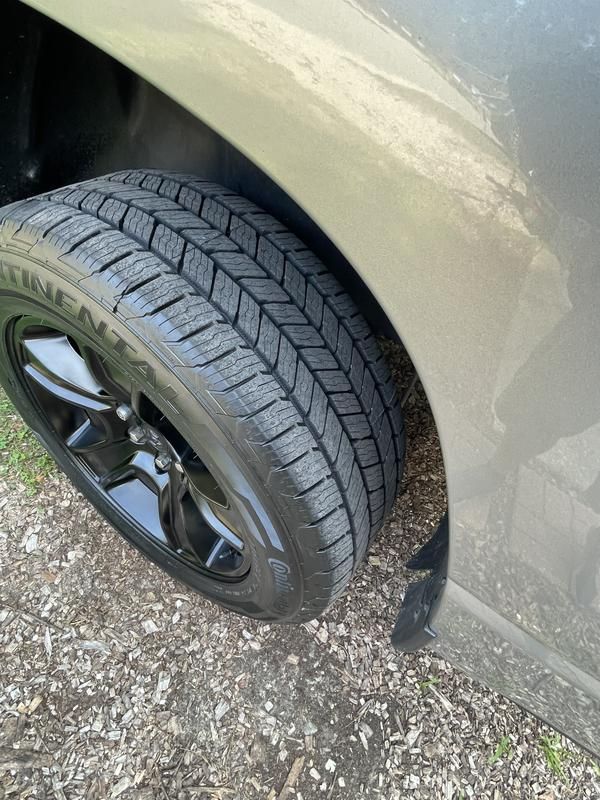
      Close-up of Continental TerrainContact H/T tire on SUV, showing detailed tread design with stable center ribs for a smooth and quiet ride.
      Continental TerrainContact H/T — premium highway all-season tire that balances comfort, wet grip, and long tread life for daily-driven trucks and SUVs.

      The Continental TerrainContact H/T is one of my favorite highway tires since 2019. Well, at the beginning, I felt like it was a bit too squishy for me. It was perfect in rain and snow, no doubt, but when it came to loaded applications — I wasn’t sure. However, years passed, and iteration paid off. Instead of releasing a new model, Continental kept refining the same tire and made it great for almost any use. I love that approach.

      Now, it’s easily one of the best in its class, and honestly, there’s not much real competition. Even the new Michelin Defender LTX M/S2 probably needs a couple of rounds of refinement to catch it. In this article, I’ll evaluate, in my point of view, the real legend — Continental TerrainContact H/T — using test data and real customer reviews to get straight to the point. Let’s begin.

      Quick Look

      Continental TerrainContact A/T

      Continental TerrainContact A/T tread design
      Tested Rating: 8.8/10

      Trusted Retailers with Best Deals:

      Tire Rack
      Free road-hazard coverage Authorized dealer
      SimpleTire
      Local installers Financing options
      Amazon
      Prime shipping Multiple sellers

      The Continental TerrainContact H/T is still the benchmark in its class. In testing, it stopped about 3% shorter on dry pavement and nearly 5% shorter in wet braking than the Michelin Defender LTX M/S2, while also holding the highest lateral grip at 0.76 g. It is one of those highway tires that feels both planted and smooth, with tight steering, steady feedback, and almost no noise even at highway speeds.

      What is more impressive is it manages that performance without giving up comfort. It scored roughly 3% higher in ride quality and ran about 5% quieter than most premium options. Add in proven long-term durability, and it is easy to see why this tire still leads the segment after years on the market. The TerrainContact H/T does everything right and keeps doing it longer.

      Best Use Cases

      • Trucks and SUVs mostly driven on pavement

      • Drivers who value wet braking and all-weather stability

      • Middle to mild towing conditions with stable ride under load

      • Long highway runs or mixed daily driving

        Dry Grip & Stability — Feels Firm, Confident, and Predictable

        On dry pavement, the Continental TerrainContact H/T sets the standard for how a highway tire should feel. It recorded 0.76 g in average cornering and stopped from 60 mph in 130 feet, leading the group in both stability and braking confidence. You can feel that grip through the steering; it holds a line without that soft delay you get from comfort-biased compounds.

        Compared to the Michelin Defender LTX M/S2, which stopped in 140 feet and delivered 0.75 g, the Continental feels a bit firmer and more responsive in quick maneuvers. Well, the good news is, it even has a smoother ride than the Michelin, which makes that result even more impressive. You get both precision and comfort, something most highway tires struggle to balance.

        A guy on Reddit said, “These tires make my F-150 feel like it’s on rails. No squirm, no drama, just solid grip.” Another review on Tire Rack summed it up perfectly: “Dry traction is unbelievable for a highway tire — it corners like something sportier.”

        From my point of view, this is where Continental nailed it. The TerrainContact H/T feels engineered for drivers who like a steady, locked-in steering feel. It’s firm, predictable, and stays composed no matter how much weight you’ve got in the back.

        Wet Traction & Braking — Still the Benchmark

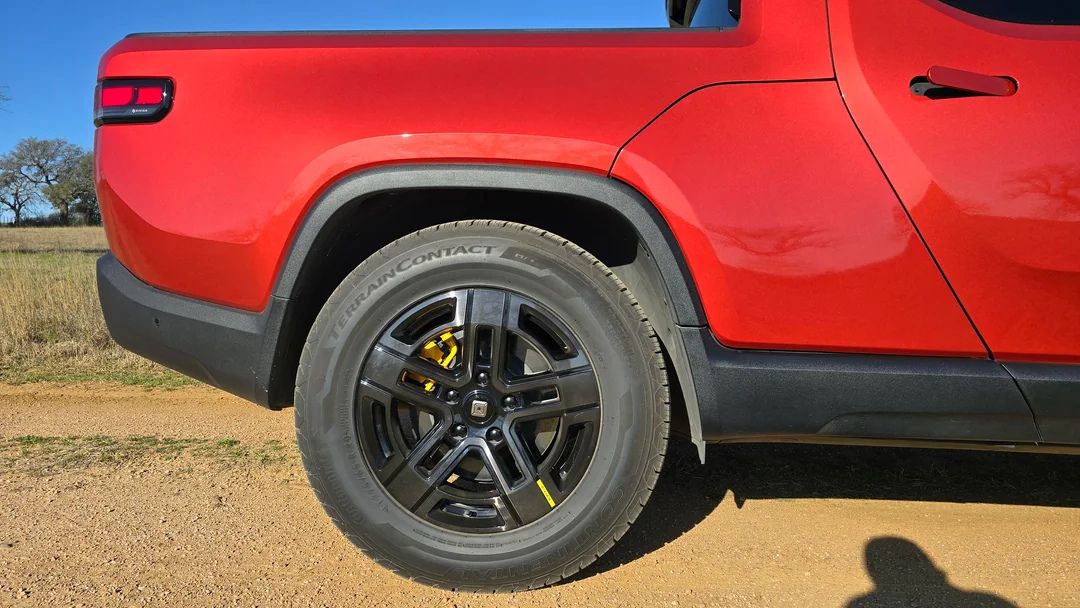
        Close-up of Continental TerrainContact H/T tire on a Rivian R1T electric pickup truck, highlighting tread design and sidewall branding.
        Continental TerrainContact H/T mounted on Rivian R1T — built for drivers who value quiet comfort, stability, and long-lasting performance on highways.

        The Continental TerrainContact H/T is one of those tires that makes driving in heavy rain feel easy. In testing, it stopped from 50 mph in 97 feet, ran a 36.02-second wet lap, and held 0.74 g of cornering grip, which is the best result in its class. That number tells a lot. The tire doesn’t just clear water — it holds traction through the turn instead of sliding out mid-corner. It’s that combination of grip and control that makes it stand out.

        Compared to the Michelin Defender LTX M/S2, which stopped in 100 feet and held 0.73 g, the Continental still has the upper hand. It feels tighter on turn-in and more composed when braking hard in standing water. The steering feedback stays linear, and it never feels floaty or nervous. Michelin is solid, but the TerrainContact H/T just gives more confidence when things get slick.

        One owner on F-150Forum said, “I’ve hit standing water at 70 and didn’t even flinch — these things just cut through.” Another on Reddit wrote, “Best wet grip I’ve ever had on a truck tire. I don’t even think about slowing down when it rains.” Those comments match the test data perfectly — calm, predictable handling and class-leading grip even when the road is covered in water.

        From my point of view, this is the tire that defines wet performance for the category. It grips, it stops, and it does it all quietly. If you want the safest, most confidence-inspiring drive in the rain, this is the one I’d pick.

        Winter & Light Snow Performance — Strong for Its Class

        For an all-season tire that doesn’t carry the 3PMSF badge, the Continental TerrainContact H/T does an impressive job in cold conditions. In testing, it needed 77 feet to stop on packed snow and about 95 feet on ice — both among the best in its class. Snow lap times and acceleration results put it comfortably ahead of most highway all-seasons, which shows that Continental’s compound doesn’t stiffen up as quickly when temperatures drop.

        Compared to the Michelin Defender LTX M/S2, which stopped at 82 feet on snow and 105 feet on ice, the Continental is clearly stronger in both braking and control. The tire feels more connected to the surface, especially in those in-between conditions — slush, frozen rain, or slightly packed snow. You can feel it bite and pull instead of spinning uselessly. Michelin is still the more comfortable one when things get bumpy, but in real traction, Continental wins it clean.

        A few user reviews line up exactly with that. A driver on Reddit said, “Didn’t expect much in snow, but these things dig in better than most all-seasons I’ve tried.” On BobIsTheOilGuy, another mentioned, “No drama on icy driveways. Grips like it has claws.” For a non-3PMSF tire, that’s high praise — and it’s consistent across multiple forums.

        From my experience, this is about as good as it gets for a standard all-season. The TerrainContact H/T gives you usable winter traction without sacrificing dry comfort or treadwear. For anyone driving in light to moderate snow regions, it’s the most capable tire you can run year-round without switching sets.

        Noise & Comfort — The Smoothest in the Segment

        If I had to pick one thing that defines the Continental TerrainContact H/T, it’s how refined it feels on the road. In testing, it scored 8.75 for ride comfort and 8.50 for noise, both best-in-class results. You can tell right away how much time Continental spent tuning this tire for daily driving. It’s quiet on fresh asphalt, stays calm on concrete, and absorbs rough surfaces without turning harsh.

        Compared to the Michelin Defender LTX M/S2, which scored 8.50 for ride and 8.25 for noise, the Continental actually feels smoother and a little more composed over patchy roads. The steering stays centered, and the suspension doesn’t have to work as hard to keep the ride balanced. It’s that fine-tuned feel you only get from a tire that’s been tested, refined, and retuned instead of being replaced every few years.

        Owners say the same thing. One driver on Tire Rack wrote, “It’s so quiet I can finally hear the wind noise over my tires — that’s new.” Another on F-150Forum said, “These feel like a luxury tire. I run them on my work truck, but they ride better than the stock ones on my SUV.” That kind of feedback shows how well this tire balances comfort without going soft.

        From an engineering standpoint, this tire nails the sweet spot. The tread blocks are tightly spaced and make small, frequent contact with the road, which breaks up air pulses that usually cause tire hum. The compound itself feels pliable but not mushy, giving the ride a cushioned feel without losing feedback.

        If you drive a truck or SUV mostly on pavement and want something that just disappears under you, this is the tire. It’s as smooth as highway tires get, and for long drives, it’s easily one of the most comfortable sets you can buy.

        Treadwear & Durability — Proven Over Time

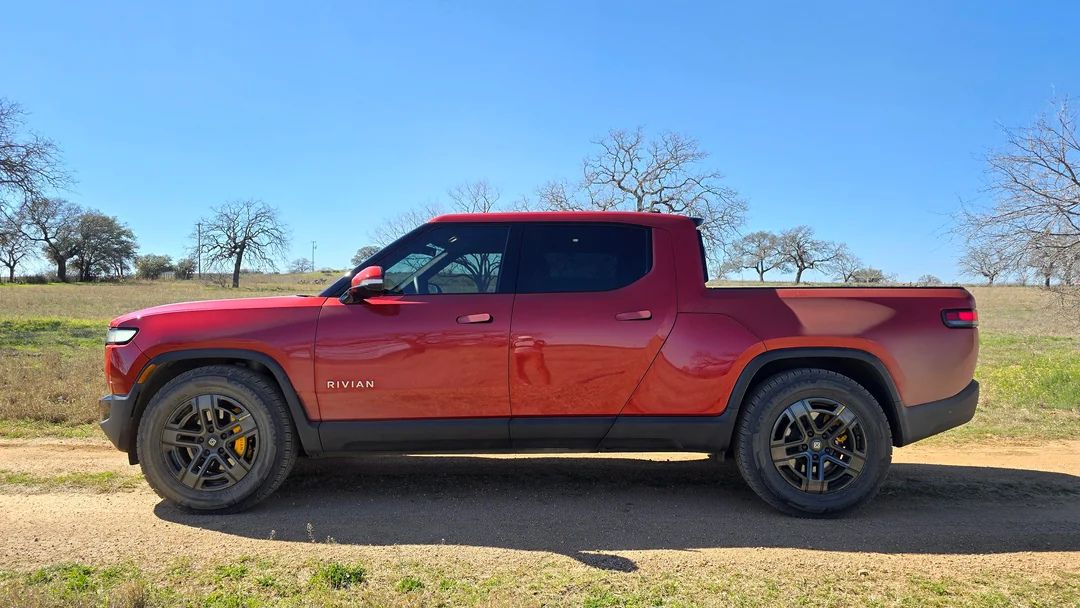
        Side profile of a red Rivian R1T electric truck equipped with Continental TerrainContact H/T tires, parked on a dirt road under clear blue skies.
        Continental TerrainContact H/T on Rivian R1T — engineered for electric pickups needing confident highway handling, quiet comfort, and long tread life.

        This is where the Continental TerrainContact H/T really proves why it’s been trusted since 2019. It comes with a 70,000-mile warranty for Euro-metric sizes and 60,000 miles for LT sizes, which already puts it among the best in the highway tire category. But what makes it special is how consistently it wears — not just how long it lasts.

        Owners who’ve run them for 30–40k miles often say the same thing: “They still look new.” On Tire Rack, several reviews mention perfectly even wear patterns with minimal rotation effort. A user on F-150Forum wrote, “I’ve got 40k on mine, and I’ll easily see 70k. No cupping, no noise increase.” That kind of feedback tells me the carcass construction and tread stiffness are dialed in.

        Compared to the Michelin Defender LTX M/S2, Continental doesn’t promise more mileage on paper, but it often holds its feel longer. Michelin tends to harden a bit as it ages, while Continental stays flexible and consistent. That said, Michelin’s stiffer sidewall can be slightly better for heavy-duty towing, where extra rigidity helps keep the rear end more stable under max load. But for everyday mixed driving, Continental’s balance between stiffness and comfort feels more natural.

        From my point of view, the TerrainContact H/T isn’t just long-lasting; it’s stable over time. The compound wears slowly and evenly, and the casing resists deformation under load. That’s the difference between a tire that just survives 70k miles and one that actually performs the same way from day one to the end of its life.

        If you’re the type who keeps a truck for the long haul and wants to forget about tire issues, this one won’t disappoint. It’s built to last and stay consistent — and that’s what separates good tires from great ones.

        Final Verdict — Still the Highway Tire to Beat

        The Continental TerrainContact H/T has been around for a while, but honestly, it doesn’t need replacing. Continental kept refining it instead of rushing a new version, and it shows. The tire feels planted, confident, and consistent across every surface — dry, wet, or light snow. It’s quiet, smooth, and wears evenly, which is exactly what most truck and SUV owners want from a daily tire.

        Even against newer models like the Michelin Defender LTX M/S2, it still leads in wet braking and stability while matching or beating it in ride comfort. Michelin’s slightly stiffer build gives it a small edge for heavy towing, but for everything else, the Continental just feels more balanced. It’s one of those tires that makes your truck drive better without you realizing why — and that’s what good engineering does.

        Best Use Cases

        • Trucks and SUVs used mostly on highways and paved roads

        • Daily drivers looking for the smoothest and quietest ride in the category

        • Light towing and work trucks that still need stability under load

        • Drivers in mild-winter climates who want reliable rain and snow performance without switching tires

        FAQ – Continental TerrainContact H/T

        Is the Continental TerrainContact H/T better than the Michelin Defender LTX M/S2?

        In most cases, yes. The TerrainContact H/T stops about 5% shorter in the wet and feels tighter in corners with 0.76 g of lateral grip. The Michelin still rides a little softer, but Continental combines that stability with smoother comfort overall.

        How does the TerrainContact H/T perform in rain?

        It leads the category in wet traction. The tire stays stable in deep water, keeps strong braking performance, and provides confident steering even in heavy rain. Many drivers describe it as “planted” and “unbothered” in wet conditions.

        Can the TerrainContact H/T handle snow?

        Yes, for light to moderate snow. It stops around 77 feet on snow and 95 feet on ice, which makes it one of the best non-3PMSF highway tires in winter traction. For deep snow or icy regions, a dedicated winter tire is still better.

        How is the ride comfort and noise level?

        It is one of the quietest highway tires you can buy. In testing, it scored 8.75 for ride comfort and 8.50 for noise. Most drivers say it feels calm on rough pavement and almost silent on the highway.

        Is it good for towing?

        Yes, for middle to mild towing conditions. It keeps its shape under load and stays stable without adding harshness. If you tow heavy or frequently, the Michelin’s stiffer sidewall might give a small edge in rear stability.

        How long does the TerrainContact H/T last?

        It comes with a 70,000-mile warranty for Euro-metric and 60,000 miles for LT sizes. Most owners report even wear and quiet performance past 40k miles, with many expecting to reach full warranty life easily.

        Who should buy the TerrainContact H/T?

        It is perfect for drivers who spend most of their time on pavement and want premium stability, comfort, and wet traction without the premium price. Great for daily trucks, family SUVs, and long-distance commuters.

        Filed Under: Highway-Terrain Tires Tagged With: continental, Continental Terraincontact H/T, Review

        • « Go to Previous Page
        • Page 1
        • Interim pages omitted …
        • Page 10
        • Page 11
        • Page 12
        • Page 13
        • Page 14
        • Page 15
        • Go to Next Page »

        Primary Sidebar

        Find Tires

        Contact Channels

        • Email
        • Facebook
        • LinkedIn
        • Twitter

        High-End Tires by Category

        Best All-Terrain Tires

        Best Rugged-Terrain Tires

        Best Mud-Terrain Tires

        Best All-Season Tires for Snow

        Best Tires for Snow Plowing

        Best Semi-Truck Tires

        Categories

        Copyright © 2026

        • Disclaimer
        • About Me
        • Contact
        • Privacy Policy