• Skip to primary navigation
  • Skip to main content
  • Skip to primary sidebar

TireTerrain

  • Home
  • Comparisons & Reviews
  • All-Terrain Tire Decision Tool
  • Pro Tips
  • About

Review

Cooper Discoverer Stronghold AT Review (2025): Cooper’s First Balanced AT Tire

Updated: November 11, 2025 by Emrecan Gurkan Leave a Comment

Close-up of Cooper Discoverer Stronghold AT tire tread on a black alloy wheel, featuring large staggered blocks, deep grooves, and siping for all-terrain grip.
Cooper Discoverer Stronghold AT — rugged tread design built for traction, stability, and durability on both highways and off-road trails.

Unlike brands like BFGoodrich or Toyo, which tend to release one “do-it-all” all-terrain model and update it every few years, Cooper has built its lineup around user intent. The Discoverer AT3 series made this clear: the AT3 XLT was tuned for towing stability, while the AT3 4S leaned toward on-road comfort for daily drivers. From there, they expanded — the Rugged Trek for trail lovers, the Road+Trail AT for highway-focused drivers, and now the Cooper Discoverer Stronghold AT, a tire released exclusively in LT sizes.

And here’s the big shift: Stronghold AT feels like Cooper’s first attempt at a true on-/off-road balance, positioned directly against heavy hitters like the BFGoodrich KO3. With tougher construction, a more aggressive tread, and LT-only availability, Cooper is signaling this tire isn’t just about comfort anymore — it’s aiming for credibility in the off-road arena.

In this article, I’ll break down independent test results, driver feedback, and design details to see where the Stronghold AT actually lands — and whether it can hold its own against proven competitors. Let’s get into it.

Quick Look

Cooper Discoverer Stronghold AT

Cooper Discoverer Stronghold AT tire
Tested Rating: 8.2/10

Trusted Retailers with Best Deals:

Tire Rack
Free road-hazard coverage Backed by Discount Tire
SimpleTire
Financing options Local installers
Amazon
Prime shipping Direct from brands

The Cooper Discoverer Stronghold AT shines with its excellent off-road traction, giving drivers confidence in mud, rocks, and loose dirt, and it feels especially stable under load thanks to a strong casing that resists sway when towing or hauling. It’s also 3PMSF-rated for snow, carries a 60,000-mile treadwear warranty, and comes in at a better value than KO2 or KO3 while offering similar trail strength. But it’s not without compromises — wet braking lags behind silica-rich rivals, ice traction is its weakest point, and on the road it can feel noisier and firmer than comfort-focused A/Ts, with a slight hit to fuel economy compared to lighter-duty options. That makes it best for drivers who want durability, trail confidence, and towing stability without paying top premium, while less ideal for daily commuters in rainy or icy climates who value comfort and wet-road grip above all else.

    Raw Test Data

    Tire Test Data

    Pick categories to show metrics, then open ☰ to pick tires. Optional chart is hidden by default.

    Parentheses show the rank among the currently displayed tires (1 = best for that metric).
    Left axis lists metrics. Top axis is used for g-force metrics so they scale clearly.
    Note: Lower is better for Stopping & Acceleration; higher is better for g-force, comfort, traction & off-road ratings. Parentheses show the rank among the currently displayed tires (1 = best for that metric).
    Sources worth checking
    Tire Rack AT Tire Test Tire Rack On-Road A/T Ratings Tire Rack Off-Road A/T Ratings SimpleTire Reviews Amazon SUV/LT Tires

    Dry Performance — Stronghold Carries Its Weight

    On paper, the Stronghold AT stops in 139 feet with 0.70 g cornering grip — respectable numbers that put it right in line with premium A/Ts. But as with most tires, the feel matters more than the sheet.

    Owners who’ve tried the Stronghold describe it as “fairly quiet considering the tread spacing” and note that it feels more composed than expected on pavement. One Wrangler driver mentioned how it rolled into roundabouts with the same confidence as stock 20s, while a Tundra owner praised its “planted, solid feel on logging roads and highways.” That sense of stability comes from its LT-only casing, which locks the tire down at speed and really shines once you start adding weight to the rig.

    Unloaded, however, that same stiffness can make the Stronghold feel heavier in the steering wheel compared to more commuter-friendly A/Ts. It’s not twitchy or unsettled — just a bit slower to react in sudden lane changes or quick maneuvers. Where the Stronghold really comes alive is under load: towing, hauling, or carrying gear. The tire tracks straight, resists sway, and feels like it digs into the asphalt with more authority the harder you lean on it.

    👉 Verdict: Stronghold is built for stability, not snap. It might not give you razor-sharp agility in daily commuting, but if your truck regularly works under weight, its dry performance feels reassuringly solid and composed.

    Wet Performance — Where Stronghold Shows Its Limits

    The Stronghold AT needs about 180 feet to stop in the wet and manages 0.47 in traction. That puts it behind leaders like the Falken AT4W (171 ft, 0.58) and even Cooper’s own AT3 when the rain really comes down. Drivers echo this: “Fine in drizzle, but you know you’re carrying more weight when the highway’s soaked,” noted one Trail Boss owner.

    Why the gap? Cooper carved in deep grooves and wide notches to fight hydroplaning, but the compound is tuned for durability and off-road bite rather than high-silica wet grip. The interlocking tread blocks that make it stable on dirt also limit the siping needed for slick asphalt traction.

    At moderate speeds it feels stable, but in heavy rain the Stronghold doesn’t lock down like Falken or Toyo. One Silverado driver explained: “It rides solid on wet pavement until you really slam the brakes — then you feel it push.”

    👉 Verdict: The Stronghold is serviceable in the wet, but it’s a trade-off tire. If you live in a rainy climate or spend most of your time on highways in storms, you’ll want a silica-rich all-terrain. If your weekends are mud and rock, the compromise is worth it.

    Winter & Ice — Strong in Snow, Soft on Ice

    The Stronghold AT posts a 72.5-foot stop on packed snow with a 47.4-foot snow acceleration run — right in line with proven names like the KO2 and KO3. That’s backed up by the 3PMSF snowflake rating, which means it’s certified for severe snow service. Drivers who’ve used it in light to moderate snow generally agree: “Plenty of bite when you pull away, doesn’t spin like some A/Ts,” said one Wrangler owner.

    Where things slide is on ice. The Stronghold needs 52.3 feet to stop on ice, the weakest showing in our dataset and a reminder that the 3PMSF symbol doesn’t turn it into a true winter tire. A Colorado driver put it bluntly: “Solid in powder and packed snow, but on glare ice it skates more than I’d like.”

    The reason ties back to Cooper’s tread design. The alternating scoop lugs and hook sidewall features claw well in loose snow, while the stone ejectors and block spacing help it clear slush. But without the soft compounds and dense siping of a dedicated winter tire, ice traction stays limited.

    👉 Verdict: The Stronghold is confident in snow, delivering traction that rivals the big names, but ice is its weak spot. If you’re driving in a region with frequent icy mornings or frozen roads, you’ll still want a set of dedicated winters.

    Off-Road Performance — Where Stronghold Feels at Home
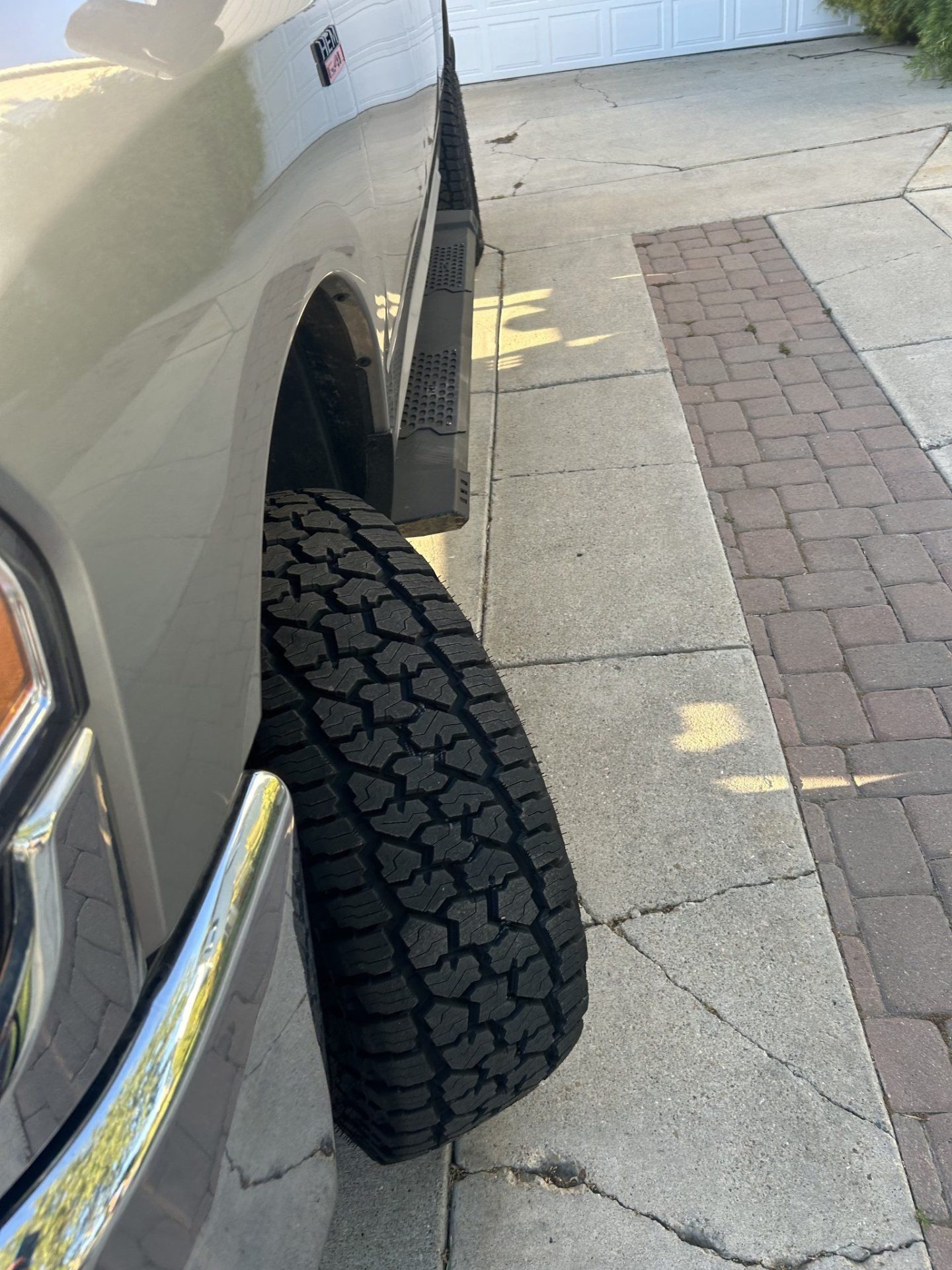
    Cooper Discoverer Stronghold AT tire mounted on a truck, highlighting aggressive tread blocks and wide stance designed for dirt, mud, sand, and rocky trails.
    Cooper Discoverer Stronghold AT — engineered for off-road traction with alternating scoop lugs, hook-shaped sidewalls, and stone ejectors.

    This is where the Stronghold AT earns its name. With scores of 8.6 in dirt, 8.2 in sand, 8.9 in mud, and 8.7 on rock, it’s one of the strongest off-road showings in the all-terrain class — landing just shy of the KO3, but ahead of options like the Recon Grappler.

    Drivers notice it too. A Tundra owner described the tire as “planted and steady on logging roads, no squirm, just bite,” while a Jeep driver reported it “walked up slick rock steps with less spin than my old KO2s.” That confidence comes from Cooper’s design choices: alternating scoop lugs, hook-shaped sidewalls, and stone ejectors that dig into loose terrain and shed debris before it can pack in.

    The two-ply polyester casing with steel belts and a polyamide cap adds toughness, keeping the Stronghold stable under load and resistant to sidewall damage. That makes it feel more like a “serious trail tire” than some of Cooper’s more comfort-leaning Discoverer models.

    There is a trade-off, though. On sand, the tire’s stiff LT construction can make it feel a bit heavy compared to softer, more flexible A/Ts. But on dirt, mud, and rock — where it matters most — the Stronghold feels like it was purpose-built to compete with BFG.

    👉 Verdict: Off-road is where the Stronghold shines brightest. If your weekends mean trails, mud, or rocky climbs, it delivers the kind of grip and durability that finally makes Cooper a real rival to KO2 and KO3.

    Durability & Load Handling — Stronger Under Stress

    Cooper Discoverer Stronghold AT tire on a heavy-duty pickup, showing reinforced sidewall and wide tread stance built for towing and hauling.
    Cooper Discoverer Stronghold AT — designed with a two-ply casing, steel belts, and polyamide cap for towing stability and everyday toughness.

    The Stronghold AT was clearly built with work in mind. Its two-ply polyester casing, steel belts, and polyamide cap give it the kind of backbone you notice when you start towing or loading the bed. One tester at Off-Road.com put it simply: “Even under load the sidewalls hold up with good support… I’ve run them at 75 PSI when towing, and they’ve felt planted and stable.”

    That toughness carries over to day-to-day abuse. A Trail Boss owner mentioned he “basically pulverized it, and not a mark on the tire or the truck,” which lines up with the Stronghold’s resistance to rock cuts and chunking. On the ChevyZR2 forums, drivers pointed out the 295s are Load Range E rated at 4,080 lbs, while the 35s step up to Load Range F — a sign Cooper wanted this tire to handle serious weight.

    Not everyone thinks it’s perfect, though. Some Tundra owners wished Cooper had gone with a 3-ply sidewall for even more confidence off-road. And a few ZR2 drivers noticed the stiffer build makes it trickier to balance, with one admitting “they took a good bit more weight to balance” and still showed a light vibration above 60 mph.

    👉 Verdict: The Stronghold feels most at home under stress. Tow a trailer, stack in gear, or head down a rocky road and it locks down in a way lighter-duty A/Ts can’t. Just know that when your truck is empty, that same stiffness can come across as firm or slightly less refined.

    Comfort & Noise — A Bit More Growl, But Not Overbearing

    For an all-terrain with off-road leanings, the Stronghold AT does a decent job of keeping road manners in check. On our data, it scores a 7.0 in comfort/noise, which puts it below smoother on-road A/Ts like the Vredestein Pinza (9.2) or Cooper’s own AT Trail (9.0). Still, many owners say it’s quieter than expected for the tread pattern. One JL Wrangler driver described them as “fairly quiet considering the tread spacing… not loud by any means,” and a Chevy ZR2 owner agreed, noting they felt “quieter and more comfortable compared to stock, especially at low speeds.”

    That said, the Stronghold isn’t trying to fool anyone into thinking it’s a touring tire. At highway speeds the hum becomes more noticeable, and the stiff LT construction means you feel more of the road. As one Reddit driver put it, “they are unquestionably louder, bumpier, and sway more than the OEM tires for me.”

    The balance here is clear: Cooper prioritized durability and off-road traction first, highway refinement second. For daily commuting, especially if you’re coming from a road-biased tire, the Stronghold will feel firmer and noisier. But for a tougher A/T with serious trail chops, it’s far from unbearable — and some drivers even like the “planted” feel that comes with the extra stiffness.

    👉 Verdict: The Stronghold won’t give you whisper-quiet rides like road A/Ts, but it also won’t drone you out of the cabin. Think of it as a middle ground: some hum on the highway, steady and comfortable enough for everyday use, and tough enough that most owners are happy to make the trade.

    Fuel Efficiency — Tough Tire, Slight Trade-Off at the Pump

    Like most LT-rated all-terrains, the Stronghold AT isn’t built with fuel savings in mind. Its heavier two-ply construction and aggressive tread blocks mean rolling resistance is a bit higher than lighter, road-focused A/Ts. Drivers switching from OEM or highway tires usually notice a small drop in mpg.

    A Chevy ZR2 owner noted they were “quieter and more comfortable compared to stock,” but did mention a slight hit in mileage after mounting the Strongholds. On Reddit, another driver said, “They’re extraordinary off-pavement… but you do feel them at the pump compared to the factory set.”

    The good news is that compared to other off-road-biased A/Ts like the KO2 or Ridge Grappler, the Stronghold is in the same ballpark — you’re not losing anything extra by choosing Cooper. In fact, some testers even remarked that fuel economy didn’t take as big a hit as they expected, which speaks to the efficiency of its tread design despite the stiffer casing.

    👉 Verdict: Expect a minor drop in mpg compared to stock or road A/Ts, but nothing unusual for a tire in this category. If fuel economy is your top priority, you’ll be better served with a lighter, highway-leaning all-terrain. But if you want off-road toughness, the Stronghold balances performance and efficiency about as well as its rivals.

    Warranty & Value — Backed Like a Workhorse

    The Stronghold AT comes with a 60,000-mile treadwear warranty, which is right in line with most premium all-terrains. For comparison, Falken’s Wildpeak AT4W also carries 60–65k depending on size, while BFG’s KO3 is rated for 50k. That means Cooper is confident the Stronghold can handle years of mixed use without burning through tread too quickly.

    Owners so far are positive about longevity. On Tundras.com, one driver swapped from AT3 XLTs to Strongholds and noted after a few weeks of forest service roads that they “served me very well” with no early signs of wear. Others highlight that the stone-ejecting tread design helps prevent irregular wear by keeping debris out of the blocks.

    From a value standpoint, Stronghold tends to price below KO2 and KO3, and close to Falken AT4W, making it a strong option if you want heavy-duty off-road capability without paying top premium. A Reddit user summed it up well: “They feel like a KO2 with more bite, but at a better price point.”

    👉 Verdict: With a 60k treadwear warranty, durable construction, and competitive pricing, the Stronghold AT hits a sweet spot for drivers who want real off-road performance backed by Cooper’s protection. It may not be the cheapest A/T, but the mix of durability and warranty coverage gives it strong value for money.

    Final Verdict — Who Should Buy the Stronghold AT?

    Bar chart comparing Cooper Discoverer Stronghold AT to all-terrain tire average across dry, wet, winter, comfort, and off-road performance categories.
    Stronghold AT vs the segment: slightly behind in wet and comfort, but stronger than average off-road and holding steady in winter grip.

    The Cooper Discoverer Stronghold AT feels like a turning point for Cooper. Instead of another road-leaning A/T, this is a tire built with serious off-roaders in mind. With strong scores in mud (8.9), rock (8.7), and dirt (8.6), plus the backing of a 60k warranty, it finally gives Cooper fans a tire that can stand alongside KO2, KO3, and Wildpeak.

    Who it’s best for:

    • Truck and SUV owners who tow, haul, or run heavy gear — the Stronghold feels steadier under load than many lighter-duty A/Ts.

    • Weekend off-roaders — drivers tackling trails, logging roads, mud, or rocky climbs will find confidence in its hook sidewalls, scoop lugs, and stone ejectors.

    • Snow belt drivers who see more powder than ice — with the 3PMSF badge and strong snow acceleration, it handles winter better than most, but ice performance remains its weak spot.

    Who should look elsewhere:

    • Highway commuters in rainy or icy climates — wet stops at 180 ft and ice braking at 52.3 ft put it behind silica-heavy A/Ts like Falken or Toyo.

    • Drivers chasing comfort above all else — at a 7.0 noise/comfort rating, it’s firmer and louder than on-road A/Ts.

    👉 Bottom Line: If you’ve been waiting for a Cooper that can finally stand toe-to-toe with the KO2, KO3, and Wildpeak, the Stronghold AT is it. It’s not the quietest or best in the rain, but it delivers what matters most: off-road strength, durability under load, and value that makes sense.

    Filed Under: All Terrain Tires, Off-Road All Terrain Tires Tagged With: cooper, Cooper Discoverer Stronghold AT, Review

    Mickey Thompson Baja Boss A/T Review — Winter Traction & Off-Road Power in 2025

    Updated: November 11, 2025 by Emrecan Gurkan Leave a Comment

    Close-up of Mickey Thompson Baja Boss A/T tire showing aggressive hybrid tread design with deep central voids and shoulder lugs; product label visible showing LT275/60R20 Load Range E specification.
    Mickey Thompson Baja Boss A/T — aggressive all-terrain traction with mud-terrain strength.

    Real test data, off-road insights, and daily-driving impact — from a former Bridgestone engineer.

    The Mickey Thompson Baja Boss A/T is an aggressive Rugged-Terrain tire built for heavy-duty trucks and serious off-roaders. Its signature feature is the PowerPly XD 3-ply sidewall, which delivers exceptional puncture resistance and stability under load — a big reason it’s popular with ¾-ton and 1-ton pickup owners. Unlike balanced Off-Road A/Ts, the Baja Boss A/T leans toward off-road toughness while still carrying a 3PMSF rating for winter traction, making it a rare hybrid of brute strength and year-round drivability.

    From testing and driver feedback, it excels in durability, winter grip, and towing confidence. The trade-off is weight and aggressiveness — its blocky tread and stiff casing can translate to added noise, a firmer ride, and reduced efficiency compared to milder A/Ts.

    In the sections ahead, we’ll break down how the Baja Boss A/T performs across dry, wet, snow, and off-road categories. You can also compare it directly against other rugged-terrain options in our All-Terrain Tire Decision Tool for quick recommendations by SUV, CUV, or truck class.

    Quick Look

    Mickey Thompson Baja Boss A/T

    Mickey Thompson Baja Boss A/T tire
    Tested Rating: 8.1/10

    Trusted Retailers with Best Deals:

    Tire Rack
    Free road-hazard coverage Backed by Discount Tire
    SimpleTire
    Financing options Local installers
    Amazon
    Prime shipping Direct from brands

    The Mickey Thompson Baja Boss A/T impressively combines excellent wet and winter performance with an aggressive, head-turning look. Its responsiveness and cornering stability are top-notch, though it could use a touch more lateral grip on gravel. While its lifespan may fall short of warranty claims, it remains an ideal pick for those who want off-road mud-tire performance while still enjoying reasonable noise levels and ride comfort. That said, it’s worth noting that the Baja Boss A/T isn’t the best choice for drivers prioritizing fuel efficiency.

      Things to Know

      Mickey Thompson Baja Boss AT falls into the category of a rugged terrain tire, positioning it between mud-terrain and all-terrain types. Notably, sizes of 315 (12.50) width or smaller are marked with the 3PMSF (Three-Peak Mountain Snowflake) symbol, indicating enhanced winter performance, while larger sizes are not. Additionally, both LT (Light Truck) and P-metric sizes of the Baja Boss AT come with a 60,000-mile treadwear warranty. It’s also worth mentioning that this tire is manufactured in the USA, reflecting its commitment to quality.

      Wet Performance

      Side by side Falken Wildpeak AT3W and Mickey Thompson Baja Boss AT

      E load range Mickey Thompson Baja Boss AT is notably heavy; even heavier than the Falken Wildpeak AT3W by almost 6 lbs. This is primarily due to its wider tread pattern, which is also about 0.5/32” taller compared to the AT3W.

      Distinctively, the Baja Boss AT features a completely asymmetrical tread design. Unlike other rugged terrain tires, its center section is more segmented, significantly increasing the number of biting edges. This design, coupled with additional siping on both the shoulder and center section lugs, results in strong braking capabilities.

      Concerned about hydroplaning with its wide design? The tire’s deep, sectional pattern excels in water evacuation. However, remember that hydroplaning is a risk with any tire at high speeds, so caution is always advisable.

      In summary, the Mickey Thompson Baja Boss AT stands out as an exceptional tire for wet surfaces.

      Note from the Expert: When it comes to rain, I always emphasize two things: compound grip and water evacuation. You can see the full details in my analysis, but if you take just one thing away, remember that an AT tire’s stiff nature makes achieving top-tier wet performance a constant battle. This is why the question, Are All-Terrain Tires Good in Rain?, requires a nuanced answer that balances tread design against rubber stiffness.

      Snow Performance

      Mickey Thompson Baja Boss AT’s 3PMSF (Three-Peak Mountain Snowflake) marking is a rarity among rugged terrain tires, making it stand out in its category.

      Despite its slightly stiff compound, the tire has a good number of sipes, which initially had me concerned about its light snow traction. However, it handles light snow conditions exceptionally well, possibly outperforming other rugged terrain tires in this aspect.

      In deep snow and slush, the Baja Boss AT truly excels. It easily chews through snow or mixed snow and mud, thanks to its high self-cleaning capability.

      As for ice, while it may not be the best, it still provides reliable safety, ensuring you can get home safely at speeds below 50 mph.

      Overall, in my view, the Mickey Thompson Baja Boss AT is the top rugged terrain tire for winter conditions.

      Note from the Expert: Our discussions often boil down to the core tradeoff. On one hand, you must understand why all-terrain tires are truly effective in deep snow, but not on ice. On the other hand, you face the 3PMSF Paradox—the hidden cost of that badge. The short answer is: The 3PMSF badge certifies traction, but it costs you durability. Dive into our full analysis on the critical 3PMSF rating for severe winter and off-road service, and its hidden costs, before you risk your rig on the trail.

      Road Noise and Riding

      How Mickey Thompson Baja Boss AT looks like on Ford F-150

      To be candid, the ride with the Mickey Thompson Baja Boss AT felt a bit rough, likely due to its E load range. While the extra ply in the flotation and LT metric sizes enhances road stability, it also results in a stiffer ride.

      On a different note, the sectional lugs may exhibit some squirm under loaded conditions, but in my experience, they’ve performed satisfactorily.

      As for noise, I was bracing for more, given its aggressive design and deep tread. Although it’s commendably quiet for an asymmetrical tire, when compared to the Toyo Open Country AT3 or Falken Wildpeak AT3W, it’s a bit noisier.

      In summary, the Mickey Thompson Baja Boss AT, as expected, provides a ride that’s slightly rough and noisier.

      Note from the Expert: For years, choosing all-terrain meant accepting noise—a true compromise for off-road grip. That’s why the question, Are All-Terrain Tires Louder than Highway Tires?, used to have a simple “yes” answer. Now, with the rise of on-road models, the core issue has shifted from noise to overall refinement. To fully understand which side of the comfort spectrum you’re buying into, you need to determine Are All-Terrain Tires Good for Daily Driving?—a question that depends entirely on the tire’s construction, not just the name.

      Off Road Performance

      One of the standout advantages of the Mickey Thompson Baja Boss AT is its robust sidewalls. This feature allows for a bit more flexibility(it can handle 3-4 PSI less) in airing down the tires, which, in turn, creates a larger contact area for enhanced traction. Plus, the tire’s extremely beefy and aggressive sidewall design further improves traction on loose surfaces.

      In air-down conditions, its deep and wide tread design enables it to float effectively, particularly on sandy terrain.

      As for dirt and gravel, the stone ejectors on the shoulder blocks perform admirably, ensuring the Baja Boss AT maintains a solid grip.

      While I haven’t personally tested it in deep mud, there’s an excellent article detailing severe off-roading experiences with the Mickey Thompson Baja Boss AT, which I recommend for more in-depth insights.

      Note from the Expert: Every successful day on the trail is about preparation and physics, because tire longevity is earned, not given. Before you even start, you must master the critical link between tire pressure and load range for every rig to maximize your contact patch. Once moving, remember your ultimate off-road armor is your sidewall protection against the inevitable pinch flat. And finally, your traction on the obstacle is dictated by choosing the right aggressive vs hybrid tread pattern for your terrain. Master those three steps, and your rig will be ready for anything.

      Tread Wear

      Mickey Thompson Baja Boss AT, with its stiff and deep compound, comes with an impressive 60,000-mile treadwear warranty from the manufacturer. While I’m curious about how the F-rated versions will fare, achieving 60,000 miles does seem a bit ambitious.

      Let’s talk about wear. The tire’s contact patch is well-designed, leading to even wear, especially with regular rotation. But, there’s a catch with aggressive, thick sidewall designs – they tend to generate heat.

      While I haven’t experienced it personally, I’ve come across online reviews mentioning shoulder chunking after about 40,000 miles, likely due to this heat factor.

      In conclusion, I believe the Mickey Thompson Baja Boss AT has the potential to be one of the most durable rugged terrain tires on the market. However, be mindful that long-term chunking could be a concern.

      Fuel Efficiency

      Like the Falken Wildpeak AT3W, the Mickey Thompson Baja Boss AT carries the 3PMSF designation and is a heavy tire. Its substantial inner construction and siped compound contribute to a higher rolling resistance, which inevitably leads to a decrease in miles per gallon (MPG).

      If you’re switching from a highway terrain or all-terrain tire, be prepared for a noticeable drop in fuel efficiency. It’s fair to say that the Baja Boss AT isn’t the most fuel-efficient option out there.

      Tire Size Selection: The Basics You Can’t Skip

      Even the best tread design can’t rescue a tire that’s built too weak. Back when I was testing tires at Bridgestone, I saw all-terrain models that should’ve performed but fell short — simply because the basics (size, load strength, and speed rating) weren’t matched to the vehicle.

      P-Metric vs. LT (Light Truck) Tires

      The first step is knowing whether you need LT or passenger tires. LT (Light Truck) tires are built with extra reinforcement and stiff sidewalls, designed for towing, hauling, or off-road use. Passenger (P-metric) tires are lighter, smoother, and tuned for daily comfort and fuel efficiency — but they’ll flex more under load.

      Understanding Tire Load Range: XL vs. E-Load

      Then comes the tire load index and load range — essentially your tire’s strength rating. Here’s where things split between passenger XL and LT E:

      • XL (Extra Load) is a passenger tire with reinforced sidewalls. It can handle a bit more pressure (~41 PSI) than a standard SL tire and is perfect for SUVs, crossovers, or light trucks that carry extra gear, passengers, or small trailers. XL tires ride softer and quieter than LT options, making them ideal for daily use.

      • E Load Range is an LT tire class built with a much thicker casing. E-rated tires can handle far more pressure (up to ~80 PSI) and heavier loads, which makes them essential for ¾-ton and 1-ton trucks towing trailers or hauling close to max capacity. The trade-off is weight, stiffer ride, more road noise, and a small drop in fuel efficiency.

      Put simply: XL is for “extra luggage and family,” while E is for “truck bed full of bricks or a car trailer.”

      Why the Tire Speed Rating Matters for Safety

      Finally, don’t overlook the tire speed rating. It’s not just about top speed — it measures how well a tire handles heat and stress at highway pace. Lower ratings (like S) tend to ride softer and last longer, while higher ratings (H, T) feel more stable and responsive under sharp maneuvers. Heat build-up is the silent killer of tires, and speed rating is your safeguard.

      Bottom line: Match your tire’s construction (LT vs P-metric), load range (XL vs E), and speed rating to your vehicle’s demands. Get those right, and everything else — off-road grip, winter traction, comfort — will finally perform the way it was designed to.

      Conclusion

      Mickey Thompson Baja Boss AT excels in medium and heavy-duty applications. Its unique sidewall design makes it an ideal choice for towing, hauling, and particularly for severe off-roading. For those who primarily drive on highways, I recommend opting for the p-metric sizes.

      I hope you found this article insightful. If you have any further questions or need more information, feel free to ask. Your safe and satisfied driving is my top priority.

      Filed Under: All Terrain Tires, Rugged Terrain Tires Tagged With: mickey thompson, mickey thompson baja boss at, Review

      Cooper Discoverer AT3 XLT Review — Quiet Comfort & All-Season Traction in 2025

      Updated: November 11, 2025 by Emrecan Gurkan Leave a Comment

      Real test data, off-road insights, and daily-driving impact — from a former Bridgestone engineer.

      The Cooper Discoverer AT3 XLT is the most aggressive member of Cooper’s On-Road A/T lineup, designed exclusively in LT (Light Truck) sizes. Compared to the more comfort-focused AT3 4S, the XLT features reinforced sidewalls, larger sizes for ½-ton and ¾-ton pickups, and a bolder tread pattern aimed at drivers who want extra durability and towing confidence. It isn’t built to be a hardcore off-road tire, but it strikes a practical balance — stable on highways, dependable in wet and snowy conditions, and capable enough for mild trail use.

      From testing and driver feedback, the AT3 XLT earns praise for tread life, towing stability, and its snow-certified 3PMSF rating, though it rides firmer and noisier than its AT3 4S sibling.

      In the sections ahead, we’ll break down how the AT3 XLT performs across dry, wet, winter, and off-road conditions. You can also compare it directly with other A/T options in our All-Terrain Tire Decision Tool for quick recommendations by SUV, CUV, or truck class.

      I've noticed a standout feature in the Cooper Discoverer AT3 XLT: its beefy sidewalls. These aren't merely for looks; they create extra biting edges when you air them down, which I've found greatly improves off-road grip

      Drawing on my experience as a former Bridgestone engineer, the Cooper Discoverer AT3 XLT stands out as a tire that excels in wet, dry, and mild winter conditions, delivering performance that’s truly commendable. Its drawback lies in self-cleaning ability, which falls short in mud, sand, and deep snow, making it less ideal for those terrains. Despite these limitations, the AT3 XLT impresses with its quietness and comfort — a rare quality for a tire with such a rugged, aggressive design.

      Cooper Discoverer AT3 XLT

      Cooper Discoverer AT3 XLT tire
      Compare prices:
      Amazon
      Prime shipping Direct from brands
      Tire Rack
      Free road-hazard coverage Backed by Discount Tire
      SimpleTire
      Financing options Local installers

      Tire Decision Tool

      For those in a hurry: this tool makes it easy. Just pick your vehicle and what matters most to you, and it’ll instantly suggest the best tire options.

      Click Show to see tire recommendations. (After that, changes update automatically.)
      No matching tires found. Try another selection.

        On-Road Performance

        The Cooper Discoverer AT3 XLT excels in on-road performance, striking a notable balance in various aspects.

        Handling: With its robust sidewalls and a strong inner structure, this tire delivers outstanding responsiveness and cornering stability. Its highway-terrain-like tread, enhanced by Cooper’s Even Arc Technology, plays a key role here.

        Wet Performance: The five-rib pattern excels in water evacuation, effectively preventing hydroplaning. Additionally, the multi-zigzag sipes in the tread blocks offer commendable wet traction and a reliable stopping distance.

        Noise Level: Remarkably, the AT3 XLT is as quiet as a church mouse. This is due to its highway-inspired tread pattern and Whisper Groove Technology, which disrupts air noise within the tread. You’ll notice this in the shoulder slots.

        Ride Comfort: The tire’s slightly narrower tread width not only optimizes the contact patch but also contributes to a more comfortable ride. Compared to more aggressively designed all-terrain tires like the BF Goodrich KO2 or Toyo Open Country AT3, its design is less rugged, enhancing comfort.

        Appearance: Don’t be misled by its narrower profile; the AT3 XLT doesn’t look naive. In my view, its beefy and aggressive sidewalls give it a rugged appearance, rivaling even the most robust all-terrain tires.

        Winter Performance

        Despite lacking the 3PMSF (Three-Peak Mountain Snowflake) symbol that the Cooper Discoverer AT3 4S boasts, the AT3 XLT still delivers respectable ice and snow performance.

        Mild Winter Conditions: The tire’s independent blocks and zigzag sipes are quite effective in mild winter conditions. What’s more, the aggressive shoulder blocks excel at ‘chewing’ through snow. The beefy upper sidewall also contributes significantly here, making the tire adept at handling light snow, deep snow, and slush.

        Ice Performance: On ice, though, the AT3 XLT doesn’t quite hit the top marks. Its narrower tread pattern is a factor here. Lowering the air pressure in the tires might improve performance slightly, but overall, I’d rate it as decent, not outstanding, on icy surfaces.

        Note from the Expert: Our discussions often boil down to the core tradeoff. On one hand, you must understand why all-terrain tires are truly effective in deep snow, but not on ice. On the other hand, you face the 3PMSF Paradox—the hidden cost of that badge. The short answer is: The 3PMSF badge certifies traction, but it costs you durability. Dive into our full analysis on the critical 3PMSF rating for severe winter and off-road service, and its hidden costs, before you risk your rig on the trail.

        Durability

        Looks beefy and aggressive!

        When I first delved into researching the Cooper Discoverer AT3 XLT, I stumbled upon a few mentions of cracking issues, which initially raised concerns about its durability.

        Stone Ejection: One thing I can assert is that this tire does pick up small stones. It appears that Cooper’s Safe Guard Technology isn’t as effective with this model, possibly leading to cracks in the tread over time.

        Sidewall Durability: However, the sidewalls are impressively beefy and show excellent resilience against external factors. This robust design significantly enhances the tire’s overall durability.

        Heat Management: A point of consideration is the heat generation, particularly because the thickest part of the tire is the shoulder or sidewall. Excessive heat, often a byproduct of heavy or loaded usage, can be detrimental over time, especially after a year.

        In conclusion, the Cooper Discoverer AT3 XLT is a highly durable tire. But when it comes to prolonged air-down usage, I’m somewhat reserved in endorsing it as the best option.

        Tread Wear

        The Cooper Discoverer AT3 XLT exhibits excellent wear characteristics, much as you’d expect from a tire with a highway-like and slightly narrower pattern.

        Pattern Optimization: This type of pattern is inherently easier to optimize for even wear. The absence of a 3PMSF (Three-Peak Mountain Snowflake) rating implies a harder compound, which generally aids in uniform wear.

        Tread Depth and Heat: However, the tire boasts a deep tread, varying from 16/32” to 17/32” depending on the size. The combination of small lugs, deep tread, and siped pattern can generate more motion and consequently, heat. From my experience, this means it tends to wear slightly quicker with air-down usage.

        Durability in Gravel: While the lugs hold up well in gravel conditions, the bottom of the tread may suffer due to stone retention.

        In summary, the Cooper Discoverer AT3 XLT wears quite well, aligning with its 60,000-mile tread wear warranty. It’s a testament to its well-engineered design and durability, even if there are some nuances to consider in specific conditions.

        Off-Road Performance

        While the Cooper Discoverer AT3 XLT is primarily an on-road all-terrain tire, it boasts a considerable void area, enhancing its off-road capabilities.

        Gravel and Dirt Performance: In my experience, the AT3 XLT handles gravel and dirt with remarkable ease. However, on gravel, a bit of caution is advised, especially when turning, to maintain control.

        Sand and Mud Challenges: As for sand or mud, the tire’s performance isn’t quite as impressive. This is mainly due to its limited evacuation capability. It’s serviceable for short trips on such terrains, but I wouldn’t recommend it for extreme off-road events like the Baja Race.

        Note from the Expert: Every successful day on the trail is about preparation and physics, because tire longevity is earned, not given. Before you even start, you must master the critical link between tire pressure and load range for every rig to maximize your contact patch. Once moving, remember your ultimate off-road armor is your sidewall protection against the inevitable pinch flat. And finally, your traction on the obstacle is dictated by choosing the right aggressive vs hybrid tread pattern for your terrain. Master those three steps, and your rig will be ready for anything.

        Tire Size Selection: The Basics You Can’t Skip

        Even the best tread design can’t rescue a tire that’s built too weak. Back when I was testing tires at Bridgestone, I saw all-terrain models that should’ve performed but fell short — simply because the basics (size, load strength, and speed rating) weren’t matched to the vehicle.

        P-Metric vs. LT (Light Truck) Tires

        The first step is knowing whether you need LT or passenger tires. LT (Light Truck) tires are built with extra reinforcement and stiff sidewalls, designed for towing, hauling, or off-road use. Passenger (P-metric) tires are lighter, smoother, and tuned for daily comfort and fuel efficiency — but they’ll flex more under load.

        Understanding Tire Load Range: XL vs. E-Load

        Then comes the tire load index and load range — essentially your tire’s strength rating. Here’s where things split between passenger XL and LT E:

        • XL (Extra Load) is a passenger tire with reinforced sidewalls. It can handle a bit more pressure (~41 PSI) than a standard SL tire and is perfect for SUVs, crossovers, or light trucks that carry extra gear, passengers, or small trailers. XL tires ride softer and quieter than LT options, making them ideal for daily use.

        • E Load Range is an LT tire class built with a much thicker casing. E-rated tires can handle far more pressure (up to ~80 PSI) and heavier loads, which makes them essential for ¾-ton and 1-ton trucks towing trailers or hauling close to max capacity. The trade-off is weight, stiffer ride, more road noise, and a small drop in fuel efficiency.

        Put simply: XL is for “extra luggage and family,” while E is for “truck bed full of bricks or a car trailer.”

        Why the Tire Speed Rating Matters for Safety

        Finally, don’t overlook the tire speed rating. It’s not just about top speed — it measures how well a tire handles heat and stress at highway pace. Lower ratings (like S) tend to ride softer and last longer, while higher ratings (H, T) feel more stable and responsive under sharp maneuvers. Heat build-up is the silent killer of tires, and speed rating is your safeguard.

        Bottom line: Match your tire’s construction (LT vs P-metric), load range (XL vs E), and speed rating to your vehicle’s demands. Get those right, and everything else — off-road grip, winter traction, comfort — will finally perform the way it was designed to.

        Conclusion

        Cooper Discoverer AT3 XLT strikes a fantastic balance, offering a quiet and comfortable ride along with respectable performance in wet conditions and light snow. For those who primarily use highways, I highly recommend this tire.

        I hope you found this article insightful. If you have any further questions, feel free to drop them in the comments below. Safe travels, folks!

        Filed Under: All Terrain Tires, On-Road All Terrain Tires Tagged With: cooper, Cooper Discoverer AT3 XLT, Review

        Yokohama Geolandar AT G015 Review — Wet & Winter Performance for Daily Driving in 2025

        Updated: November 11, 2025 by Emrecan Gurkan Leave a Comment

        Right before mounting.

        Real test data, off-road insights, and daily-driving impact — from a former Bridgestone engineer.

        The Yokohama Geolandar A/T is a highway-oriented On-Road A/T tire built for SUVs, crossovers, and light-duty pickups. Unlike competitors like the Toyo Open Country AT3 or Falken Wildpeak AT3W, which aim for a true 50/50 split of on-road and off-road performance, Yokohama positions the Geolandar A/T primarily for paved-road comfort and daily drivability. It’s also available in LT (Light Truck) fitments, which feature a more aggressive tread design than the P-metric versions, giving it added durability and towing stability for ½-ton trucks and above.

        This dual-design approach makes the Geolandar A/T unique — P-metric sizes deliver smoother road manners, while LT versions add bite and toughness for drivers who need more utility. The trade-off is that it doesn’t match the off-road depth of category leaders, but for highway-focused drivers who want occasional dirt-road confidence, it strikes a practical balance.

        In the sections ahead, we’ll break down how the Geolandar A/T performs across dry, wet, winter, and light off-road testing. You can also see how it compares against rivals in our All-Terrain Tire Decision Tool for quick recommendations by SUV, CUV, or truck class.

        Quick Look

        Yokohama Geolandar A/T G015

        Yokohama Geolandar A/T G015 tire
        Tested Rating: 8.7/10

        Trusted Retailers with Best Deals:

        Tire Rack
        Free road-hazard coverage Backed by Discount Tire
        SimpleTire
        Financing options Local installers
        Amazon
        Prime shipping Direct from brands

        From my perspective as a former Bridgestone engineer, the Yokohama Geolandar AT G015 is an excellent choice for highway and city driving, offering strong traction in wet, dry, and snowy conditions with impressive handling for an all-terrain. While it isn’t the best for serious off-road use, it performs well on dirt trails. The trade-offs come on gravel, where it wears quickly, and in fuel economy, as buyers should expect a slight drop in MPG.

          City and Highway Driving

          A close-look

          Having experience with p-metric tires, we found that our city and highway driving experiences were highly satisfying. To provide a better understanding, let’s break down our experiences for wet, dry, and snowy conditions separately.

          Dry Performance

          Switching from regular all-season tires to the Yokohama Geolander AT, as expected, resulted in slightly inferior dry performance compared to all-season tires. To clarify, when I mention “dry performance,” I’m referring to the handling capability.

          However, it’s important to note that the Yokohama Geolander AT is a relatively mild all-terrain tire. In comparison to our experiences with the Toyo AT3 or Falken Wildpeak AT3W, the Geolander AT felt more responsive. What pleasantly surprised me the most was its cornering stability. Even at high speeds, the tire maintained its shape exceptionally well. This can be attributed to its strong sidewalls and wider shoulder blocks.

          For the LT (Light Truck) specification, Yokohama seems to employ a 5-rib design with narrower shoulder lugs. This design choice results in wider center and outer ribs, which contribute positively to the tire’s stability. Based on this observation, I expect similar performance characteristics from the LT sizes of the Geolander AT as well.

          Wet Performance

          Thanks to its ability to put a substantial amount of rubber on the ground, the Yokohama Geolander AT G015 delivers highly satisfying wet performance.

          This isn’t solely due to improved wet traction but also enhanced hydroplaning resistance. Upon close examination of the tire’s tread, one can easily spot the full-depth and 3D siping. This design choice not only increases traction by providing numerous biting edges but also greatly improves hydroplaning resistance. The angled notches on the outer ribs effectively direct water to the shoulder slots, contributing to its impressive hydroplaning resistance.

          Overall, the Yokohama Geolander AT G015 excels in wet performance for highway and city driving.

          I’d like to add some thoughts regarding the LT (Light Truck) metric sizes:

          LT sizes of this tire feature a tread that is 4/32” or 5/32” deeper, greatly enhancing hydroplaning resistance. Additionally, they boast a higher siped density, which leads to similar wet traction capabilities as their non-LT counterparts.

          Note from the Expert: When it comes to rain, I always emphasize two things: compound grip and water evacuation. You can see the full details in my analysis, but if you take just one thing away, remember that an AT tire’s stiff nature makes achieving top-tier wet performance a constant battle. This is why the question, Are All-Terrain Tires Good in Rain?, requires a nuanced answer that balances tread design against rubber stiffness.

          Snow Performance

          The Yokohama Geolander AT G015, despite being a mild all-terrain tire, boasts a noticeably aggressive tread pattern compared to standard all-season tires.

          Let’s dive into its performance in snow conditions. This tire excels in light snow thanks to its sectional outer ribs and siped pattern. The sectional outer ribs effectively prevent the tread from packing with snow, ensuring consistent traction. Additionally, the shoulder block notches create extra biting edges, contributing to excellent light snow traction.

          However, it’s important to note that this tire is primarily designed for on-road use, which results in a shallower tread depth and less void area compared to more aggressive all-terrain tires. While it may not be the best choice for deep snow or slush, it can still provide traction in unexpected snowfall.

          A noteworthy point is that the Yokohama Geolander AT G015 carries the 3PMSF (Three-Peak Mountain Snowflake) symbol, indicating that its compound retains flexibility even in temperatures below 45°F, enhancing its winter performance and cold-weather capabilities.

          Note from the Expert: Our discussions often boil down to the core tradeoff. On one hand, you must understand why all-terrain tires are truly effective in deep snow, but not on ice. On the other hand, you face the 3PMSF Paradox—the hidden cost of that badge. The short answer is: The 3PMSF badge certifies traction, but it costs you durability. Dive into our full analysis on the critical 3PMSF rating for severe winter and off-road service, and its hidden costs, before you risk your rig on the trail.

          Road Noise

          The Yokohama Geolander AT G015 features a relatively low tread depth for its p-metric sizes, which is advantageous for reducing road noise. However, contrary to some other tests, I found that this tire may not be as quiet as some of its direct competitors, such as the Cooper Discoverer AT3 4S or Firestone Destination AT2.

          The tire incorporates deep notches that effectively disrupt the airflow within the tread, which is generally a noise-reducing feature. However, the shoulder blocks on the Yokohama Geolander AT G015 are quite aggressive compared to its competitors, and a significant portion of the tire noise seems to be generated by these sections.

          It’s worth noting that despite the aggressive appearance of the shoulder blocks, they are not perfectly square. This design choice results in a narrower tread width on the road at certain tire pressures, contributing to a decent noise level for a tire with such an aggressive tread pattern.

          Overall, the Yokohama Geolander AT G015 may not be the quietest highway-oriented all-terrain tire, yet it’s a decent contender in terms of noise performance.

          Note from the Expert: For years, choosing all-terrain meant accepting noise—a true compromise for off-road grip. That’s why the question, Are All-Terrain Tires Louder than Highway Tires?, used to have a simple “yes” answer. Now, with the rise of on-road models, the core issue has shifted from noise to overall refinement. To fully understand which side of the comfort spectrum you’re buying into, you need to determine Are All-Terrain Tires Good for Daily Driving?—a question that depends entirely on the tire’s construction, not just the name.

          Riding Comfort

          In my opinion, the Yokohama Geolander AT G015 benefits from its wider shoulder blocks and variable pitch design, which contribute to its overall performance. The tire sidewalls are notably stiff, enhancing stability and control. Additionally, the variable pitch design ensures that there is always a sufficient amount of rubber in contact with the road surface, resulting in a decent level of riding comfort.

          The tire’s inner structure includes an extra nylon layer, which enhances its uniformity. This feature plays a role in providing a smoother and more comfortable ride experience for drivers.

          Treadwear

          In terms of uneven wear, the Yokohama Geolander AT G015 performs admirably, largely due to its symmetrical pattern. However, its blocky tread design, while beneficial for traction, can have a negative impact on longevity.

          Yokohama offers a 50,000-mile treadwear warranty for LT sizes and a 60,000-mile warranty for p-metric sizes, which is slightly lower than the industry average. This could be attributed, in part, to the tire’s higher rolling resistance.

          Overall, the Yokohama Geolander AT wears well, but it may not last as long as tires like the Cooper Discoverer AT3 4S or Falken Wildpeak AT Trail.

          Fuel Efficiency

          Based on information from AutoBild and various customer reviews I found online, the Yokohama Geolander AT G015 appears to have a higher rolling resistance, which is somewhat expected due to its notched tread design. While it carries a UTQG rating of 600 A B, similar to its competitors, and has a comparable weight, there are indications that the tire may wear out relatively quickly. Typically, quicker tire wear can contribute to higher rolling resistance.

          If fuel efficiency is a top priority for you, I would suggest considering alternative tire options that may offer better fuel economy performance.

          Off-Road Performance

          Sidewall isn't that aggressive but LT sizes have more aggressive ones

          I would advise against choosing the Yokohama Geolander AT if off-road performance is a top priority for you.

          This tire excels on dirt surfaces thanks to its siped and cavitated pattern. However, when it comes to gravel, it appears a bit mild to me in terms of providing a robust gravel performance. It can handle some gravel, but if you spend a significant amount of time on gravel roads, this tire may wear out quickly.

          For those seeking a more detailed off-road review, I recommend checking out this article: Expeditionportal Off-Road Review.

          Note from the Expert: Every successful day on the trail is about preparation and physics, because tire longevity is earned, not given. Before you even start, you must master the critical link between tire pressure and load range for every rig to maximize your contact patch. Once moving, remember your ultimate off-road armor is your sidewall protection against the inevitable pinch flat. And finally, your traction on the obstacle is dictated by choosing the right aggressive vs hybrid tread pattern for your terrain. Master those three steps, and your rig will be ready for anything.

          Tire Size Selection: The Basics You Can’t Skip

          Even the best tread design can’t rescue a tire that’s built too weak. Back when I was testing tires at Bridgestone, I saw all-terrain models that should’ve performed but fell short — simply because the basics (size, load strength, and speed rating) weren’t matched to the vehicle.

          P-Metric vs. LT (Light Truck) Tires

          The first step is knowing whether you need LT or passenger tires. LT (Light Truck) tires are built with extra reinforcement and stiff sidewalls, designed for towing, hauling, or off-road use. Passenger (P-metric) tires are lighter, smoother, and tuned for daily comfort and fuel efficiency — but they’ll flex more under load.

          Understanding Tire Load Range: XL vs. E-Load

          Then comes the tire load index and load range — essentially your tire’s strength rating. Here’s where things split between passenger XL and LT E:

          • XL (Extra Load) is a passenger tire with reinforced sidewalls. It can handle a bit more pressure (~41 PSI) than a standard SL tire and is perfect for SUVs, crossovers, or light trucks that carry extra gear, passengers, or small trailers. XL tires ride softer and quieter than LT options, making them ideal for daily use.

          • E Load Range is an LT tire class built with a much thicker casing. E-rated tires can handle far more pressure (up to ~80 PSI) and heavier loads, which makes them essential for ¾-ton and 1-ton trucks towing trailers or hauling close to max capacity. The trade-off is weight, stiffer ride, more road noise, and a small drop in fuel efficiency.

          Put simply: XL is for “extra luggage and family,” while E is for “truck bed full of bricks or a car trailer.”

          Why the Tire Speed Rating Matters for Safety

          Finally, don’t overlook the tire speed rating. It’s not just about top speed — it measures how well a tire handles heat and stress at highway pace. Lower ratings (like S) tend to ride softer and last longer, while higher ratings (H, T) feel more stable and responsive under sharp maneuvers. Heat build-up is the silent killer of tires, and speed rating is your safeguard.

          Bottom line: Match your tire’s construction (LT vs P-metric), load range (XL vs E), and speed rating to your vehicle’s demands. Get those right, and everything else — off-road grip, winter traction, comfort — will finally perform the way it was designed to.

          Conclusion

          The Yokohama Geolander AT G015 is an excellent tire choice if your main focus is on-road performance and comfort. However, it may not perform as well in more severe off-road conditions.

          I hope you found this article helpful and informative. If you have any additional questions or need further assistance, please feel free to leave them in the comments below. Have a safe and enjoyable ride!

          Filed Under: All Terrain Tires, On-Road All Terrain Tires Tagged With: Review, yokohama, Yokohama Geolander AT G015

          Rocky Mountain All Terrain Tires Review

          Updated: September 29, 2025 by Emrecan Gurkan 1 Comment

          Real test data, off-road insights, and daily-driving impact — from a former Bridgestone engineer.

          The Rocky Mountain All Terrain, sold exclusively through Discount Tire, is an affordable On-Road A/T tire built for SUVs, crossovers, and light-duty pickups. With a highway-inspired tread design, it prioritizes smooth road manners, low noise, and year-round drivability while still carrying a 3PMSF rating for reliable winter traction. Its budget-friendly pricing and well-rounded performance have made it a popular alternative to more expensive name-brand all-terrains, though its lighter tread pattern means less bite in mud, sand, or rocky trails.

          From our testing and driver reports, the Rocky Mountain All Terrain delivers strong wet and snow performance for its class, dependable tread life, and excellent highway comfort. The trade-off is limited off-road depth — it’s better suited to paved roads, dirt, and gravel than to aggressive trail use or heavy towing.

          In the sections ahead, we’ll dig into its dry, wet, snow, and light off-road performance. You can also compare it against similar budget A/Ts in our All-Terrain Tire Decision Tool for quick recommendations by SUV, CUV, or truck class.

          The Rocky Mountain All Terrain tire features a 5-rib variable pitch design, which plays a crucial role in providing a smooth and comfortable riding experience.

          Overview

          Rocky Mountain All Terrain is an excellent choice if you’re in search of a budget-friendly all-terrain tire. While it may not excel in extreme off-road conditions, it strikes a good balance between on-road and light off-road performance. It’s particularly well-suited for SUVs or 1/2-ton trucks. However, if you have a heavier vehicle, you might encounter a shorter lifespan with this tire.

          Tire Decision Tool

          For those in a hurry: this tool makes it easy. Just pick your vehicle and what matters most to you, and it’ll instantly suggest the best tire options.

          Click Show to see tire recommendations. (After that, changes update automatically.)
          No matching tires found. Try another selection.

            On-Road Manners

            Rock Mountain All Terrain tire is a great choice for on-road use. Below, I’ll provide a detailed explanation of what you can expect from it.

            Dry Traction

            The dry traction of a tire is largely determined by the amount of tire compound in contact with the road. In the case of the Rocky Mountain All Terrain tire, its compact tread pattern allows it to have a substantial amount of rubber on the road. Additionally, the tire features a soft compound, which further enhances its traction in any condition.

            Wet Traction

            Rocky Mountain All Terrain tire offers a respectable level of wet traction, and this can be attributed to two key factors.

            Firstly, the tire features well-siped lugs, reminiscent of the legendary Cooper Discoverer AT3 4S. These sipes contribute to improved grip on wet surfaces.

            Secondly, the tire’s compound plays a significant role. In terms of compound stiffness, the Rocky Mountain All Terrain tire stands out with one of the softest compounds on the market. While its competitors in the SL load range typically have UTQG ratings of around 600, this tire boasts a lower UTQG rating of 520. This lower rating indicates a softer compound, which performs exceptionally well in wet conditions.

            Handling

            When it comes to handling, two key metrics come into play: steering response and cornering stability.

            The Rocky Mountain All Terrain tire excels in both these aspects. Its continuous and reinforced center rib enhances its responsiveness, making steering feel more immediate and precise. Additionally, the tire’s rounded shoulders, although not overly aggressive in appearance, play a crucial role in reducing its tread width. This reduction further contributes to improved responsiveness.

            In terms of cornering stability, the tire’s narrow and compact tread pattern is a significant asset. Combined with solid sidewalls (although not as robust as some competitors like the BF Goodrich KO2 or Nitto Ridge Grappler), the tire manages to distribute the load effectively and maintain stability during cornering.

            Furthermore, the Rocky Mountain All Terrain features four circumferential grooves and full-depth siping. These design elements enhance its water evacuation capabilities, resulting in impressive resistance to hydroplaning. Consequently, drivers can feel confident in the tire’s wet handling performance.

            In summary, the Rocky Mountain All Terrain offers commendable handling capabilities, delivering both responsiveness and stability.

            Comfort

            The Rocky Mountain All Terrain tire boasts a compact and highway-like tread pattern with a 3-3 center rib design. This design choice makes it relatively straightforward to optimize for a consistent contact patch.

            Thanks to its well-maintained contact with the road surface during rolling, this tire delivers a smooth and comfortable riding experience.

            Road Noise

            The Rocky Mountain All Terrain tire’s reduced void area plays a pivotal role in noise reduction. Additionally, upon closer inspection of the shoulder section, you’ll notice that the lugs are uniform, resulting in reduced traction on loose terrain but enhanced noise reduction.

            Furthermore, this tire has a slightly lower tread depth compared to its competitors. This characteristic enables it to break the airflow within the tread more easily than its counterparts. In summary, the Rocky Mountain All Terrain tire is known for its quiet and noise-free performance.

            Off Road Prowess

            Upon close examination of the sidewall, it becomes apparent that the Rocky Mountain All Terrain tire is not the ideal choice for situations that require deflating the tire, such as rock crawling or dune driving.

            When it comes to off-road performance, the Rocky Mountain All Terrain tire may not be the absolute best choice, but it still holds its own in certain conditions. This tire performs well in light off-road conditions where an emphasis on evacuation capability is needed. However, for more demanding off-road activities like rock crawling or dune driving, it’s advisable to look for alternative tire options.

            In summary, the Rocky Mountain All Terrain tire is not solely an off-road tire but strikes a balance between light off-road capability and respectable on-road performance.

            Winter Performance

            The Rocky Mountain All Terrain tire excels in bare pavement and on-road snow conditions, thanks to its 3PMSF designation and well-siped compound.

            However, it faces challenges in deep snow conditions. While its full-depth sipes assist in gripping and chewing through snow, the tire struggles to efficiently evacuate snow, affecting its performance in slush and deep snow.

            On icy surfaces, the tire’s sipes and soft compound provide good traction, but it’s not the ideal choice for a tire that needs to excel in all four seasons, especially on ice.

            Deep Dive into the Tread

            Red: Step-down feature Green: Snow biters

            The Rocky Mountain All Terrain tire features a variable pitch design that enhances handling on uneven terrains. Although its well-siped pattern provides good wet and on-road snow traction, it can lead to increased rolling resistance.

            Additionally, some of its lugs have a step-down feature, which benefits loaded applications. Despite the soft compound, this design element helps reduce tire squirming, contributing to better stability and performance under load.

            Compound Composition

            The Rocky Mountain All Terrain tire is rated 520 A B UTQG on P-metric sizes, indicating an A rating for wet traction and a B rating for temperature.

            This rating suggests that the tire may wear more quickly on rocky terrains, resulting in lower cut and chipping resistance.

            Overall, the tire’s compound strikes a good balance between off-road and on-road performance, with better performance observed on highway conditions.

            Treadwear Life

            From my perspective, the primary drawback of the Rocky Mountain All Terrain tire is its lower tread depth, which, while beneficial for handling, results in a shorter lifespan compared to premium brand all-terrain tires.

            Additionally, the highly siped compound can lead to higher rolling resistance on loaded applications, potentially affecting towing capability.

            Warranty Coverage

            Rocky Mountain offers a 50,000-mile warranty for P-metric sizes of this tire, while LT sizes come with a 45,000-mile warranty.

            Price Point

            In terms of price point, this tire is unbeatable. While a set of four tires from most of its competitors costs almost $1000, Rocky Mountain All Terrain comes in at around $600, making it a cost-effective choice.

            Conclusion

            If you’re searching for an affordable tire, I highly recommend giving Rocky Mountain All Terrain a try. While it may not be the absolute best all-terrain tire on the market, it offers excellent value for its price point.

            I hope the article was helpful. Have a safe ride folks!

            Filed Under: All Terrain Tires, On-Road All Terrain Tires Tagged With: Review, rock mountain all terrain

            • « Go to Previous Page
            • Page 1
            • Page 2
            • Page 3
            • Page 4
            • Interim pages omitted …
            • Page 15
            • Go to Next Page »

            Primary Sidebar

            Find Tires

            Contact Channels

            • Email
            • Facebook
            • LinkedIn
            • Twitter

            High-End Tires by Category

            Best All-Terrain Tires

            Best Rugged-Terrain Tires

            Best Mud-Terrain Tires

            Best All-Season Tires for Snow

            Best Tires for Snow Plowing

            Best Semi-Truck Tires

            Categories

            Copyright © 2026

            • Disclaimer
            • About Me
            • Contact
            • Privacy Policy