• Skip to primary navigation
  • Skip to main content
  • Skip to primary sidebar

TireTerrain

  • Home
  • Comparisons & Reviews
  • All-Terrain Tire Decision Tool
  • Pro Tips
  • About

Tips&Advices

What are OEM Tires?

Updated: September 21, 2023 by Emrecan Gurkan Leave a Comment

OEM tires are factory-mounted tires by vehicle manufacturers. So, basically, those tires are the first tires of your vehicle. You may probably realize that the OEM tires of your vehicle are always better than the replacement ones. Well, you’re not being obsessive. As a former Bridgestone Engineer, I can confidently say that’s true. But why? Let’s analyze the process and see the reasons beneath this!

Table of Contents

Factory Tires

Factory tire is the other name of OEM tires. In my point of view, this name fits better to these tires. Though worth reminding, I’ll use OEM tires for this article.

Are Factory Installed Tires Differently?

No, they’re doing it in the same way with your dealer. However, unlike your dealer, factories pay attention to using proper torque to compress tires’ bolts. That might seem insignificant, yet, I’ve seen a lot of cracked bolts. One cracked bolt isn’t crucial but a couple of them may cost your life.

How do I know My Tires are OEM?

Sidewall Logo of OEM Tire
Maserati Sidewall Marking

You can’t understand if your tires are OEM or not. However, some manufacturers use specific marking systems on tires’ sidewalls. For instance, if you have a Goodyear tire and it has an ‘MGT’ marking on the sidewall, that means this tire is approved by Maserati.

Tire Homologotion Codes: https://www.tirerack.com/tires/tiretech/techpage.jsp?techid=23

Should You Use OEM Tires?

Even though OEM tires have a good reputation in the market, none of them can last forever. So, at some point, you should replace your tire. The good news is you don’t have to replace your tire with the same brand and pattern. You can use a tire with the same functionality. Though worth reminding, the below points should be taken into the consideration.

  • Try to use the same size – This item isn’t essential. However, we always recommend using the vehicle’s owner manual sizes(you may look inside the drivers’ door jam)
  • Pay attention to load and speed index
  • Define what do you expect from tire clearly
  • Changing rim size should be your last option. Use this only for massive changes and don’t forget to consult the vehicle manufacturer

Here is an original tire finder tool: https://simpletire.com/learn/tire-buying-guides/find-your-original-tires

Are OEM Tires Inferior?

The ‘OEM tires are inferior’ argument is completely delusive. Tires can’t be perfect in every aspect. That’s the first thing that I’ve learned in Bridgestone. In this equation, you should sacrifice from some points to get better on others.

  • OEM tires are definitely offers smoother ride
  • OEM tires have definitely better handling
  • OEM tires have definitely better grip
  • OEM tires have definitely better traction
  • Replacement tires definitely last longer

Tire manufacturers need to pass the homologation process of vehicle manufacturers. In this process, vehicle manufacturers ask for a couple of things.

  1. Uniformity(Key of handling)
  2. Grip
  3. Balance

The above 3 points are key for vehicle manufacturers. Therefore, tire manufacturers tend to use softer rubber for OEM tires. In a conclusion, OEM tires generally can’t last long as replacement tires. Yet, they’re better in other aspects.

Note: In this section, I assume that OEM and replacement tires are the same(for instance, both are Michelin Defender T+H)

Does OEM Tires Have Warranty?

Yes, they do. Though, if you’ll manage your warranty process via your vehicle’s manufacturer, you may accelerate your process.

OEM vs Replacement Tires

OEMReplacement
ReliableLasts Longer
CozyYou have a chance to choose
Better performanceIf you’ll define your needs, they overperform OEM tires

The comparison of OEM and replacement tires are a bit kinky. However, I can confidently say that OEM tires are more reliable. Manufacturers allocate the tires with the highest test results and send these tires to vehicle manufacturers. Though worth reminding, the tread life test isn’t part of this process.

OEM tires are produced in lower limit ranges. So, their error margin is exceedingly low compared to replacement tires.

In that case, I can’t say that OEM tires are better in every aspect. However, they’re above average on any one of them. That makes them trustworthy.

Conclusion

In my point of view, all vehicles should use their OEM tires at the end of their tread life. They may wear quickly, though, you can easily specify your needs in this term.

I hope this article was helpful. If you need any further questions, please leave them in the below section.

Filed Under: Tips & Guides Tagged With: Tips&Advices

Tire Wear Patterns

Updated: November 11, 2025 by Emrecan Gurkan Leave a Comment

Tires naturally wear and tear due to the fraction force that is applied by surfaces. However, uneven wearing is the enemy of decent tire life. It can be shown up in different forms. In this article, I will explain different tire wear patterns and the reasons that could be behind them. Let’s begin!

Tire Wear Patterns and What They Mean?

Irregular wear on the rubber can create various types of tire wear patterns. Most popular are inner&outer shoulder wear, center wear, shoulder edge wear, cupping, and heal&toe type uneven wearing. Uneven wearing can be caused by the internal structure of the tire or most probably is the signal of the need for mechanical fixing. For this reason, checking the uneven wearing often will give you an idea about the current situation of your vehicle.

Let’s see the different patterns and what they mean.

Inner and Outer Shoulder Wear

Shoulder Step Down

Inner Shoulder Wear

Outer Shoulder Wear

Inner and outer shoulder wear can be shown on single or both shoulders on your tire. A number of the deflected shoulders is the game-changer out here.

So, when you use an under-inflated tire, robust shoulders can’t step to the surface completely. As a consequence, tires’ shoulders wear unevenly. In that case, the location of uneven wearing is crucial. If it’s on the inner side of the shoulder, it might also be caused by the poor internal structure of your tire. Hence, you may contact the manufacturer and replace your tire with a new one. 

If shoulder wear occurs on both sides;

That means your tires are under-inflated. Stiffness of tire compound changes from section to section. The Center section compound is always fluffier due to increasing grip capability. However, shoulder compounds should be robust, due to resisting wrenching force and keeping to tire in shape while wheeling.

On the other hand, if uneven wearing on the outer side of the shoulder or your shoulder rib step down completely, that mostly caused by under-inflated tire and there is no way that manufacturer will replace it.

One Side Shoulder Wear

If the shoulder wear occurs on one side;

That comes to mean your vehicle needs a wheel alignment. Vehicles are mechanical devices and they need calibration from time to time. Similar to periodical maintenance of your vehicle, your wheels need to be aligned. I recommend at least 2 times a year.

In that case, you should recheck your camber angles. Leaning outside is negative, leaning inside is positive camber. Both cause irregular wear. The above illustration will explain it properly.

Center Wear

If your tire rapidly wearing from the center, you may use your tires overinflated. Fluffy center compound flexes a bit outwardly than tough shoulder compound and that causes uneven wearing on the center. That one is also considered as a customers’ mistake and you can’t replace your tire with a new one. If you face this tire wear pattern, I recommend you replace your tire immediately.

You can also check this guide for a better understanding of the right inflation pressure!

Cupping Tire Wear Patterns

Tire cupping is the uneven wear that looks like some part of your treads wear anomalously wear more or less than other parts of your tire. Cupped tires aren’t always dangerous. In that case, the design of your tire is the game-changer. If it’s shown on a rib-type pattern, it might be a sign of a crucial problem. However, that uneven wear appears on almost every lug-type pattern at the beginning of its tread life.

Cupping could be caused by;

  • Misaligned Tires – In that case, your tires should be misaligned too much that already pass over the shoulder edge wear stage. These tires should replace immediately.
  • Worn Suspension and Shocks – If these systems aren’t working properly on the left or right tire of your vehicle, that tire bounce more than its design, and that causes cupping. In that case, you should change your suspensions and tire also.
  • An unbalanced tire and bend wheels – This one is the most popular one. When your tire is unbalanced, it can’t step to the ground as designed. For this reason, some parts are affected by fraction force more than others. Hence, your tire wears unevenly. On the other hand, bending wheels are also work in the same way. These tires can’t resist centrifugal force properly and mostly wear more from the bend wheel side.

Symptoms of cupped tires;

  • Tire Noise – When some locations wear way much more than others, the worn location creates a gap and that gap also creates height difference. Thus, you hear rhythmic noise every time an unworn part hits the ground.
  • Vibration or shaking – This symptom generally starts out from certain speed ranges(for instance, between 40-60mph). You feel unusual vibration or shaking especially from the driver’s seat. In that case, you may save your tires with rotations. If this vibration and shaking become consistent, it’s too late to save your tire. For this reason, you should take quick action.
  • Vehicle Pulling on one side – That’s also a sign of misalignment. When you don’t guide the steering wheel, due to its design, it goes back to 0 point which means your vehicle move on the straight line. If it pulls to the left or right that means your vehicle is misaligned. If you ignore this sign, a pulling level will increase over time and that means your tire is also in the business. Hence, you can try it from time to time and prevent cupping.
Heel&Toe Wear

If your tire is lug-type;

That type of uneven wear is called heel and toe. That’s completely natural at beginning of the tread life. So, if you pay attention to rotation, the sound and vibration that is caused by the heel and toe will disappear over time.

Note: Your vehicle needs to be aligned at least 2 times a year. If you feel pulling from one side, I recommend you to bring a mechanical appointment forward.

I recommend you to check Goodyear’s guide if you need a piece of further information about cupping!

Cut and Chipping

That kind of uneven wear is mostly shown on off or on/off-road tires. The tire rubber started to rupture little by little and that’s chipping. If the pieces are bigger, that’s cutting.

That issue might be caused by poor rubber or wrong application selection. If it appears on all of the tires, that’s probably because of poor rubber and you can blame the manufacturer. However, if it’s shown in some certain places only, you might overload your tire or use your tire of its application range.

What Causes Uneven Tire Wear?

Uneven tire wear could be the manufacturer’s or your fault. If you have already checked the below points and there is no problem, I recommend you to claim that tire to the manufacturer.

  • Check your vehicle’s toe angels
  • Check your  vehicle’s camber angles
  • Be sure that your suspensions and shocks work properly
  • Be sure that your wheel is in shape
  • Re-evaluate your application range and check if your tire fits
  • Check the inflation pressure more often

Note: If your vehicle is tuned, manufacturers won’t replace your tire even though you don’t see any significant problem regarding the above points.

Can Uneven Tire Wear Cause Vibration?

Yes, uneven wearing causes vibration. Yet, most probably, your tires are out of balance. Unbalanced tires cause vibration and also uneven wearing. So, you should define uneven wearing type before and check if it is caused by unbalanced tire.

Can Uneven Tire Wear Indicate Problems with the Suspansion System?

If your tire is cupped, the answer might be yes. However, before making a decision, you should be sure that your axles are aligned, your tires are balanced and your wheel is in good shape.

Conclusion

Uneven tire wear is common. Yet, it’s preventable. If you will follow the rules in this article, I’m pretty sure that you won’t face uneven wearing unless it’s the manufacturer’s fault.

If you have any further questions, you can leave them in the below section.
Note: If you will share your tire photos, I may help you with your issue and how to fix that!

Filed Under: Tips & Guides Tagged With: Tips&Advices, uneven wearing

XL vs SL Load Range

Updated: September 21, 2023 by Emrecan Gurkan 6 Comments

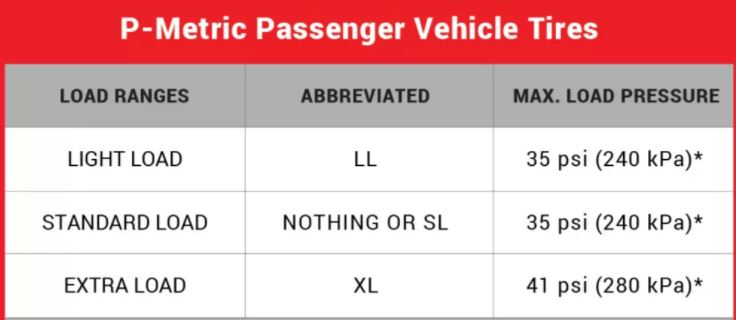
Load range states the tires carrying capability. Passenger tires are separated into two different load ranges. Regular passenger tires rated with SL(Standart Load) labeling. Although, XL(Extra Load) tires are strengthened versions of SL tires. These tires are capable to carry heavier loads. In return, they drop behind on a couple of characteristics.

XL tires can carry more load. They are stronger and have better handling. On the other hand, SL tires have a smoother and quieter ride. They are also more fuel-efficient.

Table of Contents

What is an XL Load Range?

Passenger tires might have the same size, same pattern but different load range. At first, it seems complicated. No worries. I will bring it home.

If you see XL letters at the tail of tire size, that means this tire can carry more weight than the standard version(SL). These tires have reinforced internal structures. Additional rubber and stronger carcasses ensure that it doesn’t blow up under high inflation pressure. High inflation pressure means more load to carry.

Continue below for an explanation.

  • XL –> Extra Load
  • SL –> Standart Load

In that case, I would like to give niche information. The tire can’t carry to load by itself. It doesn’t have carrying ability. But the air inside the tire does.

Imagine you have 4 flat tires. When you put them under the vehicle and try to ride, the vehicle might move but your wheels will tear apart. Why? Cause it can’t carry the vehicle’s weight. The vertical pressure is too much to handle.

Right here, the air inside of the tire gets into the game. Air doesn’t mean anything by itself. Yet, when you put it into the closed area it starts to stand again external forces like weight. Imagine basketball, if you sit on it when it’s filled with air, it doesn’t stretch at all. In opposite, if the ball is deflated, it stretches easy as hell. 

In summary, XL tires are capable to fill with more air. They can stand against more inflation pressure(41 psi on passenger tires). Though, that can carry more load. On the other hand, this number is 35 for SL tires. So, they are less capable to carry weight.

What does Load Range SL Mean?

As I’ve mentioned above, SL means ‘Standart Load’. These tires are built with standard materials. No additional rubber or beefed-up ply are used on these tires.

These are daily driving tires. They are not capable to carry extra loads.

What's the Difference Between SL and XL Tires?

The supreme difference between SL and XL tires is carrying capability. Inherently, most people think that XL tires use on bigger vehicles like trucks or busses. Well, that’s wrong. XL tires can be used for your SUV or light truck. The intention of the XL tire is to carry more weight than usual.

SL and XL tires have some advantages and disadvantages. Let me examine them in the below table.

XL TiresSL Tires
Better for commercial usageBetter for daily usage
Better handling and corneringFuel efficient
Better for SUV or light trucksSmoother ride
More durableCheaper
Longer tread life under the same conditionsQuieter
Can carry more load
More capable of off-road driving yet it’s not recommended

The above table will help you to decide between these two.

I recommend you to check this article also!

Can I Mix XL Tires with Normal Tires?

It is not recommended for the same axle. You can use XL tires only for the rear axle. Yet, that might cause vibration and comfort issues. Moreover, it will cause irregular wear if you don’t adjust inflation pressures properly.

Is a Load Range XL better than E?

While XL is a heavy-duty version of a passenger tire, E-rated tires are stand for light trucks.

XL tires promise a smoother ride. On the other hand, E-rated tires can carry heavier loads and are applicable for heavier vehicles.

These tires use on different types of vehicles. Though, making a comparison isn’t make sense at this time.

Conclusion

Deciding between SL and XL tires totally depends on your need. Before you decide,

  • If your factory tire is SL, you can change it to XL
  • If your factory tire is XL, you can’t change it to SL unless your vehicle load range is matched with it

To verify the second item, you can check to sticker on your door pillar. If your vehicle is new, the load index is stated on the sticker. If you have a veteran truck, you can see only the gross vehicle and axle weight. Though, you can use that guide and find a proper tire for yourself.

If you are stuck between performance and touring tires, check this one out!

I hope this article is helpful for you guys. If you will struggle to decide which tire to go with, leave your preferences in the comment section. I will help you out!

Filed Under: Tips & Guides Tagged With: SL Load Range, Tips&Advices, XL Load Range

Bridgestone Turanza vs Potenza

Updated: July 28, 2025 by Emrecan Gurkan 2 Comments

Potenza and Turanza are two members of the Bridgestone passenger tires family. Potenza as a performance tire can provide tons of grip on hypervelocity. Even on wet ground. On the other hand, Turanza as a touring tire meets any customer expectations every month of the year. Do you wanna hear details from a former Bridgestone engineer? Let’s light it up!

Potenza and Turanza‘s line-up has over 40 different tire patterns.

TuranzaPotenza
Efficiency-orientedPerformance-oriented
Long-lasting rubberBetter grip and responsiveness
Higher load indexClassy looking
Quiet and smooth rideBetter start and stopping performance
4 season performance3 season performance
Best Turanza All-Season Tire:
Bridgestone Turanza QuietTrack
Best Potenza All-Season Tire:
Bridgestone Potenza RE980AS+

All-Season Tires Cheat Sheet

Finding the most suitable one for you among thousands of tires is very difficult.

My team & I have analyzed 100 different tires and generated this ‘Quick Answer Sheet‘ for those who don’t wanna spend too much time during tire selection.

Before we start, here are the incredibly helpful articles I highly recommend to take a look at;

  • How to keep tire noise down:
    https://www.tirerack.com/upgrade-garage/why-do-tire-tread-patterns-make-noise
  • Fuel-Efficiency:
    https://www.tirerack.com/landing/fuel_efficiency
  • Traction/Stability control for AWD/4WD (All-Season tires specific)
    https://www.tirerack.com/upgrade-garage/traction-stability-4ws-awd
Below the table, you can find my favorite tires that I have classified according to your needs.
All-Season Tires Cheat Sheet
NameBest forWorks Best onArticles3PMSFRoad NoiseMileageResponsivenessRiding ComfortWarrantyFuel EconomyWet PerformanceMild WinterSevere Winter

Michelin Crossclimate 2
( Check Price – Test Report )

Year Round Usage & Tread LifeSedans, coupes, crossovers, SUVs, minivansReviewYesDecentElegantElegantDecent60,000DecentElegantElegantDecent
Michelin Primacy Tour A/S
( Check Price – Test Report )
Everything but severe winter tractionSedans, coupes, crossovers, SUVsReviewNoElegantElegantElegantElegant45,000 – 55,000DecentElegantAverageFairy Well
Bridgestone WeatherPeak
( Check Price – Test Report )
Smooth & quiet 4 season drivingSedans, coupes, crossovers, SUVs, minivansReviewYesElegantDecentElegantElegant70,000ElegantDecentElegantAverage
Bridgestone DriveGuard Plus
( Check Price – Test Report )
Great all-round run-flat tireSUV, CUV, Sedans, CoupesReviewNoAverageExcellentExcellentExcellent65,000AverageExcellentDecentAverage
Vredestein Quatrac Pro
( Check Price – Test Report )
4-Season performance-driven ridingSedans, coupes, crossovers, SUVsReviewYesElegantDecentElegantElegant50,000DecentElegantElegantAverage
Vredestein HiTrac All-Season
( Check Price –Test Report )
Year round performance with great handlingSedans, coupes, crossovers, SUVsNoDecentDecentElegantDecent70,000DecentElegantDecentAverage
Pirelli P7 AS Plus 3
( Check Price – Test Report )
Great all-round performance + mild winterSedans, coupes, crossovers, SUVsReviewNoElegantElegantElegantElegant70,000ElegantDecentDecentAverage
Nokian WRG4
( Check Price )
Traction focused 4 season drivingSedans, coupes, crossovers, SUVs, minivansReviewYesDecentDecentDecentElegant65,000AverageElegantElegantDecent
Goodyear Assurance WeatherReady
( Check Price –Test Report )
Year-round traction + handlingSedans, coupes, crossovers, SUVs, minivans–YesAverageDecentElegantElegant60,000AverageElegantElegantAverage
Firestone WeatherGrip
( Check Price –Test Report )
Winter-focused 4 season drivingSedans, coupes, crossoversReviewYesAverageFairy WellAverageDecent65,00Fairy WellAverageElegantElegant
BF Goodrich Advantage Control
( Check Price –Test Report )
Quiet & smooth 3 season traction + light snowSedans, coupes, crossovers, SUVsReviewNoDecentDecentElegantDecent65,000 – 75,000ElegantDecentAveragePoor
Kumho Crugen HP71
( Check Price – Test Report )
Decent all-round performance + light snowCUV, SUVReviewNoAverageAverageDecentDecent65,000DecentDecentDecentFairy Well
Bridgestone Alenza AS Ultra
(Check Price – Test Report )
Long lasting performance for squishy regionsCrossovers, SUVs, light trucksReviewNoDecentDecentDecentDecent70,000DecentElegantDecentFairy Well
Uniroyal Tiger Paw Touring AS
(Check Price)
Affordable 3 season tractionSedans, coupes, crossovers, SUVsReviewNoAverageAverageDecentDecent70,000DecentAverageFairy WellPoor
Goodyear Assurance All-Season
( Check Price – Test Report )
Affordable all-round 3 season + light snow performanceSedans, minivansReviewNoDecentDecentDecentDecent65,000DecentDecentAverageFairy Well
Goodyear Assurance MaxLife
( Check Price – Test Report )
Longevitiy focused 3 season traction + light snowSedans, coupes, crossovers, minivansReviewNoDecentElegantElegantElegant85,000ElegantDecentAveragePoor
Bridgestone Turanza QuietTrack
( Check Price – Test Report )
Comfort-focused 3 season traction + light snowSedans, coupes, crossovers, minivansReviewNoElegantDecentElegantElegant80,000ElegantElegantDecentFairy Well
Goodyear Assurance ComfortDrive
(Check Price – Test Report )
Above average all-round performanceSedans, coupes, crossovers, SUVsReviewNoDecentElegantElegantElegant60,000AverageElegantDecentAverage
Michelin Defender T+H
(Check Price – Test Report )
Efficiency focused 3 season performanceSedans, coupes, crossoversvs Crossclimate 2NoDecentDecentDecentDecent80,000ElegantDecentFairy WellPoor
BF Goodrich Advantage T/A Sport
( Check Price – Test Report )
Long lasting 4 season performance + handlingSedans, coupes, crossovers–NoAverageDecentDecentDecent60,000 – 70,000AverageDecentDecentFairy Well
Continental TrueContact Tour
( Check Price – Test Report )
Smooth & long-lasting 3 season performance + light snowSedans, coupes, crossovers–NoDecentDecentDecentDecent70,000 – 80,000DecentElegantAverageFairy Well
Yokohama Avid Ascend LX
( Check Price – Test Report )
Long-lasting & responsive 4 season performanceSedans, coupes, crossovers, minivansNoDecentElegantElegantElegant85,000ElegantDecentDecentFairy Well
Laufenn S Fit AS
(Check Price)
Long-lasting sporty drivingSUV, CUV, Sedans, CoupesReviewNoDecentDecentExcellentDecent45,000DecentDecentAveragePoor

Depending on your needs, the below article might help;

  • https://tireterrain.com/best-all-weather-tires-for-snow/
  • https://tireterrain.com/bridgestone-vs-michelin/
  • https://tireterrain.com/best-michelin-tires-for-suv/

Table of Contents

What is a Touring Tire vs Performance Tire?

Touring and performance tires are both used for passenger cars. Well, with a different intention. Touring tires show up with long wear life and smooth ride. However, performance tires step ahead with massive grip on high speeds.

What is a Touring Tire?

Touring tires can be used in any passenger vehicle confidently. They should cover every customer expectation. So, they are not perfect in any feature but above average in every condition. In that case, you should be aware of one thing. This comment is valid for any manufacturer or any pattern.

What is the Differance Between Touring and All-Season Tires?

This is a common question. The answer is snap. All-season tires are a subset of touring tires. In that case, you should consider the difference between ‘Grand Touring’ and ‘All-Season Touring’ tires.

Let’s start with all-season touring tires.

All-season touring tires are built to perform in every season. They generally have symmetrical patterns. Also, circumferential grooves increase their wet grip. Here is the take-home point. Don’t buy all-season tires for winter conditions. In the tire industry, below 6°C  air temperature be respected as a winter condition. So, all-season tires can perform unless they face snow and ice. When you see the minus air temperature, you better stop riding!

Let’s examine grand touring tires.

These tires are designed to deliver a smooth ride and all-season traction. They generally have higher speed ratings than regular all-seasons. Another difference is tread design. Opposite to all-seasons, they have an asymmetrical tread design.

If you need an all-season tire with a severe winter performance, I recommend you to check this article out!

What is a Performance Tire?

Performance tires are built for specific usages. Along with luxury cars, some vehicle owners modify their vehicles and demand massive grip while cornering or stopping at high velocity. Well, that’s what exactly performance tires can provide.

Performance tires have a high-speed rating coupled with a huge wet grip. Though worth remembering, these are mostly summer tires. There are some released as all-season. Yet, they will not perform as well as touring all-season tires.

Potenza vs Turanza

I’ve clarified the difference between performance and touring tires. Now, it’s time to go back to our main topic.

Turanza is a family consisting of touring tires.

Potenza is a family consisting of performance tires.

[table id=9 /]

The above table is explaining what you can expect from Turanza or Potenza. You can go either way depending on your needs.

Now, I’d like to talk about products. I’ve tried most of them personally. I will share my favorites!

Bridgestone Turanza Quiettrack

Turanza QuietTrack is a touring tire that offers quiet and smooth ride

Turanza Quiettrack is the latest product in the Turanza line-up. Bridgestone reproduce it from Turanza T005. The reason behind it was a compound. T005 has a very stiff compound that sometimes doesn’t cover some customer expectations.

These tires are great. Quiet, smooth, and provide traction in all seasons. The wet performance is phenomenal. It also has 80000 miles treadwear warranty. Yet, it is a touring tire. Moreover, it has a soft compound. Yet, that might cause low tread life if ;

  • You are soo aggressive on starting (You might wanna check this one)
  • Your vehicle is too heavy

You can confidently buy this tire as long as pay attention to the above points.

According to Discounttire, Turanza Quiettrack is one of the best tires due to wearing, wet, and winter performance.

Bridgestone Potenza R980 AS+

Potenza R980+ extremely commutative tire

Potenza R980 was good but Potenza R980+ is a beast.

Bridgestone updated the Potenza R980+ compound and released the new version of Potenza R980+. This compound is capable to perform on light snow. This compound is a bit softer. So, you will get a quieter ride for sure. 

I believe that this is the best all-season performance tire in the Bridgestone line-up. My only concern is tread life. It might decrease a bit. Yet, it’s a high-performance tire with extreme advantages. I prefer to sacrifice from tread life.

Price

The tire market has a dynamic price policy. Hence, in my point of view, sharing tire price is pointless.

Though, I’ve analyzed the top 10 brands of most popular tire brands.

Here are the dealers with a reasonable price range,

TireRack

  • Fast and Free shipping
  • Usually delivered in 1 day
  • Joint venture with DiscountTire (their installers and dealers are on your service)
  • Tons of installer options, they also help you to choose the best one
  • Mobile installers in many areas, your tires will be replaced while you’re working in the office
  • Tire test results and comparisons can be found on the most product page
  • 4.6/5 points on Google rate

Bridgestone Line-up: https://www.tirerack.com/tires/brand.jsp?brand=bridgestone

SimpleTire

  • Free shipping
  • Delivered in 2 days
  • Verified shops near you (for mount and balance)
  • Mobile installation option
  • 7 million customers since 2021
  • 4.7/5 points on Google rate
  • Top-notch customer service, you may even request a price match

Bridgestone Line-up: https://simpletire.com/brands/bridgestone-tires

While choosing dealers, I especially pay attention to reliability. All of the dealers on this list have 15-20 years of experience in the online tire business. Therefore, I can guarantee a smooth and fast tire buying process.

Conclusion

I hope this article was helpful to anyone who is debating between Turanza and Potenza.

TuranzaPotenza
Efficiency-orientedPerformance-oriented
Long-lasting rubberBetter grip and responsiveness
Higher load indexClassy looking
Quiet and smooth rideBetter start and stopping performance
4 season performance3 season performance
Best Turanza All-Season Tire:
Bridgestone Turanza QuietTrack
Best Potenza All-Season Tire:
Bridgestone Potenza RE980AS+

If you have any further questions, please leave them below! Hava a safe ride!

Filed Under: Tips & Guides Tagged With: Bridgestone Potenza, Bridgestone Potenza RE980AS+, Bridgestone Turanza, Bridgestone Turanza Quiettrack, Tips&Advices

  • « Go to Previous Page
  • Page 1
  • Interim pages omitted …
  • Page 4
  • Page 5
  • Page 6

Primary Sidebar

Find Tires

Contact Channels

  • Email
  • Facebook
  • LinkedIn
  • Twitter

High-End Tires by Category

Best All-Terrain Tires

Best Rugged-Terrain Tires

Best Mud-Terrain Tires

Best All-Season Tires for Snow

Best Tires for Snow Plowing

Best Semi-Truck Tires

Categories

Copyright © 2026

  • Disclaimer
  • About Me
  • Contact
  • Privacy Policy