• Skip to primary navigation
  • Skip to main content
  • Skip to primary sidebar

TireTerrain

  • Home
  • Comparisons & Reviews
  • All-Terrain Tire Decision Tool
  • Pro Tips
  • About

Vredestein

Vredestein Pinza HT Review: Quiet, Long-Lasting Budget Option

Updated: November 11, 2025 by Emrecan Gurkan Leave a Comment

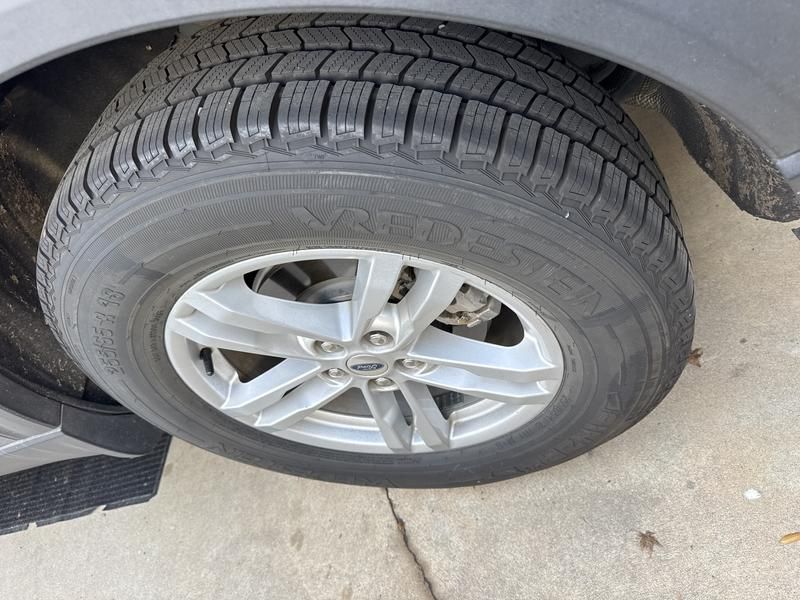
Vredestein Pinza HT tire on a Ford SUV, designed for highway comfort, long tread life, and all-season traction.
The Vredestein Pinza HT delivers excellent ride comfort, low noise, and dependable wet-weather traction—ideal for daily-driven SUVs and pickup trucks.

The Vredestein Pinza HT is the highway all-season tire from Vredestein, built for trucks and SUVs that live most of their life on the road. Its sibling, the Pinza AT, is already pretty popular among SUV and CUV owners. Well, that makes sense — people like me usually lean toward the more aggressive stuff. The internet is packed with reviews and feedback for the Pinza AT, but when it comes to the HT version, things get quieter. That’s surprising, because there are a lot of drivers out there who prefer a tire made for daily highway use over occasional off-roading.

The problem is, their options are often limited. Most highway tires sit in the premium range — Michelin Defender LTX MS2, Continental TerrainContact H/T — great tires, but not everyone wants to pay top dollar. That’s where the Pinza HT comes in. In this article, I’ll take a close look at what this tire can actually do, compare it with those big names, and also benchmark it against its all-terrain sibling, the Pinza AT, for anyone thinking about going a bit more aggressive. You’ll see real test data, customer feedback from forums, and a few engineering insights from my side. Let’s dive in.

Quick Look

The Vredestein Pinza HT is a strong option, especially when it comes to value for money. It’s a solid competitor to premium tires like the Michelin Defender LTX M/S2 and Continental TerrainContact H/T. Test data shows it’s only about 2–3 feet behind those in stopping distance and feels just as stable when cornering.

Vredestein Pinza HT

Vredestein Pinza HT tire
Tested Rating: 8.5/10

Trusted Retailers with Best Deals:

Tire Rack
Free road-hazard coverage Authorized dealer

It wears evenly, stays quiet, and holds up great over long miles. The only drawback is winter — it’s fine for light snow, but not built for harsh conditions. Still, for the price, the tread life and comfort make it one of the best highway tires you can pick right now.

Best Use Cases

  • Trucks and SUVs mostly driven on the highway

  • Drivers looking for comfort and long tread life

  • Towing or hauling light loads

  • Mild climates with occasional rain or light snow

    Dry Grip and Handling — Pinza HT Tightens the Feel Without Losing Comfort

    The Vredestein Pinza HT came out surprisingly strong in dry testing. It stopped from 60 mph in 138 feet and recorded an average cornering grip of 0.73 g, which puts it right in the top tier for highway-all-season tires. That much traction tells me the compound and tread structure are dialed in for road use—the tire resists squirming and stays composed in quick transitions. Behind the wheel, that usually means clean steering feedback and less body motion under load.

    When you look at the data next to the big names, it holds its ground. The Michelin Defender LTX M/S2 stopped at 140 feet with 0.75 g, and the Continental TerrainContact H/T came in stronger with 130 feet and 0.76 g. Continental’s higher g-force and shorter braking distance show why it’s considered a premium reference in this segment. But still, the Pinza HT’s numbers are closer than you’d expect from a tire that costs significantly less. It stays predictable and steady through corners, and you don’t feel that wandering feedback you get from softer compounds. From an engineering perspective, that 0.73 g grip is a sweet spot—it’s balanced between comfort and control.

    When we bring the Pinza AT into the picture, things make sense right away. The AT takes a few feet longer to stop (around 142 feet) and shows a bit less lateral grip (about 0.71 g), which is totally expected given its deeper tread and larger void area. Still, the difference between these two is smaller than I expected. The HT just tightens everything up a bit for the road without losing the composed ride the AT already had.

    A few real-world comments back this up nicely. One Reddit user running Pinza ATs on his F-150 said they’re “quiet and ride good,” which shows how well Vredestein nailed the base tuning. On BobIsTheOilGuy, another driver noted the HT “compares very favorably to the Defender LTX M/S,” proving how close it gets to premium-tier refinement. And a truck owner on Facebook mentioned switching to the Pinza HT after poor mileage from his OEM tires — seeing it as a true highway upgrade, not a compromise.

    Overall, the Pinza HT feels like a well-engineered balance — better grip and braking than its AT sibling, and performance that edges close to the big names without the price tag. If you spend nearly all your time on pavement, it’s one of those “set it and forget it” tires that just makes the truck feel right.

    Wet Traction and Braking — Pinza HT Feels Confident and Predictable in Rain
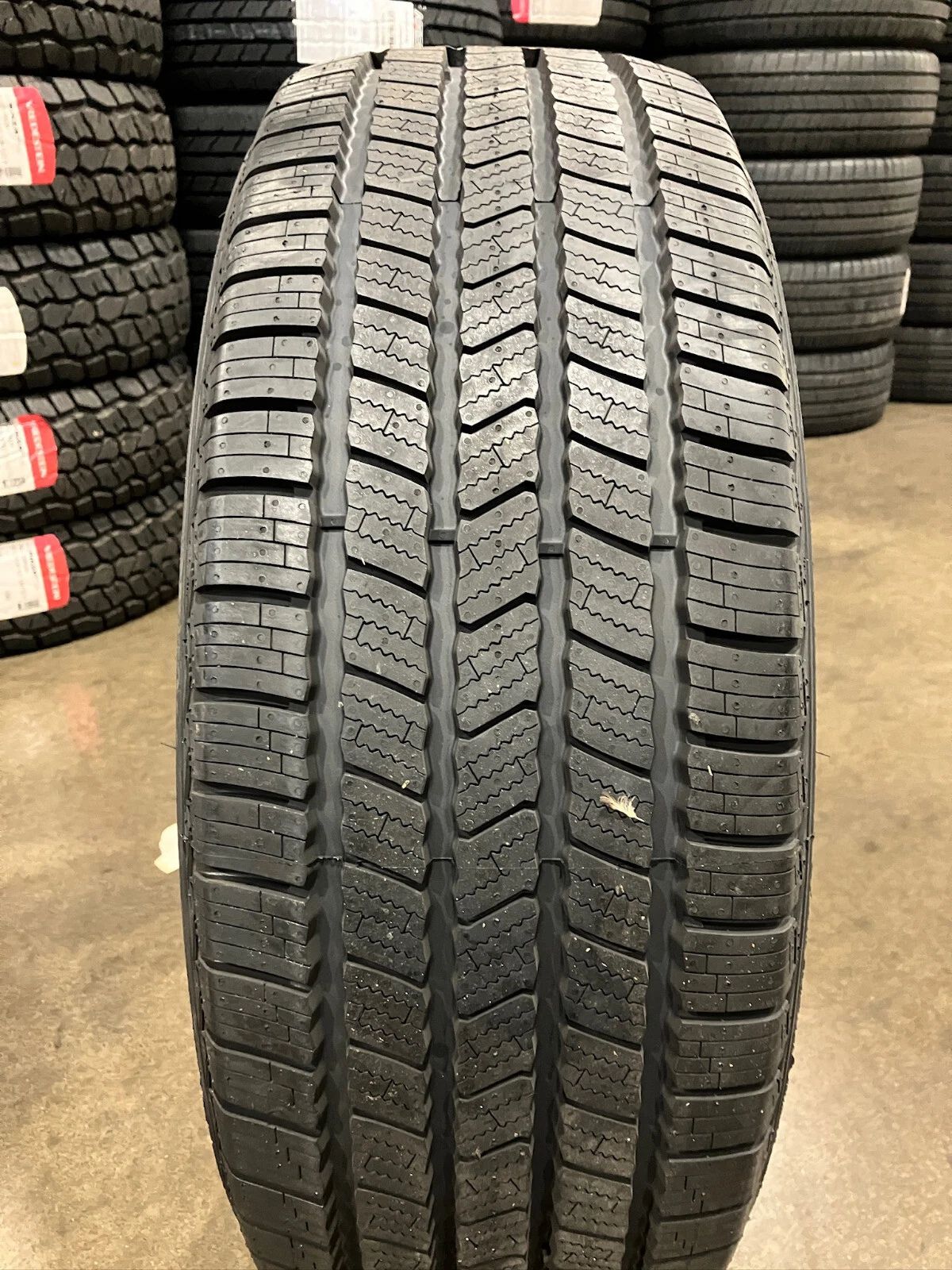
    Close-up of Vredestein Pinza HT tire tread showing highway all-season pattern with continuous ribs and deep circumferential grooves for smooth ride and wet traction.
    Vredestein Pinza HT — premium highway tire offering refined comfort, quiet operation, and long tread life for crossovers, SUVs, and light trucks.

    The Vredestein Pinza HT shows well-balanced results in wet testing. It stopped from 50 mph in 100 feet and completed the wet lap in 36.57 seconds, with an overall score of 6.50/10 in Tire Rack’s benchmark group. Those numbers place it solidly mid-pack, which makes sense given its highway-oriented compound. In real terms, that means it clears water effectively through its circumferential grooves while maintaining consistent grip during steering transitions. Even under heavier loads, the tire holds its line with minimal hydroplane tendencies — a sign of solid tread design and rubber stiffness balance.

    Compared to the Michelin Defender LTX M/S2, which stopped in 100 feet as well but edged slightly higher in cornering feedback, the difference is subtle. The Continental TerrainContact H/T leads this group with a 97-foot stop and 7.06 overall score, showing Continental’s clear advantage in silica-blend compounds and tread geometry optimization. Still, the Pinza HT’s results are respectable, especially when factoring in its smoother ride and lower cost. It might not have Continental’s razor-sharp wet steering feel, but it’s predictable and steady when conditions turn ugly.

    When compared to its sibling, the Pinza AT, things get interesting. The AT stopped at 103 feet and showed slightly more tread movement through the slalom, which is normal for a tire with larger voids. That puts the HT roughly 3 feet shorter in braking and noticeably more composed mid-corner. The closed shoulder ribs on the HT clearly help evacuate water while keeping the tread surface stable, resulting in fewer small slides when pushing through deeper puddles.

    A few driver comments back this up. One Reddit user who switched from all-terrains to the Pinza HT said, “It’s been pouring this week and I’ve got zero hydroplane issues — these things feel planted.” On BobIsTheOilGuy, another mentioned, “They’re not flashy, but wet grip is confidence-inspiring. I expected less for the price.” That sums it up perfectly: steady, confidence-building traction without surprises.

    Overall, the Pinza HT is tuned for predictability rather than sharp feedback in the rain. It’s the kind of tire that keeps you calm on wet highways, handles standing water confidently, and feels composed when braking with a load behind you — exactly what you want from a highway-focused all-season tire.

    Winter and Light Snow Performance — Pinza HT Trades Bite for Balance

    On snow and ice, the Vredestein Pinza HT delivers what I’d call “good enough” performance for a highway all-season. In testing, it completed the snow lap in 71.13 seconds, needed 83 feet for snow acceleration, and stopped from 25 mph in 81 feet. On ice, it stopped in 104 feet — not bad, but clearly aimed at mild winter use rather than deep, repeated freeze cycles. These numbers place it right in the middle of the test group, scoring a 6.25/10 overall. That’s what you expect from a tire built for road comfort first, traction second.

    Compared to the Michelin Defender LTX M/S2, which stopped in 82 feet on snow and 105 feet on ice, the difference is negligible. The Michelin holds a slight edge in feel due to its softer tread and better compound temperature adaptability, while the Pinza HT stays firmer and more stable in mixed slush or melted conditions. The Continental TerrainContact H/T, however, still sets the standard here with a 77-foot snow stop and 95-foot ice stop, showing the benefit of a tread designed specifically for cold-weather flexibility.

    When we look at the Pinza AT, it’s obvious where the trade-off lands. The AT version has more open shoulders and deeper sipes, giving it extra bite on packed snow. It stops around 78 feet on snow and 101 feet on ice, slightly ahead of the HT. That difference makes sense — larger voids clear snow faster and allow more edges to bite. But the HT counters with better braking consistency on plowed roads and doesn’t feel as vague when temperatures rise again.

    A few online comments line up with these results. One Reddit user noted, “Handles light snow fine, but once you get into slush or deeper stuff, traction drops fast.” On Tire Rack, another reviewer mentioned, “No problem in winter rain or dusting snow, but I swap to dedicated winters once it gets icy.” That reflects exactly what I’d recommend too — it’s dependable for mild winters, but if you live where the snow piles up, a dedicated 3PMSF tire is still the smarter call.

    Overall, the Pinza HT handles winter in a composed, balanced way. It doesn’t chase aggressive snow grip, but it stays consistent across varying road surfaces. For southern and coastal regions where winter means rain and light snow rather than ice storms, it’s more than capable.

    Noise and Comfort — Pinza HT Smooths Out the Daily Drive?

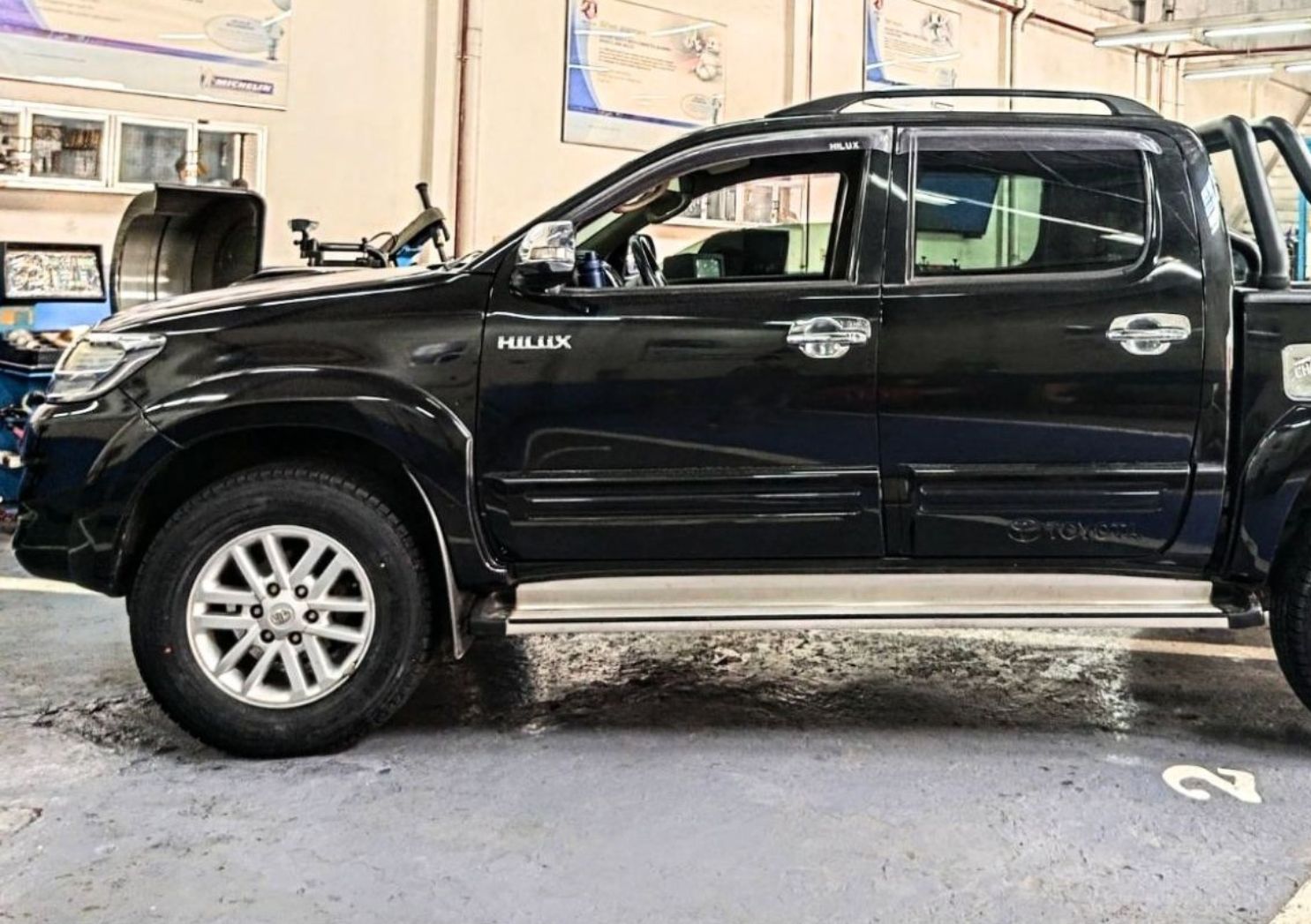
    Vredestein Pinza HT tire mounted on a Toyota Hilux, showcasing its highway tread design optimized for smooth and quiet on-road driving.
    Vredestein Pinza HT — designed for comfort and stability, ideal for SUVs and light trucks that spend most of their time on the road.

    Comfort is one of the Vredestein Pinza HT’s strongest suits. In testing, it scored an overall comfort rating of 7.25/10, with a 7.50 noise score and 7.25 ride score — placing it right behind top-tier tires like the Michelin Defender LTX M/S2 (8.25 overall) and Continental TerrainContact H/T (8.50 overall). That’s impressive for a tire that costs far less. On the road, that means you’ll feel fewer vibrations through the cabin and hear less tread hum, even at highway speeds.

    The difference mostly comes from the tread design. The HT uses smaller, closely spaced center blocks that contact the road more frequently, which breaks up air pulses that typically create noise. The Michelin still wins in refinement thanks to its softer compound and dual-pitch patterning, while Continental’s higher stability score comes from a stiffer carcass that favors load-bearing applications. But the Pinza HT manages to sit right in the middle — steady and smooth without feeling overly soft or heavy.

    Compared to its sibling, the Pinza AT, the ride quality difference is immediate. The AT has more open shoulders and deeper tread voids, which naturally produce more vibration and hum at higher speeds. The HT feels calmer on the highway and more controlled over uneven pavement. During quick transitions or small impacts, it absorbs bumps cleanly rather than echoing them through the suspension.

    A few user comments highlight this difference well. On Reddit, one driver wrote, “My truck rides smoother with the HTs than it ever did with the stock Goodyears. You barely hear them on the freeway.” On Tire Rack, another reviewer mentioned, “Super quiet tire for a half-ton pickup. No drone, even on concrete.” That kind of feedback lines up exactly with the test data — quiet, confident, and stable.

    Overall, the Pinza HT nails the balance between firmness and comfort. It’s tuned just right for daily drivers and highway commuters who want peace and smoothness without feeling detached from the road. Whether you’re driving empty or towing light loads, it stays composed and quiet — the kind of tire that fades into the background in the best way possible.

    Treadwear and Durability — Real Mileage Reports and Warranty Insights

    The Vredestein Pinza HT sits in the middle ground of the highway all-season category when it comes to warranty coverage. It’s rated for 8 years from production / 70,000 miles for P-metric sizes and 50,000 miles for LT sizes. That’s roughly on par with Michelin’s Defender LTX M/S2 (6 years / 75,000 miles for H- and T-speed, 50,000 for S) and Continental’s TerrainContact H/T (6 years / 70,000 Euro-metric, 60,000 LT). In other words, Vredestein is backing its highway lineup with premium-tier mileage expectations at a mid-tier price.

    What really matters, though, is what drivers say. On Tire Rack, several owners mention the Pinza HT holding tread depth evenly past 20,000 miles, often using phrases like “still looks new” or “wears slower than my last Goodyears.” One Reddit user summed it up simply: “After about 15k miles, they’ve barely worn and still ride quiet.” Over on BobIsTheOilGuy, another comment read, “We’ve had great luck with Vredestein wear life — they harden evenly instead of chunking like cheaper brands.” That even-wear behavior usually signals a stable compound and consistent carcass tension — exactly what I’d expect from a company that leans on European touring-tire engineering.

    Compared to the Pinza AT, the HT clearly focuses on smoother wear for highway use. The AT’s open shoulders and deeper voids make it more prone to cupping if you skip rotations, while the HT’s flatter rib pattern distributes pressure more evenly. For long-haul drivers or light-duty work trucks, that means fewer vibrations and quieter miles down the line.

    In short, treadwear consistency seems to be a strong point for the Pinza HT. It may not outlast a Michelin in the most extreme duty cycles, but real-world owners keep reporting slow, predictable wear that aligns with its 70k-mile promise — and that’s all you can really ask from a highway tire built to cruise thousands of miles without fuss.

    Final Verdict — A Highway Tire That Punches Above Its Price
    Toyota Hilux fitted with Vredestein Pinza HT tires, designed for smooth highway driving and long-lasting treadwear.
    Vredestein Pinza HT on Toyota Hilux — ideal for drivers who prioritize on-road comfort, wet traction, and dependable durability.

    After going through the data, comparisons, and what real drivers are saying, I think the Vredestein Pinza HT easily earns its spot among the best mid-priced highway tires. It may not have the prestige of Michelin or Continental, but the numbers and feedback tell the story — consistent grip, quiet comfort, balanced wet stability, and slow, even wear. It’s not trying to be sporty or aggressive; it’s trying to make your truck feel composed and dependable every single mile, and it does that really well.

    The Pinza AT will still be the better choice if you regularly see dirt or gravel, but for anyone spending 90% of their time on pavement, the HT feels like a smart upgrade. It closes the gap to premium brands without the premium bill.

    Best Use Cases

    • Daily-driven trucks & SUVs: Excellent for highway and city use with smooth, quiet road manners.

    • Towing & light hauling: Stable carcass and predictable load behavior make it a confident match for work trucks.

    • Mild climates: Reliable year-round traction for southern or coastal regions where winter means rain, not blizzards.

    • Budget-conscious drivers: Offers premium-like ride and durability for far less than top-tier brands.

    FAQ – Vredestein Pinza HT

    Is the Vredestein Pinza HT a good alternative to Michelin and Continental?

    Yes. Pinza HT runs very close to Michelin Defender LTX M/S2 and Continental TerrainContact H/T in on-road grip and stability. In dry stops it trails the premium pair by about 2–3 feet, which is a small gap for the price difference.

    How does the Pinza HT feel on dry pavement?

    Steady and predictable. It delivers clean steering, holds a line well through ramps, and resists tread squirm. Think calm highway manners with enough grip to feel confident under load.

    How is it in the rain?

    Balanced and easy to trust. The tread clears water well and the tire stays composed during quick lane changes and hard braking. It is tuned for predictability rather than sharp, sporty feedback.

    Can I use Pinza HT in winter?

    It handles light snow and cold rain fine, but it is not a harsh-winter or deep-snow tire. If you see frequent ice or heavy snow, a dedicated 3PMSF winter tire is the smarter pick.

    How does treadwear look in real use?

    Owner feedback is positive. Drivers report even wear, quiet running, and slow mileage loss when rotations are kept on schedule. It is a strong value play for long highway miles.

    Is the Pinza HT good for towing or light hauling?

    Yes. It keeps its shape under load and feels stable on the highway. Match the right load rating for your vehicle and keep rotations regular for the best results.

    Should I choose HT or the Pinza AT?

    If you stay on pavement most of the time, choose Pinza HT for quieter ride and shorter stops. If you want more loose-surface bite and a tougher look, choose Pinza AT.

    Filed Under: Highway-Terrain Tires Tagged With: Review, Vredestein, Vredestein Pinza HT

    Vredestein Pinza AT vs BFGoodrich KO3 — Wet Comfort vs Winter & Off-Road Strength in 2025

    Updated: November 11, 2025 by Emrecan Gurkan Leave a Comment

    Gray Ford F-150 driving through wet pavement while splashing water, fitted with Vredestein Pinza AT all-terrain tires designed for traction in rain and slick conditions.
    Conquer the rain — Ford F-150 with Vredestein Pinza AT showing off wet traction. 🌧️🛞💪

    Real-world test data, driver impressions, and technical breakdowns — from a former Bridgestone test engineer.

    The BFGoodrich KO3 is BFG’s latest Off-Road A/T tire, building on the KO2 with tougher sidewalls, chip-resistant tread blocks, and enhanced cold-weather pliability backed by the 3PMSF rating. It’s the upgrade for trucks and SUVs that tow heavy, run rocky trails, and need dependable year-round traction. For the full generational breakdown, check my BFGoodrich KO3 vs KO2 guide. On the other side, the Vredestein Pinza AT leans toward the On-Road A/T category — prioritizing laid-back comfort, quiet highway manners, and steady wet and snow grip. It trades a bit of hardcore off-road bite for smooth commuting and long-mile drivability, making it a favorite among daily SUV and light-truck owners.

    That’s the real contrast — KO3 for off-road muscle and load strength vs Pinza AT for everyday comfort and refinement. In the sections ahead, I’ll break down dry, wet, snow, and off-road performance. You can also compare them in our All-Terrain Tire Decision Tool for quick, vehicle-specific recommendations across ½-ton pickups, ¾-ton work trucks, one-tons, and daily SUVs.

    Quick Look

    Vredestein Pinza AT

    Vredestein Pinza AT tire
    Tested Rating: 8.7/10

    Trusted Retailers with Best Deals:

    Tire Rack
    Free road-hazard coverage Backed by Discount Tire
    Amazon
    Prime shipping Direct from brands

    BFGoodrich All-Terrain T/A KO3

    BFGoodrich KO3 tire
    Tested Rating: 8.5/10

    Trusted Retailers with Best Deals:

    Tire Rack
    Free road-hazard coverage Backed by Discount Tire
    Amazon
    Prime shipping Direct from brands

    The Vredestein Pinza AT is the highway-smart all-terrain, with shorter wet stops (170 ft @ 0.54 g), quicker snow launches (40.5 ft), whisper-quiet comfort (9.2/10), and everyday nimbleness (133-ft dry stop, 0.72 g). It feels more like a commuter’s sneaker than a rugged boot — safe in rain, calm on gravel, and OE-like in refinement. The BFGoodrich KO3, by contrast, is the off-road benchmark, with shorter snow stops (72.3 ft), stronger ice grip (46.2 ft), and elite trail strength (9.5 dirt / 9.5 sand / 9.2 mud / 9.5 rock). It requires more braking room in rain (184 ft, 0.46 g) and rides firmer (~7.5/10), but shrugs off abuse, towing loads, and sharp rock like a tank.

      Raw Test Data

      Tire Test Data

      Pick categories to show metrics, then open ☰ to pick tires. Optional chart is hidden by default.

      Parentheses show the rank among the currently displayed tires (1 = best for that metric).
      Left axis lists metrics. Top axis is used for g-force metrics so they scale clearly.
      Note: Lower is better for Stopping & Acceleration; higher is better for g-force, comfort, traction & off-road ratings. Parentheses show the rank among the currently displayed tires (1 = best for that metric).
      Sources worth checking
      Tire Rack AT Tire Test Tire Rack On-Road A/T Ratings Tire Rack Off-Road A/T Ratings SimpleTire Reviews Amazon SUV/LT Tires

      Dry Performance — Pinza quick on its feet, KO3 steadier with weight

      On pavement, the difference shows quickly. The Pinza stops in 133 ft with 0.72 g cornering, while the KO3 trails at 140 ft with 0.72 g. Behind the wheel that means Pinza reacts sooner, with lighter steering feel, while KO3 takes a moment to settle in but tracks straighter once the truck is loaded.

      That matches most forum voices. On TacomaWorld, one driver said swapping to Pinza ATs made their TRD Sport “ride like loafers instead of boots.” Over on 5thGenRams, a user praised Pinza for being “quiet, no road noise … mountains + highway with gravel uphill roads.” KO3 owners rarely call their tire nimble; they more often describe it as “predictable” and “heavy but solid.”

      The numbers back that balance. Pinza’s tighter tread rib keeps more rubber connected to the road, which sharpens response. KO3’s larger shoulder blocks and deeper voids lose that edge, but the payoff is composure once you add weight or start towing.

      • SUVs & crossovers: Pinza feels sharper, KO3 a bit heavy-handed.

      • ½-tons: Pinza shines for everyday feel; KO3 steadies things when towing.

      • ¾-ton & HD trucks: KO3 fits better — predictability matters more than agility.

      👉 Verdict: Pinza wins daily dry manners; KO3 wins when stability under load is the priority.

      Wet Performance — Pinza grips quicker, KO3 steadier with margin

      Highway terrain-like pattern provides unique on-road manners

      In the rain, Pinza posts a 170 ft stop at 0.54 g, compared to KO3’s 184 ft at 0.46 g. That difference is noticeable in traffic — Pinza hooks earlier, while KO3 needs more space but tracks straight once it’s engaged.

      Drivers echo the split. A Pinza owner on IH8Mud called them “quiet, handle well, ride is good … only issue is small stones in tread.” On Reddit, a KO3 driver noted, “Been in wet conditions with no issues. Quieter than I expected, too.” Our dataset shows KO3 stops longer, but the perception of “no issues” makes sense: its stiffer carcass resists squirm, so even if the distance is stretched, the tire feels calm under a loaded chassis.

      The compounds tell the story. Pinza’s silica-enriched mix and dense siping act like cleats cutting into the film of water, giving early grip. KO3’s harder rubber doesn’t bite as quickly, but once compressed by vehicle weight it locks the truck down like a keel steadying a boat.

      • SUVs & crossovers: Pinza is the safer wet-weather pick.

      • ½-tons: Pinza better unloaded, KO3 steadier if you tow.

      • ¾-ton & HD trucks: KO3 more predictable when rain meets heavy load.

      👉 Verdict: Pinza wins for light rigs in wet; KO3 steadier under weight.

      Note from the Expert: When it comes to rain, I always emphasize two things: compound grip and water evacuation. You can see the full details in my analysis, but if you take just one thing away, remember that an AT tire’s stiff nature makes achieving top-tier wet performance a constant battle. This is why the question, Are All-Terrain Tires Good in Rain?, requires a nuanced answer that balances tread design against rubber stiffness.

      Winter & Snow — KO3 stronger on braking, Pinza eager off the line

      On snow, KO3 stops shorter at 72.3 ft, while Pinza stretches to 75 ft. But in acceleration, Pinza claws forward in 40.5 ft, compared to KO3’s 46.4 ft. In practice, KO3 feels calmer when you hit the brakes on packed roads, while Pinza digs in faster when you’re pulling away in loose powder.

      Community feedback reflects that split. A TacomaWorld driver with Pinzas noted they “power through a driveway drift,” while KO3 users on F150Forum describe the tire as “predictable, even in salted highway slush.” Our test report supports both views: Pinza’s compound flexes better at launch, KO3’s stiffer lugs resist closing up under brake load, so it bites firmer when stopping on plowed surfaces.

      • SUVs & crossovers: Pinza feels more eager in light snow; KO3 safer for braking.

      • ½-tons: KO3 steadier in mixed winter; Pinza fine for occasional snow commutes.

      • ¾-ton & HD trucks: KO3 is the clear pick — weight + braking stability matter.

      👉 Verdict: Pinza digs out of driveways faster; KO3 gives calmer braking on real winter roads.

      Note from the Expert: Our discussions often boil down to the core tradeoff. On one hand, you must understand why all-terrain tires are truly effective in deep snow, but not on ice. On the other hand, you face the 3PMSF Paradox—the hidden cost of that badge. The short answer is: The 3PMSF badge certifies traction, but it costs you durability. Dive into our full analysis on the critical 3PMSF rating for severe winter and off-road service, and its hidden costs, before you risk your rig on the trail.

      Ice — Pinza catches earlier, KO3 slides predictably

      Ice exaggerates their personalities. Pinza tends to hook slightly earlier, while KO3 slides farther before recovering. In the numbers, KO3 stops in 46.2 ft, Pinza in 47 ft — very close, but the feel differs. Pinza catches quicker at low speeds, KO3 loses grip more gradually, which gives time for corrections.

      A Redditor summed up Pinza as “traction in all conditions is great … road noise is the best I’ve experienced in an A/T tire.” KO3 owners, especially in the Midwest, often report it “slides but never surprises.” Our dataset tilts KO3’s way on stopping distance, but the user reports of earlier “bite” from Pinza match how its softer winter rubber reacts on lighter rigs.

      • SUVs & crossovers: Pinza steadier pulling away; KO3 safer when braking.

      • ½-tons: Pinza good for city stop-and-go; KO3 better for highway ice.

      • ¾-ton & HD trucks: KO3 the reliable partner in icy mornings.

      👉 Verdict: Pinza gives quick bite on ice starts; KO3 steadier when you’re already rolling.

      Off-Road — KO3 armored, Pinza tuned for gravel

      Fresh BFGoodrich All-Terrain T/A KO3 tire stacked in a workshop, with size label LT285/70R17 visible, showcasing aggressive tread pattern for off-road and all-weather traction.
      Fresh from the rack — BFGoodrich KO3, ready for your next adventure.

      Off-road, KO3 simply plays in another league. Scoring 9.5s across dirt, sand, and rock, it shrugs off sharp edges and resists punctures. Pinza, at 6.3–6.5 range, handles gravel and fire roads well but feels light on rocky climbs or deep mud.

      That gap shows in owner chatter. On 4Runners.com, one Pinza driver wrote, “Good deal, smooth on gravel — not sure about sharp rocks.” KO3 fans call it “the benchmark,” especially in rocky mountain passes. Our numbers confirm: KO3’s reinforced CoreGard+ sidewalls and interlocking lugs are built to handle abuse; Pinza’s lighter two-ply casing favors highway smoothness over trail punishment.

      • SUVs & crossovers: Pinza fine for dirt/gravel weekends.

      • ½-tons: KO3 better if trails or towing mix in; Pinza good for mild duty.

      • ¾-ton & HD trucks: KO3 dominates — puncture resistance and load stability.

      👉 Verdict: Pinza works for casual trails; KO3 is the true off-road benchmark.

      Note from the Expert: Every successful day on the trail is about preparation and physics, because tire longevity is earned, not given. Before you even start, you must master the critical link between tire pressure and load range for every rig to maximize your contact patch. Once moving, remember your ultimate off-road armor is your sidewall protection against the inevitable pinch flat. And finally, your traction on the obstacle is dictated by choosing the right aggressive vs hybrid tread pattern for your terrain. Master those three steps, and your rig will be ready for anything.

      Comfort & Noise — Pinza whisper-quiet, KO3 work-ready

      Pinza wins the comfort contest easily. With a 9.2 comfort score, owners call it “almost OE quiet.” KO3, at 7.5, rides firmer and hums more, though the noise blends into the background in diesels or heavy trucks.

      A TacomaWorld review put it best: “Quietest A/T I’ve run yet, no noticeable change in steering.” KO3 drivers on IH8Mud describe it as “firm but solid — feels like part of the truck.” Our results match that: Pinza’s variable-pitch tread keeps the cabin hushed, while KO3’s stiffness transmits texture but keeps wear more even.

      • SUVs & crossovers: Pinza nearly silent, KO3 noticeably firmer.

      • ½-tons: Pinza great for long highway runs; KO3 tolerable but louder.

      • ¾-ton & HD trucks: KO3’s hum fades into background under load.

      👉 Verdict: Pinza is the highway comfort winner; KO3 rides firmer but holds shape longer under stress.

      Note from the Expert: For years, choosing all-terrain meant accepting noise—a true compromise for off-road grip. That’s why the question, Are All-Terrain Tires Louder than Highway Tires?, used to have a simple “yes” answer. Now, with the rise of on-road models, the core issue has shifted from noise to overall refinement. To fully understand which side of the comfort spectrum you’re buying into, you need to determine Are All-Terrain Tires Good for Daily Driving?—a question that depends entirely on the tire’s construction, not just the name.

      Where They Fit Best

      • Vredestein Pinza AT: Best for daily drivers who want the look of an A/T without the compromises. Perfect in the Pacific Northwest or Northeast suburbs, where wet grip, quiet ride, and light snow traction matter more than sharp-rock trails. A strong choice for SUVs and ½-ton trucks that rarely leave pavement.

      • BFGoodrich KO3: Suited for work trucks, off-road rigs, and snow-belt drivers who need durability. Excels in Rockies, Midwest, and mountain regions where towing, sharp rock, and deep winters punish weaker casings.

      👉 Bottom line: Pinza is the comfort-quiet specialist with surprising wet grip; KO3 is the long-haul bruiser, safer in snow, steadier with weight, and unmatched off-road.

      Tire Size Selection: The Basics You Can’t Skip

      Even the best tread design can’t rescue a tire that’s built too weak. Back when I was testing tires at Bridgestone, I saw all-terrain models that should’ve performed but fell short — simply because the basics (size, load strength, and speed rating) weren’t matched to the vehicle.

      P-Metric vs. LT (Light Truck) Tires

      The first step is knowing whether you need LT or passenger tires. LT (Light Truck) tires are built with extra reinforcement and stiff sidewalls, designed for towing, hauling, or off-road use. Passenger (P-metric) tires are lighter, smoother, and tuned for daily comfort and fuel efficiency — but they’ll flex more under load.

      Understanding Tire Load Range: XL vs. E-Load

      Then comes the tire load index and load range — essentially your tire’s strength rating. Here’s where things split between passenger XL and LT E:

      • XL (Extra Load) is a passenger tire with reinforced sidewalls. It can handle a bit more pressure (~41 PSI) than a standard SL tire and is perfect for SUVs, crossovers, or light trucks that carry extra gear, passengers, or small trailers. XL tires ride softer and quieter than LT options, making them ideal for daily use.

      • E Load Range is an LT tire class built with a much thicker casing. E-rated tires can handle far more pressure (up to ~80 PSI) and heavier loads, which makes them essential for ¾-ton and 1-ton trucks towing trailers or hauling close to max capacity. The trade-off is weight, stiffer ride, more road noise, and a small drop in fuel efficiency.

      Put simply: XL is for “extra luggage and family,” while E is for “truck bed full of bricks or a car trailer.”

      Why the Tire Speed Rating Matters for Safety

      Finally, don’t overlook the tire speed rating. It’s not just about top speed — it measures how well a tire handles heat and stress at highway pace. Lower ratings (like S) tend to ride softer and last longer, while higher ratings (H, T) feel more stable and responsive under sharp maneuvers. Heat build-up is the silent killer of tires, and speed rating is your safeguard.

      Bottom line: Match your tire’s construction (LT vs P-metric), load range (XL vs E), and speed rating to your vehicle’s demands. Get those right, and everything else — off-road grip, winter traction, comfort — will finally perform the way it was designed to.

      Conclusion

      If your life is highways, suburbs, and occasional snow days, the Vredestein Pinza AT fits better. It suits SUVs and ½-ton trucks in the Pacific Northwest, Northeast suburbs, and Midwest cities where wet grip, quietness, and comfort matter most.

      If your rig hauls weight, hits trails, or faces serious winters, the BFGoodrich KO3 is the smarter pick. It steadies ¾-ton and 1-ton trucks in the Rocky Mountains, Midwest snow-belt, and desert job sites, where stability and off-road bite matter more than silence.

      👉 Bottom line: Pinza AT for refinement, wet grip, and daily comfort. KO3 for durability, snow braking, and true off-road authority.

      Frequently Asked Questions: Vredestein Pinza AT vs BFGoodrich KO3

      • Which tire is better on dry roads?
        The Pinza AT. It stops shorter (133 ft vs 140 ft) and feels more nimble, while KO3 steadies trucks better under heavy load.

      • Which tire is safer in rain?
        The Pinza AT. It grips quicker (170 ft vs 184 ft) thanks to silica and siping, while KO3 feels calmer under towing weight.

      • Which performs better in snow?
        KO3 brakes shorter on packed snow (72.3 ft vs 75 ft), while Pinza launches quicker in loose powder (40.5 ft vs 46.4 ft).

      • Which handles ice better?
        The KO3. It stops at 46.2 ft vs Pinza’s 47 ft, sliding more predictably under weight, while Pinza hooks earlier at low speeds.

      • Which is stronger off-road?
        The KO3. It dominates trails (9.5 dirt / 9.2 mud / 9.5 rock), while Pinza handles gravel but isn’t tuned for abuse.

      • Which tire is quieter and more comfortable?
        The Pinza AT. It’s whisper-quiet (9.2/10) vs KO3’s firmer 7.5/10 truck-tough ride.

      • Which lasts longer?
        Pinza keeps refinement deeper into its tread life, while KO3 resists chips and abuse better under harsh use.

      • Which vehicles suit them best?
        Pinza AT fits SUVs and ½-ton trucks in mild-to-moderate regions. KO3 matches ¾-ton & HD trucks in snow, desert, and off-road duty.

      Filed Under: All Terrain Tires Tagged With: bf goodrich, BF Goodrich KO3, Comparisons, Pinza AT, Vredestein

      Vredestein Quatrac Pro Review

      Updated: July 31, 2025 by Emrecan Gurkan Leave a Comment

      Vredestein Quatrac Pro is a performance-driven all-weather tire that is developed for SUVs, CUVs, sedans, and coupes. In 2022, this dude is honored by Auto Strassenverkehr Magazin as a best price/performance tire. So, if you’re looking for an affordable all-weather tire that offers a sporty driving feeling, you’re at the right place. Since performance + all-weather combination isn’t common, you should know what to expect from this kind of tire. In this article, I’m going to help you with that. Let’s begin!

      Right before mounting
      Vredestein Quatrac Pro
      Best for4 season performance driven riding,
      Smooth & quiet driving,
      Sporty driving feeling
      ProsSmooth & quiet driving,
      Dry performance,
      Wet performance,
      Unique light-snow traction
      ConsSince it’s performance-driven, its tread life is average
      If you’re changing from all-season tires, your full consumption could slightly increase
      VehicleSedans,
      SUV,
      CUV,
      Sport utility vehicles
      Test Reportvs WeatherGrip & Celcius Sport
      (May 16, 2022)
      Available Sizes17”, 18”, 19”, 20”, 21”, 22”
      Made InHungry,
      Netherland
      Warranty50,000 miles

      As a former Bridgestone engineer, from my standpoint, Vredestein Quatrac Pro is a great option if you’re looking for a performance tire that performs year-round. Even though it didn’t last as a longevity-driven all-weather tire, it offers a smoother and quieter ride. Besides that, its handling capability is way much over than most all-weather tires. While Vredestein Quatrac Pro performs perfectly on wet, dry, and light snow, its deep snow capability is slightly behind the all-weather tire competition. Though, it can handle slush and unexpected icy conditions.

      All-Season Tires Cheat Sheet

      Finding the most suitable one for you among thousands of tires is very difficult.

      My team & I have analyzed 100 different tires and generated this ‘Quick Answer Sheet‘ for those who don’t wanna spend too much time during tire selection.

      Before we start, here are the incredibly helpful articles I highly recommend to take a look at;

      • How to keep tire noise down:
        https://www.tirerack.com/upgrade-garage/why-do-tire-tread-patterns-make-noise
      • Fuel-Efficiency:
        https://www.tirerack.com/landing/fuel_efficiency
      • Traction/Stability control for AWD/4WD (All-Season tires specific)
        https://www.tirerack.com/upgrade-garage/traction-stability-4ws-awd
      Below the table, you can find my favorite tires that I have classified according to your needs.
      All-Season Tires Cheat Sheet
      NameBest forWorks Best onArticles3PMSFRoad NoiseMileageResponsivenessRiding ComfortWarrantyFuel EconomyWet PerformanceMild WinterSevere Winter

      Michelin Crossclimate 2
      ( Check Price – Test Report )

      Year Round Usage & Tread LifeSedans, coupes, crossovers, SUVs, minivansReviewYesDecentElegantElegantDecent60,000DecentElegantElegantDecent
      Michelin Primacy Tour A/S
      ( Check Price – Test Report )
      Everything but severe winter tractionSedans, coupes, crossovers, SUVsReviewNoElegantElegantElegantElegant45,000 – 55,000DecentElegantAverageFairy Well
      Bridgestone WeatherPeak
      ( Check Price – Test Report )
      Smooth & quiet 4 season drivingSedans, coupes, crossovers, SUVs, minivansReviewYesElegantDecentElegantElegant70,000ElegantDecentElegantAverage
      Bridgestone DriveGuard Plus
      ( Check Price – Test Report )
      Great all-round run-flat tireSUV, CUV, Sedans, CoupesReviewNoAverageExcellentExcellentExcellent65,000AverageExcellentDecentAverage
      Vredestein Quatrac Pro
      ( Check Price – Test Report )
      4-Season performance-driven ridingSedans, coupes, crossovers, SUVsReviewYesElegantDecentElegantElegant50,000DecentElegantElegantAverage
      Vredestein HiTrac All-Season
      ( Check Price –Test Report )
      Year round performance with great handlingSedans, coupes, crossovers, SUVsNoDecentDecentElegantDecent70,000DecentElegantDecentAverage
      Pirelli P7 AS Plus 3
      ( Check Price – Test Report )
      Great all-round performance + mild winterSedans, coupes, crossovers, SUVsReviewNoElegantElegantElegantElegant70,000ElegantDecentDecentAverage
      Nokian WRG4
      ( Check Price )
      Traction focused 4 season drivingSedans, coupes, crossovers, SUVs, minivansReviewYesDecentDecentDecentElegant65,000AverageElegantElegantDecent
      Goodyear Assurance WeatherReady
      ( Check Price –Test Report )
      Year-round traction + handlingSedans, coupes, crossovers, SUVs, minivans–YesAverageDecentElegantElegant60,000AverageElegantElegantAverage
      Firestone WeatherGrip
      ( Check Price –Test Report )
      Winter-focused 4 season drivingSedans, coupes, crossoversReviewYesAverageFairy WellAverageDecent65,00Fairy WellAverageElegantElegant
      BF Goodrich Advantage Control
      ( Check Price –Test Report )
      Quiet & smooth 3 season traction + light snowSedans, coupes, crossovers, SUVsReviewNoDecentDecentElegantDecent65,000 – 75,000ElegantDecentAveragePoor
      Kumho Crugen HP71
      ( Check Price – Test Report )
      Decent all-round performance + light snowCUV, SUVReviewNoAverageAverageDecentDecent65,000DecentDecentDecentFairy Well
      Bridgestone Alenza AS Ultra
      (Check Price – Test Report )
      Long lasting performance for squishy regionsCrossovers, SUVs, light trucksReviewNoDecentDecentDecentDecent70,000DecentElegantDecentFairy Well
      Uniroyal Tiger Paw Touring AS
      (Check Price)
      Affordable 3 season tractionSedans, coupes, crossovers, SUVsReviewNoAverageAverageDecentDecent70,000DecentAverageFairy WellPoor
      Goodyear Assurance All-Season
      ( Check Price – Test Report )
      Affordable all-round 3 season + light snow performanceSedans, minivansReviewNoDecentDecentDecentDecent65,000DecentDecentAverageFairy Well
      Goodyear Assurance MaxLife
      ( Check Price – Test Report )
      Longevitiy focused 3 season traction + light snowSedans, coupes, crossovers, minivansReviewNoDecentElegantElegantElegant85,000ElegantDecentAveragePoor
      Bridgestone Turanza QuietTrack
      ( Check Price – Test Report )
      Comfort-focused 3 season traction + light snowSedans, coupes, crossovers, minivansReviewNoElegantDecentElegantElegant80,000ElegantElegantDecentFairy Well
      Goodyear Assurance ComfortDrive
      (Check Price – Test Report )
      Above average all-round performanceSedans, coupes, crossovers, SUVsReviewNoDecentElegantElegantElegant60,000AverageElegantDecentAverage
      Michelin Defender T+H
      (Check Price – Test Report )
      Efficiency focused 3 season performanceSedans, coupes, crossoversvs Crossclimate 2NoDecentDecentDecentDecent80,000ElegantDecentFairy WellPoor
      BF Goodrich Advantage T/A Sport
      ( Check Price – Test Report )
      Long lasting 4 season performance + handlingSedans, coupes, crossovers–NoAverageDecentDecentDecent60,000 – 70,000AverageDecentDecentFairy Well
      Continental TrueContact Tour
      ( Check Price – Test Report )
      Smooth & long-lasting 3 season performance + light snowSedans, coupes, crossovers–NoDecentDecentDecentDecent70,000 – 80,000DecentElegantAverageFairy Well
      Yokohama Avid Ascend LX
      ( Check Price – Test Report )
      Long-lasting & responsive 4 season performanceSedans, coupes, crossovers, minivansNoDecentElegantElegantElegant85,000ElegantDecentDecentFairy Well
      Laufenn S Fit AS
      (Check Price)
      Long-lasting sporty drivingSUV, CUV, Sedans, CoupesReviewNoDecentDecentExcellentDecent45,000DecentDecentAveragePoor

      Depending on your needs, the below article might help;

      • https://tireterrain.com/best-all-weather-tires-for-snow/
      • https://tireterrain.com/bridgestone-vs-michelin/
      • https://tireterrain.com/best-michelin-tires-for-suv/

      Table of Contents

      Dry Traction

      Dry traction is easy for all-weather tires.

      Due to their relatively soft compounds and notched rubbers, all-weather tires can provide way much better traction in general.

      Even though this isn’t common, sometimes, in order the increase loose ground traction, these tires could have wide void areas. This is okay for winter performance but it sometimes decreases the dry performance. This is because dry performance is mostly related to the rubber amount on the ground which decreases with the wide void areas.

      Luckily, Vredestein Quatrac Pro is a performance-driven all-weather tire. For this reason, it has a narrowed void area and a relatively softer pattern design.

      Vredestein Quatrac Pro offers excellent dry traction.

      Responsiveness

      All-weather tires aren’t agile by nature.

      These tires are built for grip and traction. For this reason, they have a soft compound and notched rubber which isn’t what we wanna see for a decent steering response.

      In this case, what makes all-weather tires fall behind is their center rib.

      The center rib is the key to precious steering response. However, since all-weather tires should offer superior traction, these tires need more sipes. For this reason, unlike all-season tires, all-weather tires generally have a notched and blocky center rib.

      Regarding Vredestein Quatrac Pro, things are a bit different. 

      Vredestein Quatrac Pro has a continuous center rib that has fewer sipes compared to its competitors. Moreover, this rib is robust, just like its shoulder blocks.

      Even though Vredestein Quatrac Pro has a fluffy compound, its solid center rib, and shoulder blocks increase its steering precious significantly.

      Cornering Stability

      Cornering stability is actually the only section I have a doubt about Vredestein Quatrac Pro if I didn’t have a chance to examine it closely.

      First of all, this tire has a wide tread section. You can clearly see that this tire has more compound to grip on the ground.

      This is great for traction-driven topics and also cornering stability. Especially with this fluffy compound.

      Besides this advantage, Vredestein Quatrac Pro’s inner structure has one extra casing ply which covers all tires and helps it to keep its shape.

      Due to its inner structure and wide tread, Vredestein Quatrac Pro offers decent cornering stability. 

      Wet Performance

      Wet performance should be evaluated under two different sections.

      One of them is wet traction. The breaking, acceleration, and stopping are related to this part.

      The other one is hydroplaning resistance. Also known as aquaplaning resistance. This is vital. Especially if you’re aggressive or a bit inattentive while going through the puddles.

      Since these two are related to different features, I prefer to divide them into two sections.

      Wet Traction

      Wet traction is mostly related to compound stiffness.

      Note: Unlike most people think, summer tires are superior wet performers compared to all-season because of their soft compounds.

      The above statement is the part and parcel of our wet traction analysis.

      Vredestein Quatrac Pro is an all-weather tire. Which means that it’s marked with 3PMSF. The tires marked with 3PMSF generally have %15 softer compounds than not labeled ones. So, Vredestein Quatrac Pro has a natural advantage out here.

      The more certain way to understand wet traction is by checking the UTQG rating.

      Vredestein Quatrac Pro has 400 AA UTQG rating.

      The first three digits stand for tread life, first letter A means this tire offers the best level of wet traction. The second letter A means that this tire has the best level of heat resistance.

      So, Vredestein Quatrac Pro has summer tire metrics in this case which is rare.

      Besides highly satisfying metrics, due to its low void ratio, Vredestein Quatrac Pro puts more rubber on the ground which is great for wet traction.

      Well, if you combine the above features with a very-well notched pattern, there is no way that you can get the best level of wet traction.

      Vredestein Quatrac Pro offers one of the best-wet traction in the market. The extra is, due to its 3PMSF compound, Vredestein Quatrac Pro offers consistent wet traction no matter how cold the weather is.

      Hydroplaning Resistance

      Even though it has a wide tread, due to 4 circumferential groove design, it offers reliable hydroplaning resistance

      Hydroplaning resistance is basically the water evacuation capability of the tire.

      Have you ever felt like you lost contact with the ground while going through the puddles? Probably, most of you experienced this feeling. This is called hydroplaning.

      So, the best way to avoid hydroplaning is to make void areas.

      Well, I’ve already mentioned that Vredestein Quatrac Pro has a low void ratio. However, it has one advantage in this case.

      Vredestein Quatrac Pro’s shoulder blocks are smaller than the default. For this reason, it has extra open shoulder slots that are great for hydroplaning resistance.

      Besides that, the outer ribs are notched laterally. These full-depth notches work as a tunnel and transport water to the shoulders.

      As a result, Vredestein Quatrac Pro offers reliable hydroplaning resistance. So, you can keep on pushing your vehicle even under the pouring rain.

      Winter Performance

      Winter performance of all-season tires is tricky. In fact, that is the reason manufacturers started pushing all-weather tires in the market.

      Unlike common knowledge, all-season tires can’t perform at their %100 under 7 Celcius degrees (at or below 40º F). Well, this isn’t mean that these tires can’t provide any winter traction at all. However, if anything happens below 7 Celcius degrees (at or below 40º F), they are not responsible. Even they don’t believe in the winter performance of all-season tires.

      Things are a bit different for all-weather tires.  Due to their specific 3PMSF compounds, these tires are somewhere between all-season and winter tires. They aren’t winter tires. However, if you’re not living in the snow belt, they can handle your winter conditions.

      For a better understanding, I prefer to divide this section into three.

      Light-Snow Traction

      Light snow traction is probably the most important and most faced one.

      Vredestein Quatrac Pro has an asymmetrical tread pattern which is a great advantage regarding light-snow traction. Besides that Vredestein Quatrac Pro’s sticky and fluffy compound is working great.

      Due to its fluffy compound and asymmetrical and very-well siped pattern, Vredestein Quatrac Pro provides great light snow traction.

      Deep-Snow Traction

      Deep snow traction is actually where this tire stays behind compared to premium all-weather tires.

      Since the beginning of the article, I have a couple of times said that Vredestein Quatrac Pro has a relatively soft design.

      So, here is the deal, for decent deep snow performance, you need a good amount of void area. For this reason, manufacturers use sectional patterns for all-weather tires.

      However, Vredestein Quatrac Pro’s priority is offering a smooth and sporty driving feeling. For this reason, it has fewer notches and void areas.

      So, its center section isn’t built for the best deep snow performance. Yet, its frequent and relatively smaller shoulder blocks create tons of biting edges. Besides that, vertical notches on the center rib and near the shoulder blocks increase the grip capability significantly.

      Vredestein Quatrac Pro isn’t the best deep snow tire. Yet, I can confidently say that it’s decent.

      Ice Traction

      Ice traction is a bit different from the other two.

      In this case, you should put as much compound on the ground and creates as many as biting edges you can. So, the sipe density and compactness of the tire are the keys.

      First of all, a wider tread works perfectly in this case. It increases the compound amount on the ground and provides extra vertical biting edges.

      Secondly, Vredestein Quatrac Pro has an extremely fluffy compound. A great advantage for ice traction.

      However, the center section of the Quatrac Pro isn’t aggressive enough for a reliable ice performance.

      Vredestein Quatrac Pro can handle slush or take you out of unexpected situations. However, it isn’t near-dedicated winter tires. Its performance will be limited.

      Riding Comfort

      Riding comfort is where this tire shines.

      In this case, a softer design always works best. 

      Vredestein Quatrac Pro’s softer tread pattern, yet, this isn’t the real game-changer.

      Vredestein Quatrac Pro’s internal structure is designed for performance. That actually means it has durable but flexible material.

      Due to its continuous center section, fluffy compound and Ultra-High-Performance driven inner structure, Vredestein Quatrac Pro offers one of the most smooth ride in the market.

      Road Noise

      Blocky and robust shoulder sections tend to make some noise after half of the wear

      The road noise section is a bit tricky for a Vredestein Quatrac Pro.

      If we were talking about regular all-weather tires, I can confidently say that this tire is quiet. However, we’re talking about the all-weather tire that is focused on ultra-high performance. That’s actually the first in the market.

      So, while one part of this tire is an opponent to Michelin Pilot Sport 4S, the other part is an opponent to Michelin Primacy Tour A/S.

      Why I’m talking about this because I’m pretty sure that there’ll be people that are changing from all-season tires or ultra-high-performance tires.

      Here is the deal,

      If you’re changing from ultra-high-performance tires, you’ll experience a huge improvement regarding noise level. Even though Vredestein Quatrac Pro has an asymmetrical pattern, the center section of the pattern is highly compact and flat. So, Vredestein Quatrac Pro is a great option if you’d like to combine a sporty driving feeling with a quiet ride.

      On the other hand, if you’re changing from the all-season tires, Vredestein Quatrac Pro could be slightly noisy for you because of its highly blocky shoulder section. The center section of the tread is very well optimized for a quiet tire. I can’t say the same thing for a shoulder part.

      If you’re changing from the all-weather tire, Vredestein Quatrac Pro most probably will be way much quieter than your former all-weather tire because of its soft and performance-driven design.

      Vredestein Quatrac Pro is a strong competitor of the all-weather tire segment regarding comfort and noise, however, it’s slightly noisier than premium all-season tires(All-Weather tires are noisier than all-season tires).

      Tread Life

      Tread life is where this tire fall short.

      As I’ve mentioned before, Vredestein Quatrac Pro has a 400 A A UTQG rating.

      The regular all-weather tires generally have a 700 UTQG rating which means that they last almost twice as Vredestein Quatrac Pro. If we only compared to wear rating.

      What I like to mention here is its heat resistance.

      The heat is the enemy of the tire. If the tire heat so quickly, it wears faster.

      So, here is the deal out here,

      Vredestein Quatrac Pro will last less than your all-season or all-weather tire. However, if your priority is performance or you’re changing from high-performance tires, Vredestein Quatrac Pro will provide decent tread life.

      Getting maximum wear life from a tire is related to you as well as your tire,

      If you’d like to learn how to get maximum tread life:

      https://tireterrain.com/how-to-make-tires-last-longer/

      Warranty

      • Vredestein Quatrac Pro has 50,000 miles treadwear warranty that lasts for 8 years
      • Vredestein offers 30 days trial period for this tire
      • In case of any uniformity-related issues, you can replace this tire with a new one for the first 2/32” of wear
      • The warranty is valid unless you buy 4 sets of Vredestein Quatrac Pro

      Vredestein Quatrac Pro Warranty Document:

      https://www.tirerack.com/images/pdf/warranty/VS0121.pdf

      Fuel Efficiency

      Fuel efficiency is related to rolling resistance. Lower rolling resistance always offers better MPG.

      Vredestein claims that Quatrac Pro offers superior rolling resistance. The question is compared to which tire?

      Here is the deal, the soft compound, and blocky shoulder blocks increase the rolling resistance. On the other hand, its center section which has a relatively soft design decrease the rolling resistance.

      I’m going to say the same thing, Vredestein Quatrac Pro is a performance-driven tire. If you wanna optimize fuel efficiency and performance, it’s a great option. If fuel efficiency is your priority, I recommend going for another all-weather or all-season tire.

      Sizes

      17”18”19”20”21”22”
      205/40R17 84W XL215/40R18 89Y XL225/45R19 96W XL235/45R20 100W XL245/35R21 96Y XL275/40R22 108Y XL
      205/50R17 93V XL215/45R18 93Y XL225/55R19 99V SL245/35R20 95Y XL265/40R21 105Y XL285/40R22 110Y XL
      205/50R17 93Y XL215/50R18 92W SL235/35R19 91Y XL245/40R20 99Y XL275/40R21 107Y XL
      205/55R17 95V XL215/55R18 99V XL235/40R19 96Y XL245/45R20 103V XL275/45R21 110Y XL
      215/40R17 87Y XL225/40R18 92Y XL235/45R19 99W XL255/35R20 97Y XL285/40R21 109Y XL
      215/45R17 91Y XL225/45R18 95Y XL235/50R19 99V SL255/40R20 101Y XL285/45R21 113Y XL
      215/50R17 95Y XL225/50R18 99W XL235/55R19 105W XL255/45R20 105W XL
      215/55R17 98W XL225/55R18 102V XL245/40R19 98Y XL255/50R20 109Y XL
      215/60R17 100V XL225/60R18 104V XL245/45R19 102Y XL255/55R20 110Y XL
      215/65R17 99V SL235/40R18 95Y XL255/35R19 96Y XL265/50R20 111Y XL
      225/45R17 94Y XL235/45R18 98Y XL255/40R19 100Y XL275/30R20 97Y XL
      225/50R17 98Y XL235/50R18 101V XL255/45R19 104Y XL275/40R20 106Y XL
      225/55R17 101Y XL235/55R18 104V XL255/50R19 107W XL275/45R20 110Y XL
      225/60R17 103V XL235/60R18 107W XL255/55R19 111W XL285/45R20 112Y XL
      225/65R17 106V XL235/65R18 110H XL275/35R19 100Y XL315/35R20 110Y XL
      235/45R17 97Y XL245/40R18 97Y XL
      235/55R17 103Y XL245/45R18 100Y XL
      235/55R17 99V SL255/55R18 109W XL
      235/60R17 102V SL255/60R18 112V XL
      235/65R17 108V XL
      245/45R17 99Y XL
      265/65R17 116H XL

      Vredestein Quatrac Pro Detailed Specification:

      https://www.tirerack.com/tires/Spec/Vredestein-Quatrac-Pro

      Conclusion

      Vredestein Quatrac Pro is a concept tire. Its main building reason is offering year-round sporty performance. Hence, regarding longevity, it’s a bit behind the premium all-weather tire.

      The table below will briefly inform you about this tire.

      Vredestein Quatrac Pro
      Best for4 season performance driven riding,
      Smooth & quiet driving,
      Sporty driving feeling
      ProsSmooth & quiet driving,
      Dry performance,
      Wet performance,
      Unique light-snow traction
      ConsSince it’s performance-driven, its tread life is average
      If you’re changing from all-season tires, your full consumption could slightly increase
      VehicleSedans,
      SUV,
      CUV,
      Sport utility vehicles
      Test Reportvs WeatherGrip & Celcius Sport
      (May 16, 2022)
      Available Sizes17”, 18”, 19”, 20”, 21”, 22”
      Made InHungry,
      Netherland
      Warranty50,000 miles

      I hope the article was helpful. If you have any further questions, please leave them below. Have a safe ride folks!

      Filed Under: All-Weather Tires, Passenger Tires, Performance Tires Tagged With: Quatrac Pro, Review, Vredestein

      Vredestein Pinza AT Review — Wet & Winter Performance Tested in 2025

      Updated: November 11, 2025 by Emrecan Gurkan Leave a Comment

      Highway terrain-like pattern provides unique on-road manners

      Real test data, off-road insights, and daily-driving impact — from a former Bridgestone engineer.

      The Vredestein Pinza A/T is a comfort-focused On-Road A/T tire built for full-size SUVs, crossovers, and light-duty pickups. Unlike more rugged Off-Road A/Ts, its relatively softer design prioritizes highway manners — delivering a quiet ride, stable handling, and year-round usability with just enough light off-road ability for gravel or dirt.

      In testing and driver feedback, the Pinza A/T has earned high marks for tread life, wet-road confidence, and refined comfort, which explains why it consistently ranks near the top of many all-terrain tire lists. The trade-off is limited capability in mud, sand, and rocky trails compared to tougher off-road competitors.

      In the sections ahead, we’ll break down how the Pinza A/T performs across dry, wet, winter, and light off-road testing — and if you want to see where it stacks up for your exact vehicle, our All-Terrain Tire Decision Tool makes it simple.

      Quick Look

      Vredestein Pinza AT

      Vredestein Pinza AT tire
      Tested Rating: 8.7/10

      Trusted Retailers with Best Deals:

      Tire Rack
      Free road-hazard coverage Backed by Discount Tire
      Amazon
      Prime shipping Direct from brands

      The Vredestein Pinza AT feels smooth and settled on pavement, with a ~133-ft dry stop and 0.72 g cornering that leans more calm than sporty. In heavy rain, it’s a standout for the class (~170 ft, 0.54 traction), while in light snow it remains solid (~75-ft stop / 40.5-ft launch) and stays predictable on ice (~47 ft). Off-road, it’s tuned for access, not aggression, posting ~6.3 dirt / 6.4 sand / 5.5 mud / 5.5 rock. Where it really shines is refinement: comfort scores ~9.2/10 with very little highway hum, and tread life runs 45–55k miles with proper rotations. In short: the Pinza AT delivers all-terrain looks with all-season road manners—perfect for SUVs, crossovers, and mixed-use ½-tons, but less suited for constant hauling or heavy off-road duty.

        Raw Test Data

        Tire Test Data

        Pick categories to show metrics, then open ☰ to pick tires. Optional chart is hidden by default.

        Parentheses show the rank among the currently displayed tires (1 = best for that metric).
        Left axis lists metrics. Top axis is used for g-force metrics so they scale clearly.
        Note: Lower is better for Stopping & Acceleration; higher is better for g-force, comfort, traction & off-road ratings. Parentheses show the rank among the currently displayed tires (1 = best for that metric).
        Sources worth checking
        Tire Rack AT Tire Test Tire Rack On-Road A/T Ratings Tire Rack Off-Road A/T Ratings SimpleTire Reviews Amazon SUV/LT Tires

        Dry Performance — Smooth and Predictable for Daily Driving

        Its sidewall protectors also increase loose ground traction

        The Vredestein Pinza AT posts a dry stop of 133 feet with 0.72 g cornering, which puts it mid-pack in this lineup. On the road, it feels calm and steady rather than sharp, settling quickly after inputs without the twitchiness some off-road-leaning A/Ts can show.

        Drivers on Outback and Bronco forums often say it “handles like a highway tire” and that it’s “confidence-inspiring for daily commutes.” I’d agree: the casing isn’t built for aggressive cornering, but for SUVs and lighter trucks it keeps things composed and drama-free.

        From a technical perspective, its closer tread block spacing reduces squirm, which gives that smooth, car-like steering. The trade-off is less bite when pushed hard in emergency maneuvers compared to sharper competitors like Falken A/T3W.

        • SUVs & crossovers: easy daily driver, tracks like a touring tire.

        • ½-ton trucks: composed, though cornering grip isn’t its strongest suit.

        • ¾-ton & 1-ton trucks: predictable, but grip limits show under heavy loads.

        👉 Verdict: The Pinza AT’s dry performance favors smooth control and comfort — best for steady drivers, not aggressive ones.

        Wet Performance — A True Strength of the Pinza

        With a 170-foot wet stop and 0.54 traction, the Pinza AT stands out as one of the best wet performers in the dataset. It beats rivals like Toyo AT3 (185 ft, 0.50) and KO2 (195 ft, 0.43), coming closer to highway-oriented A/Ts in confidence.

        Owners highlight this too: comments like “no drama in downpours” and “holds line better than expected” are common. I’ve felt the same — the silica-rich compound and full-depth siping help the tire bite into slick asphalt early, reducing ABS chatter.

        Technically, the combination of contact patch efficiency and water-clearing grooves explains its short stops. The only caveat is that under towing, the softer carcass flexes more than stiffer LT-heavy designs, so pedal feel isn’t quite as firm.

        • SUVs & crossovers: excellent wet safety, short braking.

        • ½-ton trucks: stable and predictable, even in storms.

        • ¾-ton & 1-ton trucks: still safe, but pedal firmness trails stiff-cased rivals.

        👉 Verdict: Among all-terrains, the Pinza AT is one of the best in the rain, offering calm confidence for everyday drivers.

        Note from the Expert: When it comes to rain, I always emphasize two things: compound grip and water evacuation. You can see the full details in my analysis, but if you take just one thing away, remember that an AT tire’s stiff nature makes achieving top-tier wet performance a constant battle. This is why the question, Are All-Terrain Tires Good in Rain?, requires a nuanced answer that balances tread design against rubber stiffness.

        Winter & Snow — Strong Grip for an On-Road A/T

        A side view from Maverick XLT

        The Pinza AT posts a 75-foot stop and 40.5-foot launch in snow, which is competitive for an on-road-focused A/T. In practice, it feels predictable and safe in light to moderate snow, though not as aggressive as Falken A/T3W or BFG KO-series.

        Forum voices confirm this: one Minnesota driver wrote, “it gets me through plowed roads no problem, but I wouldn’t rely on it in blizzards.” That sums it up. The tread compound stays flexible in the cold, but the block edges don’t dig as deeply into packed snow as more off-road-biased designs.

        Engineering-wise, its moderate siping density and balanced compound trade deep-bite traction for more even, predictable handling.

        • SUVs & crossovers: dependable for commutes in light snow.

        • ½-ton trucks: safe, calm feel on plowed roads.

        • ¾-ton & 1-ton trucks: usable but not for deep-snow hauling.

        👉 Verdict: The Pinza AT is winter-capable for daily drivers, but heavy snow states may want a 3PMSF tire with deeper bite.

        Note from the Expert: Our discussions often boil down to the core tradeoff. On one hand, you must understand why all-terrain tires are truly effective in deep snow, but not on ice. On the other hand, you face the 3PMSF Paradox—the hidden cost of that badge. The short answer is: The 3PMSF badge certifies traction, but it costs you durability. Dive into our full analysis on the critical 3PMSF rating for severe winter and off-road service, and its hidden costs, before you risk your rig on the trail.

        Ice — Predictable, But Average

        On ice, the Pinza AT stops in 47 feet, which is solid but not a class leader. It feels progressive in loss of grip — meaning it doesn’t snap away suddenly, which is less stressful in real-world conditions.

        Owners in northern states often note it’s “fine for icy mornings if you drive careful,” and I agree. Compared to Falken A/T3W or KO-series, the initial bite is weaker, but the gradual slide gives drivers more time to react.

        • SUVs & crossovers: predictable, safe with smooth inputs.

        • ½-ton trucks: grip is usable, but braking space is longer.

        • ¾-ton & 1-ton trucks: stable but needs margin for stopping distance.

        👉 Verdict: The Pinza AT holds its own on ice for cautious drivers, but sharper winter-focused options do better.

        Off-Road — Balanced, Not Aggressive

        Off-road scores land at 6.3 dirt / 6.4 sand / 5.5 mud / 5.5 rock, which clearly shows the Pinza isn’t chasing hybrid-style toughness. It’s capable for light trail duty and camping access, but in mud or rock it lacks the bite of Recon Grappler, KO2, or Ridge Grappler.

        On forums, drivers often say it’s “great for gravel and forest service roads” but not a “mud tire.” That tracks with my own take — the Pinza’s tighter tread works well on dirt and light sand, but clogs quickly in sticky conditions.

        Technically, its closed tread design and moderate voids explain both sides: smooth on-road, less aggressive off-road.

        • SUVs & crossovers: good for gravel or light adventure.

        • ½-ton trucks: works for mixed-use, not hardcore trails.

        • ¾-ton & 1-ton trucks: usable, but lacks strength for heavy-duty off-road.

        👉 Verdict: Off-road, the Pinza AT is trail-capable but not trail-aggressive — best for mild adventures.

        Note from the Expert: Every successful day on the trail is about preparation and physics, because tire longevity is earned, not given. Before you even start, you must master the critical link between tire pressure and load range for every rig to maximize your contact patch. Once moving, remember your ultimate off-road armor is your sidewall protection against the inevitable pinch flat. And finally, your traction on the obstacle is dictated by choosing the right aggressive vs hybrid tread pattern for your terrain. Master those three steps, and your rig will be ready for anything.

        Comfort & Noise — Impressively Refined

        The dataset puts comfort at 9.2/10, the highest of the group, and it shows. The Pinza AT feels quiet, smooth, and almost like a highway tire. At 70 mph, the hum is barely noticeable, and vibrations are minimal.

        On forums, owners echo this with comments like, “quietest A/T I’ve ever had” or “rides like a touring tire.” I’d agree — the carcass and block design clearly emphasize refinement.

        The technical story is the low void ratio and optimized tread pitch, which keep noise down and improve ride quality.

        • SUVs & crossovers: rides like an OEM tire, easy to live with.

        • ½-ton trucks: great highway comfort, no fatigue on long trips.

        • ¾-ton & 1-ton trucks: still refined, though road feel is firmer.

        👉 Verdict: Comfort is the Pinza’s calling card — one of the quietest, smoothest all-terrains available.

        Note from the Expert: For years, choosing all-terrain meant accepting noise—a true compromise for off-road grip. That’s why the question, Are All-Terrain Tires Louder than Highway Tires?, used to have a simple “yes” answer. Now, with the rise of on-road models, the core issue has shifted from noise to overall refinement. To fully understand which side of the comfort spectrum you’re buying into, you need to determine Are All-Terrain Tires Good for Daily Driving?—a question that depends entirely on the tire’s construction, not just the name.

        Tread Life & Longevity — Reliable if Rotated

        From owner reports and test notes, the Pinza AT consistently hits 45–55k miles with proper care. On lighter vehicles, some stretch it further.

        Community voices mention “even wear” and “quiet even past 40k”, though some heavier truck owners note that outer edges can feather if rotations are skipped. I agree: the softer focus on comfort makes it sensitive to irregular wear, but when maintained, it ages gracefully.

        • SUVs & crossovers: long, even wear with rotations.

        • ½-ton trucks: dependable tread life, little noise increase.

        • ¾-ton & 1-ton trucks: still durable, but rotation is critical.

        👉 Verdict: The Pinza AT lasts well, but needs consistent rotations to keep its smoothness intact.

        Where It Fits Best

        The Vredestein Pinza AT is best for drivers who want refinement and wet safety above all.

        • SUVs & crossovers: perfect for commuters needing year-round grip with comfort.

        • ½-ton trucks: balanced for mixed on-road + occasional light trail use.

        • ¾-ton & 1-ton HD trucks: usable, but comfort tuning makes it less ideal for constant heavy hauling.

        👉 Bottom line: The Pinza AT is a quiet, comfortable, wet-weather-strong A/T — great for daily drivers who want an all-terrain look without the downsides of aggressive designs.

        Tire Size Selection: The Basics You Can’t Skip

        Even the best tread design can’t rescue a tire that’s built too weak. Back when I was testing tires at Bridgestone, I saw all-terrain models that should’ve performed but fell short — simply because the basics (size, load strength, and speed rating) weren’t matched to the vehicle.

        P-Metric vs. LT (Light Truck) Tires

        The first step is knowing whether you need LT or passenger tires. LT (Light Truck) tires are built with extra reinforcement and stiff sidewalls, designed for towing, hauling, or off-road use. Passenger (P-metric) tires are lighter, smoother, and tuned for daily comfort and fuel efficiency — but they’ll flex more under load.

        Understanding Tire Load Range: XL vs. E-Load

        Then comes the tire load index and load range — essentially your tire’s strength rating. Here’s where things split between passenger XL and LT E:

        • XL (Extra Load) is a passenger tire with reinforced sidewalls. It can handle a bit more pressure (~41 PSI) than a standard SL tire and is perfect for SUVs, crossovers, or light trucks that carry extra gear, passengers, or small trailers. XL tires ride softer and quieter than LT options, making them ideal for daily use.

        • E Load Range is an LT tire class built with a much thicker casing. E-rated tires can handle far more pressure (up to ~80 PSI) and heavier loads, which makes them essential for ¾-ton and 1-ton trucks towing trailers or hauling close to max capacity. The trade-off is weight, stiffer ride, more road noise, and a small drop in fuel efficiency.

        Put simply: XL is for “extra luggage and family,” while E is for “truck bed full of bricks or a car trailer.”

        Why the Tire Speed Rating Matters for Safety

        Finally, don’t overlook the tire speed rating. It’s not just about top speed — it measures how well a tire handles heat and stress at highway pace. Lower ratings (like S) tend to ride softer and last longer, while higher ratings (H, T) feel more stable and responsive under sharp maneuvers. Heat build-up is the silent killer of tires, and speed rating is your safeguard.

        Bottom line: Match your tire’s construction (LT vs P-metric), load range (XL vs E), and speed rating to your vehicle’s demands. Get those right, and everything else — off-road grip, winter traction, comfort — will finally perform the way it was designed to.

        Conclusion

        The Vredestein Pinza AT is the “no drama” all-terrain: confident in rain, composed on dry pavement, comfortable and quiet on long highway runs, and competent on gravel and forest roads. It won’t dig like a hybrid A/T in mud or rock, and it isn’t built for heavy-duty towing week after week—but for daily drivers who want A/T style without noise or harshness, it’s one of the most refined choices. Keep rotations on schedule and you’ll see even wear and long, quiet life.

        Vredestein Pinza AT Related Articles

        Read Review
        Compare with:
        vs BFGoodrich All-Terrain T/A KO3

        Frequently Asked Questions: Vredestein Pinza AT

        • Is the Pinza AT good on-road?
          Yes. It feels smooth and predictable with ~133-ft dry stops and 0.72 g cornering. It behaves more like a calm highway tire with A/T looks.

        • How does the Pinza AT perform in heavy rain?
          It’s one of the safer A/Ts in rain, stopping around 170 ft with 0.54 traction. Siping and a silica-rich compound help it bite on slick asphalt.

        • Is the Pinza AT good in snow?
          For light snow, yes: ~75-ft stop and 40.5-ft launch with steady, predictable braking. For deep or frequent snow, dedicated winters or a more aggressive A/T are better.

        • How does it handle ice?
          It stops in about 47 ft on ice. Grip fades progressively (not abrupt), but it’s still wise to drive cautiously on black ice.

        • How capable is the Pinza AT off-road?
          It’s tuned for access, not aggression: ~6.3 dirt, 6.4 sand, 5.5 mud, 5.5 rock. Great for gravel, campsites, and forest roads—not for technical rock or deep mud.

        • Is it quiet and comfortable?
          Very. Comfort scores around 9.2/10, with a notably low highway hum compared to most all-terrains.

        • How long does the Pinza AT last?
          Typically 45–55k miles with rotations. Wear is even on SUVs and ½-tons; skipping rotations can cause mild shoulder wear.

        • Which vehicles are the best fit?
          Best on SUVs/crossovers and mixed-use ½-ton pickups where comfort and rain/snow safety matter. Not ideal for constant heavy towing; HD trucks may prefer Toyo AT3, KO2, or Recon.

        Filed Under: All Terrain Tires, On-Road All Terrain Tires Tagged With: Pinza AT, Review, Vredestein

        Primary Sidebar

        Find Tires

        Contact Channels

        • Email
        • Facebook
        • LinkedIn
        • Twitter

        High-End Tires by Category

        Best All-Terrain Tires

        Best Rugged-Terrain Tires

        Best Mud-Terrain Tires

        Best All-Season Tires for Snow

        Best Tires for Snow Plowing

        Best Semi-Truck Tires

        Categories

        Copyright © 2026

        • Disclaimer
        • About Me
        • Contact
        • Privacy Policy